From Hormuz to Baniyas: How Iraq Is Seeking New Oil Lifelines Through Syria
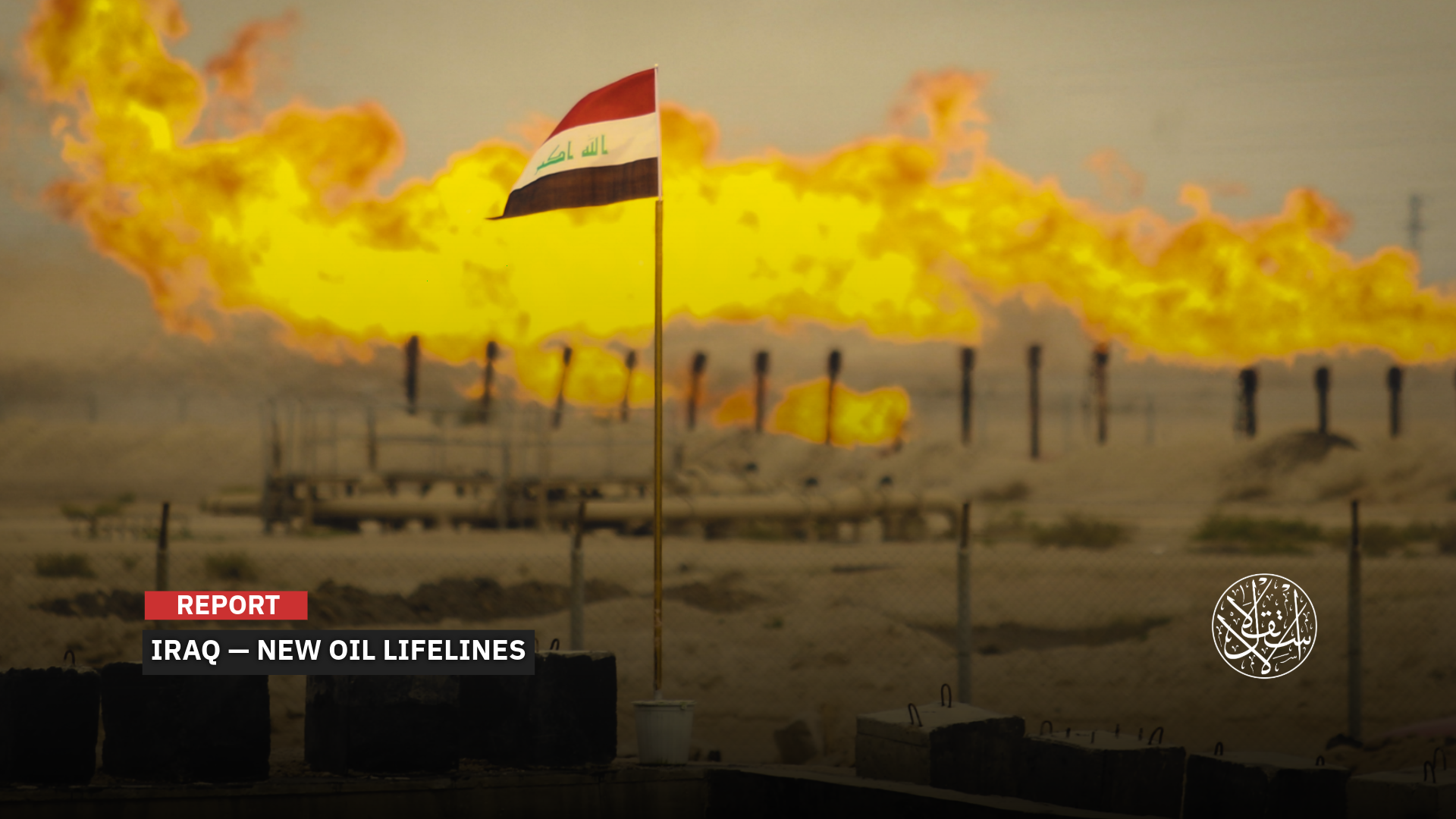
Syria could serve as a safer route for oil exports, offering an alternative to the Strait of Hormuz.
For the first time in decades, Iraq has turned to overland fuel exports through Syria, a move that underscores the scale of disruption hitting its traditional shipping routes as the U.S.-Israeli war on Iran intensifies, particularly around the Strait of Hormuz, where the shutdown has halted exports once estimated at 3.4 million barrels a day.
The stoppage has raised fresh questions about whether Syria could emerge as a new outlet for Iraqi oil, especially as talks continue between the two countries to revive a pipeline linking Iraq to the Mediterranean port of Baniyas.
A Costly but Necessary Route
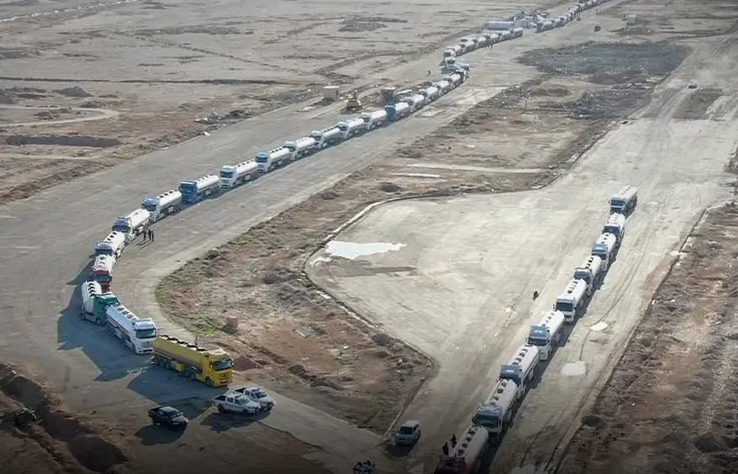
On March 31, 2026, the first convoy of Iraqi fuel shipments set off overland through Syria, reopening a route that had been dormant for years as restrictions on navigation through the Strait of Hormuz persist.
According to Reuters, the end of Syria’s civil war, combined with the unprecedented disruption caused by the U.S.-Israeli War on Iran, has pushed Iraq toward what is now seen as the most viable option, despite higher operating costs compared with maritime transport.
The State Organization for Marketing of Oil in Iraq (SOMO) has signed contracts to supply around 650,000 tons of fuel oil per month from April through June 2026, with shipments to be transported overland via Syrian territory.
Until recently, Iraq relied heavily on seaborne exports through Gulf ports such as Khor al-Zubair to reach global markets. The latest developments, however, have forced Baghdad to seek urgent alternatives.
Under normal conditions, Iraq produces more than 4 million barrels a day, most of it from southern fields that once pumped over 3 million barrels daily before the war on Iran. Output has since fallen sharply to around 800,000 barrels a day.
SOMO documents show the shipments will be sold at steep discounts ranging from $155 to $170 per ton, including contracts for 720,000 tons of high sulfur fuel oil over three months, sourced from refineries across northern, central, and southern Iraq, alongside smaller deals, Reuters reported.
Ahmad Qabji, the deputy head of the Syrian Petroleum Company (SPC), confirmed a bilateral agreement to move Iraqi oil through Syrian territory, with the initial phase relying on tanker trucks before a possible shift to maritime exports.
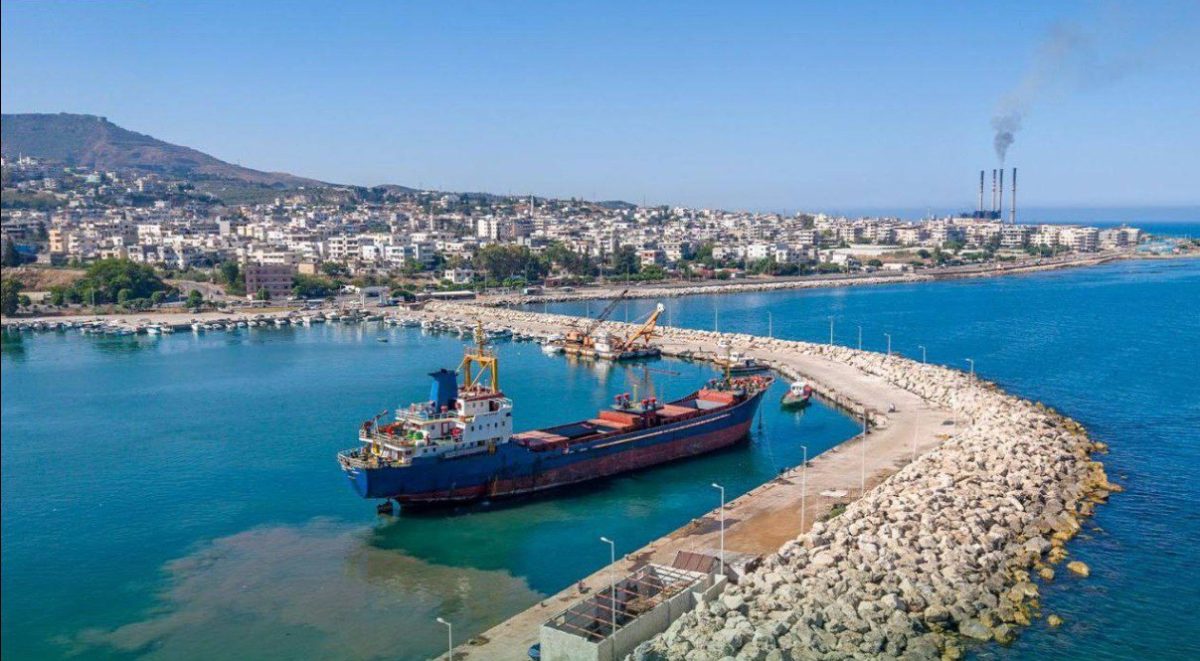
Speaking to Kurdistan 24 on April 4, Qabji said Iraqi oil is currently being transported by tankers across the desert to Baniyas, where it is being stockpiled, with volumes potentially reaching up to 1 million barrels as operations continue.
He added that the current agreement allows for the transport of around 15,000 tons per day, depending on capacity, noting that Syria’s infrastructure remains strained after 15 years of war, making rehabilitation essential to scaling up operations.
He said the deal currently covers around 300,000 barrels, with plans to increase volumes over time, as discussions continue over crude exports in light of ongoing developments.
He also noted that the fuel oil supply agreement is set to run for six years as an initial phase, with a separate deal on crude exports expected to follow based on available volumes.
Beyond Hormuz
Baghdad is increasingly looking to diversify its export routes through Jordan, Syria, and Turkiye, aiming to build a more flexible network in the face of recurring geopolitical disruptions, particularly those tied to the Strait of Hormuz.
Iraqi economic expert Hazem Hadi said the pipeline built in the 1950s, linking Kirkuk to Syria’s Baniyas and Lebanon’s Tripoli on the Mediterranean, has been repeatedly sabotaged over the years.
“Syrian authorities under Hafez al-Assad shut down the Syrian branch of the pipeline in 1982 for political reasons, and it has remained offline ever since, leaving it in need of major rehabilitation,” he told Al-Estiklal.
“Iraq must secure alternative export outlets beyond the Gulf route through Hormuz. These include the Basra-Yanbu pipeline to Saudi Arabia, which was halted in 1991 and later taken over by Riyadh as part of Gulf War reparations.”
“Iraq needs to reactivate the Basra Yanbu line and seriously pursue the Basra-Aqaba pipeline,” Hadi said, adding that Syria should not be seen as a replacement for Gulf exports but as an additional outlet within a broader strategy to expand capacity and avoid the kind of disruptions seen today.
“Exporting through the Gulf waters remains a limited option for Iraq, while pipeline exports to Turkiye, Syria, Jordan, and Saudi Arabia, along with tanker transport, are a more effective alternative, especially as Iraq faces an oil export crisis roughly once every decade due to wars.”
Hadi estimated that Iraq is currently exporting between 350,000 and 400,000 barrels a day at best, down sharply from roughly 4.5 million barrels before the U.S.-Israeli War on Iran, when about 3.5 million barrels were allocated for export.
The SPC communications director, Safwan Sheikh Ahmad, said Syria is repositioning itself as a safe energy corridor, pointing to infrastructure ready to handle Iraqi oil and gas exports to global markets following a new bilateral agreement, as tanker traffic through Hormuz and Bab al-Mandeb remains constrained.
He said the first convoy includes 299 tanker trucks, with 176 already entering through the al-Tanf al-Waleed border crossing, describing the current phase as a “trial period.”
“If things succeed, we will immediately move to signing long-term contracts,” he told Anadolu Agency.
Amid ongoing global disruptions, Ahmad said Damascus is asserting itself as a viable alternative to Hormuz, with the Kirkuk-Baniyas pipeline seen as a strategic link connecting Iraqi energy supplies to the Mediterranean and a potential foundation for turning Syria into a regional export hub.
The Baniyas Pipeline
Since the fall of Bashar al-Assad’s regime on December 28, 2024, Iraq and Syria have been moving steadily to rebuild ties, with a strong focus on security cooperation, energy coordination, and reviving the long-stalled Baniyas oil pipeline.
The two countries share a border stretching more than 599 kilometers, much of it desert terrain that has seen years of instability, especially during ISIS control of large areas between 2014 and 2017.
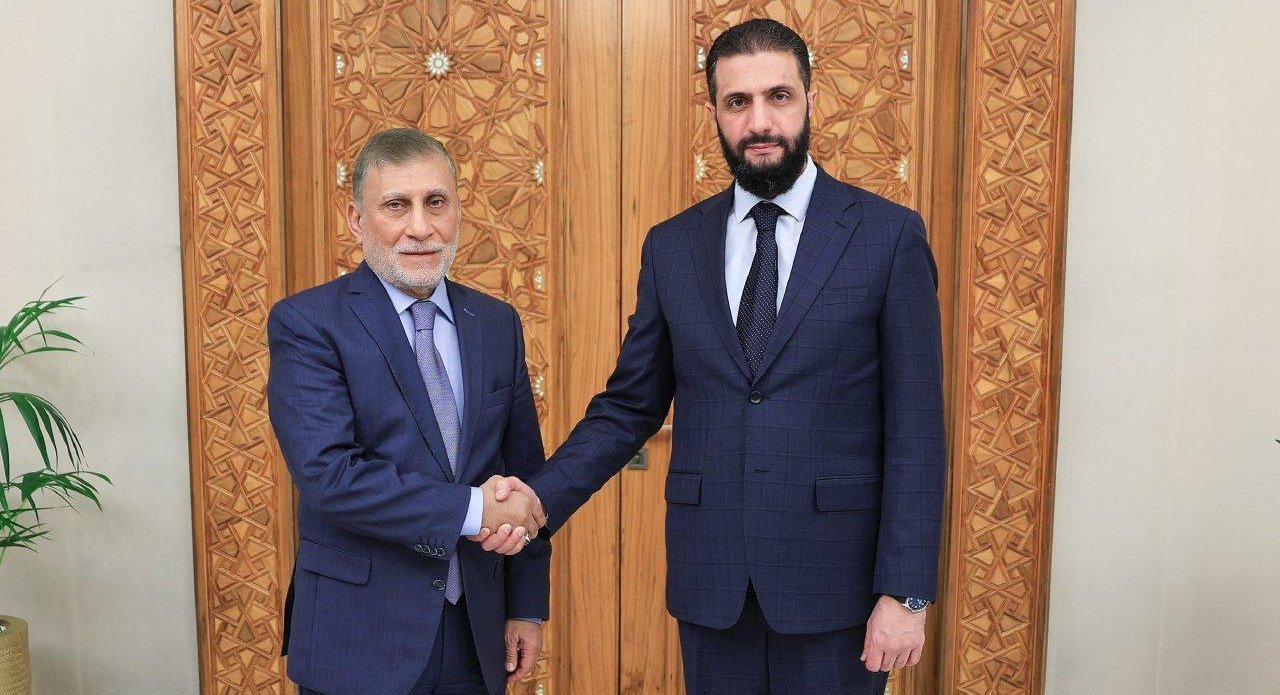
As part of these efforts, Iraqi politician Izzat al-Shabandar, a close ally of the prime minister, visited Damascus on June 9, 2025, where he met Syria’s president Ahmed al-Sharaa.
Local reports described al-Shabandar as a special envoy of Prime Minister Mohammed Shia’ al-Sudani, saying the meeting was “highly constructive” for rebuilding economic, political, and social ties between the two countries.
The visit followed a series of security and political contacts, including two trips by intelligence chief Hamid al-Shatri and a direct meeting between al-Sudani and al-Sharaa in Doha in April 2025.
Iraq’s deputy oil minister, Bassim Mohammed Khudair, confirmed that Baghdad is in talks with Damascus to rehabilitate the Iraq-Syria oil pipeline linking to the Mediterranean port of Baniyas.
Speaking to the Iraqi News Agency (INA) on September 27, 2025, Khudair said discussions are also underway with ExxonMobil on projects involving oil field development, infrastructure upgrades, and export systems for oil and gas.
These talks come alongside broader plans to rehabilitate domestic pipeline networks across northern and southern Iraq, as well as expand crude storage capacity.
In mid August 2025, Syrian Energy Minister Mohammed al-Bashir traveled to Baghdad to discuss reviving the pipeline, which has been inactive for 22 years. He noted that Syria currently imports around 3 million barrels of crude per month to meet its needs, underscoring the strategic importance of reconnecting the two countries’ energy networks.
Iraqi Oil Minister Hayan Abdul-Ghani signaled readiness to restart the line, proposing either rehabilitating the existing pipeline or building a new alternative route.
Both sides agreed to form a joint technical and advisory team to assess the pipeline’s condition, along with a central committee to coordinate shared projects.
Earlier, in April 2025, Iraq had sent a high-level delegation to Syria to study the technical and economic feasibility of restoring the Kirkuk-Baniyas pipeline.
The pipeline is one of the region’s historic energy projects. Built in the 1950s and operational since 1952, it stretches roughly 800 kilometers and once carried up to 300,000 barrels a day from northern Iraq to Syria’s Mediterranean coast.
Initial estimates put rehabilitation costs between $300 million and $600 million after damage sustained in 2003 forced it out of service.
Syrian officials have also floated plans to build a new refinery as part of a broader push to turn the country into an exporter of refined petroleum products.
For Iraq, which relies on oil for about 90 percent of its revenues, the stakes are high. As OPEC’s second largest producer, with proven reserves of around 145 billion barrels, securing reliable export routes has become a strategic priority.
Sources
- Iraq Ships Fuel Overland via Syria for the First Time in Decades [Arabic] [Arabic]
- Iraq’s Oil Revenues Drop 70% in March Due to the War [Arabic]
- Ahmad Qabji Reveals Details of Iraq Oil Transport Deal Through Syrian Territory [Arabic]
- Iraq Announces Start of Overland Oil Exports via Syria: A Step Toward Broader Projects? [Arabic]
- Kirkuk–Baniyas: An Old Oil Export Pipeline Iraq Seeks to Revive With Syria [Arabic]