Despite Israeli and U.S. Pressures: Will the Freedom Flotilla Sail Again from Turkiye to Gaza?
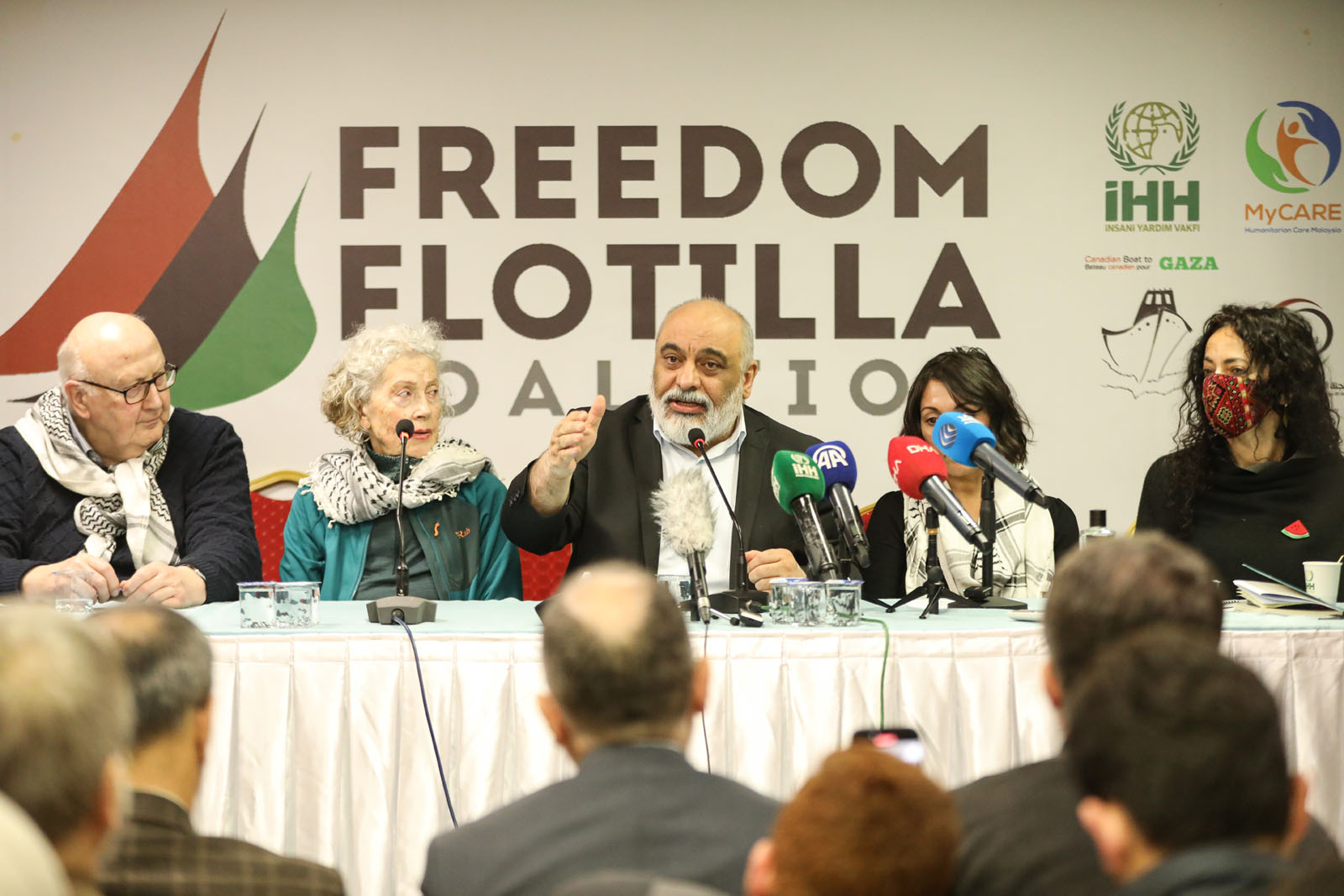
“The Freedom Flotilla Coalition is an international effort to bring aid directly to Gaza.”
Since November 23, 2023, until now, the International Freedom Flotilla Coalition (FFC), which consists of civil society organizations from 12 countries, continues its preparations to depart from the Turkish port of Tuzla in Istanbul toward the besieged Gaza Strip, with the participation of about a thousand people from several countries, including Germany, Malaysia, Palestine, Norway, Argentina, Spain, Canada, and South Africa.
The three ships of the flotilla were supposed to set off on April 26, but they remained stuck in Turkiye after being deprived of navigation as a result of Israeli pressure, according to organizers.
The Israeli Occupation deliberately obstructed the arrival of humanitarian aid to the Gaza Strip by directly targeting relief convoys, which resulted in the martyrdom of many relief personnel, including foreign workers affiliated with the World Central Kitchen organization.
Freedom Flotilla Coalition
The FFC is still seeking to break the siege on the Gaza Strip, despite Hebrew reports indicating that the Israeli Occupation is preparing politically, security-wise, and militarily in order to control the ships by force.
Last month, a coalition of NGOs and associations denounced, in a statement, the administrative obstacles that prevent the flotilla from sailing after Guinea-Bissau withdrew its flag, considering that Guinea-Bissau is complicit with the Israeli Occupation.
The statement added, "The International Registry of Ships in Guinea-Bissau, in an overtly political move, informed the FFC that it had removed the Guinea-Bissau flag from two of the flotilla's ships, including a cargo ship carrying more than 5,000 tons of vital aid to the Palestinians in Gaza."
The coalition noted: "The International Registry of Ships in Guinea-Bissau made several unusual requests, including confirmation of the ships' destination, potential stopovers and port of discharge, as well as a request for an official letter expressly approving the carriage of humanitarian aid and a detailed list of the cargo."
"Normally such an audit is only concerned with the safety and relevant standards of ships flying its flag and is not concerned with the destination, itinerary, manifests or nature of the voyage," the organizers said.
The coalition continued: "Unfortunately, Guinea Bissau has been complicit in Israel's deliberate starvation, illegal blockade, and genocide of Palestinians in Gaza."
In conjunction with the issuance of the statement, a press conference was held in Istanbul, in the presence of organizers and 280 volunteers, activists, human rights activists, lawyers, and doctors, ready to sail, chanting, "We will sail," "Return the flag," and "Free Palestine."
On her part, lawyer Huwaida Arraf, from the American Freedom Flotilla Movement, confirmed that preparations for the trip are continuing with the support of millions of people.
Israeli Channel 12 reported that the elite unit of the Israeli Navy (Shayetet 13) conducted extensive training in preparation for a confrontation with the FFC and the possibility of armed control of the Marmara 2 ship, which brings to mind the events that the Marmara Flotilla witnessed in 2010.
According to Channel, "Israel" also began a series of political moves against European countries (which it did not name) with the help of the United States, without clarifying the nature of these moves.
UN experts also demanded safe passage for the Freedom Flotilla Coalition, whose ships departed Turkiye to the besieged Gaza Strip.
"Israel must adhere to international law, including recent orders from the International Court of Justice to ensure unimpeded access for humanitarian aid," the experts said.
The statement added, "The convoy aims to deliver life-saving aid directly to the besieged people of Gaza, legitimately challenging Israel's control over the entry of humanitarian assistance."
"The Freedom Flotilla participants express the will of a global movement, especially sustained by youth worldwide, to bring the horrors in Gaza to an end — in the interest of both Palestinians and Israelis," the statement noted.
With that being said, according to The Fair Observer, the coalition states that there are three scenarios once the ships depart.
The first one: The ships will reach Gaza and accomplish the mission.
The second: The Turkish government stops the ships from leaving Istanbul after it gives in to pressure from the U.S. and "Israel," as Turkish President Recep Tayyip Erdogan may fear economic blackmail from the West after having suffered a blow in the most recent local elections.
The third: The ships take off, but the Israelis illegally hijack them in international waters, confiscate the boats and supplies, and then arrest, imprison, and eventually deport their crews.
This happened on several other voyages to Gaza, one of them with deadly consequences.
In turn, Anne Wright, a peace activist and retired U.S. State Department official, warned the Israeli authorities that any attempt to board or attack Freedom Flotilla ships would be illegal.
Wright added, "We represent civil society demanding peace and justice. We ask the world to ensure our security to provide basic goods to our brothers and sisters in Gaza."
"The U.S. is very complicit in trying to stop the Gaza flotilla," Wright said, referring to a letter to U.S. Secretary Antony Blinken signed by members of Congress last week.
American Pressure
Earlier, 20 members of the U.S. House of Representatives, in a letter, called on the administration of President Joe Biden to put pressure on Turkiye to prevent the launch of the Freedom Flotilla to Gaza, as well as to end Turkish trade restrictions on "Israel."
Yedioth Ahronoth newspaper said that the Chairman of the Committee to Strengthen Relations between the United States and Turkiye, Congressman Steve Cohen, was among the signatories, in addition to 14 representatives from the Democratic Party and 5 from the Republican Party.
The signatories called on the U.S. President to communicate directly with Turkish President Recep Tayyip Erdogan and the Turkish government in order to prevent or postpone the launch of the flotilla, and to end the trade restrictions imposed by Ankara on the exports of 54 products to "Israel."
The letter also called for ensuring that all shipments heading to Gaza are inspected and that they meet international standards regarding humanitarian aid.
The American signatories to the letter expressed their concern about Turkiye's imposition of restrictions on the export of key construction materials to "Israel," which exacerbates the economic challenges it faces.
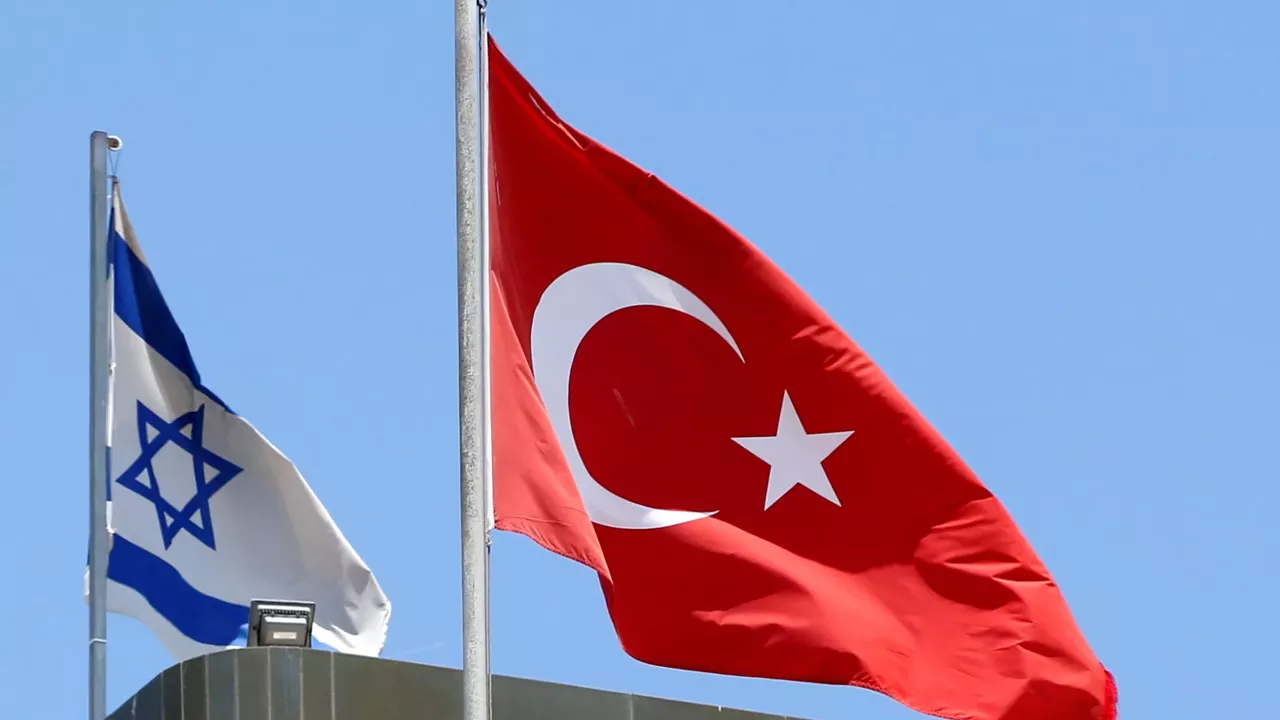
On April 9, Turkiye imposed trade restrictions on "Israel," including a ban on the export of a group of goods such as cement, iron, and steel used in construction, in response to the war on Gaza, according to the Turkish Ministry of Trade.
The Turkish Ministry of Foreign Affairs said: "This decision will remain in effect until Israel declares an immediate ceasefire and allows humanitarian aid to enter Gaza in an appropriate and continuous manner."
On May 2, the Turkish Ministry of Trade announced that Turkiye had stopped all exports and imports to and from "Israel," including all products, noting the worsening human tragedy in the Palestinian territories as a result of the Israeli aggression on the Gaza Strip.
The statement added: "Turkiye will implement these new measures strictly and decisively until the Israeli government allows an uninterrupted and sufficient flow of humanitarian aid to Gaza."
Israeli Foreign Minister Israel Katz had accused the Turkish President of violating the agreements by closing the ports to Israeli imports and exports.
"This is how the dictator behaves, ignoring the interests of the Turkish people and Turkish businessmen, and ignoring international trade agreements," Katz wrote on X.
He added that he issued directives to the Ministry of Foreign Affairs to work on finding alternatives to trade with Turkiye, with a focus on local production and imports from other countries.
Last year, Ankara summoned its ambassador to "Israel" for consultations due to the Israeli side's failure to respond to ceasefire demands and its continued attacks on civilians in the Gaza Strip, in addition to the Israeli Occupation's failure to allow humanitarian aid to enter Gaza permanently and continuously.
Attempts to Break the Siege
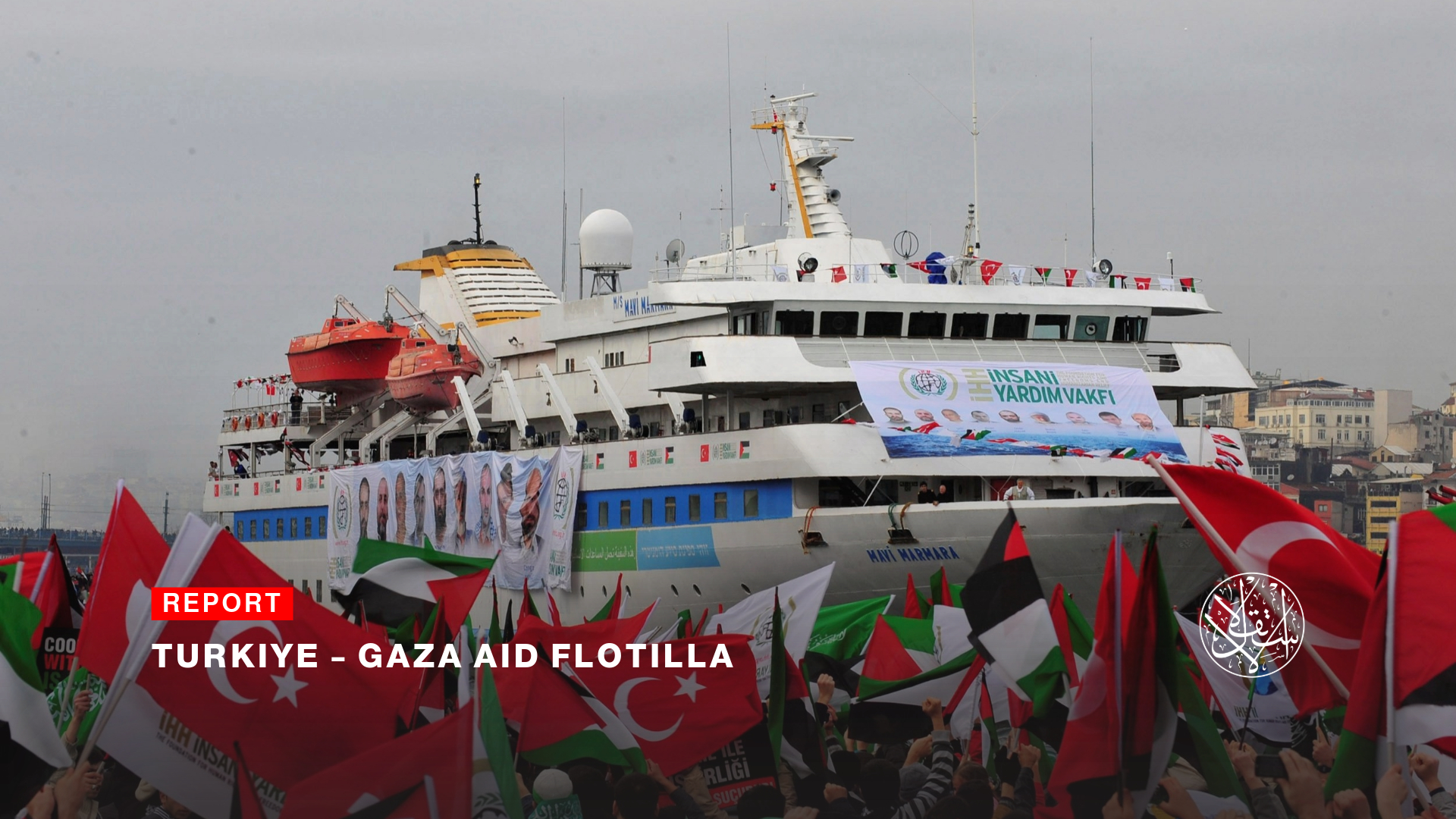
During the period from 2010 to 2024, the FFC was able to organize 6 convoys, the most famous of which were the First Freedom Flotilla in 2010, which was subjected to an Israeli military attack that left 10 dead and dozens wounded, and the Women's Freedom Flotilla in 2016.
During the period from 2010 to 2024, no flotilla was able to enter Gaza and break the siege on it, but the FFC continues its efforts in this regard.
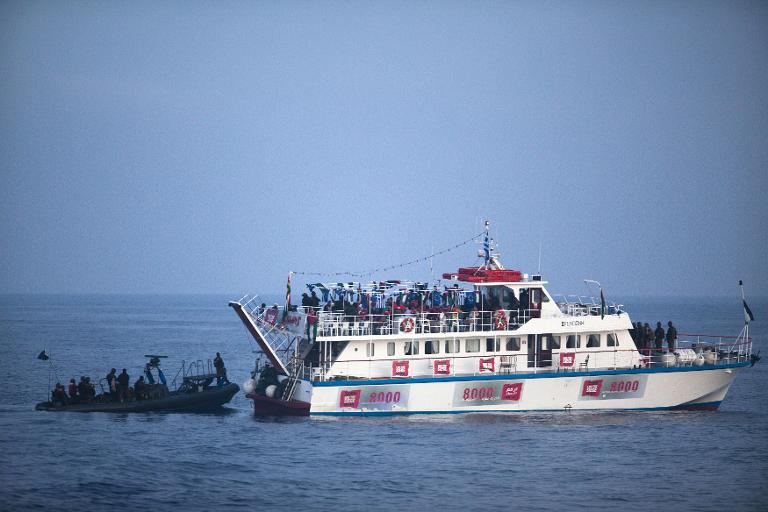
In 2010, the Freedom Flotilla, which included eight cargo ships carrying 700 passengers, humanitarian aid, and construction materials, sailed from the Turkish port of Antalya, in an attempt to break the siege imposed on the Gaza Strip and supply the population with their needs.
Nine days after he sailed, specifically on May 31, an Israeli military operation and boarding of one of the ships (Mavi Marmara) led to the killing of 10 people and the injury of 28 activists and 10 from the Israeli side.
After this incident, relations between "Israel" and Turkiye witnessed crisis until full diplomatic relations between them resumed in August 2022, with the return of the ambassadors and consuls to each of the two countries.
It is noteworthy that the International Criminal Court in The Hague decided not to prosecute "Israel" for the events of the Marmara ship off the shores of Gaza in 2010.
The Qatari ship Al Karama, which arrived in the Gaza Strip on December 20, 2008, carrying figures representing Qatari charities, is the last ship to enter Gaza since it was besieged by the Israeli Occupation.
In turn, political analyst Mahmoud Alloush explained in a statement to Al-Estiklal that "in the crises that struck Turkish-Israeli relations during the past decade, Turkish President Erdogan preferred the Palestinian Cause over anything else, but that experience was strongly present in shaping Turkiye's current policy regarding the Gaza war."
He added, "The Turkish economic and judicial steps appear to be primarily designed to put more pressure on Israel to accelerate the end of the war, nothing more."
Sources
- International aid flotilla searches for new flags to sail from Turkey to Gaza
- Gaza aid flotilla halted after vessels' flag removed, activists say
- Will the Freedom Flotilla, Now in Istanbul, Reach Gaza?
- UN experts demand safe passage for Freedom Flotilla’s humanitarian mission to Gaza
- Turkey Confirms All Trade Halt With Israel Over War in Gaza