Britons Face ‘Historic Shock’ to Their Incomes, Bank of England Governor Warns
While imposing sanctions on Russia because of its invasion of Ukraine, it seems that the UK has already started to reap the fruits, even before Russia.
Bank of England Governor Angro Bailey warned on Monday, March 28, 2022, that “the real income shock in the UK will be greater than in any year in the 1970s” because of the Russian–Ukrainian crisis.
According to Financial Times, the Bank said the people of Britain are witnessing a real shock sparked by higher energy prices that would “affect the UK’s economic growth and consumer demand.”
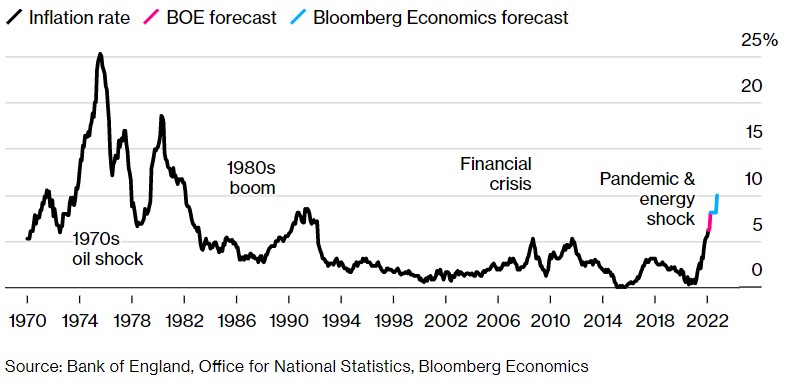
Britain’s inflation rate jumped to 6.2 percent, adding much pressure on Chancellor of the Exchequer Rishi Sunak to protect British consumers "from a tightening squeeze on living standards," Bloomberg said.
Inflation Shock
This year, Britons are facing a “historic shock” to their incomes generated by the rising energy prices that will hit UK economic growth and consumer demand, as well; this is what Bank of England governor Andrew Bailey warned on Monday.
Russia’s invasion of Ukraine would boost the UK cost of living “crunch,” and the energy price shock this year would be greater than any single year during the 1970s, said Bailey.
According to Financial Times, the BoE governor rang the alarm bell of the so-called stagflation, saying it would pose the biggest challenge to the Monetary Policy Committee of the central bank since its creation in 1997, due to the slowing economic growth and soaring inflation.

The jump in Energy prices is a main factor behind UK consumer price inflation which reached 6.2 percent this February, “more than three times the BoE’s 2 percent target,” according to the same source.
In the second quarter of 2022, the BoE expects Russia’s war in Ukraine to help raise inflation to about 8 percent. Bailey said Britons are facing a very big shock when comparing real incomes and spending with rising prices of energy and imported goods.
“This is really a historic shock to real incomes,” he said at the think-tank’s event in Brussels.
The Worst Fall Ever
The Office for National Statistics delivered figures showing that the increasing prices are expanding across much of the UK economy.
However, the surge in prices has overran the estimates of the Bank of England and Treasury, fanning concerns that the inflation will spiral further upward, especially with shortages of workers after the pandemic, and the war in Ukraine.
Bloomberg quoted Jack Leslie, senior economist at the Resolution Foundation, saying: “The chancellor will need to set out a bold response to this cost of living crisis.”
“Another sharp rise in inflation offers a foretaste of the huge income squeeze coming this year,” he added.
Treasury officials have considered inflation as the biggest threat to the British economy.
Speaking to Parliament on Wednesday, Rishi Sunak, Chancellor of the Exchequer said he will guarantee “security for working families as we help with the cost of living.”

The Chancellor is trying to reconcile between demands and the intense political pressure from his own Conservative Party to find immediate solutions for the cost-of-living crisis amid promises “to cut taxes by 2024, and to get to grips with the record debt pile built up during the coronavirus pandemic,” Bloomberg reported.
Relying on the inflation figures, it is predicted that the Bank of England will raise interest rates more in the next few months which "further tightening budgets for millions of households," according to the same source.
Bloomberg Economics said: “The soaring cost of energy bills will drive the annual rate above 8% in April, probably pushing the central bank to act in May.
“We then expect a pause in the rate hiking cycle in 2H as high energy costs hit spending power, dealing a blow to the economy. The risk to our forecast is that gas and electricity prices keep falling later this year, giving the BOE more scope to raise rates beyond May,” they explained.
Fanning Concerns
Rishi Sunak has tried to protect the British Treasury from surging prices while allowing inflation to deteriorate the budget of low and middle-income Britons, said The Guardian.
This was the accusation of the chancellor, after the statement of the spring budget put government debt reduction "ahead of calls for extra welfare support for hard-pressed families," the British newspaper reported.
At this point, Sunak's plight is whether he can manage to boost the Treasury’s spending on welfare and public services at a time when inflation will possibly amount to 8% and even more.
If that's all he's doing on energy - it is limited and won't impact the majority of households who will see a likely £1,300 average increase in year-on-year bills by October.
— Martin Lewis (@MartinSLewis) March 23, 2022
My head has sunk. I just hope there's a rabbit to come out of the hat. #SpringStatement2022
His office thinks the Treasury needs to keep a great fund reserved in order to afford higher debt costs.
The lenders are keeping a proportion of the UK’s debt in the form of index-linked bonds, so the more inflation is increased, the higher the interest rate the government has to pay.
“Central bank officials are attempting to limit the rise in inflation by increasing borrowing costs. Two rate rises later, and the annual interest rate stands at 0.75%, raising Sunak’s debt bill further,” according to The Guardian.
February figures show inflation plunged interest payments on government debt into more than 50% to £8.2bn, the highest February figure on record.
Sources
- Britain heading for worst fall in living standards since 1950s as 1.3m people face ‘absolute poverty’
- U.K.’s Latest Inflation Shock Adds to Pressure on Sunak to Act
- Britons face ‘historic shock’ to their incomes, Bank of England governor warns
- Rishi Sunak ‘protecting Treasury from inflation at families’ expense’