Billions Lost, Promises Repeated: Will al-Zaidi Change Iraq’s Old Story?
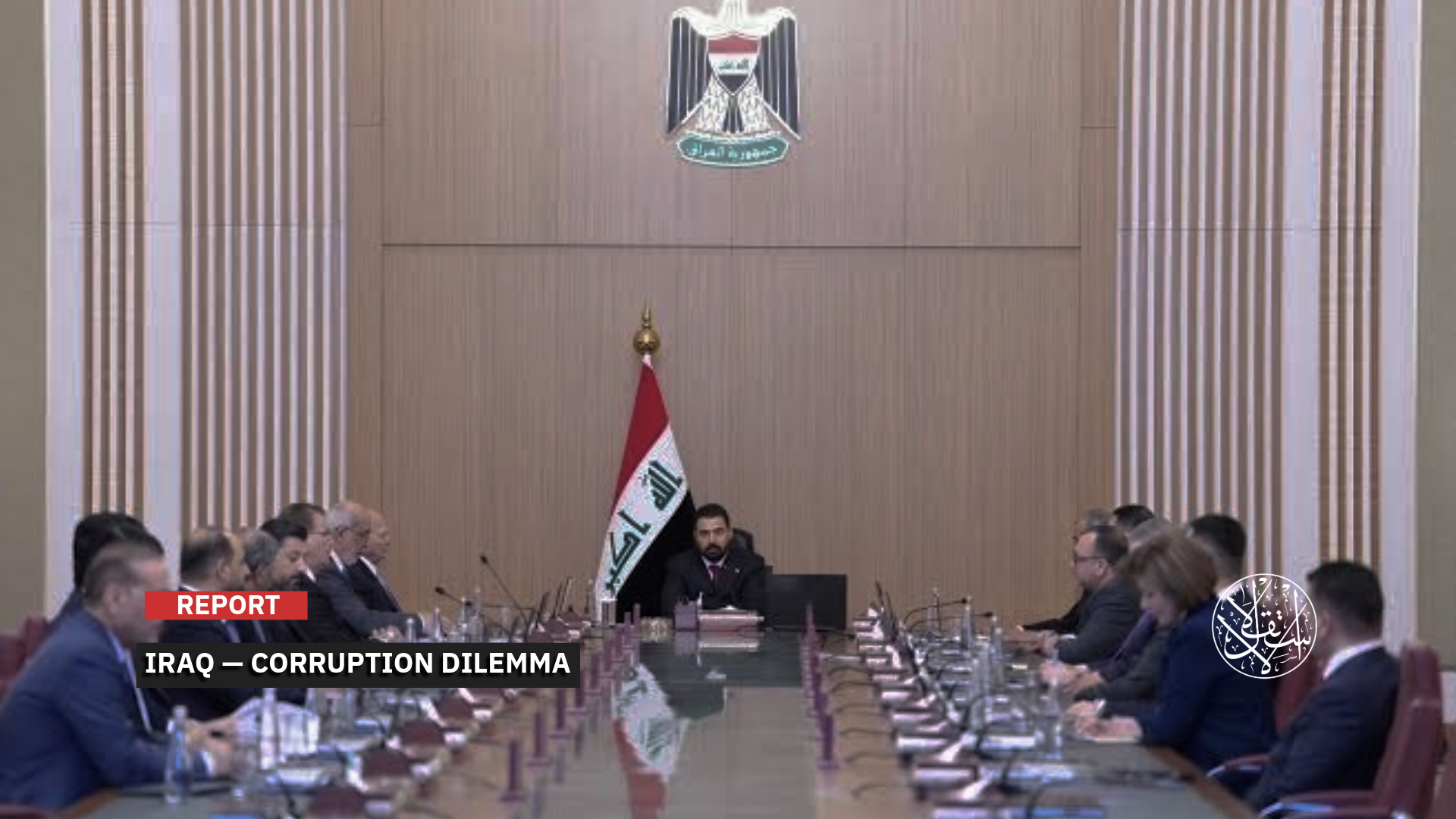
Al-Zaidi ousted several officials tied to corruption within weeks of taking office.
Since Prime Minister Ali al-Zaidi formed his government, Iraqi authorities have announced the arrests of a number of influential figures on financial corruption charges, reviving long-standing questions about whether the state is finally prepared to pursue the powerful officials accused of looting public funds and dismantle a corruption system that has become deeply embedded in state institutions since 2003.
Al-Zaidi began his tenure by announcing the creation of the Supreme Sovereign Council for Integrity, Oversight, and the Recovery of Public Funds, presenting the body as the centerpiece of a new anti-corruption drive.
Yet similar promises have been made by successive Iraqi governments, with little to show for them. Despite periodic campaigns and high-profile pledges, the political system built on power-sharing arrangements, patronage networks, and competing centers of influence has largely remained intact, even as the faces occupying positions of power have changed over time.
Secret Moves
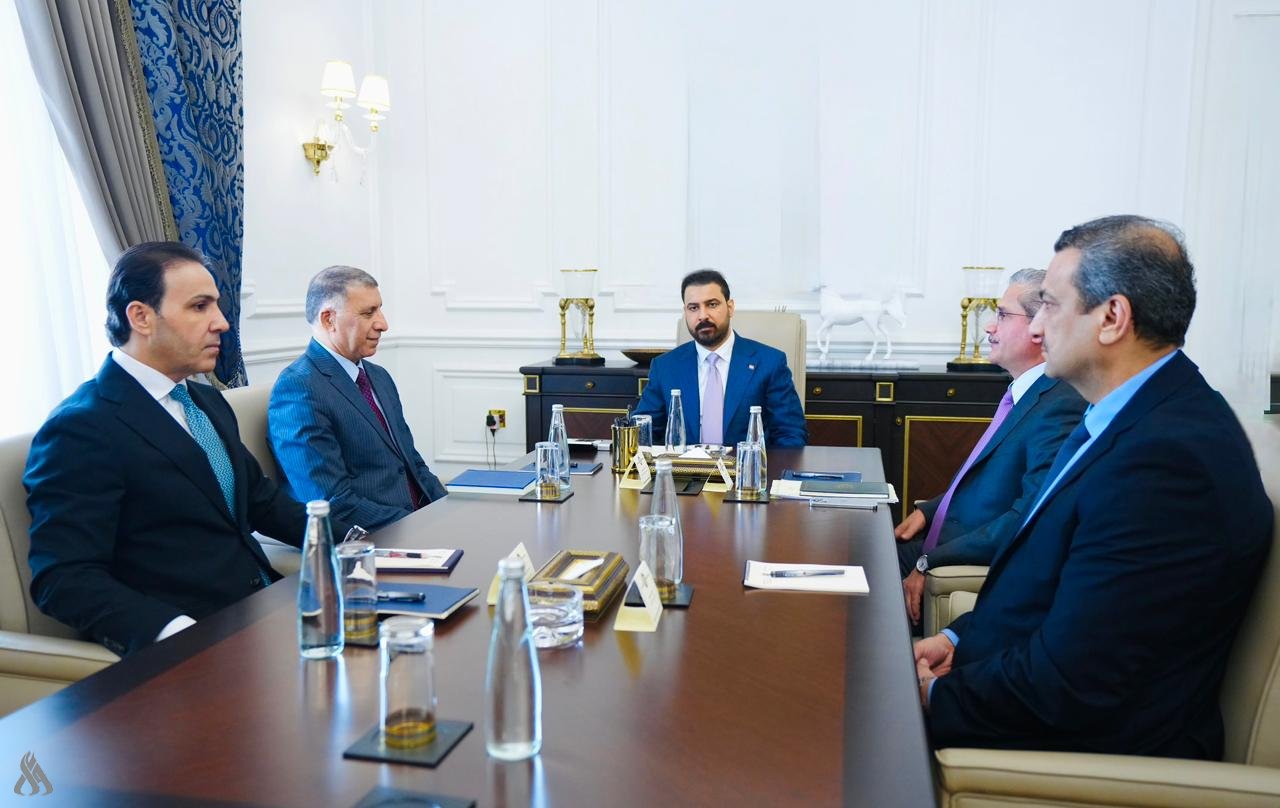
While the new anti-corruption campaign entered the public spotlight with the dismissal of Deputy Oil Minister Adnan al-Jumaili after he was accused of offering al-Zaidi a $200 million bribe, other efforts have been unfolding behind the scenes, targeting roughly 50 figures widely described in political and oversight circles as Iraq’s “big fish” of corruption.
On June 11, 2026, the Iraqi newspaper al-Mada reported that authorities had launched a broad anti-corruption drive that could lead to the recovery of what it described as the largest amount of stolen public funds since 2003. According to the report, a list compiled by the newly established Supreme Sovereign Council for Integrity, Oversight, and the Recovery of Public Funds includes individuals suspected of involvement in major corruption cases.
The list reportedly contains nearly 50 current and former lawmakers, ministers, and senior officials. Some live abroad, while others oversee major investment projects across Iraq in sectors ranging from housing and healthcare to entertainment, oil, and infrastructure.
Leaked information suggests that the value of embezzled funds ranges between $150 billion and $250 billion, with some estimates placing the figure as high as $350 billion. Part of that money is believed to have been used to finance armed groups and influential political actors.
According to the report, most of the assets are held outside Iraq, and recovery efforts extend beyond cash to include real estate, land, residential compounds, luxury vehicles, and valuable jewelry.
Yet skepticism remains. A former member of parliament’s finance committee, quoted anonymously by al-Mada, argued that the figures were inflated and designed to bolster the image of the new government. Even under the most optimistic scenario, he estimated that recoverable funds would not exceed $50 billion.
Since taking office on May 14, al-Zaidi’s anti-corruption campaign has ensnared at least four prominent figures, including two lawmakers, one current and one former.
Among the largest cases is that of Farhan al-Fartousi, the former head of Iraq’s state ports company, who was removed from office in early June. Estimates cited by the newspaper suggest that funds uncovered in the case exceed 20 trillion Iraqi dinars, or roughly $13.3 billion.
Oversight sources quoted by the paper said part of the money was used to finance political groups, fund investments abroad, and acquire large swaths of real estate in Baghdad.
In a separate case, Deputy Oil Minister Adnan al-Jumaili was detained after judicial authorities said they found nearly $10 million in cash in his possession, along with 40 properties, gold holdings, light and medium weapons, and large sums of Iraqi currency.
Meanwhile, Iraq’s Integrity Court requested on June 7 that parliament lift the immunity of sitting lawmaker Hasnain al-Khafaji over accusations of extortion and influence peddling in exchange for financial gain.
The Karkh Court of First Instance also ordered former lawmaker Jamal al-Karbouli to pay $4.5 million to the head of the Iraqi Red Crescent Society after finding him liable for diverting a Saudi-funded hospital grant for personal benefit, according to court documents.
In another development, lawmaker Alaa al-Haidari announced on June 10 that he had submitted a formal complaint to Prime Minister Ali al-Zaidi detailing what he described as serious violations and waste of public funds inside an oil company allegedly controlled by what he called a “new oil corruption kingpin.”
Al-Haidari said the case was not new and had previously been raised with the government of former Prime Minister Mohammed Shia’ al-Sudani, but no decisive action or serious investigation had followed.
Embedded in Corruption
Assessing the early anti-corruption measures launched by Prime Minister Ali al-Zaidi and their chances of reaching the most powerful figures accused of graft, Iraqi affairs researcher Nadir Mohammed argued that corruption in Iraq is no longer an isolated phenomenon. It has become intertwined with the structure of power itself, especially since many senior positions are effectively bought with money accumulated or stolen through various means.
“Numerous accusations by lawmakers and politicians have claimed that the position of parliament speaker was effectively purchased for around $30 million in 2018,” he told Al-Estiklal.
“Those accusations were echoed by several members of parliament, alongside what amounts to a widely understood price list for ministerial and other senior government posts.”
Mohammed pointed to figures such as Jamal al-Karbouli, who faces accusations of misappropriating $4.5 million yet continues to move freely within Iraq while maintaining ties with leading political figures and successive prime ministers. According to the Iraqi researcher, al-Karbouli is just one example of a class of influential figures that emerged and consolidated power under the political forces that have dominated Iraq since 2003.
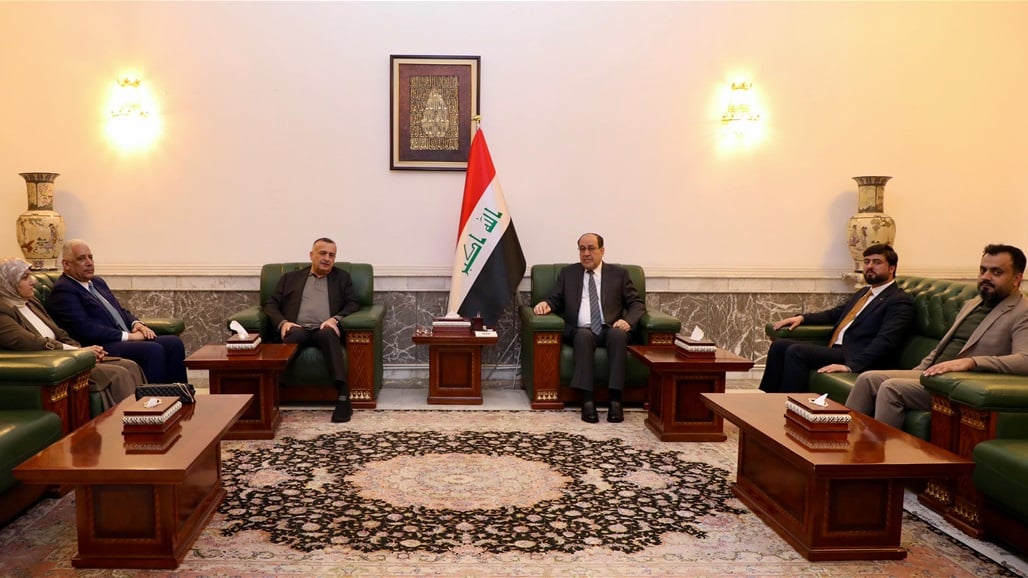
He expressed doubt that the current anti-corruption campaign would target powerful figures linked to the political forces that helped bring al-Zaidi to office. He noted that prominent names, including former prime ministers Nouri al-Maliki and Mohammed Shia’ al-Sudani, have long been surrounded by allegations linked to corruption cases worth billions of dollars without facing genuine accountability so far.
“The real test of al-Zaidi’s government in its first months,” Mohammed said, “will be its ability to arrest and prosecute major corruption figures, while also bringing weapons under state control and curbing the influence of armed factions.”
He added that every new Iraqi government has sought to showcase at least one high-profile anti-corruption case. Under former Prime Minister Mustafa al-Kadhimi, authorities arrested Nour Zuhair, the key suspect in the so-called “Heist of the Century.” Under al-Sudani, former lawmaker Haitham al-Jubouri was detained in connection with the same case. Yet Zuhair was later released, raising widespread doubts about the seriousness of the government’s response.
On October 16, 2022, al-Kadhimi’s finance minister, Ihsan Abdul Jabbar, revealed that roughly $2.5 billion had been stolen over an 11-month period beginning in September 2021 from the General Commission for Taxes’ trust account. The scheme involved five companies working with officials responsible for managing deposited funds.
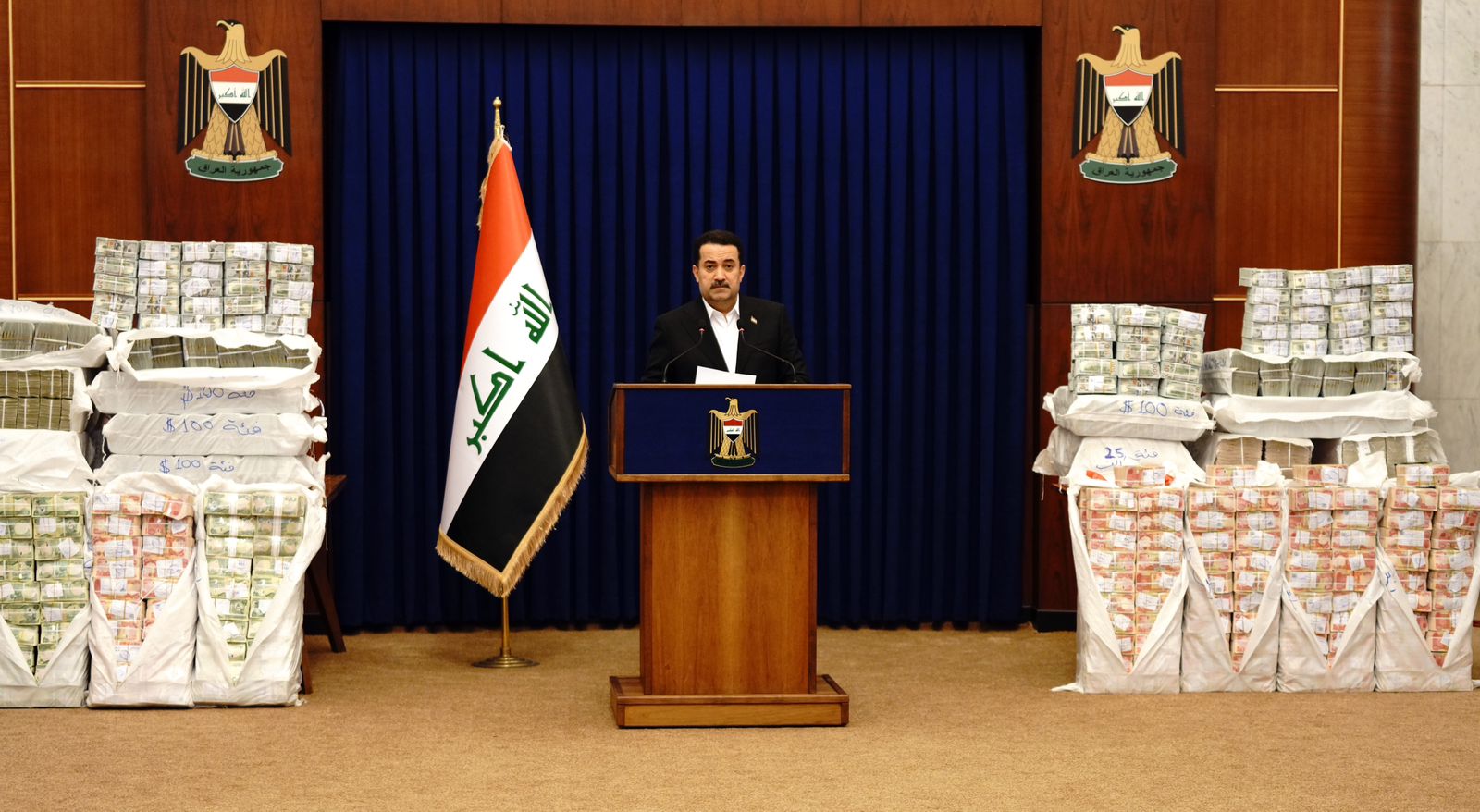
The “Heist of the Century” is only one chapter in a much larger story. Various estimates suggest Iraq has lost between $700 billion and $1 trillion to corruption and mismanagement since 2003.
Those losses extend far beyond direct theft. They include questionable arms deals, ghost projects, oil smuggling operations, kickbacks collected by powerful actors, corruption involving the food ration system, failed bomb-detection devices, military procurement contracts, and numerous other scandals that have drained public finances for more than two decades.
Iraq’s consistently poor ranking on international transparency indexes reflects more than isolated misconduct. It points to the extent to which corruption has become embedded in the country’s political and administrative system. Institutions tasked with fighting corruption have often been accused of participating in it or shielding those responsible, turning the slogan of “fighting corruption” into a tool for political pressure and score-settling rather than a genuine effort to reform the system and recover stolen public wealth.
A Familiar Script
For Iraqi political analyst Yahya al-Kubisi, the current campaign differs little from the efforts of previous governments that promised to fight corruption but failed to dismantle the system that sustains it.
Writing on Facebook on May 30, 2026, al-Kubisi noted that former Prime Minister Nouri al-Maliki established an Advisory Council for Combating Corruption in May 2007. “Corruption then became the defining feature of the Iraqi state,” he wrote.
He added that Haider al-Abadi launched the Supreme Council for Combating Corruption in early 2016, yet corruption remained largely unchanged. Adel Abdul Mahdi later created a body with a nearly identical name in late 2018, but the scale of the problem and the influence of those involved remained intact.
“In 2020, Mustafa al-Kadhimi formed the Higher Committee for Investigating Major Corruption and Criminal Cases, and corruption flooded the country,” al-Kubaisi said. “Then in October 2022, Mohammed Shia’ al-Sudani established the Higher Anti-Corruption Authority, and we sank even deeper into corruption.”
He pointed out that Prime Minister Ali al-Zaidi announced the creation of the Supreme Sovereign Council for Integrity, Oversight, and the Recovery of Public Funds on May 30, 2026, adding sarcastically, “And we are expected, quite naively, to believe that it will fight corruption.”
According to al-Kubisi, corruption in Iraq is not merely a governance failure but a structural feature of the political order itself, embedded in both the state and the system that governs it.
“Any claim of eliminating this type of corruption without fundamentally changing the structure of the political system and the way it operates is little more than a myth being sold to the public.”
Iraqi writer Aziz al-Defai argued that Iraqis have grown accustomed over the years to hearing the same promises under different names and with different labels, while corruption has remained one of the country’s most serious challenges.
In a Facebook post published on May 31, 2026, titled “Waiting for a Miracle to Tear Out the Door of Corruption,” al-Defai said this was not the first time an Iraqi prime minister had, immediately after taking office, announced the creation of a council or supreme committee to fight corruption or appointed new figures and judges to oversee the issue.
He said Iraqis still remember former Prime Minister Mustafa al-Kadhimi’s televised warning to his brother Imad not to exploit his name for personal privileges, as well as Mohammed Shia’ al-Sudani’s repeated pledges to pursue corrupt officials and recover stolen funds, including promises linked to the “Heist of the Century” case and the recovery of money taken by its main suspect, Nour Zuhair.
“What has actually been achieved compared with the scale of the promises made? Is the problem with the individuals tasked with fighting corruption, or with the system in which they operate?” al-Dafai asked.
“Many Iraqis now view corruption not as a collection of isolated cases but as a complex web of intertwined political and economic interests. Renaming committees, reshuffling agencies, or creating new institutions will not change reality as long as the structures that produce corruption and shield those responsible remain in place.”
Al-Defai stressed that any genuine effort to combat corruption cannot depend on creating a new agency or replacing an existing one. Instead, it requires fundamental conditions, above all an independent judiciary capable of holding everyone accountable without exception, along with effective oversight bodies equipped with the authority and resources needed to do their jobs.
It also requires, he said, “real transparency in public contracts and spending; legal protection for whistleblowers, journalists, and oversight institutions; as well as sustained political will that is not driven by partisan interests or short-term pressures.”
Despite the volume of announced measures, official figures suggest the scale of corruption has continued to expand rather than show a decisive decline.
In its annual report released in April 2026, Iraq’s Integrity Commission said it issued 14,645 summons orders, 3,461 arrest warrants, and 1,950 detention orders in 2025. It also issued 215 travel bans and carried out 1,555 operations that resulted in the arrest of 671 suspects.
Yet observers argue that the growing number of arrests and legal orders does not necessarily indicate success in the fight against corruption. Instead, it reflects the depth of the networks that have accumulated inside state institutions over more than two decades.
That leaves a question hanging over Ali al-Zaidi’s campaign: does it mark the beginning of a different path, or is it another chapter in a long history of promises that ultimately collided with Iraq’s entrenched system of structural corruption?
Sources
- The Chase for Corruption 'Big Fish': 50 Names and $350 Billion [Arabic]
- Court Seeks to Lift MP Hassanein al-Khafaji’s Immunity Over Extortion Accusations [Arabic]
- The Corruption Five Governments Failed to Tackle: Can the Sixth Council Succeed? [Arabic]
- Iraq’s 'Heist of the Century': A $6 Billion Black Hole That Keeps Growing [Arabic]
- Iraq reels from $2.5bn tax ‘heist of the century’
- Experts: Supreme Council Could Strengthen Oversight and Curb Waste of Public Funds [Arabic]
- Iraq Recovers Over 300 Billion Dinars From “Heist of the Century” Scandal, al-Sudani’s Office Says [Arabic]