As the Battle Over Education Intensifies in Palestine, Is the Crisis Over Pay or a Bid to Recast Public Consciousness?
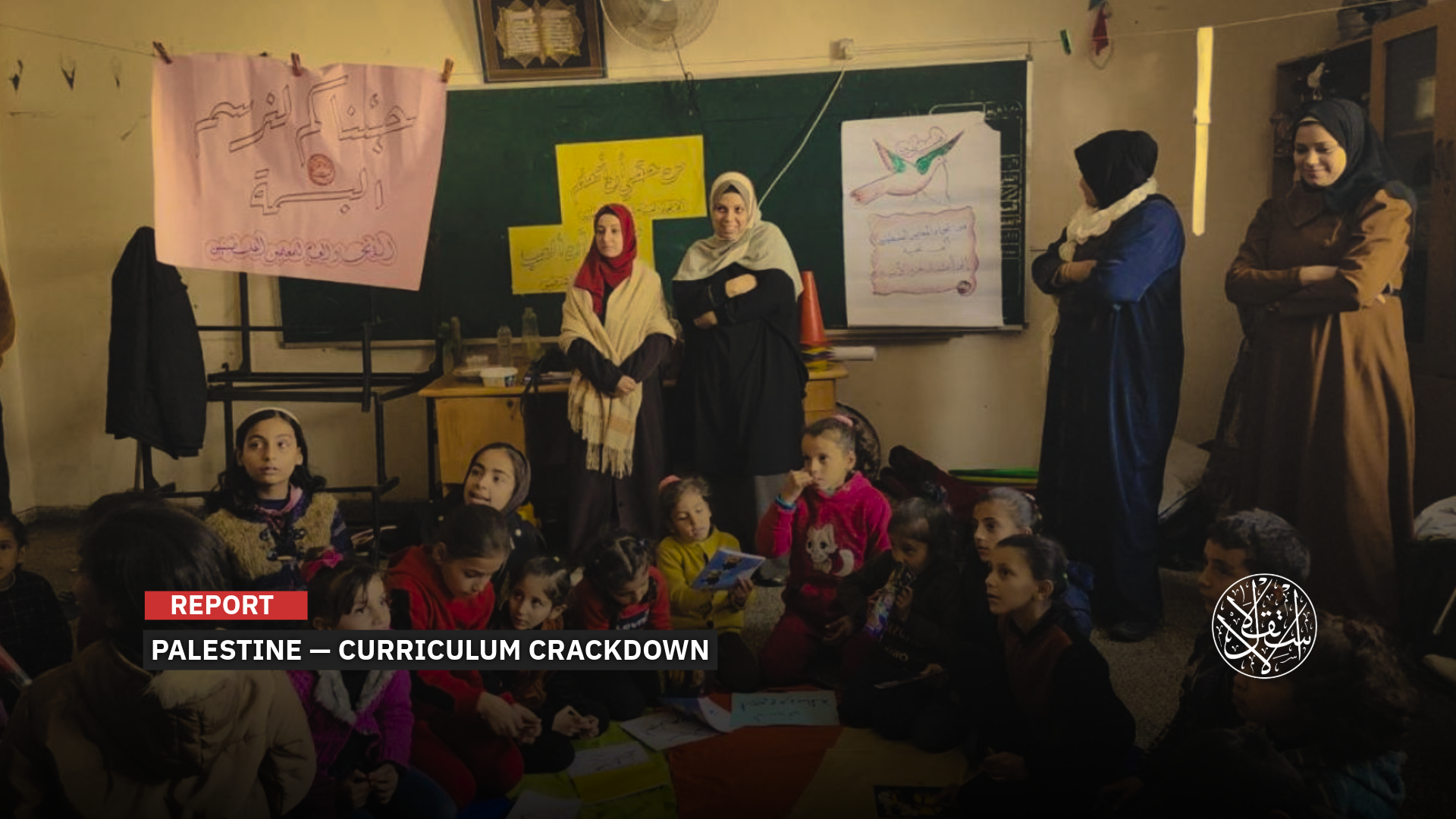
The government is using heavy-handed tactics to intimidate teachers, including threats of dismissal and actual terminations.
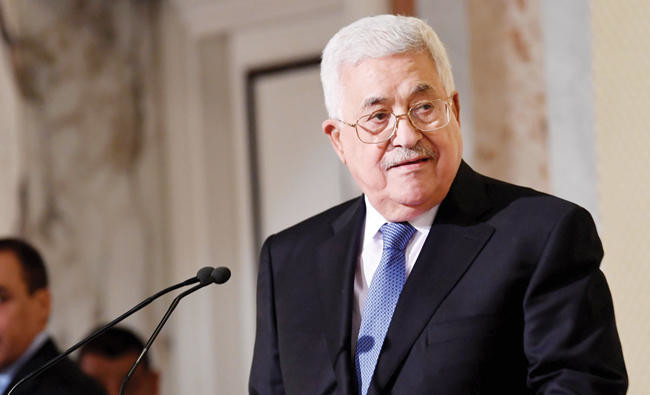
Palestinian Authority President Mahmoud Abbas has begun waging a campaign against the national education system and its teachers, pushing through new decisions that critics say reflect submission to Israeli dictates and international conditions.
Abbas has moved to alter the Palestinian curriculum according to Israeli and Western requirements, citing claims that it contains “incitement” against “Tel Aviv,” and aiming to secure financial support for his authority.
He is now advancing two tracks that target the education system and threaten the future of Palestinian teachers, the first being the overhaul of school textbooks, and the second the dismissal of teachers who have protested the non-payment of their salaries.
Curriculum Change
Abbas has instructed the government to dispatch a high-level Palestinian delegation, headed by the Minister of Education and Higher Education, Amjad Barham, for consultations with UNESCO on aligning Palestinian school curricula with the international standards adopted by the organization.
According to the Palestinian news agency Wafa on November 15, the directive came during a phone call with UNESCO’s Director-General, the Egyptian Khaled el-Enany, who recently assumed his post.
“The initiative is part of Palestine's ongoing efforts to improve its education system, both in form and content, while ensuring it maintains the core of Palestinian national identity and awareness. The goal is to harmonize Palestinian educational content with UNESCO’s global criteria and international commitments,” as reported by Wafa.
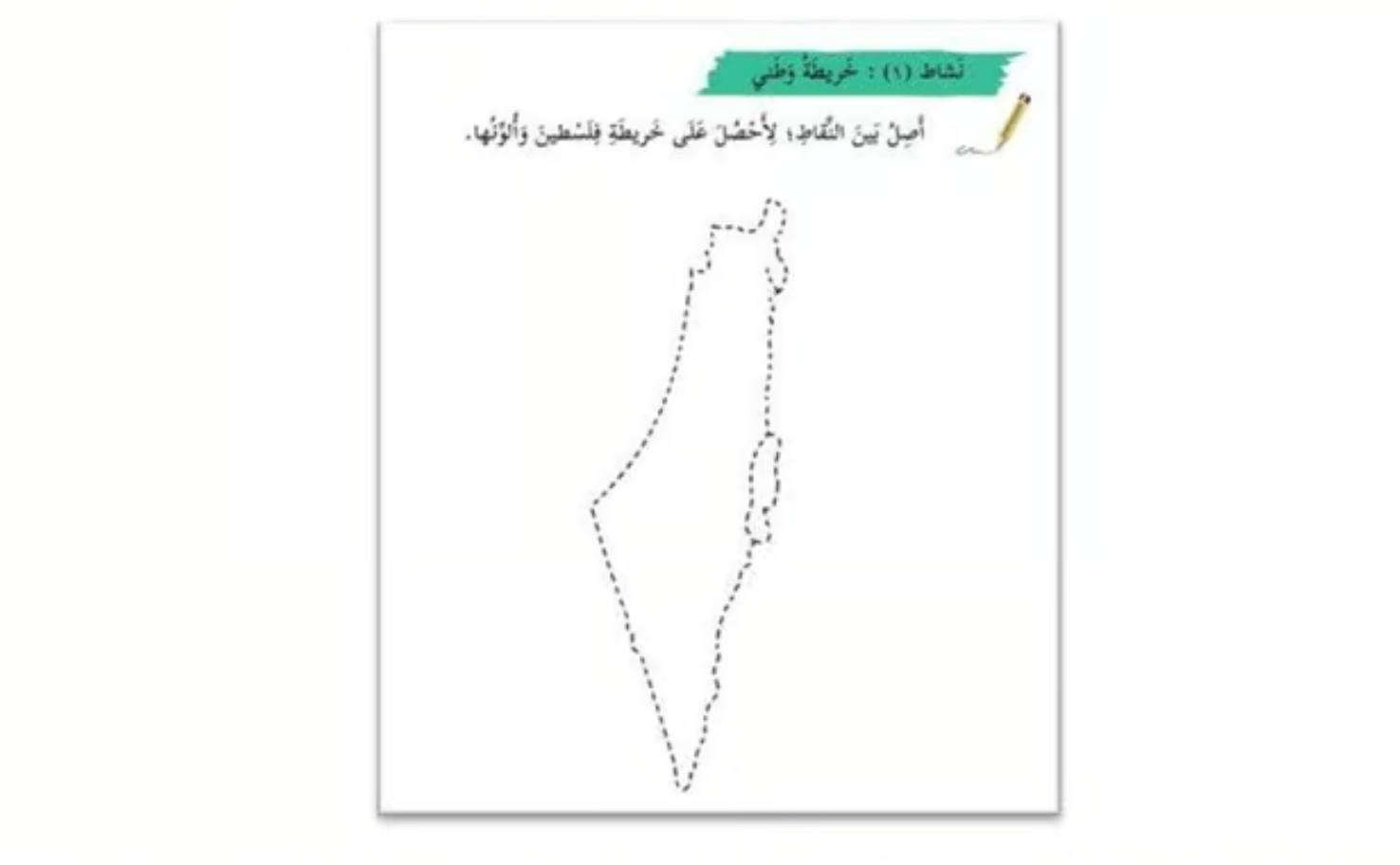
Israel has long promoted the claim, especially after the 2023 Operation al-Aqsa Flood, that the Palestinian curriculum contains “incitement” against “Tel Aviv”, largely because it does not recognize “Israel” on the map of Palestine.
The United States and the European Union embraced the Israeli allegations and have recently begun demanding changes to the curriculum, linking financial support to this step as well as to broader reforms within the Palestinian Authority.
The demand has also been adopted by Arab states, including Saudi Arabia and the United Arab Emirates, in what critics describe as an attempt to reengineer Palestinian political consciousness and delegitimize any calls for armed resistance against the occupation that has gripped Palestinian land since 1948.
Following its normalization agreement with “Tel Aviv” in 2020, Abu Dhabi has increasingly aligned itself with the Israeli position and has sought to export it by pressuring the Palestinians to dismantle their educational framework.
Israel Hayom reported that the UAE is insisting on a genuine overhaul of the Palestinian educational system and on purging it of incitement against “Israel.”
In the context of discussions at the time around a Gulf initiative, reportedly explored by the UAE and Saudi Arabia with U.S. President Donald Trump to end the war in the Gaza Strip, the two Gulf states insisted that the Palestinian curriculum must be changed.
Israel Hayom noted that a similar process was carried out in Saudi Arabia’s education system, adding that Riyadh and Abu Dhabi would oversee the proposed changes.
This condition appeared as part of a clause requiring substantive reforms within the Palestinian Authority aimed at curbing corruption, a demand the UAE and Saudi Arabia have been making for years in exchange for political and financial backing.
It was notable that former Israeli foreign minister Tzipi Livni mentioned the UAE while speaking about the Palestinian educational system at a conference organized by the Israeli Institute for National Security Studies on March 7, 2024.
The UAE can help drive change in Palestinian education because they’re truly opinion leaders in combating extremism, according to Livni.
The Emirati-Saudi approach echoes that of the European Union, which has for years called for changes to the Palestinian curriculum under Israeli pressure, citing allegations of “antisemitism”, a charge “Israel” routinely deploys against anyone who rejects occupation and settlement policies.
On May 7, 2025, the European Parliament voted for the sixth consecutive year in favor of a series of resolutions strongly condemning the Palestinian textbooks used by UNRWA and the Palestinian Authority.
The resolution claimed that the materials contain antisemitism, incitement to violence, hate speech, and glorification of terrorism. In response, the European Parliament voted to freeze financial assistance to the Authority.
According to Yedioth Ahronoth, the resolutions declared that EU funding to the Palestinian Authority should be withheld “as long as the content of the textbooks fails to meet UNESCO standards, antisemitic references are not removed, and examples inciting hatred and violence remain.”
Teacher Dismissal
The Authority entered a difficult period of austerity following punitive Israeli policies after “Tel Aviv” launched its devastating war on the Gaza Strip between 2023 and 2025.
Since the beginning of 2024, the Authority has been deducting a percentage of its employees’ salaries, citing a financial crisis caused by delays in foreign aid and by “Israel” withholding part of the clearance revenues.
These revenues are taxes on imports into the Palestinian market that Israel collects at the crossings it controls and is supposed to transfer to the Palestinian Authority.
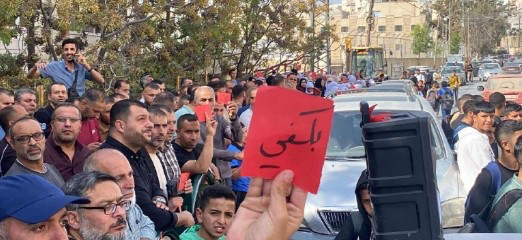
The financial crisis has also hit teachers, who for many months have received only 60 percent of their salaries, driving them to launch a strike.
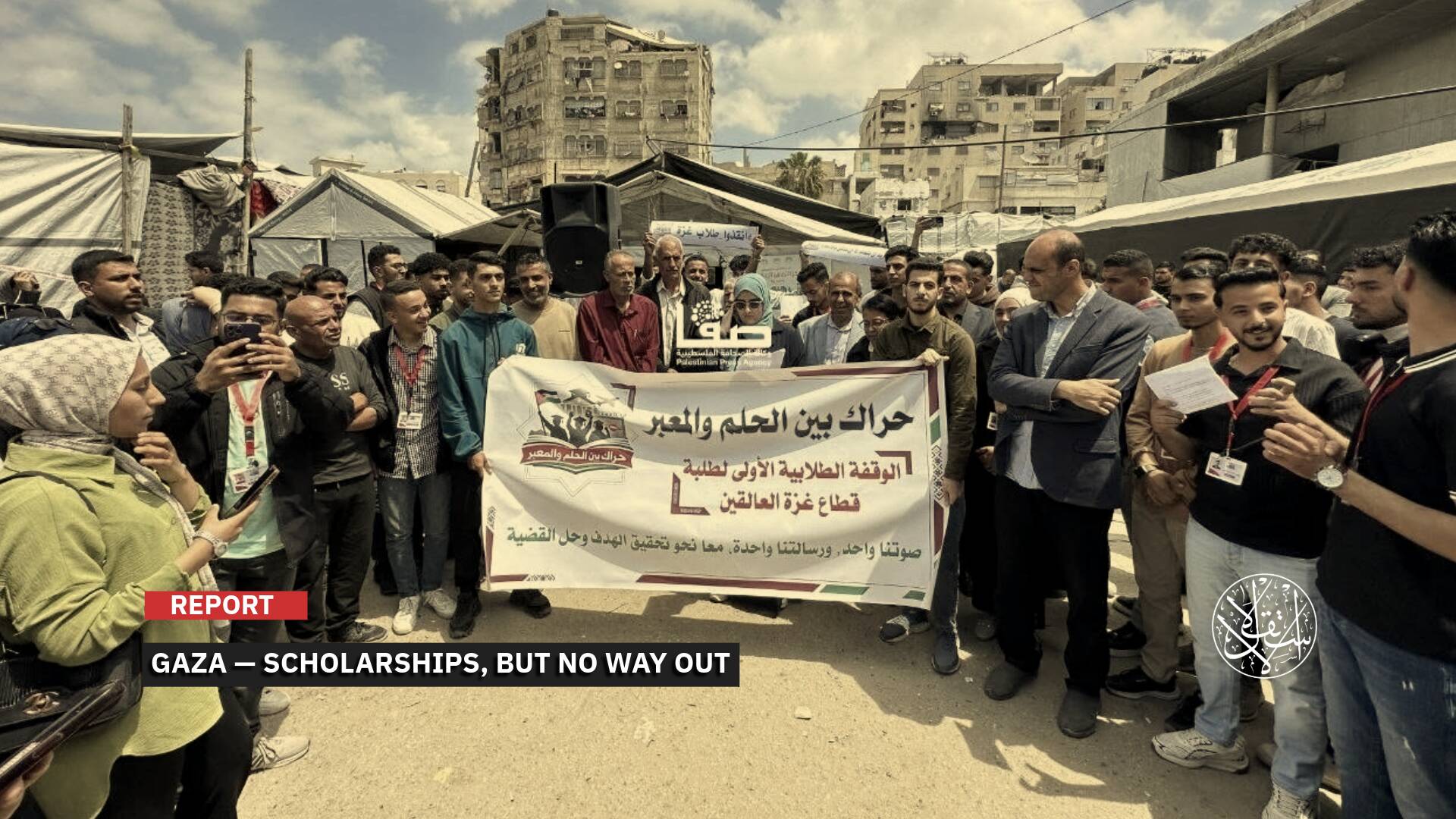
The Unified Teachers’ Movement in the West Bank announced the closure of schools on November 19, and called for a sit-in in front of the central directorates of the Ministry of Education across the governorates, beginning at 11:00 a.m. and lasting until 12:30 p.m.
The movement said in a statement that the action comes in protest against government policies and the abuse of power within some directorates and departments of the ministry.
Amid these escalating steps, eight teachers from the Yatta Education Directorate in Hebron, in the southern West Bank, were surprised to receive notices suspending them from work and removing them from the “Mena Me” human resources system.
The Palestinian Press Network quoted sources within the movement saying that the government and its affiliated bodies have, in recent weeks, launched a coordinated pressure campaign that included threats of dismissal, warnings of legal pursuit, and attempts to summon teachers to force them to back down.
It reported that some directorates have begun appointing replacements for striking teachers, a move educators described as a prelude to “mass dismissal” intended to break their will.
A teacher from Hebron told Al-Estiklal that the salary deductions for nearly a year have exhausted them financially and psychologically and left their lives in a dire state.
The teacher, who requested anonymity for fear of dismissal, said that “the majority remains silent and accepts the 60 percent so they are not dismissed entirely, as happened recently to a number of colleagues.”
“The government is intimidating teachers with arbitrary measures, including dismissal and the threat of dismissal, to force them to abandon their movement and to prevent the circle of dissent from widening beyond its control.”
He continued by saying that teachers initially showed solidarity with the government until the crisis caused by “Israel” subsided, but that education is a vital sector and should not be subjected to cuts, especially given the widespread corruption in the system, the government’s focus on the security sector and its promotions and allowances, and the marginalization of essential services such as health and education.
Omar Sarahneh, one of the teachers suspended from work, said he was officially informed of the decision by the Yatta Education Directorate, which told him that “the decision came from a higher authority.”
He told the local outlet Shahed that the decision was delivered orally in the following form, “You have been suspended from work, do not report in,” noting that he and the other suspended teachers have yet to receive an official written notice, which he said indicated the decision was “illegal.”
He added that discussions with Yatta’s Education Director, Yasser Mohammed, included the latter asking the eight teachers to end the strike in Yatta in exchange for “appeasing them.” He said, “These are strange demands, who are we to end a strike involving about a thousand teachers?”
What is Needed?
The Times of Israel argues that Abbas’s latest move toward UNESCO comes after the Palestinian Authority’s curriculum faced years of criticism amid studies claiming it contains material hostile to Israel and content that encourages terrorism, according to the paper’s description.
The newspaper said in mid-November that during the past year, 2024, the Palestinian Authority committed to the United States to undertake various reforms, including in the field of education.
On September 22, 2025, Abbas pledged to “reform” the educational curriculum within two years “in accordance with UNESCO standards,” during a speech at the International Conference on the Peaceful Resolution of the Question of Palestine and the Implementation of the Two-State Solution.
During the conference, held in New York, Abbas also pledged in a video address to cut financial stipends to the families of martyrs and prisoners, something that has already been implemented for some time.
International donors require the removal of Palestinian national icons and symbols from the curriculum, which they describe as “incitement” and as encouraging armed resistance, as well as the elimination of references to the right of return for refugees displaced from their land in 1948.
This includes images of martyrs and prisoners, and maps depicting Palestine from the river to the sea, a slogan that gained global visibility after October 7 and which Washington and other Western states label as antisemitic because they say it negates “Israel.”
Yedioth Ahronoth reported that despite the Palestinian Authority’s promises to the European Union to reform the education system in Gaza in return for aid, a report from the London-based IMPACT-se research institute shows that nothing has changed in reality.
In a report published on March 25, 2025, the newspaper said that “incitement against Israel has been inserted into language lessons and even mathematics.
The books glorify martyrs, as well as acts of murderous violence such as jihad, portraying it as a gateway to paradise,” as the paper put it.
According to Yedioth Ahronoth, “A new report from a London-based education watchdog warns of a sharp rise in antisemitic and anti-Israel content in Jordan’s school curriculum, including justification for the October 7 massacre and calls for violent jihad.”
“Jordanian school textbooks now call hostages 'settlers living on Israeli colonies around Gaza', erase Israel from maps, and promote antisemitism and violent jihad, according to a new IMPACT-se report.”
It said the curriculum also addresses the right of return, encourages jihad and martyrdom from a young age, and requires students to memorize the names of martyrs and the numbers of those killed during uprisings and wars.
Marcus Sheff, director general of the IMPACT-se institute, said that “it is very encouraging to see the European Parliament taking leadership and demanding accountability from both the Palestinian Authority and the European Commission, making clear that empty promises will no longer be tolerated.”
“It is unacceptable that European taxpayers’ money is being misused to fund an educational system that fuels the kind of extreme hatred and violence we saw on October 7. We will continue monitoring the Palestinian education system and pushing for the promised reforms to be implemented,” he added.
Eric Agassi, deputy director of the institute, said, “The European Parliament is sending a clear message today—it’s time for the European Commission to stop relying on Palestinian assurances and instead present credible public evidence that real changes have been made.”
“For six years in a row, the Parliament has consistently found no meaningful improvements in Palestinian educational content. The promises of reform have proven to be hollow. Credibility is on the line. Without verifiable evidence of change, it would be irresponsible to continue releasing funds as in the past.”
Sources
- Palestinian Authority President Mahmoud Abbas is overhauling Palestinian education and cracking down on teachers amid a financial crisis, amid international pressure to align curricula with UNESCO standards.
- President orders delegation to consult with UNESCO on aligning education curricula with international standards
- Instead of giving them their due, the Authority is threatening striking teachers with dismissal and legal action. [Arabic]
- The Authority dismisses eight teachers from Yatta for demanding their rights. [Arabic]
- Praise songs for October 7, death as a “supreme value”: Schools reopen in Gaza — here’s the plan for students [Hebrew]