Amid Reforms and Concerns: Are Gamers Reshaping German Intelligence?
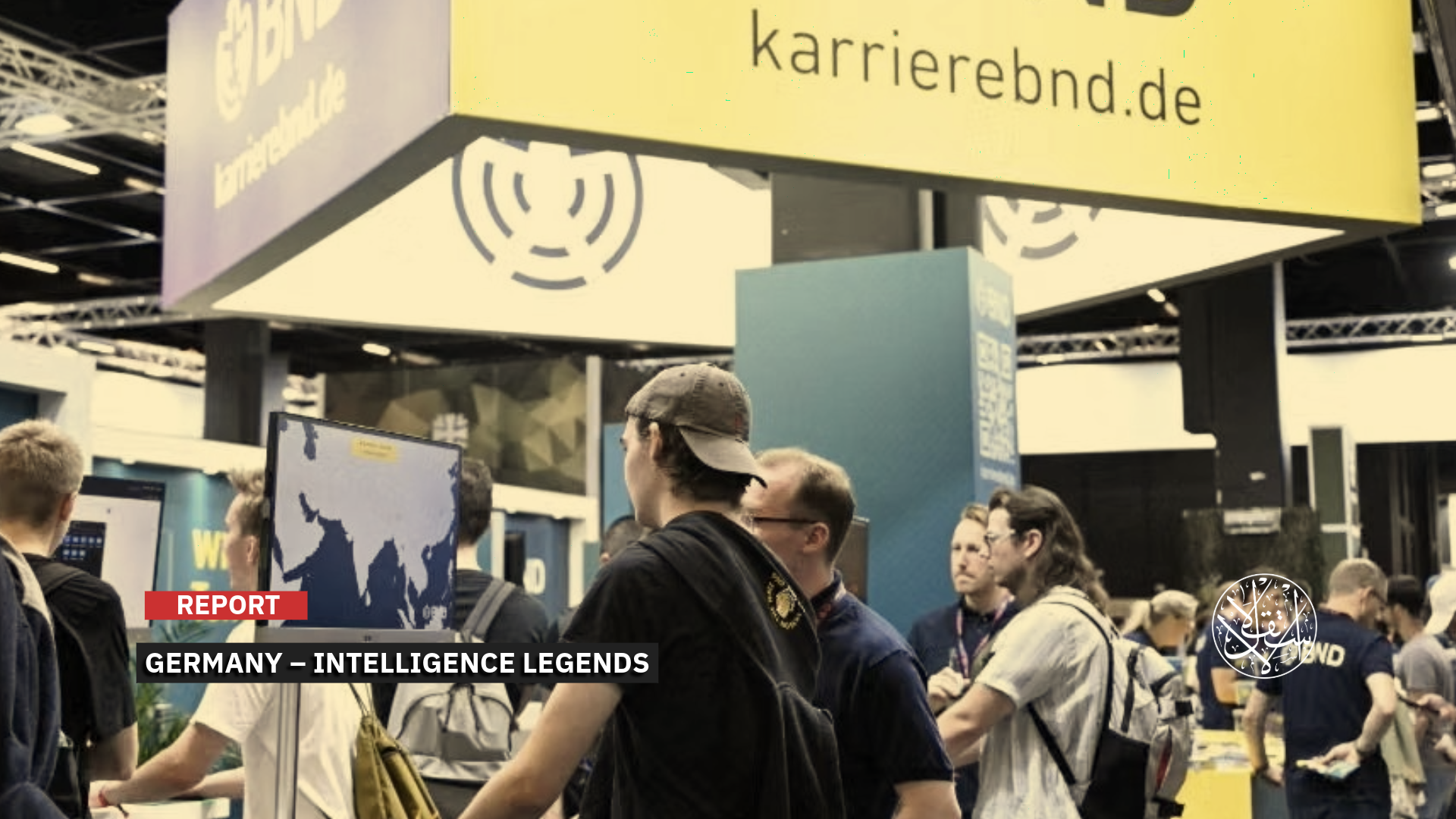
“Germany’s intelligence service is hunting for future spies at Gamescom 2026.”
Germany's Federal Intelligence Service (BND) is turning to video game arcades to recruit a new generation of cybersecurity talent, as Berlin prepares to bolster its capabilities against what it perceives as a growing Russian threat.
These moves come at a highly sensitive time for Germany, which is seeking to rebuild its military and intelligence capabilities in the face of the escalating Russian threat.
Since the 2022 Russia-Ukraine War, Germany has been subjected to a number of cyberattacks attributed to Moscow, and German concerns have intensified regarding the expansion of what Berlin calls Russia's hybrid warfare.
Earlier, the German army distributed shawarma wrappers in military camouflage colors, including a link to its recruitment website.
In mid-August, the German government approved a controversial bill that significantly expands the powers of its foreign and domestic intelligence services, allowing them to take proactive measures to counter threats, rather than simply gathering and analyzing information.
For her part, the head of the Federal Chancellery, Nina Farken, stated that the BND will, among other things, acquire the capability in the future to target and disrupt the IT systems of adversaries, as well as to shut down or disable the servers of cyber intrusion groups (hackers).

Secret Recruitment
In an unusual move, the BND is seeking to expand its intelligence recruitment base by targeting a group not traditionally considered a primary focus of spy agencies: video gamers and young tech talent.
The BND plans to send officials to Gamescom 2026 in Cologne, the world's largest video game trade show, in search of gamers with technical skills that could qualify them for work in intelligence.
The agency believes there is significant overlap between the skills acquired by some video game players and those needed by intelligence agencies to counter cyberattacks, particularly Russian attacks targeting critical infrastructure in Germany, according to The Telegraph.
Some applicants will undergo a five-stage test to assess their abilities in cybersecurity, hacking, programming, and responding to digital attacks.
The service will also offer visitors to the show the opportunity to try 'BND Legends', a game it developed specifically to showcase its work, which revolves around stealth, infiltration, and mission execution.
BND spokesperson Julia Lehner told The Telegraph: "We see a significant overlap between gamers and the talent we are looking for; They are tech-savvy, enjoy role-playing, completing tasks, and persevering until they succeed.
According to her, players currently recruited by the agency could become part of the new BND cadres, which will be formed as a result of legislative amendments currently under discussion.
Visitors to the computer games exhibition can try the game at the intelligence agency's booth. The game is set in a fictional country called 'Bitulan', which has developed a malicious program. The player is sent to Bitulan as a spy to gather classified information and prevent an impending disaster.
During gameplay, a remote-controlled game controller guides the player through an enemy military compound, while also evading drones monitoring the area.
Playing the game is not easy, requiring a high level of concentration and a strong memory. For example, the player must memorize the code for a door to unlock it later.
The player doesn't play this game alone; they are supported by a cybersecurity expert and a geography specialist, giving them a realistic understanding of the work in the field. The player can also retry whenever they want, so there's no need to fear failure.
Those interested in trying this game should head to the Gamescom gaming fair in Cologne. Currently, the game is not available online and cannot be played at home, but the BND plans to make it available on a gaming platform in the near future.
Lehner says that, like any other employer, the agency is looking for skilled employees. She emphasized that the agency's booth at Gamescom and the game it offers are effective tools for achieving this goal.
She added, "There are similarities between the people we want to recruit and the visitors to Gamescom: both are tech-savvy and enjoy switching roles, assuming different identities, undertaking missions, and uncovering connections."
According to Lehner, the common belief that recruitment is solely through covert means is incorrect. People can apply for jobs normally, and the new game represents one of its modern methods for attracting talent.

Controversial Powers
The BND was founded in 1956, a few years after World War II, in an attempt to build a new intelligence agency distinct from the legacy of Nazi regime institutions such as the Gestapo and the SS.
However, German officials believe that the restrictions imposed on the agency at that time are no longer suitable for the nature of current threats.
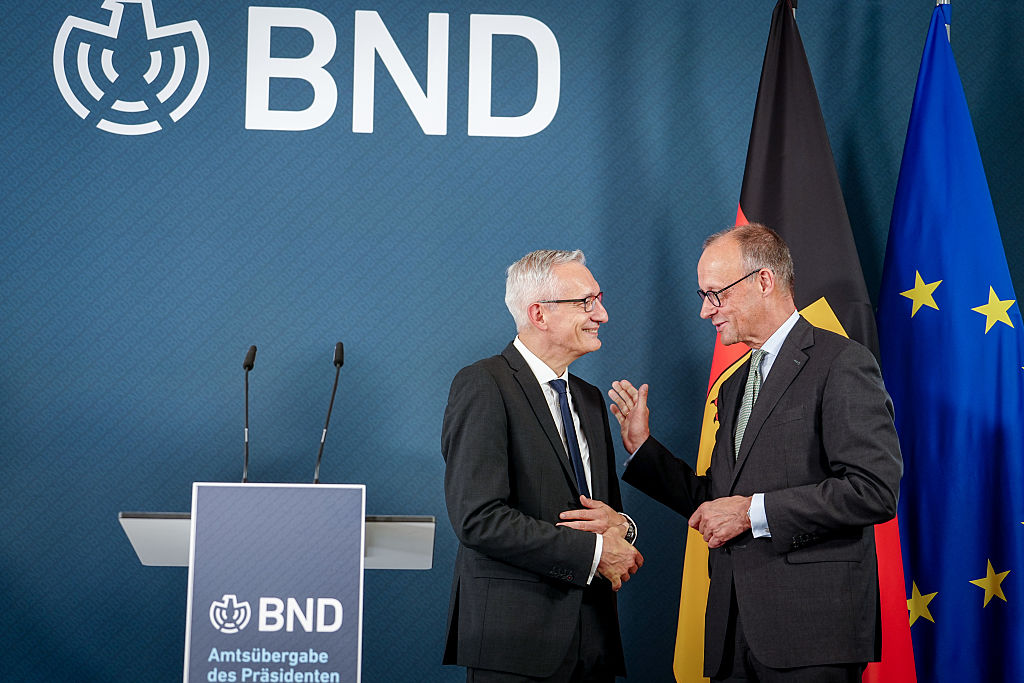
In a related development, the recruitment drive comes at a time when German intelligence agencies are undergoing a major overhaul approved by Chancellor Friedrich Merz's government, aimed at bolstering their capabilities in the face of what Berlin perceives as a growing Russian threat.
Merz’s cabinet has recently approved a counter-hacking provision allowing the agency to strike back against cyberattacks, with tactics that may include targeting foreign intelligence databases or weapons production networks.
The reforms grant intelligence agents new powers, including the authority to conduct sabotage operations abroad and use their official weapons.
However, the most controversial provision is the so-called counter-hacking clause, which allows the intelligence agency to respond to cyberattacks targeting Germany.
German Interior Minister Alexander Dobrindt said the reforms would give Germany real intelligence services.
Nevertheless, the expansion of the intelligence agencies' powers is facing criticism from both the right and the left.
The Left Party (Die Linke) warned that expanding surveillance powers could push Germany toward a surveillance state model, while the Alternative for Germany (AfD) party raised concerns about privacy protections.
However, it seems Germany wants to keep pace with the nature of modern warfare, where battlefields are no longer limited to trenches, aircraft, and missiles, but have also moved to keyboards, servers, and digital networks.
The BND's move reflects a broader adaptation across Western intelligence services as warfare and espionage become more digitized.
Recruiting at a gaming convention is an acknowledgment that the next generation of case officers and analysts may be more comfortable behind a console than in a lecture hall.
Despite all these reforms, BND agents will still have some time before they become a full-fledged German version of James Bond. The agency, for example, has yet to acquire the most iconic attribute of the famous British agent: a license to kill.
Cyberattacks
European services now face state-backed intrusion campaigns that grow faster than their hiring pipelines.
Chinese groups, for instance, doubled their attack volume after handing routine work to artificial intelligence (AI) tools.
North Korea illustrates the other half of the problem. Researchers recently built a fake Decentralized Finance (DeFi) startup and hired three suspected North Korean developers to watch them from the inside.
In addition, Germany has been subjected to a series of cyberattacks since the start of Russia’s full-scale invasion of Ukraine.
Berlin has grappled with Russian covert operations on its soil, foreign disinformation campaigns and hostile probes of critical infrastructure, including energy and transport networks.
In March 2024, Russia intercepted a recording of a classified conversation between senior German Air Force officers discussing military strategy related to the war in Ukraine.
Each incident has sharpened questions in the Bundestag about whether agencies have enough linguists, coders and analysts with the right mix of technical skills and cultural literacy.
German concerns are not limited to cyberattacks. Security services have suspected Russian attempts to target officials in defense companies, set fire to factories supplying Ukraine with military equipment, and even plant explosives at German airports.
In this new world of espionage, young agents may find themselves facing missions unlike the traditional image of a spy moving in the shadows with a fake passport.
Their missions may include hacking into Russian intelligence databases or infiltrating networks linked to Russia’s arms industry, as part of what Berlin calls hybrid warfare.
German Interior Minister Alexander Dobrindt said on August 9 that the country faces daily threats in the framework of the so-called hybrid war.
According to him, we are talking about espionage, sabotage, cyber-attacks and covert operations by foreign states aimed at destabilizing or harming Germany.
Sources
- Germany’s spy agency looks to hire gamers as secret agents
- Germany's Spy Agency Is Recruiting Cyber Talent at Gamescom 2026
- Germany Turns to Gamers to Plug Spy Skills Gap in New BND Recruitment Push
- Gamers turning spies? German intelligence sets up booth at Gamescom to recruit a new generation of espionage talent