African Sahel Countries May Activate a Unified Military Force: What Are the Expected Scenarios and Obstacles?
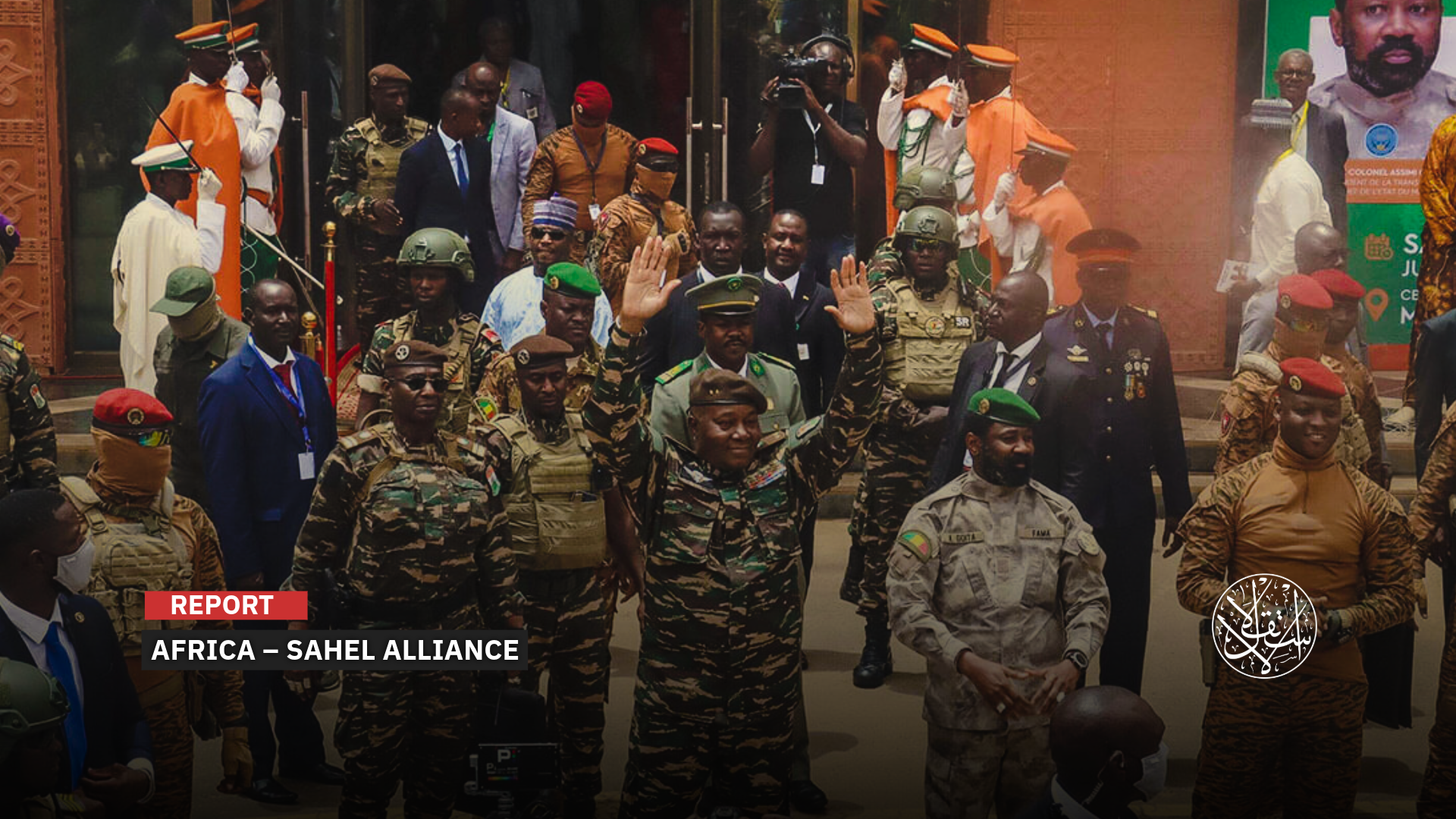
“The joint military force is expected to comprise approximately 5,000 troops.”
Faced with escalating security challenges, the Sahel Alliance countries—Mali, Burkina Faso, and Niger—announced accelerated steps to activate a joint military force, amid questions about its objectives and potential obstacles to its effectiveness.
The joint initiative was announced during a high-level meeting hosted by the Nigerien capital, Niamey, on November 7, which brought together the defense ministers of the Sahel Alliance countries.
The meeting discussed ways to accelerate the activation of the joint military force, the idea for which was announced in early 2025, in light of the increasing security threats in the region.
Rapid Developments
The meeting, chaired by Nigerien President Abdourahmane Tiani and attended by the defense ministers of the three countries, discussed unified command arrangements, information exchange mechanisms, and field coordination to ensure the force's readiness to carry out its missions.
The force is expected to comprise approximately 5,000 troops and will be headquartered in Niamey at the former base of the French Operation Barkhane, under the command of Burkinabe Colonel Eric Dabire.
Burkina Faso's President Ibrahim Traore affirmed that the battalions are being equipped according to standardized criteria, even though each country procures its own equipment separately.
This move comes amid the withdrawal of French and European forces from the Sahel region and a decline in coordination with UN missions, prompting the alliance countries to adopt a self-defense strategy.
This strategy relies on national capabilities to confront transnational armed groups, particularly in the border region between the three countries.
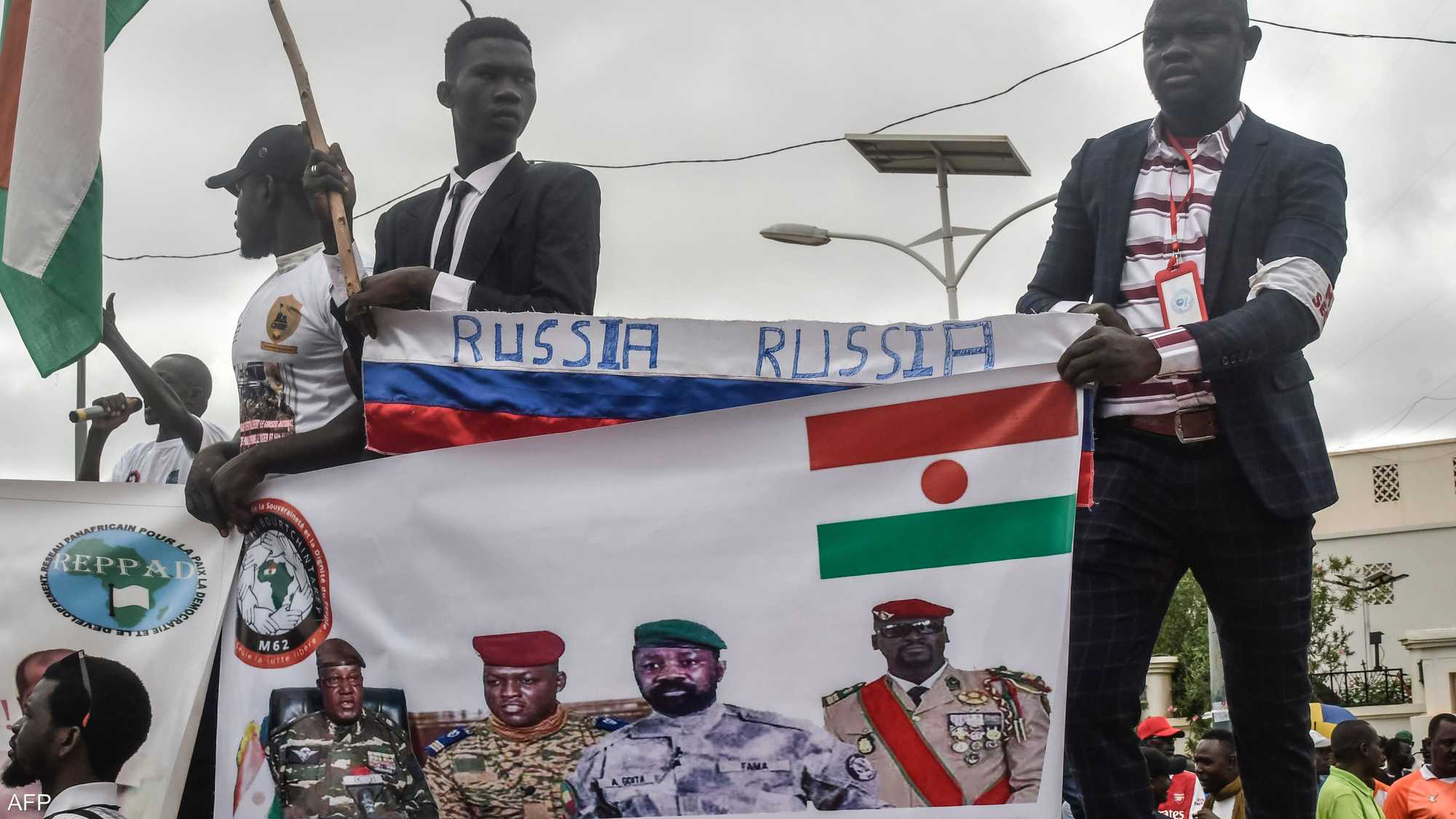
The meeting reflects the member states' desire to redefine the regional security equation, moving away from direct dependence on international powers, in light of rapidly evolving geopolitical landscapes and the growing threat of jihadist groups, which have been besieging Mali's capital, Bamako, for over two months.
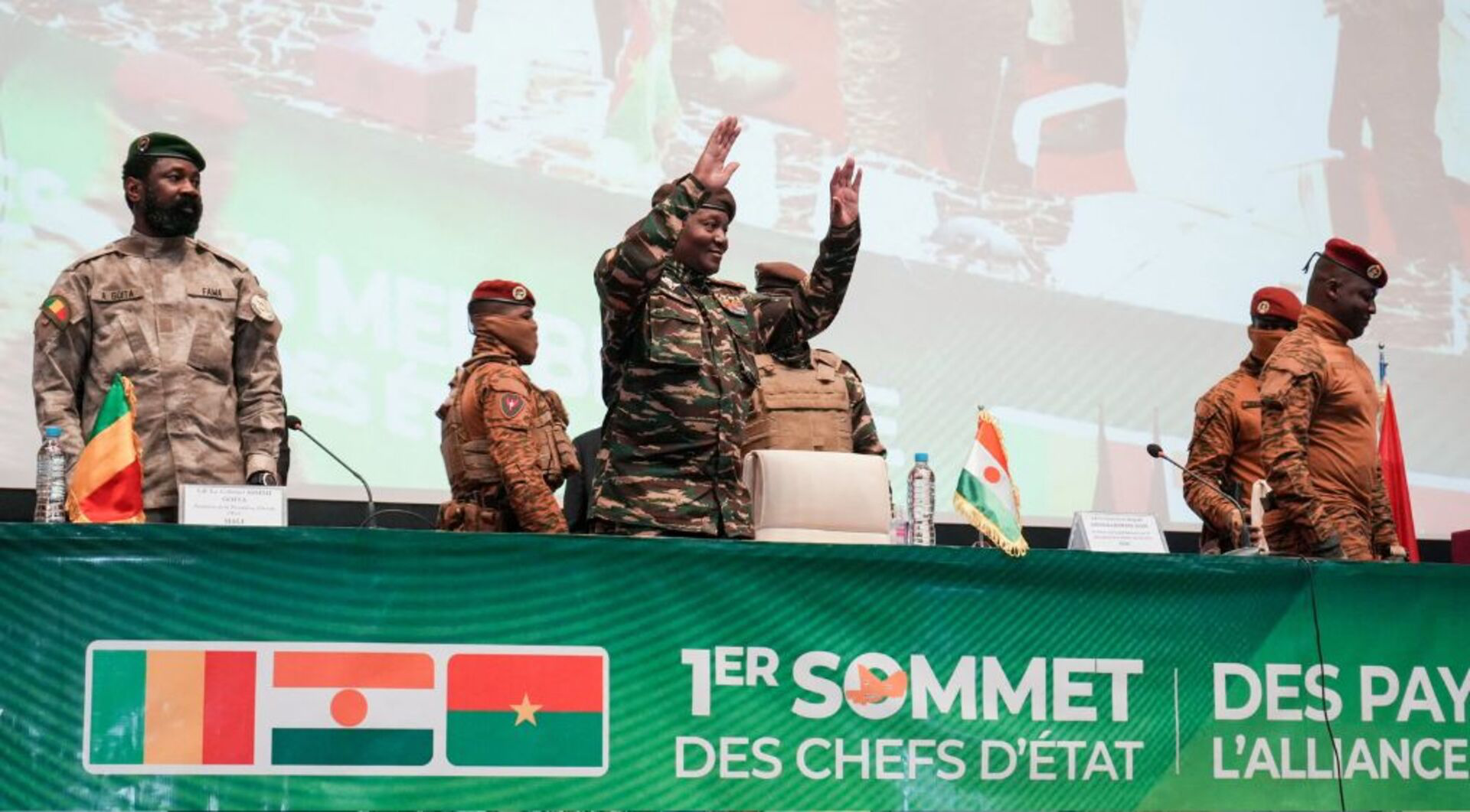
It is worth noting that the Alliance of Sahel States (AES) is a confederation established by the ruling military councils of Mali, Burkina Faso, and Niger in July 2014.
The confederation's objectives include military coordination, combating terrorism and organized crime, eliminating artificial and proxy organizations, as well as political and diplomatic coordination, and promoting trade and cultural exchange.
Common Goals
In his analysis of this development, Moroccan researcher Zakaria Aknouch, specializing in African affairs, told Al-Estiklal that the announced unified force is an extension of the joint defense alliance signed by the Sahel countries in September 2023, coinciding with the imposition of sanctions by the Economic Community of West African States (ECOWAS).
He added that the military coordination between these countries aims to combat terrorism and organized crime and to continue activating the tripartite alliance, noting that the security threat remains, and the results achieved in this regard are inconsistent.
Among the major challenges facing the activation of this unified force is the deteriorating humanitarian situation in the region.
The UN published a report in October indicating that there are nearly 4 million displaced people in the Sahel region due to violence and insecurity.
He described the establishment of the unified force as a collective step adopted by the three countries, noting that it comes in the context of withdrawing from certain international and regional organizations whose strategies conflicted with those of the three nations.
This wasn't limited to ECOWAS; the three countries also jointly withdrew from the International Criminal Court on September 22 and severed ties with the International Organization of the Francophonie (OIF) in March.
“These confrontational steps largely found considerable popular support, providing a strong incentive for the military to proceed. Many citizens of these countries were convinced that the ruling military regimes were striving for sovereignty and independence,” he said.
While acknowledging that some measures had yielded tangible results, particularly in renegotiating with companies to increase mineral exploitation quotas, he emphasized that the reality indicates that the alternatives offered by these transitional military regimes are, in some respects, not significantly different from what had been previously offered. Present.
Regional Partners
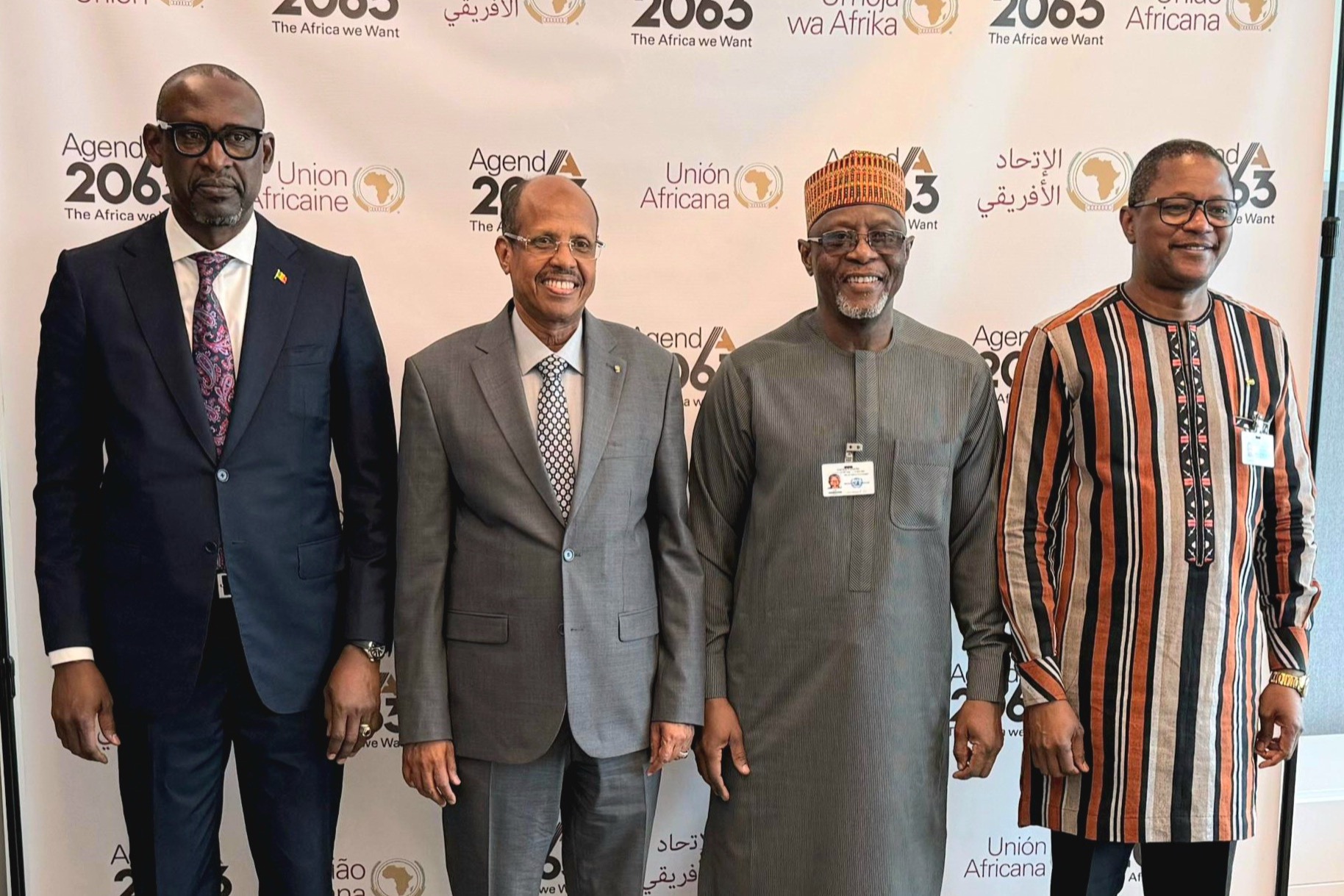
This new joint meeting follows previous moves by the alliance, as the foreign ministers of the Sahel countries met with the Chairperson of the African Union Commission, Mahmoud Ali Youssouf, to discuss cooperation between the two organizations, including counterterrorism efforts.
According to the African Qiraat website on September 25, the ministers, Abdoulaye Diop (Mali), Bakary Yaou Sangare (Niger) et Karamoko Jean Marie Traore (Burkina Faso), outlined the Sahel countries' main expectations of the African Union in light of the ongoing crisis in the region.
On the sidelines of the 80th session of the UN General Assembly, they stressed that the organization's decisions must take into account the realities on the ground.
Traore stated, “We must correct misconceptions by engaging with our reality and interacting directly with the regions… All of Africa, not just the Sahel, is facing terrorism… We cannot talk about combating terrorism without the coalition countries.”
The ministers also expressed their belief that terrorism in the region persists largely due to external interference and support from neighboring countries.
In turn, Youssouf indicated that he was aware of the coalition ministers’ concerns and promised that the Union, under his leadership, would strive to adapt its decisions to national realities and avoid isolating member states of the Sahel Alliance.
He stated that the Commission would continue to support and advise the Alliance and would also take its criticisms into account.
As part of this outreach to the regional environment, Senegalese Defense Minister General Birame Diop received a high-level Malian military delegation led by Colonel Amara Maiga, Technical Advisor for Cooperation at the Ministry of Defense, to discuss ways to strengthen military cooperation between the two countries.
According to the African Perceptions website on November 6, these talks come amid deteriorating security in Mali.
This country is facing a severe fuel crisis as a result of the blockade imposed by the Jama'a Nusrat ul-Islam wa al-Muslimin (JNIM) group through its repeated attacks on supply convoys.
The two countries share mutual security and economic interests. Senegal is a key fuel supplier to Mali, which was Senegal's largest African trading partner in 2024, accounting for more than half of its exports to the continent.
Obstacles to Implementation
Senegalese political analyst Rik Le Mouaya Tamba believes that the political will among the coalition leaders is clear, but the operational capacity to create an effective military response still needs to be demonstrated.
He explained to Al-Estiklal that the national armies of the three countries, despite their experience, face ongoing challenges, including a shortage of heavy equipment, logistical deficiencies, and weak air coordination.
He emphasized that all these factors and limitations directly impact the strategic effect of joint initiatives, including the military strength of the alliance.
In addition to military coordination, Le Mouaya Tamba stated that the alliance could establish the foundations for a counterterrorism doctrine specific to the Sahel region.
He stressed that it is no longer just about winning the war against armed groups, but about regaining effective control over lost territories, as well as restoring the state's presence in local communities.
He believes that this ambition also reflects a desire among the coastal elites to reclaim their security role, along with better integrating local social structures into the security response.
He pointed out that the Sahel Alliance presents itself as a symbolic turning point in the pursuit of security sovereignty in West Africa, as it expresses the will of three regimes to reclaim their strategic destiny in light of the failure of regional mechanisms and a lack of trust in external partners.
“Military cooperation among the alliance's member states will constitute a unique model in the region, if it is implemented through the establishment of a unified command, joint funding, and transparent accountability mechanisms, thus enhancing the credibility of this approach,” he added.
He indicated that there is a second scenario of stagnation, meaning a weak implementation of the joint force concept due to a lack of resources, ongoing internal competition, and increasing dependence on external actors, which could transform this joint force into merely a facade for the alliance.
The most ambitious scenario, according to Le Mouaya Tamba, is to expand this joint force or integrate it with other African frameworks, to become a laboratory for comprehensive African security governance, based on the principle of independence from external influences and reliance on local solutions.
It concluded that the assessment of the coalition's authority will not be based solely on strengthening joint military power, but also on its ability to transform governance practices, restore the trust of coastal communities, and integrate its actions into the logic of sustainable African integration.