A Project Without an Incubator: Why Is Hikmat Al-Hijri’s Separatist Plan Facing a Dead End?
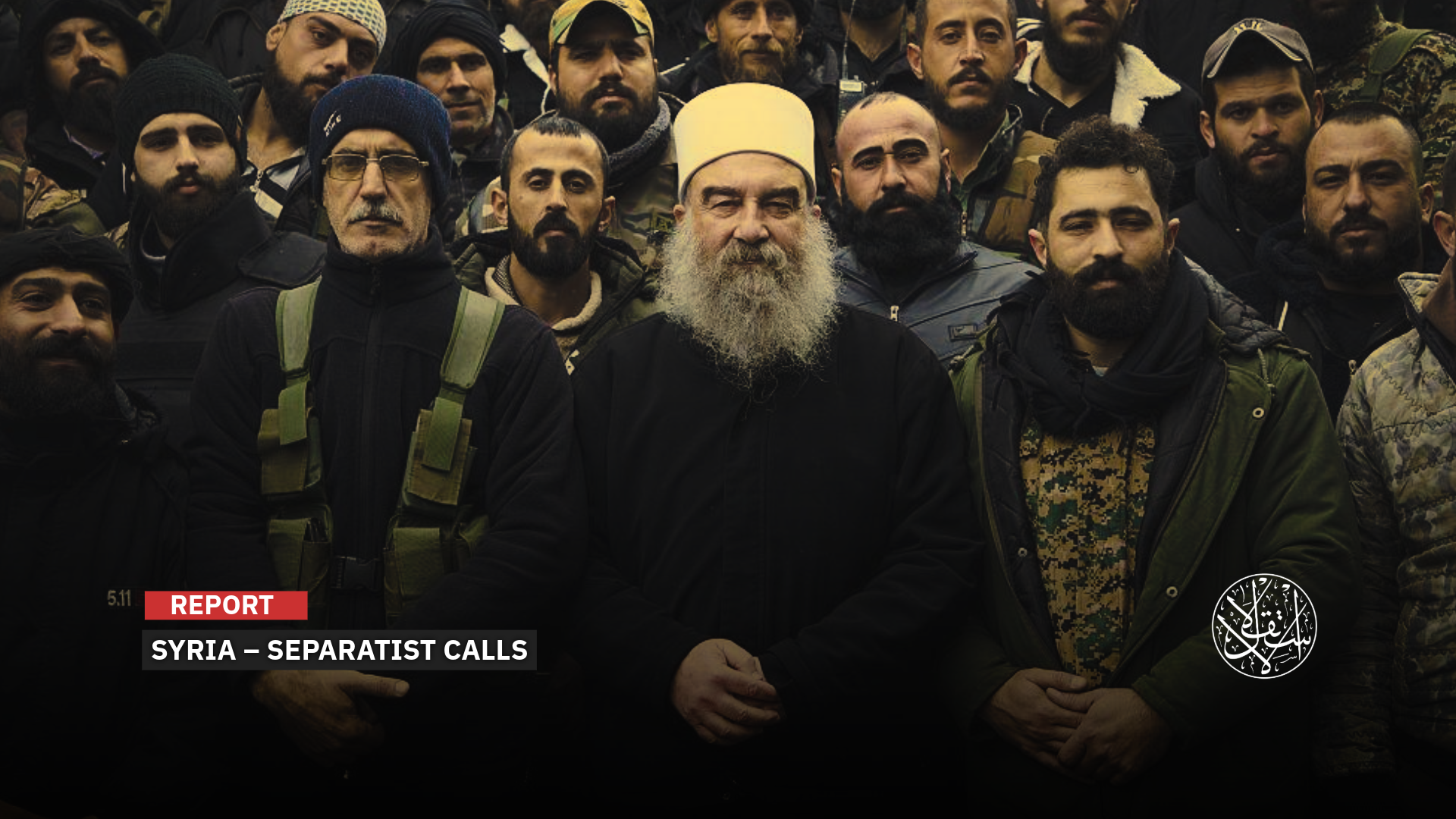
“Al-Hijri recently renewed his call for the independence of southern Syria.”
The Syrian landscape has always been characterized by the complex relationships between its social components, particularly among certain minorities.
However, this rapprochement has never reflected a unified national stance or vision. Rather, it has often been exploited politically by limited parties seeking to use it to serve their own agendas.
This was clearly demonstrated in the attempts by Sheikh Hikmat al-Hijri, head of the Druze spiritual authority in the Suwayda governorate, to incite other groups to adopt separatist demands—proposals he has been promoting since July 2025.
Secessionist Projects
In a speech based on appealing to minority ties, Sheikh Hikmat al-Hijri, who is promoting a separatist plan, incited members of the Alawite community to secede from Syria, emphasizing his support for their right to self-determination.
In a new video message broadcast on December 12, al-Hijri called on Sheikh Ghazal Ghazal, head of the Supreme Alawite Islamic Council in Syria and abroad, to work towards what he termed determining their fate in the Syrian coastal region.
On November 15, several areas in the Syrian coastal region witnessed demonstrations demanding the implementation of decentralization and the release of detained members and officers of the ousted Bashar al-Assad regime implicated in the bloodshed of Syrians.
Recently, al-Hijri reiterated his call for the independence of southern Syria, asserting that this option has become, in his words, the only demand on the table for negotiations with Damascus.
Al-Hijri's latest appeal to the Alawite community in the coastal region coincided with the US House of Representatives' vote to repeal sanctions imposed on Syria under the Caesar Act, which was passed in 2019 to punish the ousted Assad regime for the crimes it committed against the Syrian people over the past 14 years.
In contrast, Sheikh Ghazal Ghazal, residing abroad, called for a general strike, urging Alawites to remain in their homes for five days, beginning December 8th, in a video statement published on the council's Facebook page.
He also attacked the Syrian government, claiming it was forcing citizens to celebrate the anniversary of the fall of Bashar al-Assad's regime.
However, these calls received little response in the provinces where Alawites are concentrated, particularly in Hama, Homs, Tartus, and Latakia.
Observers believe that the geographical dispersion of Alawites, living in scattered villages and across multiple provinces, renders secessionist projects unrealistic.
They pointed out that the proposal to establish a separate region encompassing the Syrian coast and the cities of Homs and Hama and their surrounding rural areas clashes with the diverse demographic reality of these regions, where various population groups coexist, including Alawites, Sunnis, Christians, Ismailis, and Murshidites.
In this context, Syrian President Ahmed al-Sharaa, on November 27, during his participation via video conference in a broad meeting that included popular and official figures in Latakia Governorate to promote civil peace and social stability.
He affirmed that Syrian geography is interconnected, and it is impossible for the coast to have an independent authority isolated from the rest of the country.
He emphasized that the Syrian coast is a priority for the state, given its location on global trade routes, noting that he understands the people’s legitimate demands, but that some of them are politically motivated.
A State of Impasse
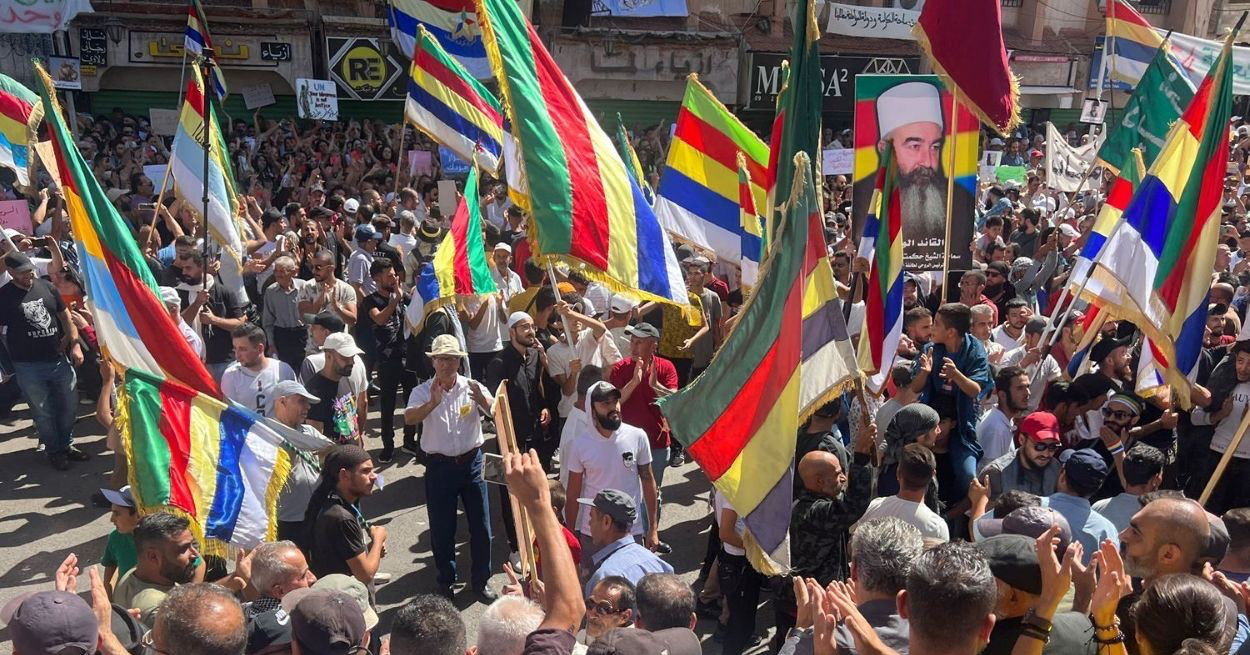
In this context, the gradual decline of Hikmat al-Hijri's movement began to become clearly visible within the Suwayda Governorate, particularly following the arrest campaign carried out in late November against opponents of his projects, most notably the call to geographically separate Suwayda from Syria and establish a new political entity under Israeli protection.
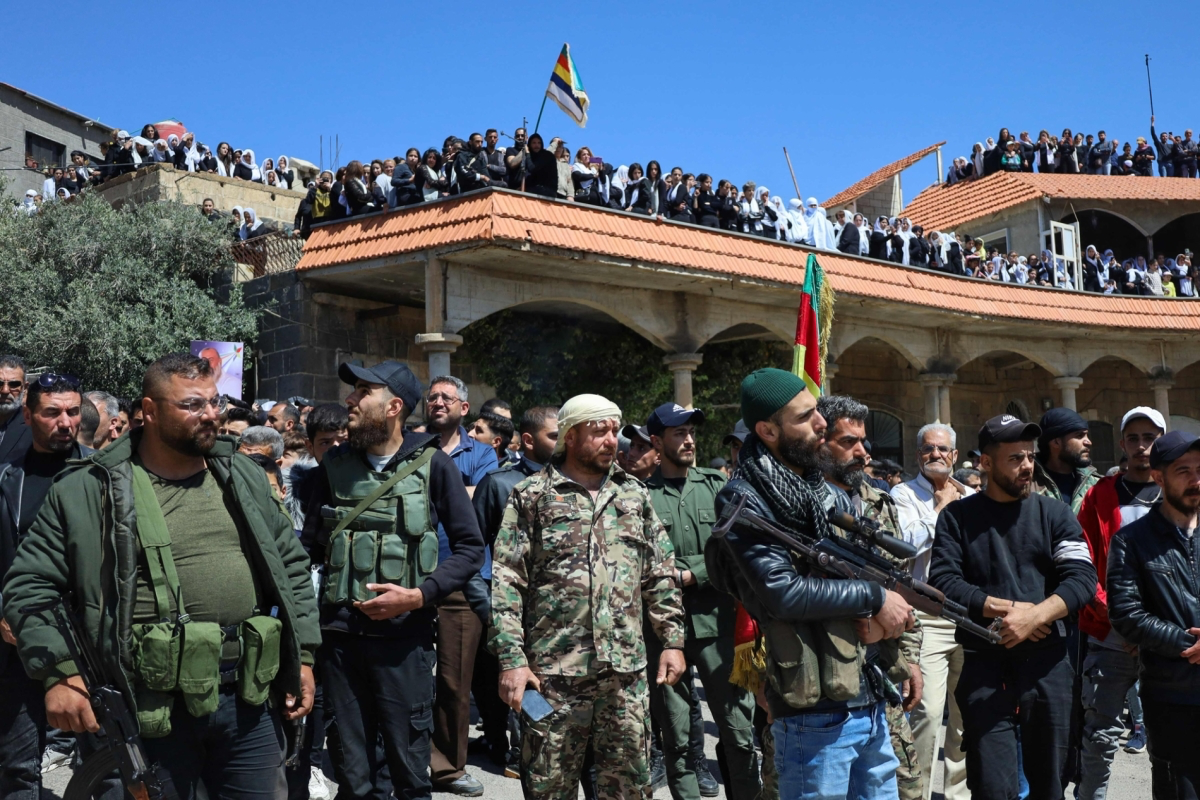
During that campaign, the deaths of Sheikh Raed al-Mutni and Sheikh Maher Falhout were announced, after they were subjected to torture while detained by the National Guard militia, which al-Hijri had formed on August 23.
Al-Hijri's group accused al-Mutni and Falhout of treason and communicating with the Syrian government, according to a statement issued by the National Guard militia.
The militia claimed to have uncovered a conspiracy aimed at carrying out a serious internal security breach to pave the way for what it described as a barbaric attack targeting Suwayda and its people, in exchange for money tainted with treason, according to the statement.
These developments come at a time when the Suwayda is witnessing demonstrations during which Israeli flags were raised, and calls were made for independence from Syria and the opening of a crossing into the occupied territories.
In mid-September, activists in Suwayda launched a campaign entitled ‘The Right to Self-Determination’, which aimed to collect written signatures from residents of villages and towns demanding what they described as the right of the people of Suwayda to determine their own destiny.
This followed al-Hijri’s announcement on August 25th of his demand for a separate region, coinciding with his efforts to unify the armed factions in Suwayda into a single entity.
However, the failure of the separatist project in Suwayda, along with the emphasis placed by the United States, Arab states, and Turkiye on the importance of preserving the unity of Syrian territory, has led al-Hijri to further exacerbate the situation within Suwayda.
In addition, al-Hijri has repeatedly rejected all calls to enter into serious negotiations with Damascus to reach a political settlement that would allow the return of Syrian state institutions to Suwayda .
This rejection comes despite the Syrian government's announcement on September 16 of a roadmap, backed by the United States and Jordan, aimed at establishing reconciliation in the province. This roadmap continues to be rejected by al-Hijri's group, which persists in calling for the secession of Suwayda from Syria.
In a clear indication of al-Hijri's continued intransigence regarding integration into the new Syrian state, the so-called Supreme Legal Committee in Suwayda, formed by al-Hijri, rejected the roadmap for resolving the Suwayda crisis announced by the Syrian Ministry of Foreign Affairs.
Based on these developments, observers believe that the project led by al-Hijri to secede from Syria faces a genuine impasse because it lacks sufficient regional or international support to guarantee its continuation, in addition to declining popular support within the local community in Suwayda, which is experiencing difficult living conditions amid ongoing security tensions.
Political Goals
In this context, Brigadier General Abdullah al-Asaad, head of the Syrian Rasad Center for Strategic Studies, confirmed in an interview with Al-Estiklal that the Syrian landscape has historically witnessed close relations between some minorities.
He pointed out that the people of Jabal al-Arab and the Alawite inhabitants of the coast have, at various times, supported one another in different circumstances.
He added that this historical reality does not necessarily reflect the position of all these groups, explaining that at each stage, a limited number of individuals emerge who attempt to exploit the factor of closeness between minorities and play on this sentiment to achieve political or personal goals.
He pointed out that al-Hijri represents only a very narrow segment within Suwayda, noting his attempts to bolster his position by leveraging certain Alawite circles, in addition to the SDF forces, with the aim of inciting public opinion, exploiting a victimhood narrative, and gaining sympathy, at a time when Damascus is regaining the political and diplomatic initiative.
He explained that the available information indicates the presence of officers from the remnants of Bashar al-Assad’s ousted regime, originating from the coast and belonging to the Assad sect, who are currently stationed in Suwayda, under the command of al-Hijri and his militias, and participating alongside him in the fighting.
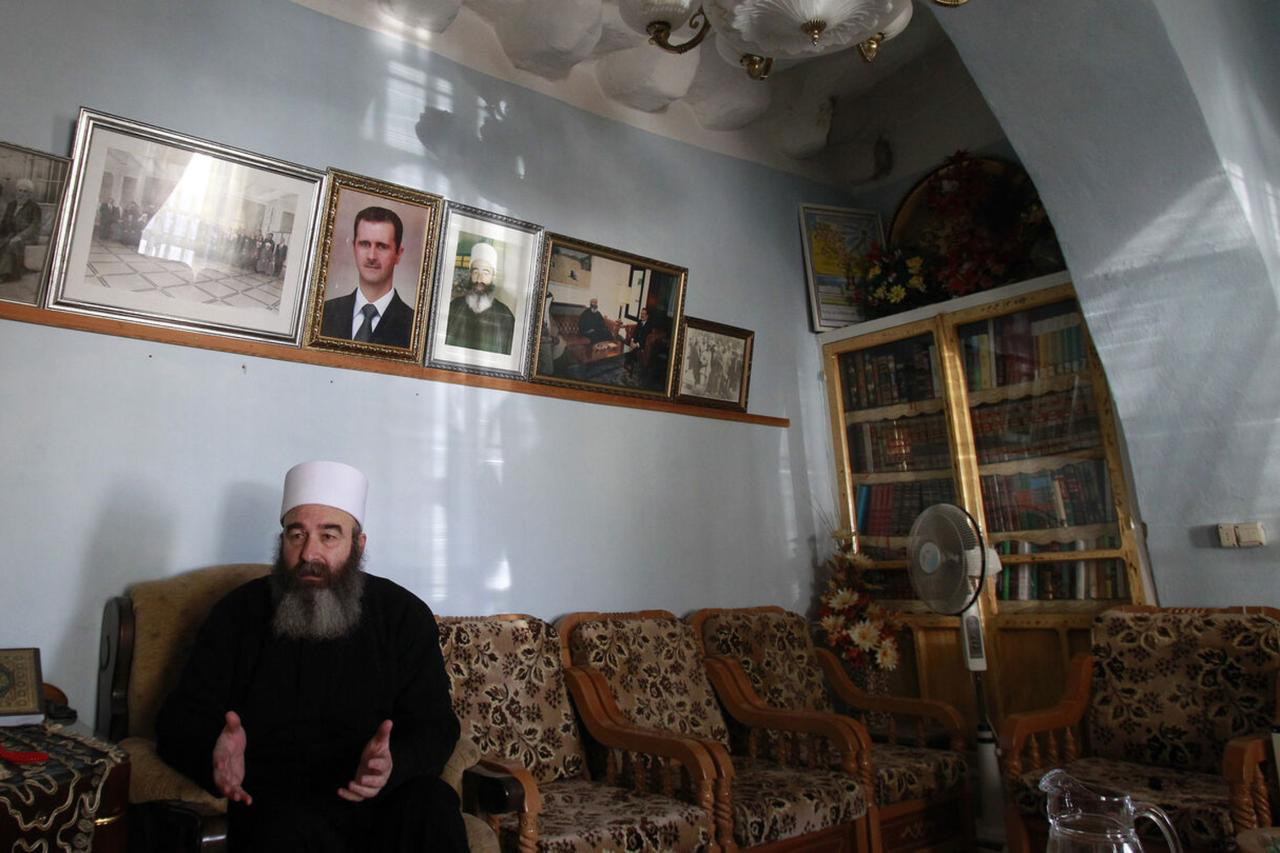
According to Mr. al-Asaad, al-Hijri is working to raise the issue of self-determination for the Alawites on the coast, in an attempt to boost the morale of the regime's remnants and officers working with him, maintain their loyalty, and prevent them from abandoning him. This indicates his efforts to protect his project from any potential internal conflict.
He added that these attempts coincide with the behavior of the SDF forces at the present stage, as they are playing for time, awaiting the outcome of developments in Suwayda, amid increasing talk of coordination between them and al-Hijri.
He concluded that “relations between some minorities in Syria are not a recent phenomenon, but rather have deep historical roots, but this does not mean that all members of the Druze and Alawite communities stand on the same side.”
He stressed that these parties represent only a limited group trying to impose themselves as a player in a highly complex scene, coinciding with the birth of the new Syria.
Sources
- Tarif calls on Washington to play a greater role in Suwayda [Arabic]
- Demonstrations, attacks, and conflicting demands... What happened on the Syrian coast? [Arabic]
- President Al-Sharaa: I understand the legitimate demands of the people on the coast, and state institutions are indivisible [Arabic]
- Al-Hijri reiterates demands for secession in southern Syria and calls for international support [Arabic]