A Moment of Reckoning: What the ‘Pledge and Commitment’ Document Says About Power in the UAE
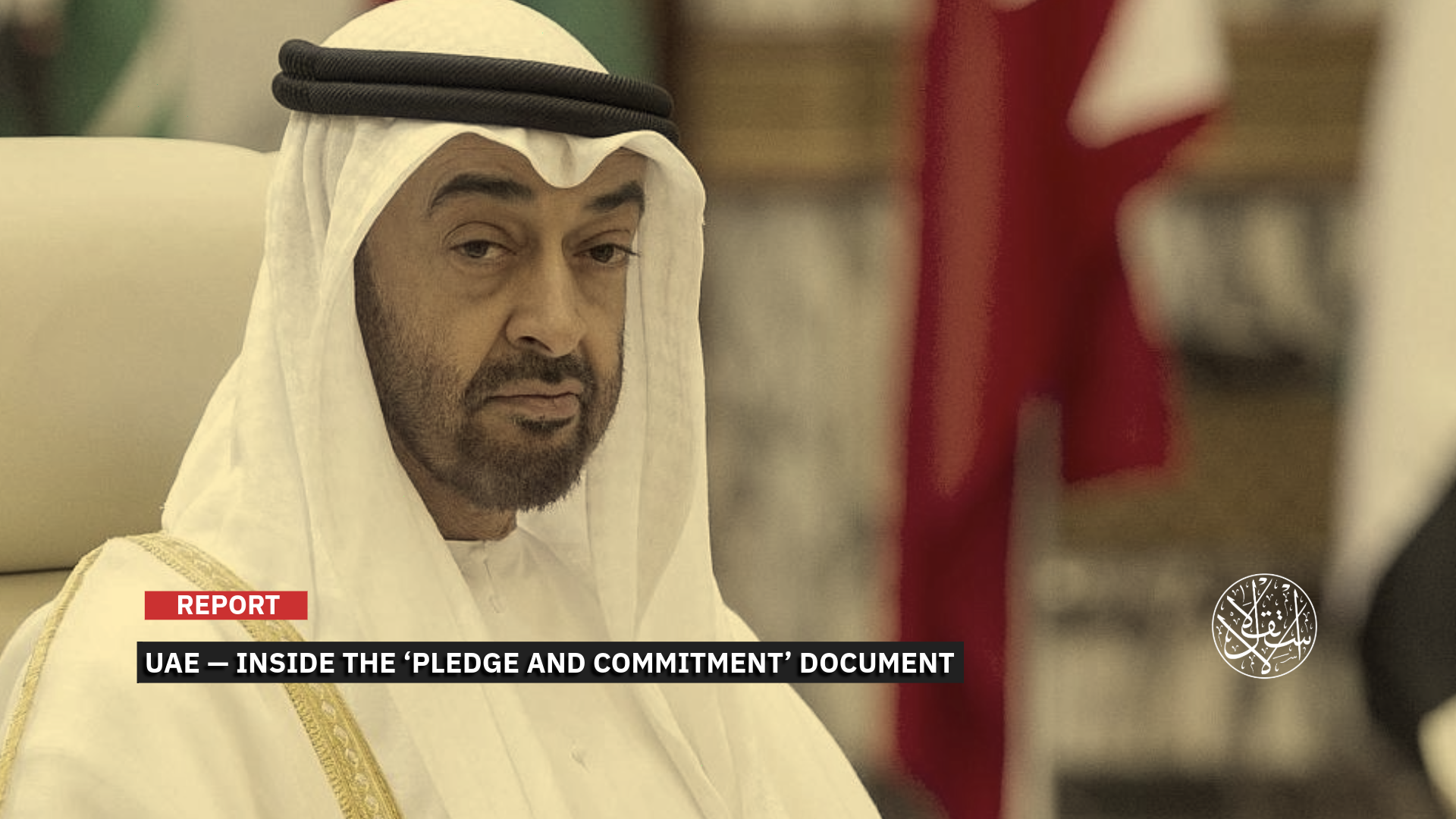
The document appears to be a political effort to reaffirm unity around bin Zayed.
At a time of intense regional turbulence, and months after the U.S.-Israeli War on Iran and the strikes and tensions that accompanied it weakened the UAE’s image as a safe destination for business and investment, Abu Dhabi launched a nationwide campaign calling on citizens, residents, and institutions to sign a document expressing support for President Mohammed bin Zayed al-Nahyan.
Officially, the initiative was presented as an expression of loyalty and a means of strengthening national unity. Yet its timing, broad scope, and emergence amid growing discussion of tensions within the country’s ruling structure have raised deeper questions about its political significance and the extent of cohesion within the UAE’s federal system.
A Pledge of Commitment
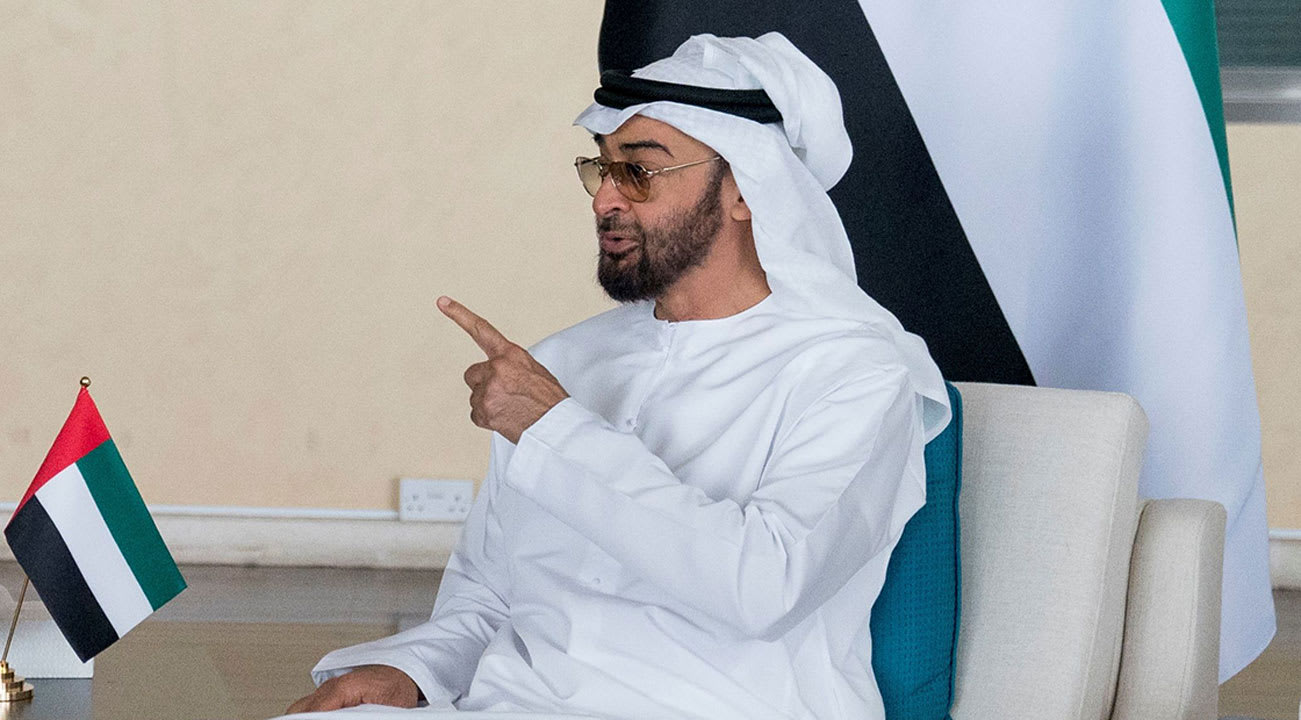
The “Pledge and Commitment” initiative was launched in Abu Dhabi on June 3, 2026, under the patronage of Nahyan bin Mubarak al-Nahyan, the UAE’s minister of Tolerance and Coexistence, during an event hosted by the Abu Dhabi Energy Center that drew more than 4,800 attendees, including citizens, residents, students, investors, academics, business leaders, and representatives of expatriate communities.
According to Emirati media reports, the initiative called on the public to declare their support for President Mohammed bin Zayed al-Nahyan, in recognition of what organizers described as his role in strengthening security and stability and enhancing the UAE’s international standing.
The document was not presented as a limited ceremonial gesture. Instead, it was launched as an open public campaign, supported by a dedicated website and QR code that allows electronic signatures, with plans to involve companies, universities, government bodies, and other institutions.
According to the official narrative, the pledge rests on four pillars: promoting coexistence and national unity, embracing the leadership values embodied by bin Zayed, strengthening social responsibility and national identity, and expressing gratitude for the security, stability, and prosperity enjoyed by the country.
What stands out, however, is not only the content of the initiative but also the audience it targets. The campaign extends beyond Emirati citizens to include residents in a country where foreigners make up the majority of the population and represent more than 200 nationalities, according to UAE Foreign Ministry figures.
That broad scope gives the call to sign a loyalty document a political and social significance that goes beyond a symbolic expression of gratitude, linking non-citizen communities to a wider narrative of unity around the leadership.
It also raises a central question: Why does the UAE need a public signature campaign in support of its head of state?
Part of the answer may lie in the timing. The initiative comes after one of the most challenging security periods the UAE has faced since the outbreak of the U.S.-Israeli War on Iran in February 2026.
After a series of shocks that affected both the country’s economic and security landscape—particularly in Dubai and Abu Dhabi—the narrative of stability and openness that underpins the UAE’s economic model faced growing pressure.
In that sense, the document can be seen, at least in part, as an effort to reinforce the image of a cohesive and stable state at a moment when risks are no longer confined to distant regional conflicts but have begun to affect strategic sectors such as ports, aviation, real estate, energy, and foreign investment.
Safe Haven Under Pressure
Since the outbreak of the U.S.-Israeli War on Iran, Gulf states have become increasingly exposed to the dynamics of deterrence and retaliation.
In March 2026, Reuters reported that Iranian strikes on Gulf countries could push them toward closer alignment with a broader U.S.-led coalition after attacks targeted ports, cities, and energy facilities across a region critical to global energy supplies.
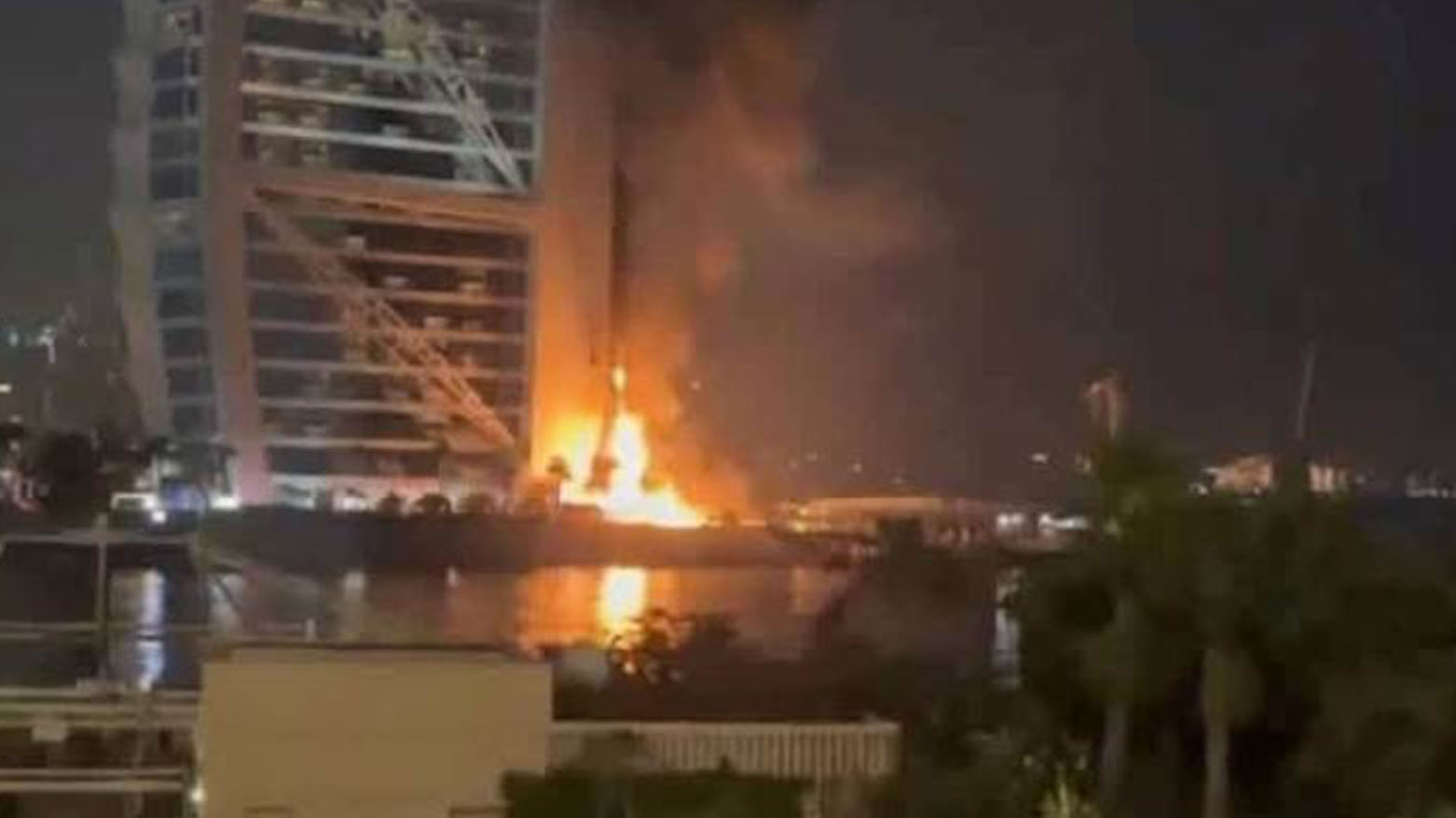
In May 2026, Reuters also reported a drone-related fire at the Barakah Nuclear Energy Plant in Abu Dhabi, noting that the UAE had been among the Gulf states most exposed to Iranian strikes.
Reuters further reported partial disruptions at the ports of Fujairah and Khor Fakkan, both located on the Indian Ocean outside the Strait of Hormuz and considered vital arteries of the Emirati economy.
The impact of these developments extended beyond security concerns, touching one of the UAE’s most valuable assets: its reputation as a safe haven for capital and expatriates.
In March 2026, The Guardian reported a downturn in the UAE real estate market following the Iranian strikes, noting that shares in Emaar and Aldar fell by around 5 percent, while new bond issuances nearly came to a halt amid the sector’s heavy reliance on foreign investors and off-plan property sales.
The Financial Times, citing official data, reported that one in eight British residents had left the UAE since the outbreak of the war—roughly 30,000 people—amid security concerns and disruptions to some educational services.
Meanwhile, in a report titled “The Unravelling of Dubai as a SafeHaven,” The New Yorker argued that Iranian missile and drone attacks had shaken residents’ sense of security, even though air defense systems successfully intercepted most of the projectiles.
A Difficult Test
Against this backdrop, the “Pledge and Commitment” document carries a meaning that extends beyond a celebration of Mohammed bin Zayed al-Nahyan’s leadership. The UAE, a country that has built its image on hard security and economic openness, now faces an unfamiliar test: how can it maintain the flow of investors and residents when Dubai and Abu Dhabi themselves become part of a regional threat zone?
From this perspective, the document appears less as a ceremonial gesture and more as a symbolic response to a broader moment of uncertainty. It presents a collective image of citizens, residents, and institutions expressing support for the leadership at a time of heightened risks, reflecting an attempt to restore confidence both at home and abroad.
It is not accidental that the document emphasizes security, stability, and prosperity—the very concepts that were put under pressure during the war. When ports, airports, real estate markets, or energy facilities come under threat, rebuilding political and economic confidence becomes more than a symbolic exercise; it becomes a strategic necessity.
Yet beyond external pressures, the document also emerges amid growing debate over the structure of power within the UAE federation. International reports and research institutions have pointed to the growing concentration of political and security decision-making in Abu Dhabi, a shift that has occasionally fueled internal unease, particularly since Mohammed bin Zayed rose through the leadership ranks and formally became president in May 2022 following the death of Sheikh Khalifa bin Zayed.
A 2026 report by Freedom House said that the UAE’s political system is effectively governed from Abu Dhabi, with no political parties and executive, legislative, and judicial authority concentrated in the hands of hereditary rulers.
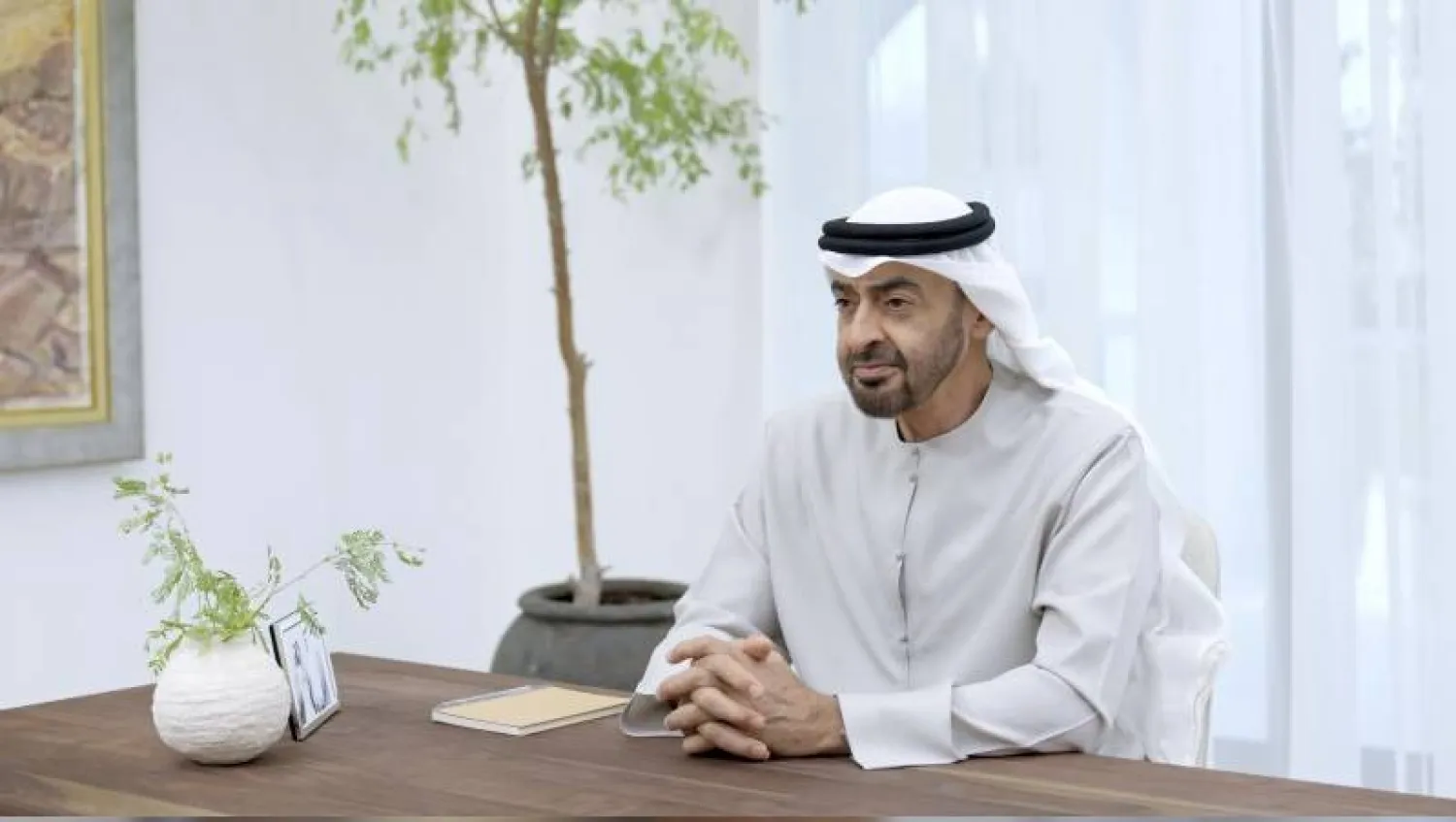
This backdrop gives any public message from Dubai particular sensitivity. It adds significance to a post published by Sheikh Mohammed bin Rashid al-Maktoum, UAE vice president, prime minister, and ruler of Dubai, on X on May 2, 2026, in which he wrote that “responsibility is a trust.”
He added that officials who place personal success above all else are not trustworthy and that those who fail to support the success of other officials in the country are not trustworthy, stressing that self-interest in public work is a betrayal of trust because the nation cannot be divided.
Emarat Alyoum published the text of the post on the same day. While it can be read as a general message about public administration, its timing and the reactions that followed opened the door to political interpretations about relations between centers of power, especially as public comments from officials increasingly appeared on social media platforms rather than through traditional institutional channels.
Rising Tensions
Against this backdrop, The Dark Box has emerged as one of the sources examining these developments from a broader political perspective.
The platform published an analysis—cited by Emirates Leaks on May 4, 2026—that pointed to growing internal tensions within the UAE’s ruling structure, linking Mohammed bin Rashid’s post to what it described as the increasing centralization of power in Abu Dhabi and the shrinking space for Dubai’s independent political influence.
The platform argued that the public appearance of messages from the prime minister and several UAE ministers, rather than their remaining within closed institutional channels, reflected a shift in the way political signals are managed inside the country.
Historically, relations between Abu Dhabi and Dubai have not been defined by direct confrontation as much as by a balance of power within the federation. However, the 2008 global financial crisis, Abu Dhabi’s intervention to support Dubai, and the rise of a more assertive political approach under Mohammed bin Zayed contributed to strengthening Abu Dhabi’s position within the federal structure.
An analysis by the Carnegie Endowment for International Peace noted that the fallout from the financial crisis reshaped the center of decision-making in the UAE, giving Abu Dhabi, under bin Zayed’s leadership, greater influence over federal policies.
Other studies on the evolution of Emirati foreign policy have also highlighted that this concentration of power in Abu Dhabi was among the factors that pushed the country away from a quieter diplomatic approach toward a more assertive, interventionist, and self-reliant foreign policy.
From this perspective, the emergence of a broad loyalty pledge for bin Zayed, alongside political messages coming from Dubai in the preceding weeks, suggests that the document cannot be viewed in isolation. Instead, it forms part of a wider process aimed at reinforcing Abu Dhabi’s position as the center of political gravity within the UAE.
Lack of Trust
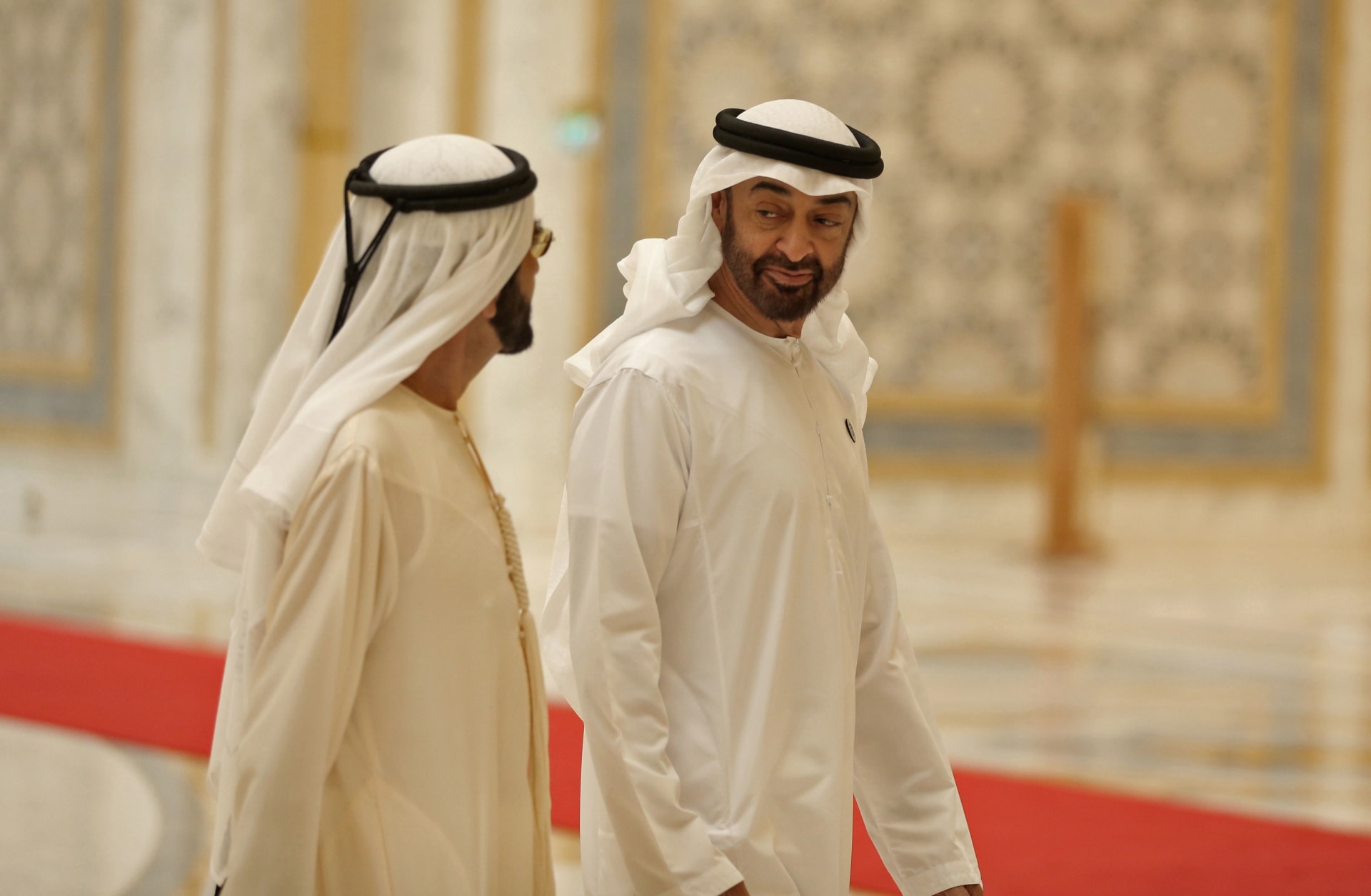
Speaking to Al-Estiklal, political researcher Mohamed Maher said the launch of the “Pledge and Commitment” document at this particular moment reflects not only an official desire to celebrate Mohammed bin Zayed but also a growing need by the Emirati leadership to recreate an image of internal cohesion amid accumulating signs of concern and a lack of trust within the ruling structure.
He argued that countries with high levels of political confidence and stability do not typically resort to broad loyalty campaigns involving citizens, residents, institutions, companies, and universities all at once. In his view, the scale and reach of the campaign suggest that decision-makers felt a need to publicly and systematically demonstrate alignment around the leadership.
Maher said the document followed a series of developments that unsettled the Emirati landscape, from the fallout of the U.S.-Israeli War on Iran and the attacks that challenged the UAE’s image as a safe destination for investment and business, to unprecedented messages emerging from Dubai in recent months that, he argued, reflected internal differences over the management of power and the distribution of influence within the federation.
He added that Mohammed bin Rashid’s remarks about “self-interest in governance” and “personal success” were not merely passing statements but carried notable political implications given their timing and the fact that they came from the prime minister and ruler of Dubai.
Maher also pointed to what he described as unusual public messages and exchanges among Emirati officials in recent months, including comments by Sharjah ruler Sheikh Sultan bin Mohammed al-Qasimi, arguing that they reflected genuine debates within the ruling elite over how the state is governed and how power is balanced within the federation.
“I believe the document is closer to a political attempt to reaffirm cohesion around bin Zayed at an unprecedented moment. When state institutions, companies, universities, and residents become part of a collective loyalty campaign, the message is not directed only at society but also at centers of power within the state,” he concluded.
Sources
- UAE public invited to pledge support to President Sheikh Mohamed in national campaign
- UAE shares hit two-month high as hopes grow for Iran-US deal
- The Iranian missile cities the US could not destroy
- United Arab Emirates
- The Unravelling of Dubai as a Safe Haven
- Intelligence Platform: Rising Internal Tensions Within the UAE’s Ruling Structure [Arabic]