What Are the Main Economic Challenges Facing the New Algerian Government?
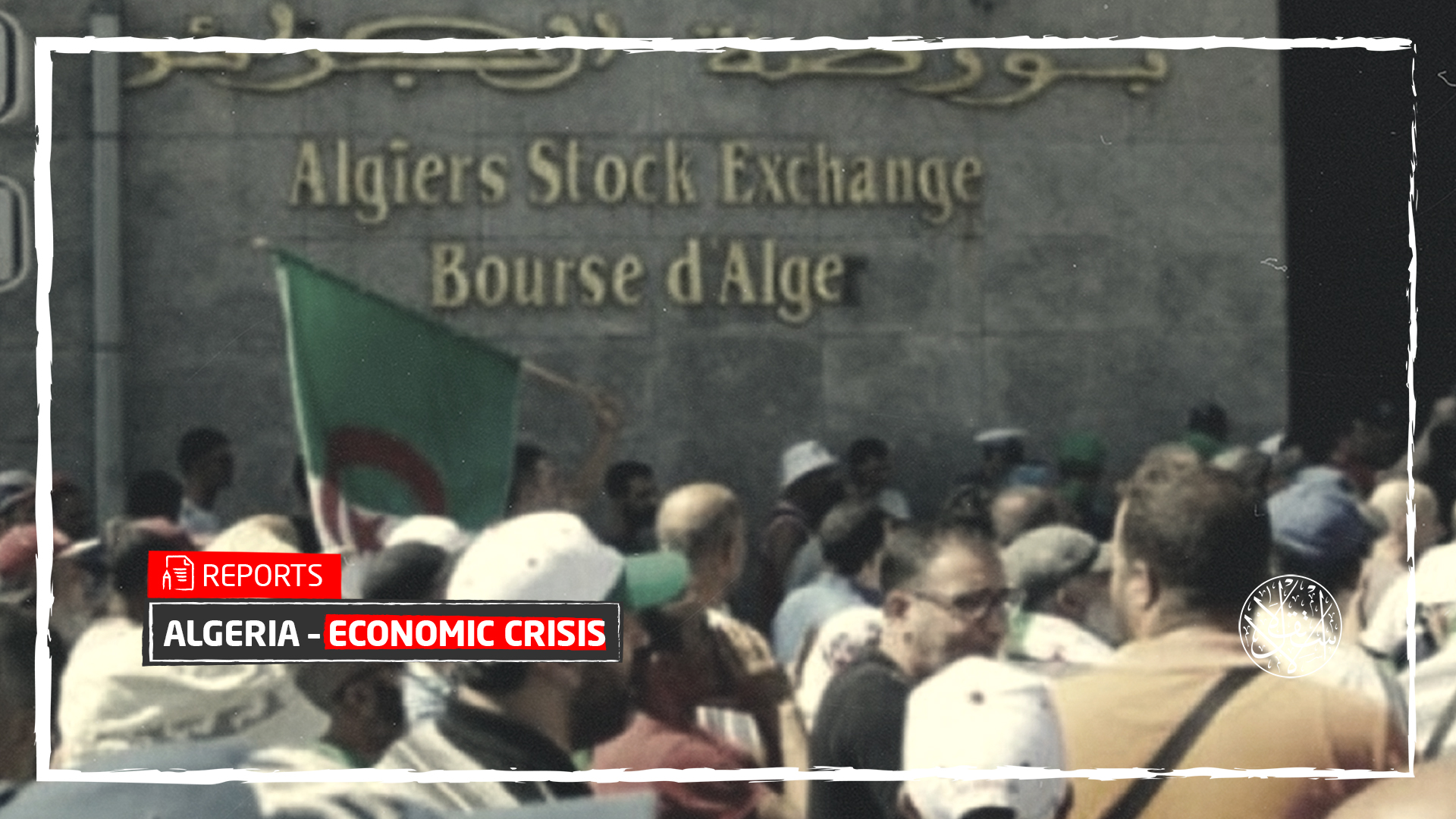
The headlines of the crisis of the Algerian economy were covered by international newspapers and magazines, as they monitored the file and referred to the suffering of the Algerians and put “urgent solutions,” amid questions about the ability of the new government to decipher the crisis quickly.
Indeed, the Algerian government, headed by Ayman Bin Abdul Rahman, faces many “economic challenges,” as the country suffers from the repercussions of the Corona pandemic, and oil prices collapse in 2020, in addition to the decline in the exchange rate of the local currency.
On July 7, 2021, the Presidency of the Republic announced the formation of the government of Prime Minister Ayman Bin Abdul Rahman, on June 30, 2021, Algerian President Abdelmadjid Tebboune assigned him to head the government.
The Algerian economy suffered a “violent shock” in 2020, this resulted in a “historic deficit” in the 2021 budget, which amounted to $22 billion.
The double crisis prompted the Algerian authorities, headed by former Prime Minister, Abdelaziz Djerad, to reduce government spending by almost half and to freeze many projects in several sectors.
Economic Development
The most prominent challenges for the new Algerian government are the transformation of the “rentier economy,” which depends on fuel revenues, which amount to (93%) of the country’s foreign exchange income, into a productive economy based on industry and technology.
As a result of the decline in fuel prices in 2020, the country's foreign exchange revenues decreased, consequently, the value of the Algerian dinar was negatively affected.
The general budget law for 2021 expects the average exchange rate to reach 142 dinars per dollar, and 149 dinars per dollar in 2022.
The economic expert, Moqaddam Abirat, believes that the most prominent challenge facing Abdul Rahman, is the diversification of economic activity outside the fuel sector, he pointed out that the total dependence on oil led to the disruption of development.
Abirat stresses to “Al-Estiklal” the need to revitalize the industrial, agricultural, service and tourism sectors.
He points out that “among the most important challenges is the government's conclusion of technology-based partnerships with foreign countries, to create a strong industrial sector capable of creating added value within the local economy.”
He points out that these sectors stimulate and attract foreign investment, in addition to stimulating exports, which brings inflows of foreign exchange and contributes to reducing unemployment rates.
Algeria's non-oil exports in 2020 amounted to about $2.26 billion, compared to $23 billion in fuel exports.

The Algerian market lost about 51,000 jobs in 2020 because of the Corona pandemic, according to the Ministry of Labor.
The unemployment rate exceeded 13% in 2020, and reached 23% among university graduates, and 27% among young people, according to data from the Ministry of Statistics and Foresight.
Professor of Economics at Ahmed Ben Yahia El-Wancharissi University in Algeria, Alali Mokhtar, believes that Algeria should learn from its economic crisis in 2020.
He adds to “Al-Estiklal,” that the water war that is now going on in some African countries, Algeria must be aware of, it works to develop and revitalize the south, and the exploitation of its wealth that can open the markets of Africa.
He points out in particular that “the tribal structure in southern Algeria has extensions in Africa, Algeria can use it to its advantage.”
One of the most important points for the new government is also to control the prices of consumer goods of all kinds, which witnessed a “noticeable increase,” especially with the advent of the last Ramadan, this led to a decline in purchasing power, the inflation rate at the end of May 2021 was about 3,9%.
No Need to Borrow
Economists believe that Algeria “does not need external borrowing.”
In the first quarter of 2020, the volume of foreign exchange decreased from $60 billion to $42 billion, a decrease by 30%.
Algeria uses its foreign exchange reserves to purchase imports of goods and services, valued at $45 billion annually.
Abirat believes that Algeria is still in need of international lending institutions such as the International Monetary Fund (IMF) and the World Bank Group (WBG).
He points out that development within the country can be financed through “fuel revenues,” by directing them to non-oil investments, especially in the industrial sector and not to consumption.

Alali points out that the new government does not need to borrow, especially since it is a “technocratic government” aimed at creating a “rational economy.”
Monitoring and Transparency
What is remarkable is that the new prime minister kept the portfolio of the Ministry of Finance for himself, to exercise “tight monitoring” over public expenditures, and not having to resort to international donor institutions.
Alali clarifies that the Algerian constitution currently grants civil society the right to monitor public expenditures, which prevents corruption and waste of “public money,” it provides the ability to rationalize overheads.
However, it is possible to deal with other countries at the current stage through the so-called “barter,” and not on the basis of “financial debt.”
He adds: The windows for Islamic banking that the government recently established support the Algerian citizen's confidence in depositing his money in banks, it is expected that these hoards may amount to about $200 billion.
In light of the current situation, the new Algerian government must take concrete and quick steps to reset the economic situation, with the need for a “strategic plan” aimed at creating an “integrated local economy,” it is internally based and completely unaffected by the outside.
While Abirat points to the need to go to production first, in order to meet the needs of the local market and reduce the import bill, then comes the focus on stimulating exports and supporting them by the state, so you can compete with foreign goods.
He stresses the necessity of the new government's interest in providing the necessary Corona vaccines and working to vaccinate all citizens, this is so that the country can “fully return” to its economic activity without fears of a second closure.
According to the American Bloomberg Agency, until July 25, 2021, Algeria received about 75,000 doses, and about 6.2% of the total Algerian people were vaccinated.
In turn, Mokhtar said: The money looted from the state during the rule of the former regime headed by Abdelaziz Bouteflika must be recovered, as well as the need for transparency and credibility to “restore confidence” between the citizen and the authority.
He also called for working to “combat bureaucracy” and its roots in the Algerian administration, with the aim of removing obstacles to investors, as well as attracting foreign companies to work with Algerian companies to stimulate local economic activity.