Austrian Anti-Islam Chancellor Sebastian Kurz Steps Down Amid Corruption Scandal and Popular Protests
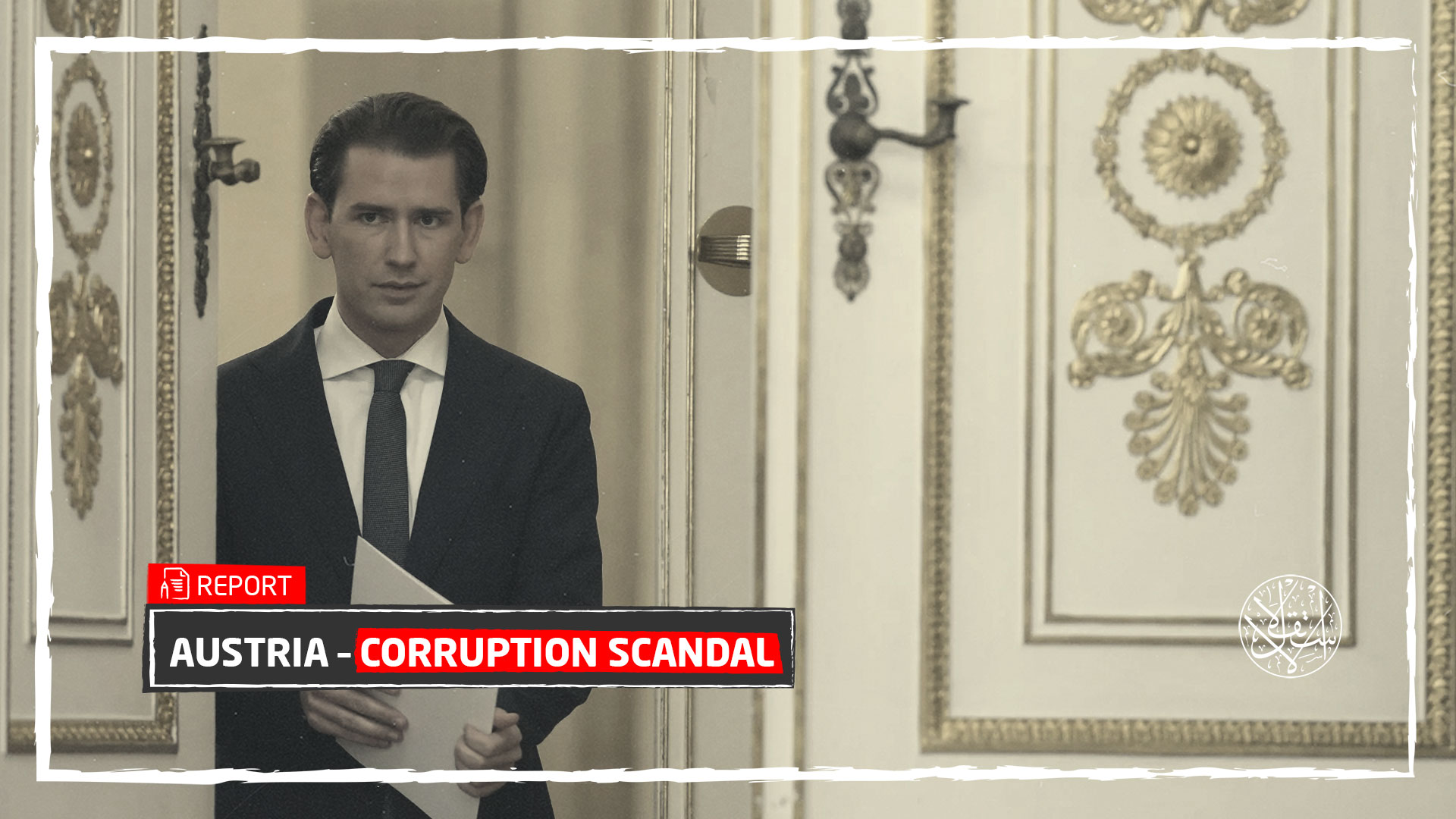
On Saturday, October 09, 2021, the right-wing conservative Austrian Chancellor Sebastian Kurz, who serves as the country's prime minister, resigned from his position, after he was placed under probe on suspicion of corruption, according to Reuters.
Kurz, 9 other top aides and 3 organizations were investigated after raids on a number of sites linked to his conservative Austrian People's Party.
The raids represent a significant escalation in the probe of corruption against the recessive chancellor, who is already facing potential charges in a separate case of allegations of perjury in a parliamentary probe last year; observers doubt that he will return for a third time in the near future.
What is interesting is that investigators have dug into what has happened since 2016, and the rocket rise of Sebastian Kurz, a young man in his thirties, and invoking the names of two prestigious newspapers, one local Der Standard and the other German Der Spiegel, in the context of a comprehensive roadmap to get Kurz to the top, by publishing opinion polls and advertisements to polish his image, according to a leaked document.
Thousands demonstrated in front of the People's Party headquarters in central Vienna late on Thursday, October 07, 2021, they called for Kurz's resignation, while waving anti-corruption banners.
Crowds now much bigger. They have begun chanting "Basti raus!". "Basti" being the nickname for Sebastian and "raus" meaning "get out". Protest has been organized by the social democratic youth organization and student union as well as the party LINKS. #Austria #governmentcrisis pic.twitter.com/nMvM7usSet
— Stephanie Liechtenstein (@StLiechtenstein) October 7, 2021
Breach of Trust
Austrian Chancellor Sebastian Kurz, 35-years-old, announced in televised statements that “he had asked Austrian President Alexander van der Bellen to name a new chancellor,” and suggested that Foreign Minister Alexander Schallenberg should take over as chancellor to succeed him.
Kurz also explained that “the government has reached a crisis situation with the opposition's stance against it.”
“What is needed now is stability, and to overcome the impasse, I want to step down to prevent chaos,” Kurz said during a conference announcing his resignation.
Kurz indicated that “he will remain the leader of his party and will continue to exercise his role as a member of Parliament.”
Since the day I started to get involved in politics, I have always tried to make my contribution. In the last ten years, I have had the privilege of serving our beautiful country as State Secretary, as Minister of Foreign Affairs, & most recently as Federal Chancellor. pic.twitter.com/Za3wSYFnvb
— Sebastian Kurz (@sebastiankurz) October 10, 2021
Kurz's government came under increasing pressure after investigators raided the chancellor's office and the headquarters of the conservative Austrian People's Party on October 05, 2021.
The party spokeswoman confirmed at that time that the raids were carried out, and according to local media “the raids included the Ministry of Finance, the Chancellery (the prime minister), offices of the right-wing People's Party, and 3 houses of the Austrian chancellor's top aides.”
Anti-corruption Prosecutors said: “Austrian Chancellor Sebastian Kurz was under probe on suspicion of receiving bribes and breach of trust.”
While press reports revealed that “Kurz and those close to him are suspected of embezzling public funds during the period between 2016-2018, Bribes were offered to a polling center in exchange for positive coverage in favor of the Austrian chancellor and his party, which was then published in a local newspaper.”
As soon as news of the raid was published in the Austrian media, opposition parties demanded Chancellor Kurz resign. It also threatened to hold a vote of no-confidence in Parliament.
The Head of Social Democratic Party, Pamela Rendi Wagner, said: “If Kurz had a bit of a civilized attitude, he would resign,” she asked him to appear in front of Parliament to answer questions related to this issue.”
The deputy chancellor and leader of the Green Party, Werner Kugler, also called on the People's Party to nominate another chancellor.
“Kurz is no longer eligible for the position and his resignation is the right step for Austria and its reputation abroad,” Kugler said.

Kurz Scandals
A secret probe by the Anti-Corruption Commission revealed last week that Kurz's team used taxpayers' money, in order to manipulate public opinion to make the Chancellor's image look better and to raise his levels of favor.
In the details of the probe, Prosecutors relied heavily on text messages exchanged, which were discovered on the phone of Thomas Schmid, a confidant of Kurz, who at that time was secretary-general in the Ministry of Finance.
It is clear from some of the accusations that were published in the press that Prosecutors believe Kurz is under suspicion; they described him as “the main beneficiary in the case.”
Now, Prosecutors in corruption cases suspect that “the chancellor and some of his close associates used money from the conservative-led Finance Ministry budget in 2016, when Kurz was Secretary of State, he paid for manipulated opinion polls.”
Prosecutors note that “the payments were made to an unnamed media company”; but it is widely believed to be the yellow newspaper Osterreich, in return for publishing those polls.
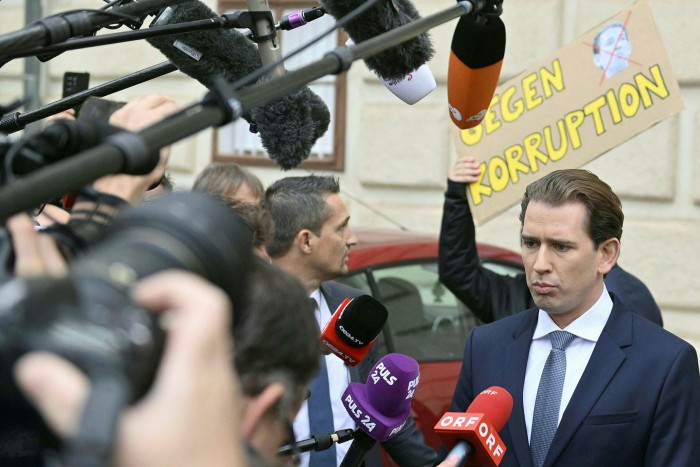
In a separate case, the Austrian public prosecutor opened a criminal probe last May against Kurz, as a result of accusations against him that he deliberately lied after taking the oath in front of a parliamentary committee, a charge that can lead to imprisonment.
At that time, Kurz denied any interference from him in the file of appointing a relative of his to head a public holding company.
On his part, Kurz denied that “he had committed any wrongdoing” and stressed that “the charges against him were false.”
He pointed out that “some of the text messages that caused him the problem were written in a moment of excitement. “
He added, “I am human, and I have emotions and slips.”
It is noteworthy that “Kurz had become the leader of the Austrian People's Party in May of 2017 and led his party to victory in the elections in December 2017, after being foreign minister ten years ago.
At the age of 31, Kurz became one of the youngest democratically elected heads of government in the world.
In May 2019, the alliance of the right-wing conservative People's Party and the far-right Freedom Party collapsed, after a corruption scandal (Ibiza scandal) ravaged his ally, the People's Party, which led to the overthrow of the Kurz government.
However, Kurz returns to power in January 2020; But this time together with the Green Party, it is an alliance that has previously suffered several shocks following the repercussions of corruption scandals and disagreements over issues including asylum policy and anti-Islam.
Anti-Islam
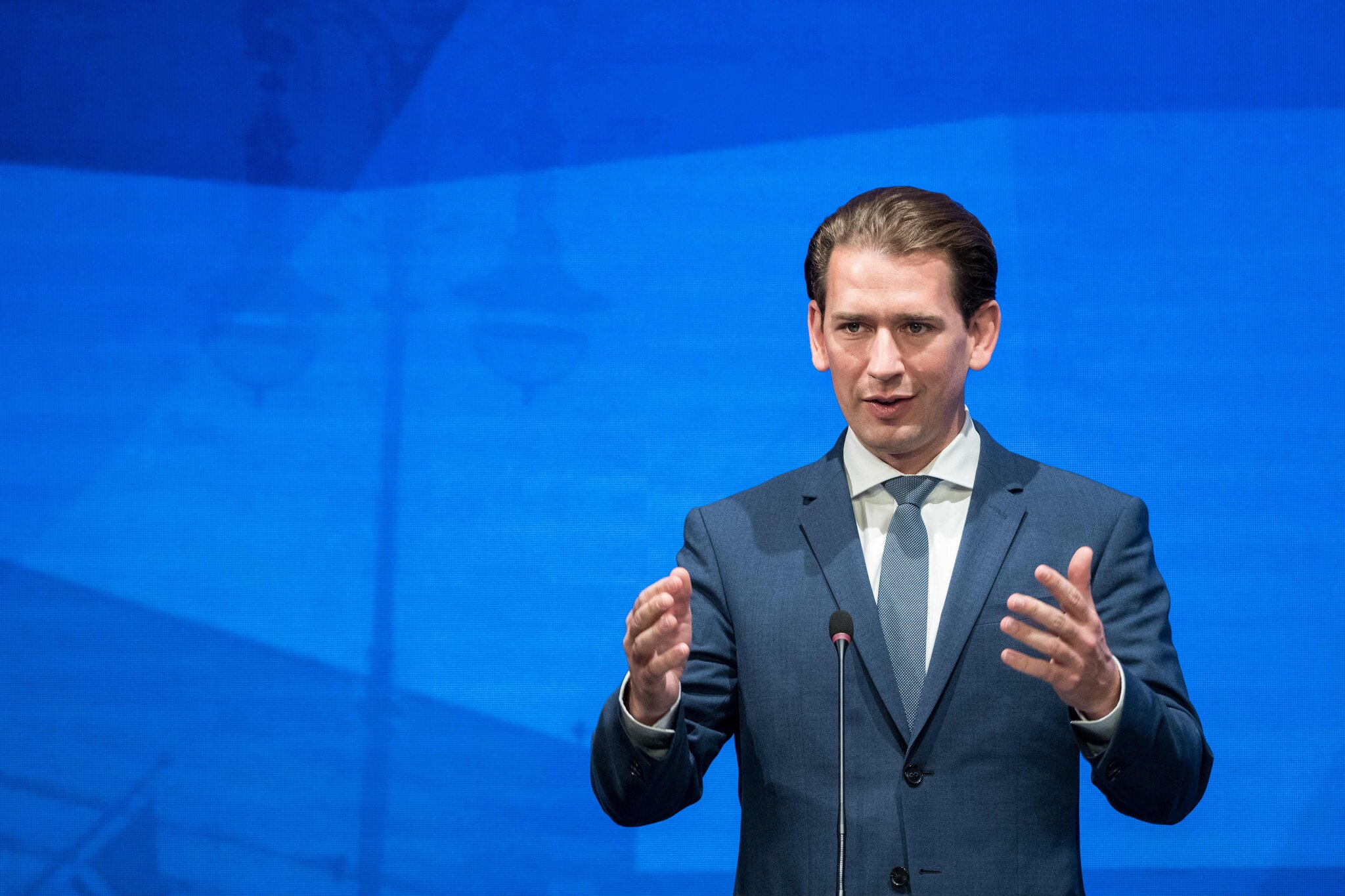
In late October 2020, Austrian Chancellor Sebastian Kurz confirmed the intention of his country's authorities to establish a criminal offense called “political Islam”, and about a plan to close Muslim associations and mosques, this was after a group of young men attacked a Catholic church in the Austrian capital, Vienna.
Knowing that the number of Muslims in Austria reaches about 700,000 at least out of a total population of 8.773 million, according to official statistics.
However, Kurz then called on the European Union to combat what he called “political Islam,” he considered it an ideology that posed a threat to the European model of living.
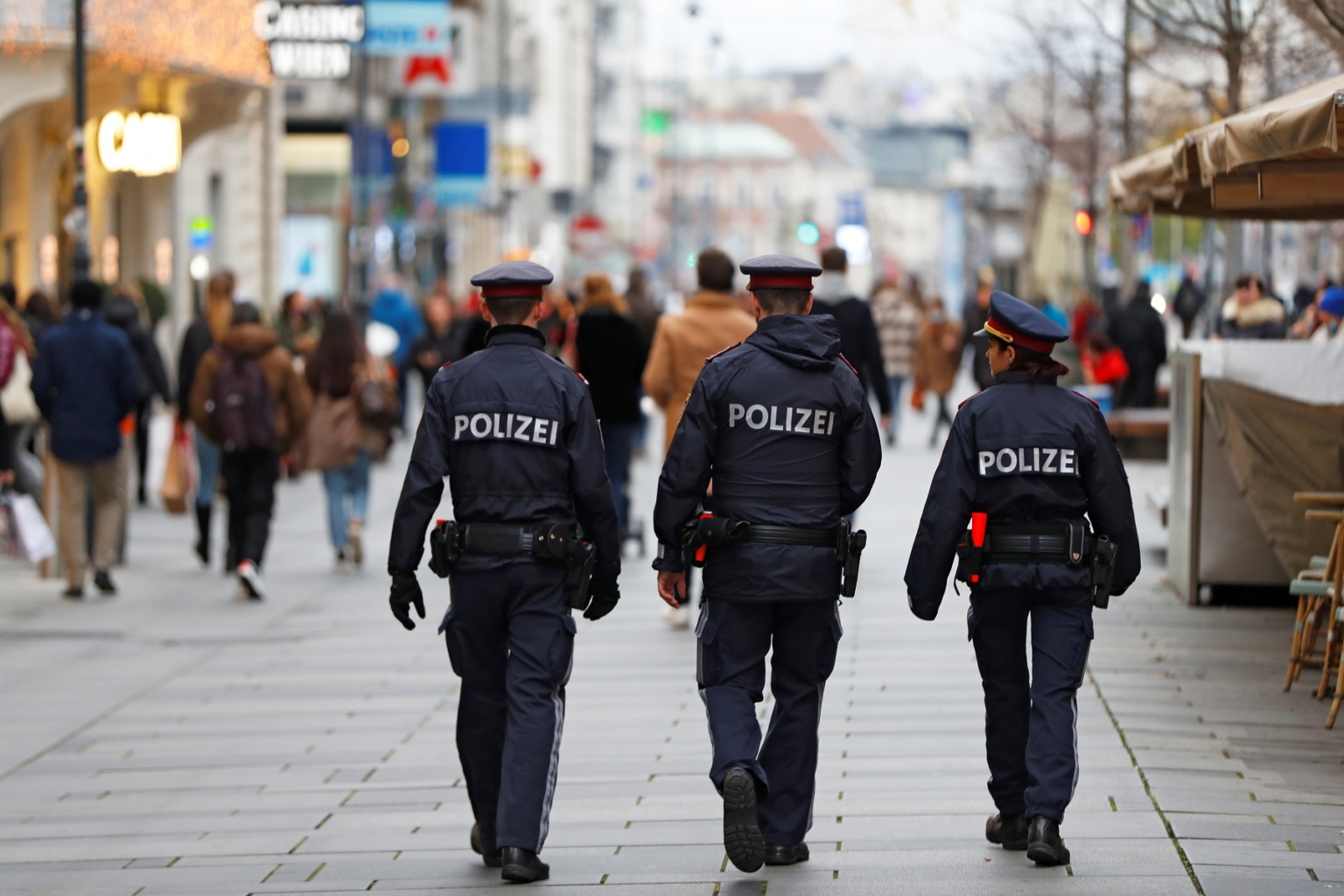
According to an association tasked with collecting reports, since the first attack on Austrian soil in November 2020, the number of verbal or physical attacks targeting Muslims in this European country has increased dramatically, the association counted 1,402 attacks, the vast majority of which were on the Internet.
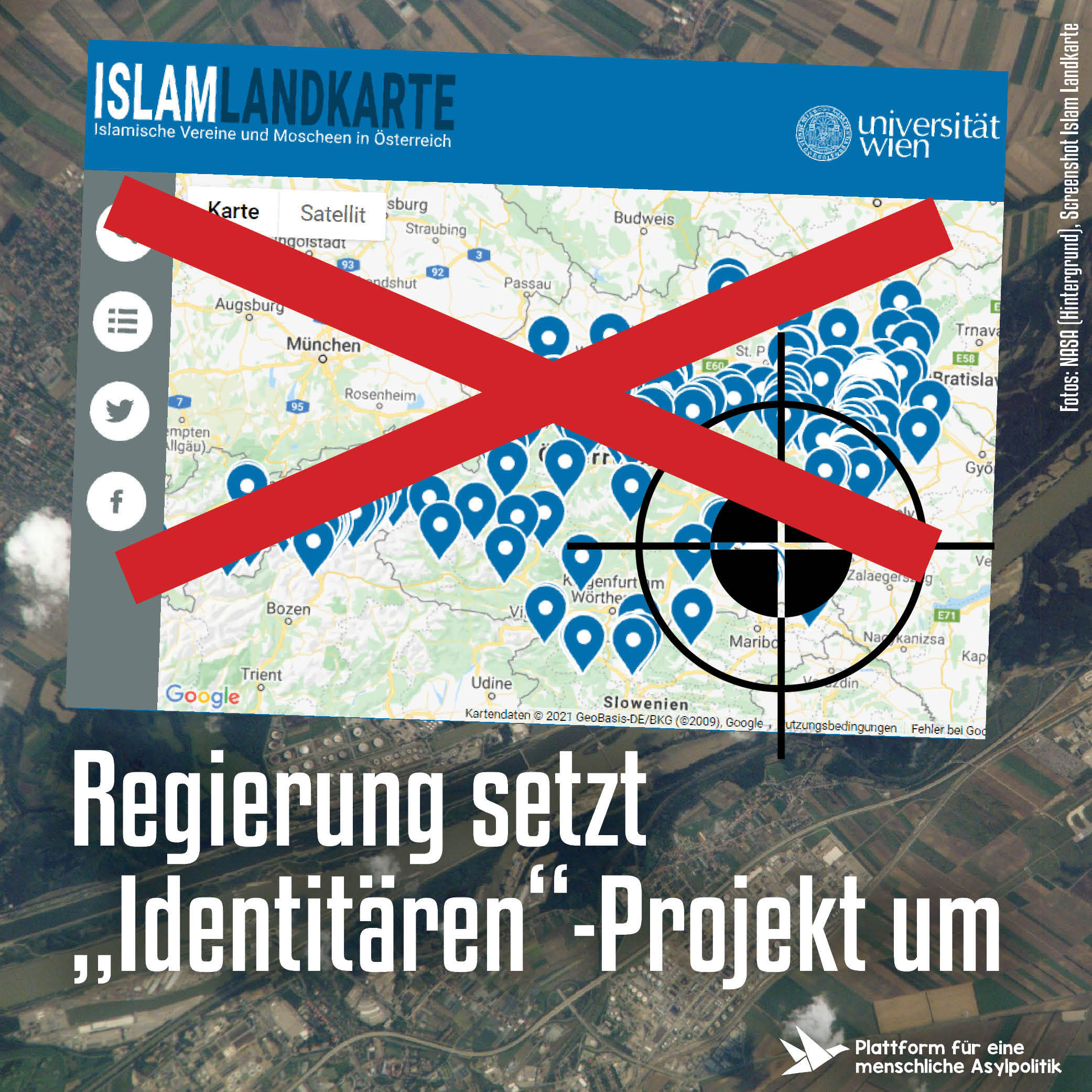
In late May 2021, the presentation of the government of Austrian Chancellor (Sebastian Kurz) “a map of Islam” on the Internet, which includes the names and locations of more than 620 mosques, Islamic associations, and Muslim officials, raised a wave of condemnation among Muslims who denounced the stigma of being largely exposed to insecurity.
At that time, the Islamic Religious Society of Austria, an intergovernmental organization that represents the interests of Muslims in the country, stated that “this new map will only fuel the racism that continues to rise against Muslims who are exposed to major security risks.”
Days later, Kurz's government was forced to suspend work on the map, this is due to the wide wave of criticism leveled by circles against the Austrian authorities, the political controversy raised by the case, and the misuse of the map by some far-right groups.
It is noteworthy that the ruling People's Party in Austria has a history of anti-Muslim agitation, which came to the extent that the Secretary-General of the party “demanded a ban on fasting in schools,” this is something that was previously known only in totalitarian communist societies.
Austria is also the only country in Western Europe with a far-right government since Kurz won Austria's national elections last year, under this government, Islamophobia intensified.
Rather, it tended to show foreigners and refugees as if they were a scarecrow, responsible for all the negative phenomena that the country is witnessing.
Sources
- Austrian Chancellor Kurz resigns amid corruption allegations
- Austria's Kurz steps down over corruption probe to save coalition
- Sebastian Kurz: Austrian leader resigns amid corruption inquiry
- A new political scandal hits the Austrian right [Arabic]
- Austrian Chancellor Sebastian Kurz resigns over corruption charges [Arabic]