Why Did Sisi’s Regime Release Palestinian Activist Ramy Shaath After 900 Days in Detention?
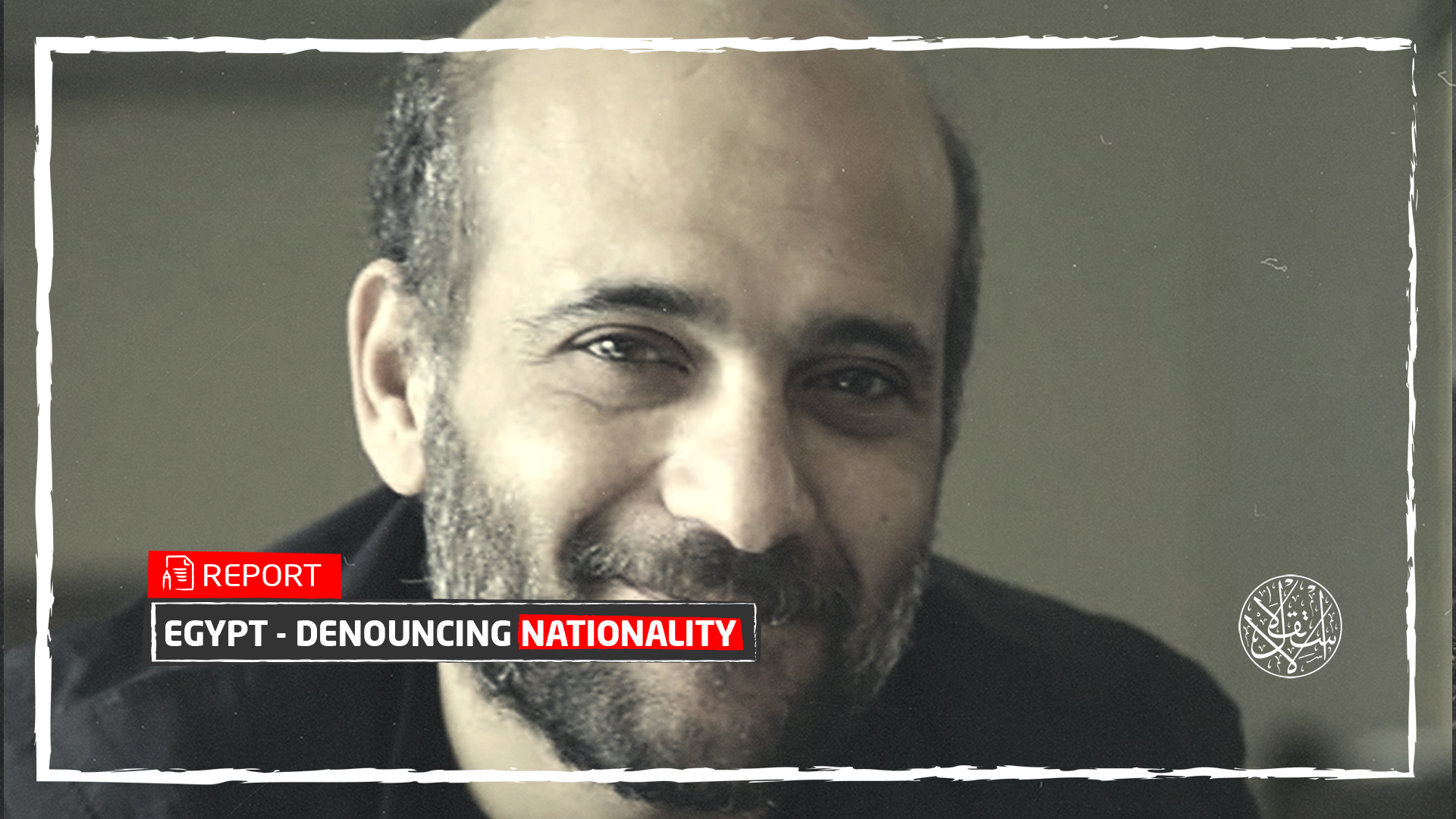
The family of Egyptian-Palestinian activist Rami Shaath announced that the Egyptian authorities had already released their son and deported him to Paris, noting that he had been forced to renounce his Egyptian citizenship as a condition for his release.
Shaath was arrested by Egyptian authorities on July 5, 2019 from his home in Cairo as part of a wide-ranging security crackdown, in the case known in the media as the "Cell of Hope" case.
Rami Shaath faces charges in the 2019 case of restricting the security of a higher state to crimes of involvement with a group established contrary to the provisions of the law, intended to call for the disruption of the provisions of the Constitution and laws, prevent state institutions and public authorities from carrying out their work, and to deliberately disseminate false news, information and statements about the political and economic situation in the country, with the aim of undermining public peace and undermining confidence in state institutions.
Last July, the Court of Cassation issued a final ruling that Rami Shaath and 13 other defendants, including lawyer and former member of parliament Ziad al-Alami, would be on the terrorist lists for five years.
Shaath is a 50-year-old political activist and co-founder of the Constitution Party and the BDS, which demands economic divestment and sanctions against Israel.
He is the son of Palestinian government leader Nabil Shaath, who has held positions including foreign minister and deputy prime minister.
His detention, alongside other activists, came amid a crackdown on political dissent, which also targeted liberal and Islamist critics of Sisi.
Rami holds two Arab nationalities, Egyptian and Palestinian, and shortly before his arrest he declared his position against the so-called Deal of the Century.
“Ramy’s release is a living testament to the power of organizing the collective in putting an end to grave injustices; such as those that Ramy has fought against throughout his life.”#RamyisFree #FreeThemAll
— Free Ramy Shaath (@FreeRamyShaath) January 8, 2022
Ghada Najib
Under article 16, the Prime Minister may strip any person, whether born Egyptian or naturalized, of his Egyptian nationality for a number of reasons, including "if his normal residence abroad has been convicted of a felony that is harmful to the security of states from the outside."
Sisi’s regime exploited this law whenever he could, forcing opposition leaders to be stripped from their Egyptian nationality.
Ghada Najib was one of the opponents of Sisi who were harmed due to article 15 of the same act which gives the Government broader powers to revoke citizenship.
On December 24, 2020, the Egyptian Official Gazette published the government's decision signed by Prime Minister Mustafa Madbouli to strip Najib of her Egyptian citizenship. The procedure is based on Law 26 of 1975, which gives the Government the power to do so without judicial review.
"Egypt's decision to revoke Ghada Najib's citizenship is a horrible and dangerous precedent," said Joe Stork, Deputy Middle East Director at Human Rights Watch. “The Egyptian authorities are descending to a new level of punishment of opponents."
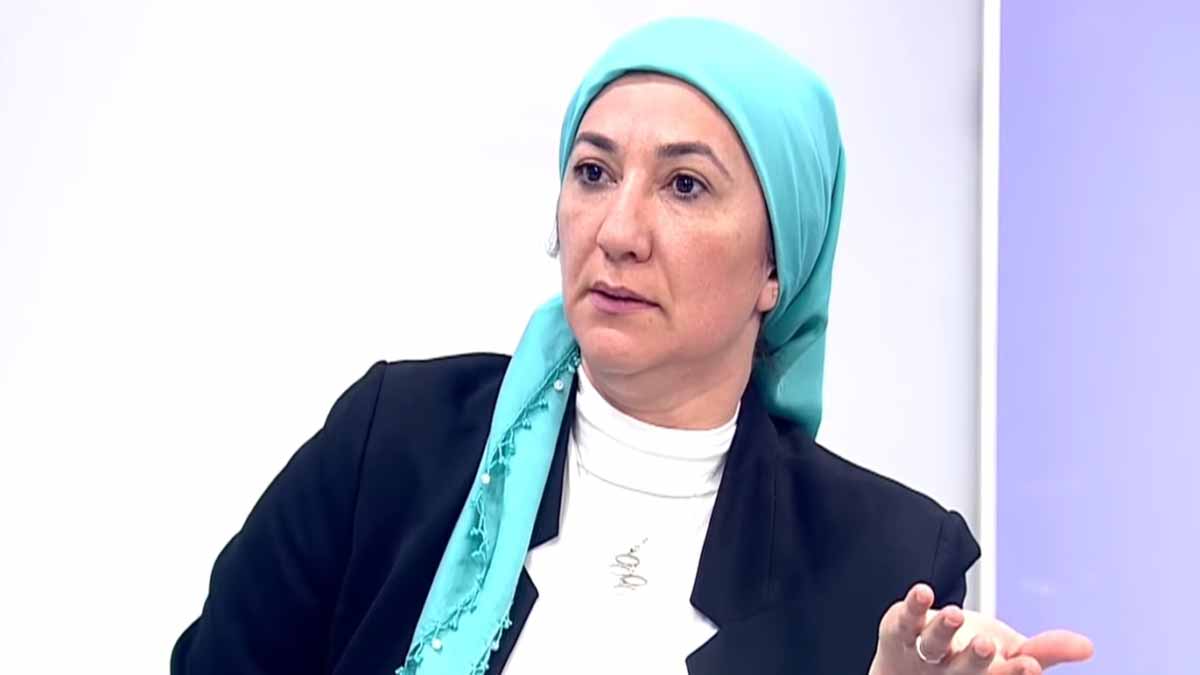
Najib, 49, is a political activist who has lived in Turkey since late 2015 with her family. State media and supporters have often targeted Najib and her husband, Egyptian actor and television presenter Hisham Abdullah, for their opposition activities since late 2013.
Human Rights Watch has previously documented that the government harassed, terrorized, and arrested members of their families in Egypt in July and August 2018.
In January 2019, a Criminal Court in Giza overseeing cases related to "terrorism" and "state security" in absentia sentenced Najib and Abdullah to five years in prison, in a mass trial of more than 25 defendants, before finally withdrawing Najib’s nationality
Mohamed Sultan
What happened with Shaath had already been done with the well-known Egyptian activist Mohamed Sultan.
A few days after the break-up of Rabaa sit-in in 2013, Mohamed Sultan's house was raided and arrested after he was charged with a number of charges, including belonging to the Muslim Brotherhood, which the government designated as a "terrorist organization,” planning to overthrow the regime, spreading false news, and communicating with foreign entities to provide them with information about the Egyptian state.
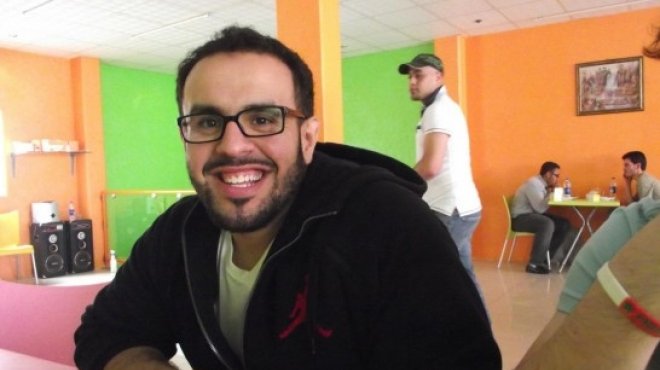
In an interview with The New York Times, Mohammed said he was beaten and abused by security forces and tortured in various ways.
After nearly a year and a half in prison, Sultan was released on May 30, 2015, after going on hunger strike for 489 days. Mohammed was forced to renounce his Egyptian citizenship in exchange for his freedom.
"The removal of citizenship from the measures protected by the Constitution, leaving its implementation of the law without tampering with, changing or amending a text, so that no system is left to tamper with it, so as not to leave a sword hanging over the necks of the people, and for citizens to live safely," said political activist Ali Shenen.
"The Constitutional Court has established one of its provisions on the disqualification or acquisition of citizenship, and the extent to which power limits in its implementation," Shenen, who holds a master's degree in law, added to Arabi21.
"Egyptians have become experiments with ideas of suppressing a dictator who left an idea that would violate the rights of Egyptians only by doing so,” he added.