What’s Really Behind Akhannouch’s Shake-Up of Morocco’s Press Council Law?
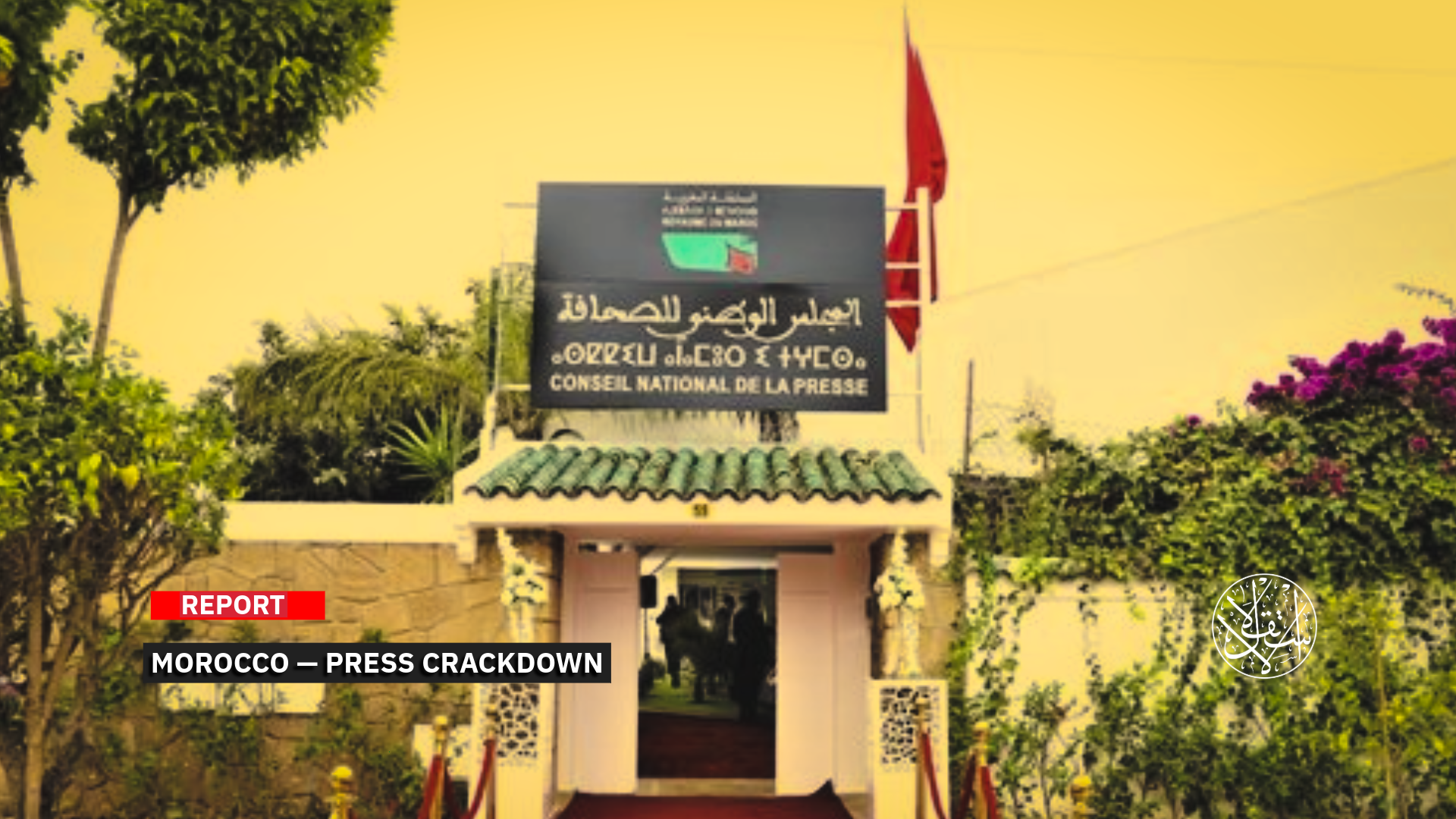
The council has been in an unusual situation since 2022.
Amid mounting criticism from experts, journalists, and politicians across Morocco, Prime Minister Aziz Akhannouch’s government has once again found itself at the eye of the storm — this time over a proposed amendment to the law governing the National Press Council.
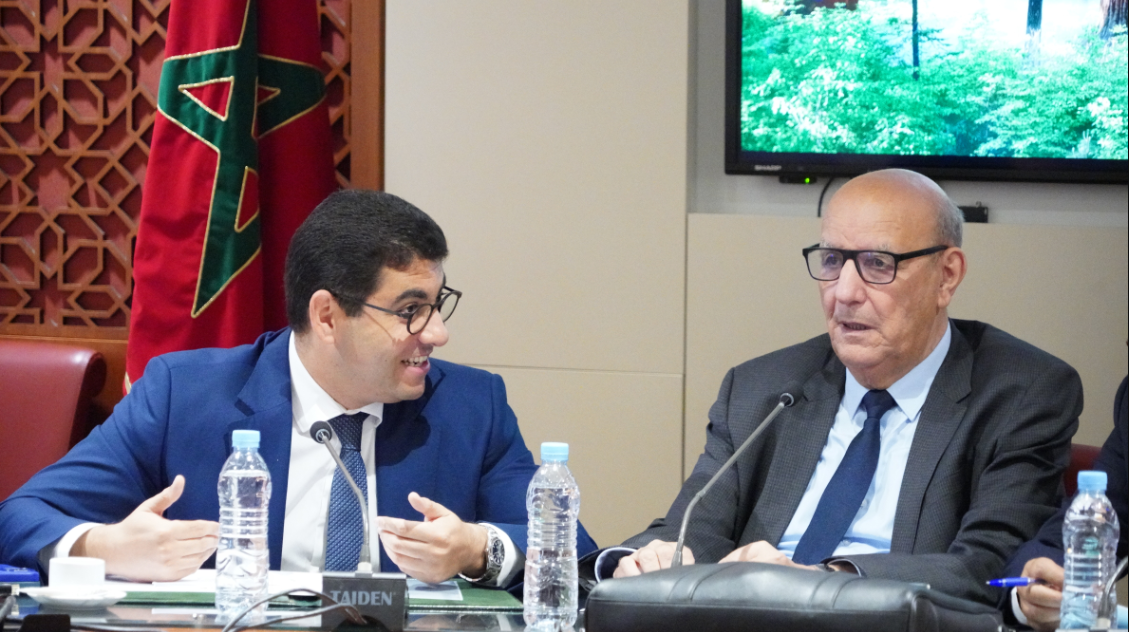
On July 3, 2025, the government approved a draft bill concerning the council, introduced by Mohamed Mehdi Bensaid, Minister of Youth, Culture, and Communication.
Just days later, on July 9, the Education and Culture Committee in the House of Representatives began deliberating the proposed legislation.
The National Press Council — an independent professional body — was established and elected in 2018 as part of Morocco’s effort to promote self-regulation in the journalism and publishing sector.
The council’s core responsibilities were outlined as granting press cards, mediating disputes among media professionals, monitoring press freedom and ethical standards, offering opinions on draft laws and decrees related to the profession, and conducting studies on the state of the sector.
But since 2022, the council has been operating in a state of limbo after the end of its members’ mandate, with no new elections held.
In response, the government passed emergency legislation to extend the council’s term by six months.
That was followed, in April 2023, by another law transferring the council’s powers to a temporary committee tasked with overseeing the press and publishing sector for two years.
With that mandate now expired, the government has returned with a fresh amendment to the original law — reigniting controversy over its handling of media regulation.
Numerous Breaches
Speaking during the Education Committee meeting, Minister Mohamed Mehdi Bensaid defended the draft bill as part of broader efforts to reform Morocco’s national media framework and to create a stable, transparent legal environment for journalism.
Bensaid told lawmakers the amendment also aims to reflect the profound transformations reshaping the media landscape, ensuring that the legal framework keeps pace with the demands of a rapidly evolving reality.
The Justice and Development Party’s parliamentary group called for the National Human Rights Council and the Economic, Social and Environmental Council to issue their opinions on Draft Law No. 26.25 concerning the reorganization of the National Press Council.
In a letter dated July 11, 2025, the group said it had formally requested the Speaker of the House of Representatives to refer the bill to the two advisory bodies, citing Article 152 of the Constitution as the legal basis for the move.
Former Minister for Relations with Parliament and Civil Society, Mustapha el Khalfi, has warned that the government’s proposed amendments to the law governing the National Press Council contain what he described as “dangerous setbacks” and provisions that “clearly violate the Constitution.”
Speaking to Al-Estiklal, el Khalfi pointed in particular to changes in the council’s composition, arguing that the amendments introduce a troubling shift by mixing two systems of representation: one based on elections and another on appointments and nominations. The current law, he noted, is rooted entirely in an electoral process.
He emphasized that all existing laws governing representative bodies in Morocco are based on direct elections, and that appointment-based mechanisms are meant to be exceptional.
Yet, he cautioned, the government’s proposal appears to give primacy to this exceptional route in selecting members of the National Press Council.
El Khalfi also rejected the notion that any global precedent supports the model proposed by the government, arguing that the amendments stand in clear contradiction to the Constitution, which mandates that the press sector be governed in a democratic and independent manner.
“Where is the independence,” he asked, “when appointments and nominations take precedence?”
He went on to say that, from a democratic standpoint, Morocco had previously presented the elected National Press Council as one of its key achievements during the Universal Periodic Review before the UN Human Rights Council in Geneva.
The proposed changes, he warned, risk placing the country in an awkward and damaging position on the international stage.
Addressing the issue of the council’s composition, el Khalfi noted that the electoral oversight committee now includes three members appointed directly by the Prime Minister — a move he described as a clear regression.
He added that the newly proposed structure has already become grounds for a constitutional challenge before the judiciary.
On the matter of sanctions, el Khalfi pointed out that the amendment allows for the suspension of a newspaper’s publication for up to thirty days — a sharp departure, he argued, from the current legal framework, which prohibits the confiscation of a publication or the shutdown of a news outlet without a court order.
He concluded that the government’s approach effectively drags the country back to a pre-2011 constitutional era, seeking to erase hard-won gains by once again handing the power to suspend publications to an administrative body — the majority of whose members are politically appointed.
Regressive Mindset
Echoing these concerns, media and journalism researcher Abdallah Amoush accused the government of persistently pushing to transform the National Press Council from a democratically elected body into one dominated by appointments and nominations — a shift he described as profoundly undemocratic.
Speaking to Al-Estiklal, Amoush argued that “this reflects a regressive mindset within certain segments of Morocco’s political elite.”
He explained that the government has abandoned elections as a democratic mechanism for selecting representatives of publishers within the council’s structure, replacing it instead with a nomination process that amounts to a different form of political appointment.
He went on to explain that the publishers’ body will nominate seven members, while one member will be appointed by the Supreme Council of the Judiciary, another by the National Human Rights Council, and a third by the Economic, Social and Environmental Council — bringing the total number of appointed and nominated members to ten, or 59% of the council.
Amoush added that even the seven journalists who will be elected, representing 41 percent of the council, will be chosen through a less democratic system of direct individual voting rather than by a list-based proportional representation.
“All these factors raise serious concerns about the process, especially given the context of these amendments, which starkly depart from the constitutional moment that gave rise to the principle of self-regulation in the press,” Amoush concluded.
From the professional side, Mahtat Rekkas, president of the Moroccan Federation of Newspaper Publishers, said that “several organizations have rejected the proposed amendments to the law governing the National Press Council,” stressing that the issue “concerns not just those working in the sector, but Morocco as a whole.”
According to the Justice and Development website on July 9, Rekkas highlighted that “the National Press Council was the first achievement following the 2011 constitution, and it should have been built upon to develop momentum during its initial four years — not see the regressions we are witnessing today.”
“There is now a rush and mobilization to push the law through,” Rekkas pointed out that “press law is enshrined in the constitution as part of the freedoms and rights category, which calls for broad consultation with all relevant parties, organizations, and institutions.”
Rekkas also criticized the draft law’s reliance on media organizations’ turnover figures to determine the number of representatives, describing it as a deliberate move to tailor the legislation to favor certain interests — a shift he warned would lead to the domination of representation by just three publishing companies, a scenario he deemed unacceptable.
He further flagged concerns over a proposal to impose criminal penalties on those who refuse to return their professional press cards to the National Press Council as part of disciplinary measures, describing this as a clear regression and damaging to Morocco’s international reputation.
Rekkas concluded by urging parliament to uphold freedom of expression, a free press, and democratic development by rejecting any amendments that contravene the constitution or undermine the democratic foundations and progress of the sector.
Legislative Misstep
The National Union of Moroccan Journalists also protested against what it described as the government’s “complete disregard for trade unions” in the draft law concerning the National Press Council.
In a statement issued on July 11, the union criticized the bill’s preamble for recognizing publishers while ignoring journalists, describing this omission as “indicative of a discriminatory approach that undermines constitutional principles.”
The union argued that “the foundation of all legislation in the sector must start with the Constitution and the relevant royal speeches, including the 2004 Throne Speech, which emphasizes the importance of engagement and consultation with professional bodies.”
The statement expressed the union’s strong dissatisfaction with the exclusion of several proposals submitted in its memorandum to the temporary committee overseeing the press and publishing sector, noting that the draft law even includes provisions that directly contradict the union’s demands.
“Foremost among these is the expansion of the number of publishers alongside the freezing of journalists’ representation, despite the memorandum’s call for increased journalist participation in line with the spirit of self-regulation and the unique Moroccan experience.”
The union called for “a necessary expansion of journalists’ involvement to ensure a participatory approach within the council and to guarantee that the human resources managing the profession’s affairs from within the council are truly capable.”
In the same vein, the statement criticized the draft law’s current reliance on a system of single-name voting, describing it as a blow to the very achievements celebrated in the bill’s own preamble and a departure from the previous practice of professional list-based elections.
It added that the approach also contravenes constitutional principles and international standards, which require the meaningful involvement of trade unions in professional oversight and decision-making — especially within a body that is meant to be founded on independent self-regulation and participatory professional democracy.
The union concluded that this choice represents a clear regression from democratic governance, effectively marginalizes trade unions, and opens the door to a fragile individualistic logic that undermines the legitimacy of representation and disenfranchises entire professional groups.
Journalist Taoufik Bouachrine described the government’s push to pass the draft law as a “serious incident, a legal scandal, a constitutional massacre, a slaughter of the journalism profession, a political farce, and a catastrophe for the fourth estate.”
In a Facebook post, Bouachrine elaborated, “All of these headlines are fitting descriptions of the bill to restructure the National Press Council.”
He went on to accuse the Ministry of Youth, Culture, and Communication, led by Bensaid — who, he claimed, “has no standing in culture, communication, or politics” — of drafting legislation aimed at “killing the legitimacy of the National Press Council.”
“The bill is unconstitutional because it violates the principle of equality before the law by discriminating between elected and appointed members […] It also undermines the council’s democratic and independent self-regulatory nature.”
He went on to say the law effectively turns print and digital publishing houses into vast fiefdoms, granting the “major players” twenty seats while leaving the “smaller ones” with just a single seat — all based on commercial turnover figures.
Bouachrine argued that the bill violates legal norms by tailoring the legislation to favor certain factions within the press while sidelining journalists deemed disloyal to the government.
He concluded that “this draft law is designed to undermine the spirit of the National Press Council, erode its legitimacy and credibility, and pave the way for it to play a role contrary to its stated objectives.”
The organization Justice for the Right to a Fair Trial described the draft law as a “legislative misstep,” warning that the distinction it draws between journalists and publishers “undermines the National Press Council’s independence.”
In a statement issued on July 11, the group asserted that differentiating between journalists and publishers in the appointment process “threatens to erode the principles of democracy, pluralism, and media diversity.”
It added that the bill also “serves to entrench the dominance and monopoly of economic elites over the press sector.”

Former Ministers
Amid the ongoing debate, several former government officials, including past ministers of communication, joined the chorus of criticism against the bill.
Mohammed Nabil Benabdellah, Secretary-General of the Party of Progress and Socialism and former Minister of Communication, described the draft as a “complete distortion of the philosophy of self-regulation within the profession, reflecting a shift towards placing journalism under the control of money.”
Speaking to Sawt al-Maghrib on July 9, 2025, Benabdellah stressed that “the model followed in all democratic countries with national press councils is based on three core constituencies within the council: journalists, publishers, and representatives of society. This structure is designed to ensure the defense of a broad range of social and professional interests, free from closure or bias.”
However, according to Benabdellah, “the current trajectory in Morocco is heading in an entirely different direction, abandoning this pluralistic philosophy and removing community representation within the council — which previously included groups such as lawyers and writers — and replacing it with constitutional institutions.”
He described this shift as “a hollowing out of the council’s independence.”
“The new model effectively places the press under the control of money, leading to the domination of self-regulation by those with financial power and opening the door to the influence of economic forces in a media landscape that should be characterized by neutrality and diversity.”
“The government’s sole aim appears to be placing its own people in decision-making positions within the council, representing a dangerous retreat from the spirit of reform,” Benabdellah concluded.
Meanwhile, former Minister of Communication and public law professor Mohamed Auajjar criticized the government for abandoning a constitutional and rights-based approach to regulating the press sector, instead entrenching a more regulatory and economic framework.
In an opinion piece published by Bayan al-Youm on July 9, Auajjar criticized the lack of proactive publication of the draft legislation on the government’s official website, the absence of an accompanying impact assessment, and the failure to disclose the recommendations of the temporary press committee in accordance with Article 4 of Law No. 23-15.
He also condemned the exclusion of representation from the constitutional body responsible for achieving integrated social projects, as well as other human rights organizations.
Notably, the draft sought to sideline the representative of the National Council of Languages and Moroccan Culture.
He further highlighted the exclusion of representatives from the Association of Bar Councils — an independent professional body that supports the judiciary and contributes to the pursuit of justice — as well as from the Moroccan Writers’ Union, a cultural organization dedicated to promoting and guiding literary practice.
“The exclusion of these bodies is unjustified and raises serious questions about the purpose behind such decisions,” Auajjar said.
He concluded that the ongoing legislative process clearly reflects the government’s focus on control and economic mechanisms, diverging sharply from principles of constitutional wisdom and rights-based safeguards.