Was an Egyptian Scientist Assassinated Abroad?

Egyptians draw parallels between Reem Hamed's death and past mysterious scientist deaths.
The name of 29-year-old Egyptian researcher Reem Hamed has surged to the forefront of search engines and social media discussions following the announcement of her death in France under mysterious circumstances.
The details of her death remain unclear, but it follows a series of troubling posts she made on Facebook just days before, in which she described being subjected to threats, harassment, and surveillance by individuals she did not name, though she implied they were connected to her workplace.
Foul Play?
Reem Hamed, a promising PhD researcher, earned her Bachelor's degree in Agriculture with a focus on Biotechnology from Cairo University in 2017.
Hamed was pursuing advanced studies at the Institute of Integrative Cell Biology at the University of Paris-Saclay, where she also earned a Master's degree in Genomics.
Hamed’s journey to France, where she sought a doctorate in biotechnology and genetics, took a dark turn when she began experiencing harassment and persecution during the final stages of her studies.
According to posts attributed to her, which were later deleted, she endured hacking attempts on her devices, bullying, discrimination, and racism.
In one particularly alarming post, Hamed claimed she had survived an assassination attempt by a neighbor in her university residence who, she alleged, sprayed a harmful substance under her apartment door, leading to respiratory distress and an increased heart rate.
Just days after making these posts, on the evening of Thursday, August 22, Hamed was found dead outside the door of her apartment.
Her death, shrouded in mystery, has prompted French authorities to launch an investigation to determine if foul play was involved.
In response, the Egyptian Ministry of Foreign Affairs issued a statement confirming that it is closely monitoring the investigation.
In the wake of Hamed’s death, social media users launched a hashtag, "Right of Reem Hamed," speculating that she was assassinated and drawing parallels to the mysterious death of Egyptian scientist Samira Moussa in 1952.
However, Hamed’s family has refrained from endorsing these claims. Her brother, Nader Hamed, posted on Facebook, stating that the investigation into his sister’s death is ongoing and urging people not to spread unverified information that could jeopardize the investigation and disrespect Reem's memory.
Nader Hamed further confirmed that the family is in regular contact with the French authorities to stay informed about the investigation’s developments and is coordinating with Egyptian officials to facilitate the return of his sister’s body.

Nuclear Scientist
Hamed’s death brought up Samira Moussa’s assassination in mid-August 1952, when the life of pioneering Egyptian scientist Moussa was tragically cut short in a car accident in California.
Many Egyptians suspect that her death was no mere accident. They believe it was a calculated assassination, echoing a pattern of mysterious incidents that have claimed the lives of Egyptian scientists excelling in fields related to military technology.
Just days before she was set to return to Egypt, Moussa’s car fell down from a height of approximately 40 feet.
Egyptian media swiftly pointed fingers at the Israeli intelligence agency Mossad, and some even implicated a Jewish Egyptian actress in the plot.
Moussa was a nuclear scientist of remarkable talent. She pursued a PhD in Britain, focusing on the effects of X-rays on different materials. During her studies, she devised an equation that hinted at the potential for creating a nuclear bomb using inexpensive metals.
Upon her return to Egypt, she played a pivotal role in establishing the Atomic Energy Authority, just three months after the formation of the State of “Israel” in 1948. Her ambition was for Egypt to develop its own atomic bomb.
On August 15, 1952, Moussa was invited to tour a nuclear facility in California. En route, a transport truck collided with her car, sending it tumbling into a sloop.
Egyptian press accounts describe how her driver, who reportedly jumped out just before the crash, vanished without a trace. Further investigations revealed that the driver used a false identity, raising suspicions of foul play.
The Egyptian press speculated that Mossad had orchestrated the assassination, though concrete evidence remains elusive.
One particularly sensational claim involves the Egyptian Jewish actress Raqia Ibrahim. According to reports, Ibrahim, allegedly acting on behalf of “Israel”, tried to persuade Moussa to remain in the United States and accept citizenship.
When Moussa refused her, the actress supposedly collaborated with Mossad to orchestrate the assassination.
These allegations were further fueled by claims from Ibrahim’s granddaughter, who purportedly confirmed her grandmother’s involvement.
Three decades after her death, President Anwar Sadat posthumously honored Samira Moussa with the First Class Medal of Science and Arts in 1981.
Her legacy endures in Egypt, with a school named after her in her hometown and a cultural center bearing her name.
Series of Attempts
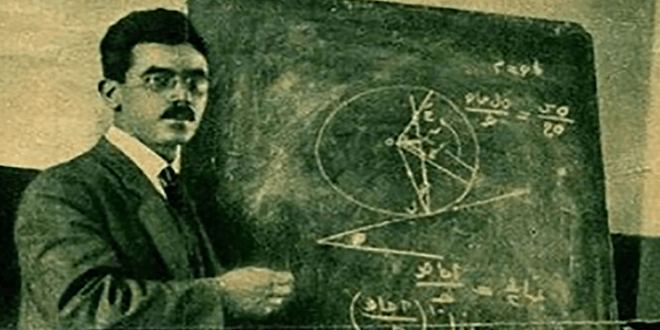
Moussa's death is not the only one shrouded in suspicion. Her mentor, Dr. Ali Mustafa Mosharafa, the first dean of the Faculty of Science and dubbed the "Egyptian Einstein," died in 1950 under mysterious circumstances, believed by some to be the result of poisoning.
Musharrafa’s extraordinary academic journey began when he earned a bachelor’s degree in mathematics from the University of Nottingham in just three years, followed by a doctorate in the philosophy of science from the Royal College in 1923 and a second doctorate in science from the University of London in 1924—one of the highest scientific honors of the time.
Returning to Egypt, Musharrafa quickly rose through the ranks at Cairo University, becoming a professor at an unusually young age. On January 15, 1950, he died suddenly, allegedly from poisoning, an event many believe was orchestrated by the Mossad.
Similarly, the life of Dr. Samir Naguib, a rising star in nuclear science, was cut short under mysterious circumstances.
A brilliant young scientist, Naguib had been conducting groundbreaking research in nuclear physics in the United States and was appointed as an assistant professor at the University of Detroit.
Despite numerous offers to stay in the U.S., Naguib was determined to return to Egypt, particularly in the wake of the June 1967 war.
On the night before his scheduled departure, Naguib was killed in a car accident when a large vehicle deliberately rammed into his car—a death many believe was no accident but a targeted killing.
These suspicions were linked to the recent deaths of several Egyptian scientists under similarly mysterious circumstances.
Dr. Abu Bakr Abdel Moneim Ramadan, an expert at Egypt's nuclear regulatory authority, died suddenly in Morocco while attending a workshop organized by the International Atomic Energy Agency.
Moroccan authorities attributed his death to a heart attack, but the circumstances have raised eyebrows, especially given Ramadan’s past work studying the potential effects of nuclear reactors in Israel and Iran.
Ramadan's death follows the deaths of three other Egyptian scientists in an Ethiopian plane crash just months earlier. The series of incidents has fueled widespread speculation, with some pointing to Israel’s history of targeting Arab scientists as a potential explanation. Despite the absence of concrete evidence, the pattern of sudden, unexplained deaths among Egypt’s top scientific minds has left many Egyptians questioning whether these incidents are indeed mere coincidences.
These incidents collectively paint a picture of the high stakes and deadly risks faced by Egyptian scientists involved in advanced research during a volatile period in the region’s history.
The Egyptian government has yet to formally accuse any party of wrongdoing in these deaths, and no official investigations have confirmed criminal involvement.
However, the persistent doubts and the high-profile nature of these cases continue to stir public debate, with calls for greater protection of Egypt’s scientific community.