Unsettles the State’s Prestige; What Is the Fate of the PMF 7 Years After Its Establishment in Iraq?
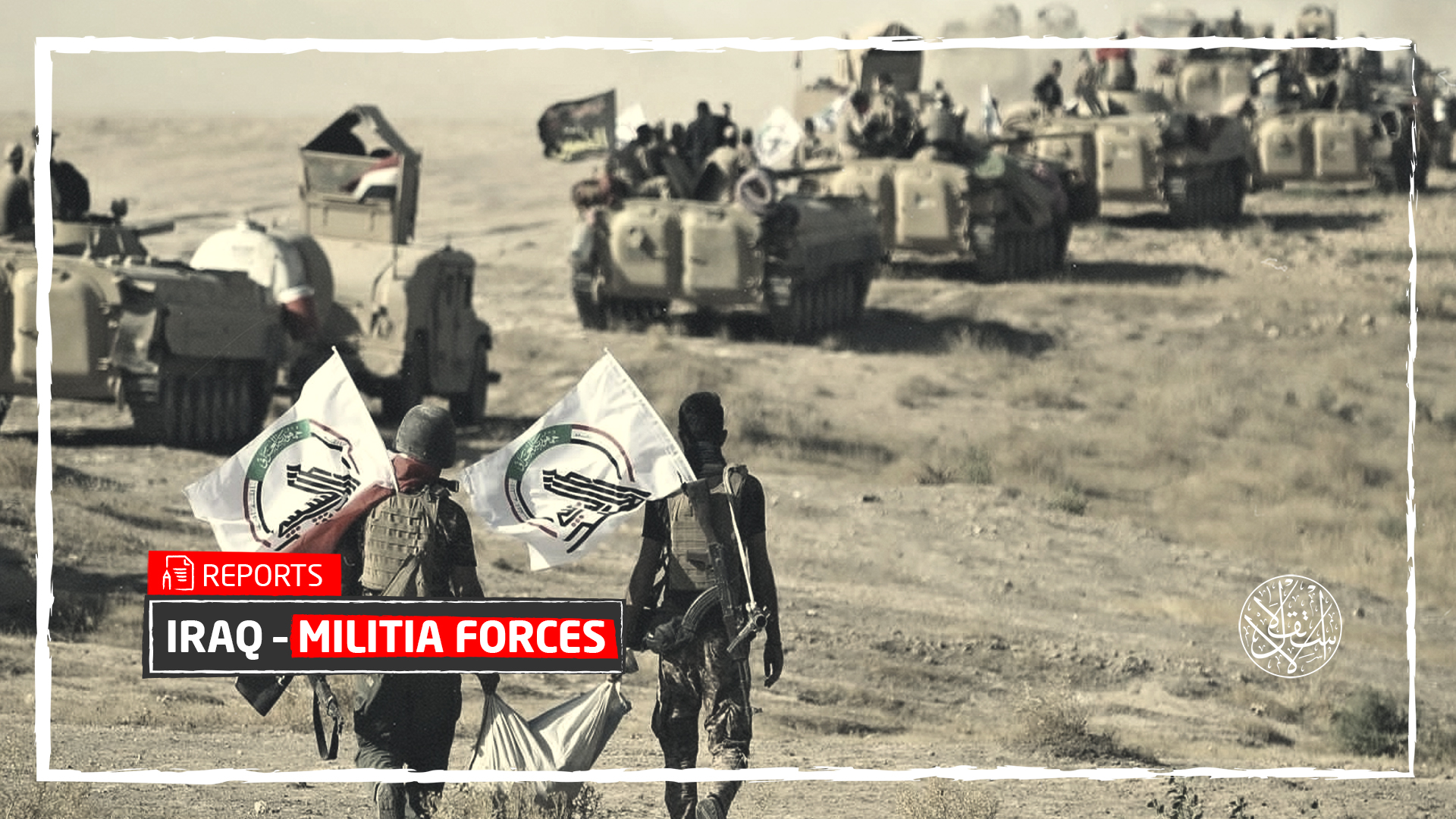
Seven years since the founding of the Popular Mobilization Forces (PMF) in Iraq, but the controversy is renewed with the passage of this anniversary after the disappearance of the main reason for which it was formed, which is to fight the Islamic State organization that swept the country and rapidly took control of a third of its area in June 2014.
A year before Iraq declared victory over ISIS and completely expelled it from the country at the end of 2017, the Iraqi Parliament passed a law for the Popular Mobilization on November 26, 2016, amid the boycott of the Sunni forces, who considered the legislation of the law as “a blow to the national partnership.”
In the past period, questions were raised regarding the fate of the PMF— which was formed amid an exceptional situation in the country, due to the collapse of the security services in 2014, with the entry of ISIS—and the possibility of it remaining as an independent entity in its own right or merging and dissolving it with the security ministries.
Sistani's Responsibility
For his part, the Iraqi writer and political analyst, Yahya Al-Kubaisi, said during a television interview on June 13, 2021 that “the fatwa of Religious Authority Ali Al-Sistani was regarding the volunteering of individuals in the ranks of the security forces, due to its collapse in that period; not the formation of a security institution.”
Al-Kubaisi said that “the position of the Religious Authority was an exceptional fatwa from the history of Shiite jurisprudence, but the problem is the exploitation and use of this fatwa, because the Prime Minister at the time, Nouri Al-Maliki, ordered the formation of the PMF before the fatwa and issued a Diwani Order on June 11, 2014, while the fatwa came later on the 13th of the same month.”
The political analyst explained that “the fatwa was used to legitimize militias that existed before the fatwa, meaning that there was an ideological militia that took advantage of this fatwa to legitimize its existence and produced the catastrophic situation today. Hence, we found a militia that announced its arrival at Camp Speicher in Saladin Governorate before the formation of the Popular Mobilization.”
Al-Kubaisi pointed out that “there are four constituents within the Popular Mobilization System. The first is the loyalist militias (loyal to Iran), which are the largest in number, most armed and integrated into politics, and the second party is Saraya Al-Salam [Peace Companies] affiliated with the leader of the Sadrist movement Muqtada Al-Sadr, and it follows his, and only his, orders.”
He continued: “The third party is the Mobilization of Religious ‘Atabat [Shrines] (subordinate to the Religious Authority), and the fourth party is the Tribal Mobilization, which is limited in armament and capabilities, and are the closest to be the watchmen, as they are unable to carry out real combative actions.”
Al-Kubaisi stressed that “Sistani has a responsibility today, and if he does not lift the cover that these militias used to legitimize their existence, then there is no possibility to talk about their dismantling, especially since the Shiite political actor was originally complicit in the formation of the Mobilization, particularly, the decision of Prime Minister Nouri Al-Maliki.”
Press reports on June 15, 2021 noted that “the Popular Mobilization was, in fact, a rapid Iranian exploitation of Sistani's fatwa to establish a sectarian army, a reserve for the Iraqi forces in order to transform Iran’s political influence in Iraq into field control over its areas.”
According to the report: “The Iraqi regular army, regardless of its level of armament, organization and strength, remains suspicious of the Iranians because they still are the heir to the army that faced them in the Eight Years’ War during the 1980s.”
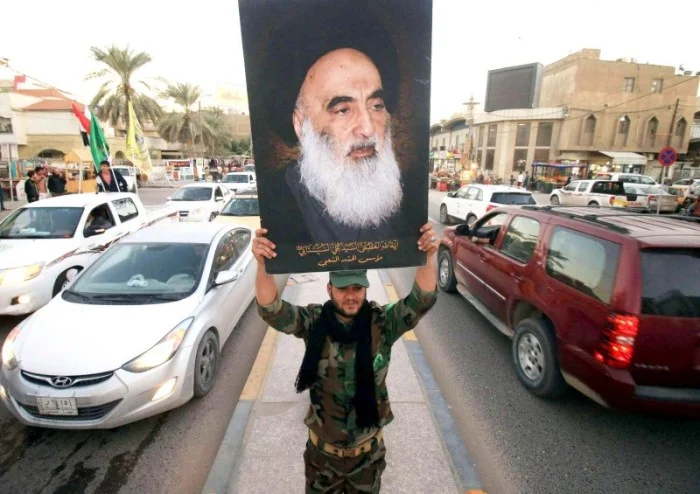
Rebellious Force
Al-Sistani’s fatwa, which he called “Sufficient Jihad,” was the reason for the formation of the Popular Mobilization from dozens of Shiite militias, and its transformation into a “back-up army” for the regular forces that played a major role in the war against ISIS, but it has now turned into a dilemma that hinders restoring the prestige of the state and confining arms to its hands.
Although the Popular Mobilization joined the Iraqi armed forces through the Parliament’s law, and it was linked it to the Commander-in-Chief of the Armed Forces [the head of the government], it remained, in practice, outside the control of its leadership and subordinate to the leaders of the militias that first created it, defending their interests and implementing the agenda they serve, which is basically an Iranian agenda that often contradicts with interests and sovereignty of Iraq.”
The PMF consists of 76 armed militias with a total of about 90 thousand fighters, the most prominent of which are: Kata'ib Hezbollah (Hezbollah Brigades), Asa'ib Ahl Al-Haq, Kata'ib Sayyid Al-Shuhada (Sayyid of Martyrs Battalions), Harakat Al-Nujaba, Kata'ib Al-Imam Ali (Imam Ali Brigades), Liwa Al-Tafuf (Al-Tafuf Brigade), Ansar Allah al-Awfiyya (The Loyal Partisans of God).”
These militias took advantage of the fatwa of the Sufficient Jihad to expand their influence and commit massacres against the residents of predominantly Sunni governorates. Demographic cleansing operations took place, such as at the Jurf Al-Sakhar area in Babil Governorate, as well as theft and demolition of homes of citizens who fled the control of ISIS.
At the time, governmental political bodies warned against these practices carried out by armed groups loyal to Iran, stressing that the continuation of this approach may lead to a distortion of the image of the PMF or the fatwa of Sufficient Jihad.
In mid-2016, the representative of Religious Authority Al-Sistani, Ahmed Al-Safi, during the Friday sermon praised the military operations carried out by the “volunteers.” He did not mention the term “Popular Mobilization” until this moment. In each sermon, he focuses on the phrase “volunteers in defending the Iraqi land.”
Al-Safi referred to the practices of armed parties against the people in the governorates of Anbar, Saladin and Babil, as the Iraqi Hezbollah kidnapped hundreds of civilians, while Asa'ib Ahl Al-Haq burned villages and orchards in Saladin and raised sectarian and provocative slogans in Sunni areas.
Officials and representatives from Anbar Governorate confirmed the kidnapping of nearly 1,200 civilians, including women, while the existence of secret militia prisons in Babil, especially in the Jurf Al-Sakhar area, was also confirmed.
Since then, the PMF has been in great chaos regarding administration, positions, salaries, the distribution of military missions, training, political exploitation, and financial deals.
These militias were not satisfied with these operations, so much so that internal matters reached the point of financial corruption, taking the cover of the Popular Mobilization.
Fake names were planted within the commission; there are more than a thousand fake names in the Financial Directorate of the PMF, in addition to imposing royalties and kidnapping investors, businessmen and others, according to press reports.
These practices prompted the withdrawal of the ‘Atabat Mobilization Forces from the Popular Mobilization Forces in December 2020, which consists of the “Al-Abbas Division, Ali Al-Akbar Brigade, Imam Ali Division, Ansar Al-Marji’iya Brigade.”
These groups raised the slogan, “‘Atabat Mobilization: Incubator of Fatwas and State Builders.”
At the time, the leader of the largest of these factions, the Al-Abbas Combat Division, Maytham Al-Zaidi, said that “the main reasons for forming the ‘‘Attabat Mobilization’ are to serve the country and correct the path.”
While the commander of the Ali Al-Akbar Brigade, Ali Al-Hamdani, said that the conference was “only concerned with the factions that, since the issuance of the fatwa for Sufficient Jihad, have adhered to the recommendations of the Religious Authority Al-Sistani’s reference.”
This move was welcomed by the Iraqis, but at the same time, it was rejected by the leaders of the militias loyal to Iran, as Qais Khazali, the leader of the Asa'ib Ahl Al-Haq movement, accused the ‘Atabat Mobilization of being part of the Israeli project.
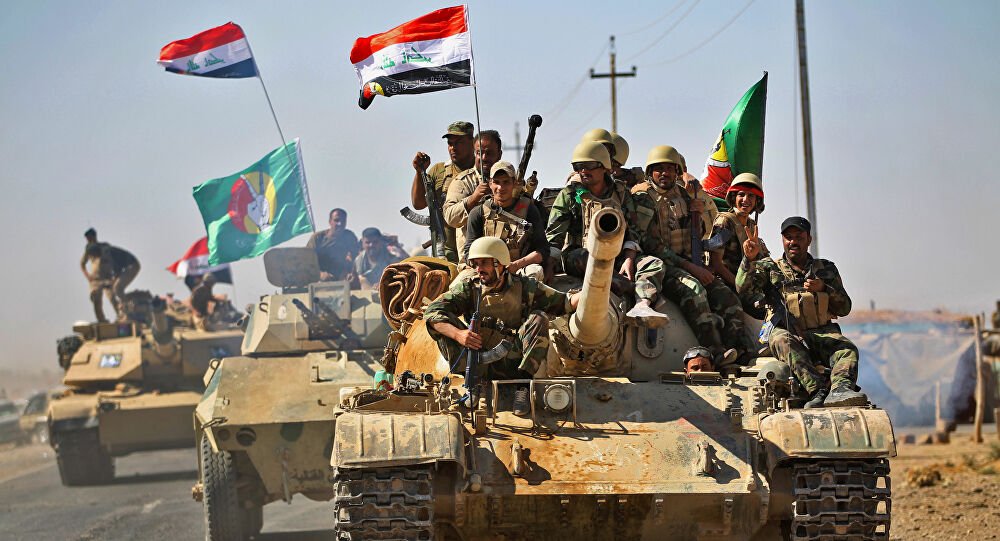
On the seventh anniversary of the founding of the Popular Mobilization, President Barham Salih said, on June 13, 2021 via Twitter, that “we remember with pride the call for Sufficient Jihad, which was launched by the Supreme Authority Al-Sistani; and we salute those who answered the call at the moment of the most difficult challenge.”
The Iraqi president added: “The liberation of our homeland from the defilement of terrorism was achieved through the unity of Iraqis from the army, the Popular Mobilization and the Peshmerga,” stressing that “victory will not be complete without the consolidation of the capable state, the rule of law and good governance.”
For his part, Prime Minister Mustafa Al-Kadhimi said in a statement: "Our beloved country has gone through very difficult circumstances in these days, which have placed Iraq in front of a dangerous existential challenge, and had it not been for the divine providence of this sacred country and the fatwa and directives issued by the Supreme Authority, Ali Al-Sistani, that have stopped a terrorist monster that had terrorized the whole world.”
The fatwa led to the elimination of this organization during a period the whole world could not have imagined.
Al-Kadhimi added that “the fatwa came from a national standpoint that addressed the comprehensive Iraqi identity, as is the permanently usual approach in the positions of the rational [Religious] Authority, which refused to address Iraqis but with their identity, leaving sectarian and ethnic headlines completely far from its political discourse.”
He pointed out that the Iraqis, of all groups and sects, responded to the comprehensive call for all volunteers to join the official security forces to confront ISIS.
In the same context, the Iraqi writer Alaa Al-Lami saw during an article published by the Al-Badeel Al-Iraqi website on May 22, 2021 that “the popular crowd was formed as an emergency and exceptional treatment for one of the disasters of the sectarian and ethnic quota system brought by the American occupation, yet it is not a definitive treatment for this incurable and deadly disease; the only remedy for it is to change the system of government.”
Al-Lami pointed out that “when the voluntary popular uprising succeeded in its mission and ended the takfiri rebellion of ISIS, the parties and militias of corruption and subordination took the initiative to exploit the uprising and transform the volunteers into an alternative or parallel army to the state army, taking advantage of the most heinous exploitation of the fatwa of the Religious Authority Al-Sistani.”
The Supreme Religious Authority Al-Sistani called on Iraqis able to bear arms to volunteer in the government armed forces and never called on them to form an alternative army.
According to the writer, “Sistani's fatwa literally stated: ‘Hence, citizens who are able to take up arms and fight terrorists in defense of their country, people and sanctities must volunteer to join the security forces.’”
This reading onto the fatwa was then repeated in Al-Sadr’s clarification of the Religious Authority by saying: “In His name the Most High: We have issued a fatwa that it is a sufficient obligation to join the armed forces, to defend the Iraqi people, their land and their sanctities, and this fatwa is still valid, for the continuation of its obligation, despite some progress made by the heroic fighters in defeating the terrorists.”
According to Al-Lami, the militias and parties “were able to pass their lie and implement their plan, and then the Popular Mobilization Forces were transformed into a constitutional military force.”
At that time, people said that there is nothing wrong with that temporarily, as long as Iraq lacks any national military body to rely on to defend the country and people, but the mobilization force later turned into mobilization forces.
In addition to the constitutional Popular Mobilization, there are external militia factions close to it, who consider themselves to be from part of the PMF.
The writer continued, “as we can see, things have become complicated and warn of imminent danger and a bloody clash between the armed parties of the regime, and the equations are no longer the same as they were at the beginning of the popular uprising to repel the ISIS invasion.”
He asked: “What is a possible solution in these cases? Is it in dissolving the Popular Mobilization Forces and stripping the Iraqis of the last means of defending themselves, or merging it with the infiltrated-leaders army, or in maintaining the situation as it is with all its corruption, fragmentation, killing and dependency until the expected bloody and devastating clash occurs?”
Al-Lami concluded that “the original problem was not in the Popular Mobilization, as it was a popular uprising that successfully achieved its goal, as aforementioned, but it is in the ethno-sectarian regime that is dependent on the U.S. and Iran, and this problem or any other structural problem of Iraq's major problems cannot be solved by the continuity of this regime.”
“The only possible solution is to change the system of governance of sectarian and ethnic components to a system of citizenship and equality, and abolish dependency agreements with America, such as the Strategic Framework Agreement, and the rewriting of the Iraqi Constitution and the laws of parties and elections by independent constitutional experts under the direct and transparent supervision of the people,” said Al-Lami.