The Espionage Cell Puzzle: Why Did Turkiye Remove the UAE from the Charges?
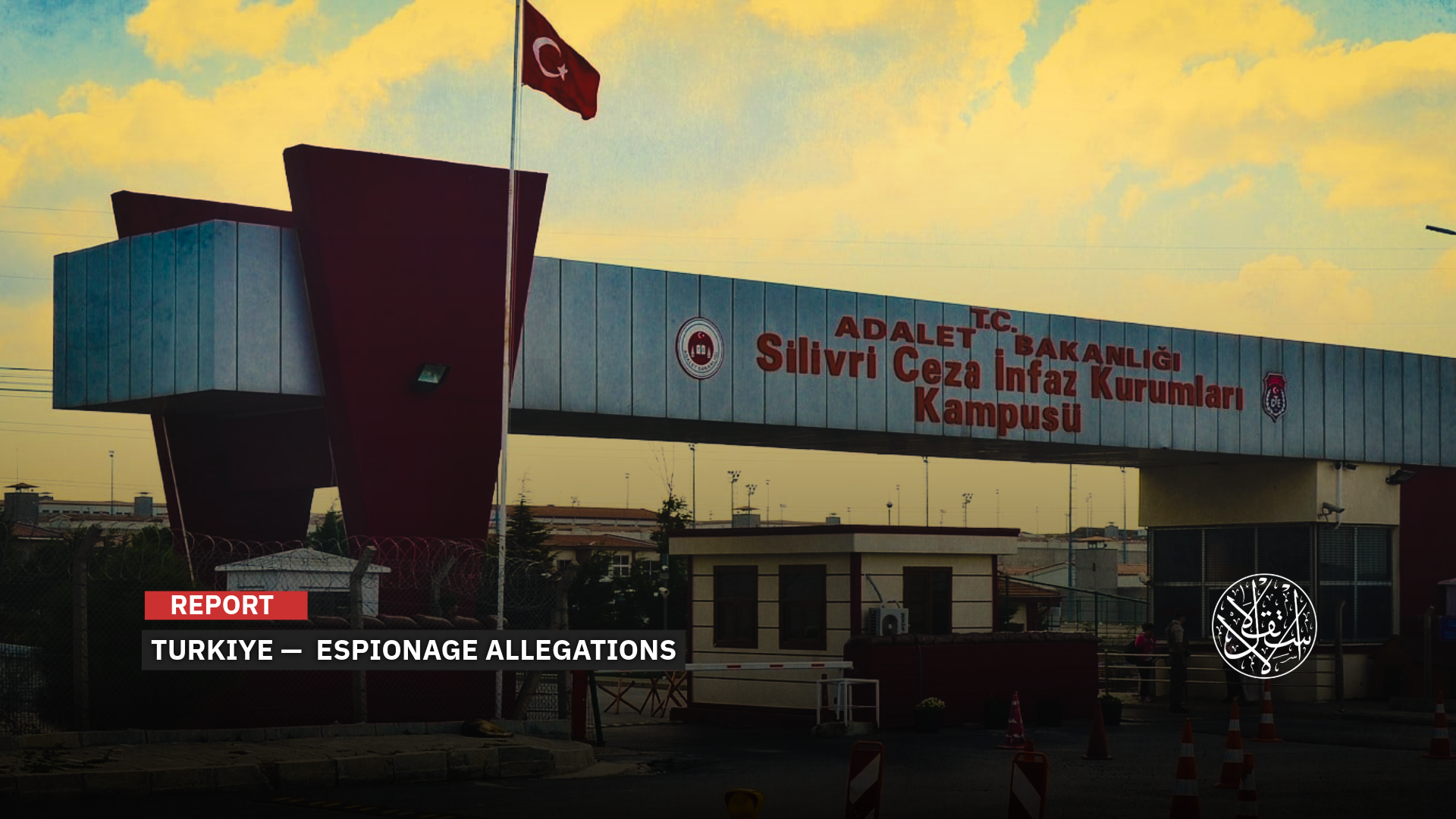
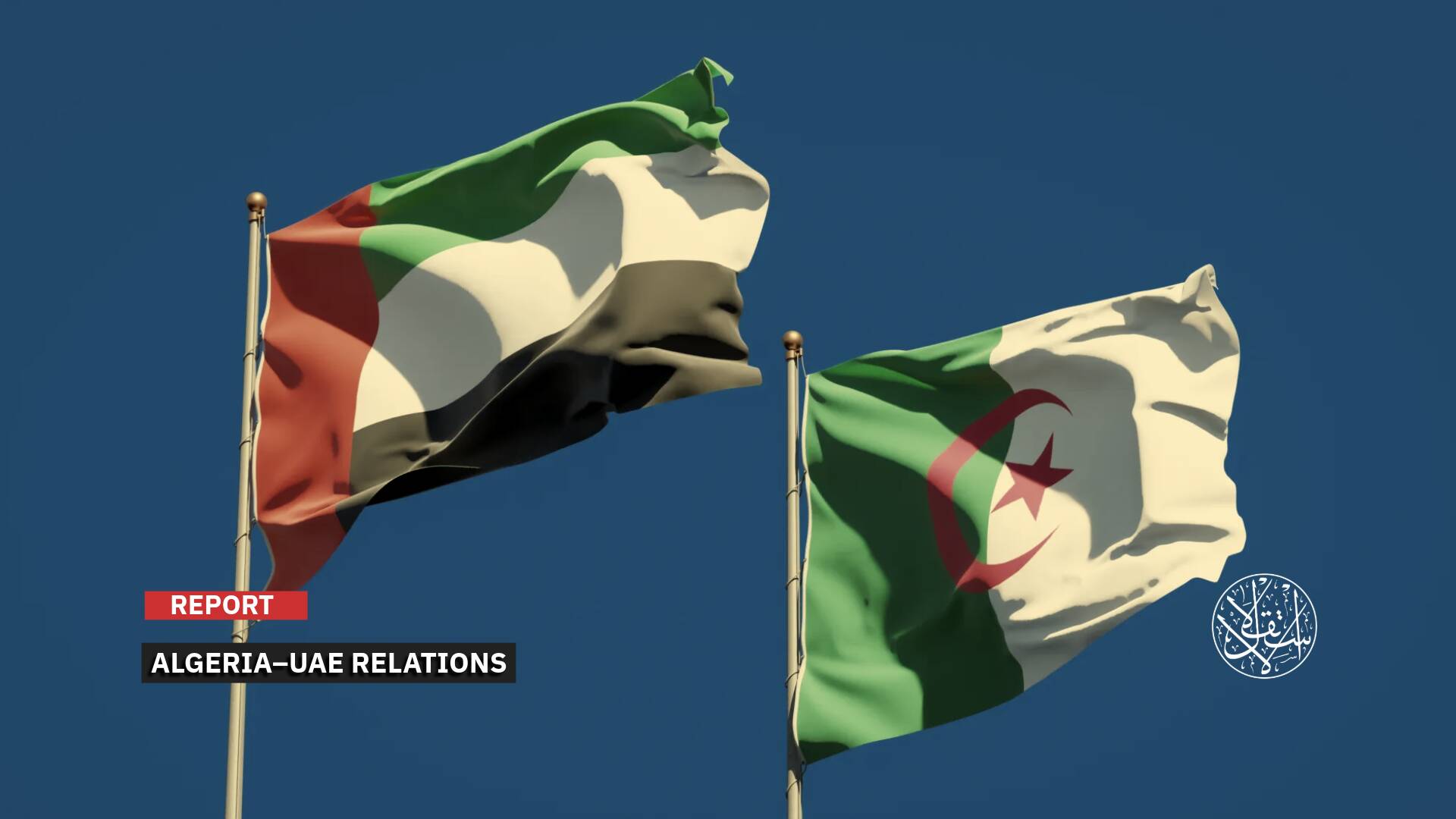
Turkiye’s intelligence service has exposed an Emirati spy ring accused of collecting sensitive data on critical state institutions.
After Turkiye announced on November 25, 2025, that it had arrested a multi-member espionage cell accused of attempting to spy on the country’s defense industries and senior foreign ministry officials, as well as transferring phone SIM cards to Emirati intelligence, the Turkish prosecutor’s office moved swiftly the next day, November 26, to amend its statement and remove the word “Emirates”. The swift reversal triggered a wave of speculation about the true nature and purpose of the operation.
In a third statement, prosecutors asserted that “the suspects have no connection to the United Arab Emirates according to information received from our security sources”, a clarification that only added to the ambiguity surrounding the decision to delete the accusation, especially since the original announcement had been unusually detailed.
Turkish analysts and media reports say the espionage incident itself appears real, citing the continuation of the investigation.
But the removal of the UAE reference, followed by its formal denial, may reflect four possible motives: first, that the intended “message” had already reached Abu Dhabi through the initial statement; second, that the move signalled Turkiye’s irritation over mounting tensions with the Emirates relating to the Sudan file; third, that Ankara, mindful of broader strategic interests, wished to avoid provoking a direct crisis with Abu Dhabi; and fourth, that the espionage case could serve as a future pressure card should Turkiye choose to use it.
Even so, the idea that the UAE itself was spying on Turkish defense projects has not convinced many Turkish experts, who note that the Emirates is neither a major power nor a state with an obvious stake in such an operation.
For that reason, some analysts suggested the UAE may have acted as an intermediary for “Israel”, which has grown increasingly anxious about Turkiye’s expanding military programs, including Ankara’s “steel dome” project designed to narrow its defense gap with “Tel Aviv.”
They also point to the extensive presence of Israeli intelligence activities in Abu Dhabi.
This hypothesis gained traction after reports in the Israeli press claimed that the espionage affair had “nearly led to a crisis between Israel and the UAE” once it came to light, according to the i24NEWS website on November 26, 2025, though no further details were provided.

The Cell Puzzle
The story began with the arrest of three executives from defense contracting firms operating in Turkiye on November 25, 2025, accused of spying on behalf of foreign actors, in an investigation led by the Istanbul prosecutor’s office.
Their detention quickly set off debate over whether they were suspected of spying for the United Arab Emirates, after the first statement issued by the prosecutor’s office included an explicit reference to Abu Dhabi.
According to that statement, Turkiye’s National Intelligence Organization, MIT, working in coordination with the Istanbul prosecutor’s office, had uncovered a network run by Emirati intelligence that aimed to collect sensitive information on critical institutions inside Turkiye.
But the following day, a second statement from the Turkish prosecutor’s office removed any mention of the “Emirates”, referring instead to the detainees as working for an “unnamed foreign entity”.
A third and more definitive statement then followed, issued by Turkiye’s justice minister, Yilmaz Tunc, on the platform X, in which he denied any connection between the UAE and the espionage network that had targeted employees in Turkiye’s defense industry.
Turkiye’s justice minister has said suspects detained this week as part of an espionage investigation in Istanbul have no connection to the United Arab Emirates (UAE), marking the second official correction after prosecutors previously removed all references to the Gulf country from their announcement, the Anka news agency reported.
Following the release of these statements, Emirati media outlets reacted with a sense of vindication at the Turkish denial, noting that the UAE is among Turkiye’s largest trading partners, with total bilateral trade amounting to roughly 16 billion dollars.
The UAE announced that its attorney general had held a phone call with his Turkish counterpart shortly after Ankara formally denied claims circulating in some media outlets about uncovering an illegal espionage operation in Istanbul that had been attributed to the Emirates.
According to Turkish Minute, before Turkiye issued its latest denial, the Emirates News Agency, WAM, had released a statement rejecting any involvement by Emirati citizens in unlawful activities inside Turkiye, while Emirati newspapers reported that Turkish prosecutors had confirmed that “the reports in circulation were inaccurate”.
Analysts, according to comments cited by the Turkish Minute website on November 27, 2025, suggested that Turkiye’s withdrawal of the UAE reference from its initial statement may have been a diplomatic signal, intended to preserve official relations despite the ongoing investigation, and perhaps also because the affair may have some link to “Israel”.
Did UAE Spy for “Israel”?
According to several assessments and analyses, some of them Turkish, the Emirati network is believed to have operated in coordination with other intelligence services, including the Israeli Mossad, given the overlap in security interests and the increasingly intertwined roles between them.
Dr. Ali Burak Daricili, a specialist in security affairs and a former Turkish intelligence officer, told Turkish media that the broader context of the alleged espionage activity linked to the UAE may be connected to “Israel”, noting his belief that the Emirates has, in recent years, fallen under the growing “influence and control” of “Israel”.
Daricili suggested that the removal of the UAE reference from the Turkish prosecutor’s statement may reflect a dual objective on Ankara’s part, to send a particular message on one hand, while avoiding a complete breakdown in relations with Abu Dhabi on the other, especially given the ongoing and potential opportunities for cooperation between the two countries.
Although Turkiye and the UAE have clashed over multiple regional issues, including gas exploration in the Eastern Mediterranean, the Libya file, Sudan, and parts of Africa, President Recep Tayyip Erdogan began a policy of rapprochement with regional rivals in 2021.
Within that framework, Erdogan visited Abu Dhabi in 2022 seeking investment support for Turkiye, following a rare trip to Ankara by the then–crown prince Mohammed bin Zayed in November 2021, a visit after which the UAE announced the creation of a 10-billion-dollar investment fund in Turkiye.
In July 2025, Mohammed bin Zayed, now serving as president of the UAE, returned to Ankara for an official visit, attending the inaugural meeting of the Turkiye–UAE High-Level Strategic Council, where he and Erdogan discussed enhancing economic cooperation and addressed regional issues.
Daricili expanded on what he described as the UAE’s role in serving “Israel” in a series of posts on X, writing, “In my assessment, ‘Israel’ is largely behind the espionage activities conducted by the UAE against Turkiye.” He added, “The Emirates, especially in the recent period, has increasingly come under the influence and control of ‘Israel’.”
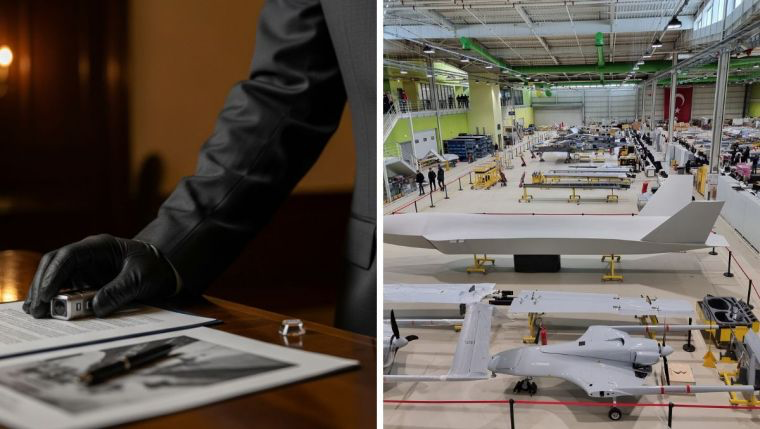
He said the UAE had sought to collect personal information on Turkish engineers, particularly their mobile phone numbers, with the aim of conducting surveillance operations through tools such as Pegasus, in order to access highly sensitive information related to Turkiye’s defense industry.
As for why the Turkish prosecutor’s office removed the UAE’s name in its second statement, Daricili argued that Ankara intended to send a specific message without going so far as to burn bridges with the Emirates, given the potential for cooperation across various fields.
Collaborating Networks
A series of indicators points to the possibility that the UAE was involved in espionage activities that may have been linked, directly or indirectly, to the Israeli Mossad, particularly as several reports and events in 2025 heightened suspicions and strengthened the connection between moves attributed to the Emirates and security interests associated with “Israel”.
According to foreign reports, Abu Dhabi hosts offices linked to Israeli intelligence agencies, some operating within the embassy and others run covertly under the cover of private companies, creating an environment conducive to joint operations.
In recent years, Turkiye has detained dozens of suspects accused of working for foreign intelligence services, including networks linked to “Israel”, Russia, and Iran.
Several of the espionage rings targeting Turkiye were found to have direct ties to the Mossad or to be acting on its behalf.
Among the most notable cases was the Mossad network of 11 members, which Israeli media outlets, including Yedioth Ahronoth, reported had been uncovered inside Turkiye on May 23, 2023, and whose members had reportedly received training in “Israel”.
The year 2019 also saw the arrest of two men suspected of spying for the UAE, according to Agence France-Presse, as part of an Istanbul prosecutor’s investigation into alleged Emirati intelligence activity inside Turkiye, a case that the state-run Anadolu Agency had previously reported.
Analysts argue that geopolitical rivalry between the UAE and Turkiye, along with the clear alignment between Abu Dhabi and “Tel Aviv” on certain issues, may create shared incentives to resort to espionage against Ankara.
Turkish newspapers suggest that this convergence of interests strengthens the likelihood of UAE–“Israel” intelligence overlap in operations targeting Turkiye’s domestic sphere.
The exposure of the latest cell linked to the Emirates comes amid a tense regional backdrop, including the Sudan file, the war in Gaza, and Turkiye’s external influence, offering, analysts say, strategic motivations for actors who may benefit from weakening Turkiye or acquiring sensitive security information about it.
In this context, the Turkish columnist Mehmet Acet had examined what he called “the UAE’s espionage games in Turkiye” in a piece published in Yeni Safak on October 22, 2020.
He commented at the time on reports from Reuters and the Washington Post stating that Turkiye’s National Intelligence Organization, MIT, had arrested Ahmed al-Astal, a Jordanian national of Palestinian origin who had lived in the UAE and was recruited by its intelligence services before being sent to Turkiye for covert missions.
Al-Astal lived along the Black Sea coast, working simultaneously as a journalist and an intelligence asset. His electronic devices contained secret communication programs enabling contact with his handlers in the UAE.
According to the Washington Post, he had been tasked with assessing the Erdogan government’s vulnerability to a new coup attempt after the failed one in 2016, and with supplying the Emirates with information on Arab journalists and dissidents residing in Turkiye who could be potential targets for recruitment.
Acet also recalled earlier remarks by President Erdogan in June 2017, when he said, in a clear reference to Abu Dhabi, that Turkiye knew precisely which actors did what on the night of July 15, 2016, who was monitoring events inside Turkiye, and how much money had been spent during that period.
A Sensitive Timing
According to the European Islamic news outlet 5PillarsUK, in a report published on November 26, 2025, intelligence experts and analysts say the failed Emirati espionage plot comes at a sensitive moment that coincides with the striking rise of Turkiye’s defense industry over recent decades, particularly in the field of drones, where Turkiye has become a major global player.
Citing comments by President Recep Tayyip Erdogan, Turkiye’s defense sector recorded growth of 29 percent in 2024, with total exports reaching around 7.15 billion dollars, driven largely by surging demand for unmanned aerial vehicles that have played decisive roles in conflicts from Libya and Syria to Ukraine, Nagorno-Karabakh, and various African states.
In this context, Emirati newspapers and Abu Dhabi–funded outlets such as Al-Arab, published in London, have shown clear interest in Turkiye’s efforts to establish the “steel dome”, an advanced Turkish air defense system designed to narrow the defense gap with “Israel”.
The project consists of a complex network of radars, multi-range missiles, sensors, and command-and-control centers.
On November 26, 2025, Turkiye’s Presidency of Defense Industries announced that local defense firms had signed 6.5 billion dollars’ worth of contracts to support and develop the integrated air defense system known as the “steel dome”.
The move is part of an accelerated Turkish effort to bolster air defense capabilities and secure its airspace, drawing on recent experiences that underscored the decisive role of air dominance in modern conflict.
Al-Arab noted that the wars waged by “Israel” and the United States in the region, and their ability to prevail with minimal losses thanks to air superiority, serve as a model driving Turkiye to enhance its own capabilities, particularly given “Israel’s” possession of a large fleet of advanced American F-15, F-16, and F-35 fighter jets.
Turkiye had already announced plans in July 2024 to build the steel dome system, which resembles the general structure of “Israel’s” Iron Dome.
The project includes 47 components encompassing radars, missiles, electro-optical sensing systems, command-and-control centers, and short, medium, and long-range air defense units. Estimates suggest that completing the system may take several years given its scale and strategic complexity.
Foreign military assessments argue that the repeated military campaigns carried out by “Israel” in the Middle East, which Ankara views as a direct threat, have played a significant role in pushing Turkiye to strengthen its air power and construct an air defense architecture capable of countering any potential threat, whether from “Israel” or from any other actor possessing comparable air superiority.
Sources
- Justice minister denies UAE link in İstanbul espionage probe
- Turkish authorities expose alleged UAE spy network targeting defence industry
- Who sent spies to Turkiye to steal defence secrets? Ankara refuses UAE espionage allegations
- UAE’s spy games in Turkiye
- Turkiye Builds Its Steel Dome to Narrow the Defense Gap with “Israel” [Arabic]