The EOKA Organization: From Bloody Memory To Renewed Political Conflict in Cyprus
“Members of the EOKA organization carried out the bloody Christmas massacre against Turkish Cypriots.”
The attack targeting Turkish Cypriot civilians in the Yegitler Burcu area of Nicosia, the capital of Cyprus, in early April was not viewed in Ankara and Northern Cyprus as a mere border incident, but rather as a direct invocation of a bloody memory associated with the EOKA terrorist organization.
On April 2, Turkish Vice President Cevdet Yilmaz declared that the responsibility for the attack lay with the Greek Cypriot administration, which has glorified murderers and terrorists for decades.
It should be noted that groups associated with commemorating the founding of the Greek EOKA organization attacked Turkish Cypriot civilians in the Turkish Republic of Northern Cyprus with stones, sticks, and improvised explosive devices.
On the same day, Turkish Presidency's Head of Communications Burhanettin Duran stated that targeting civilians was a provocative act that disregarded regional security, international law, and humanitarian values, emphasizing that Turkiye would continue to closely monitor developments.
This harsh Turkish rhetoric cannot be understood without revisiting the history of the organization itself and its place in Turkish and Turkish Cypriot collective memory.
EOKA is a name associated with a long series of acts of violence, displacement, and civil unrest, according to the official Turkish narrative and in the collective memory of Turkish Cypriot Muslims.
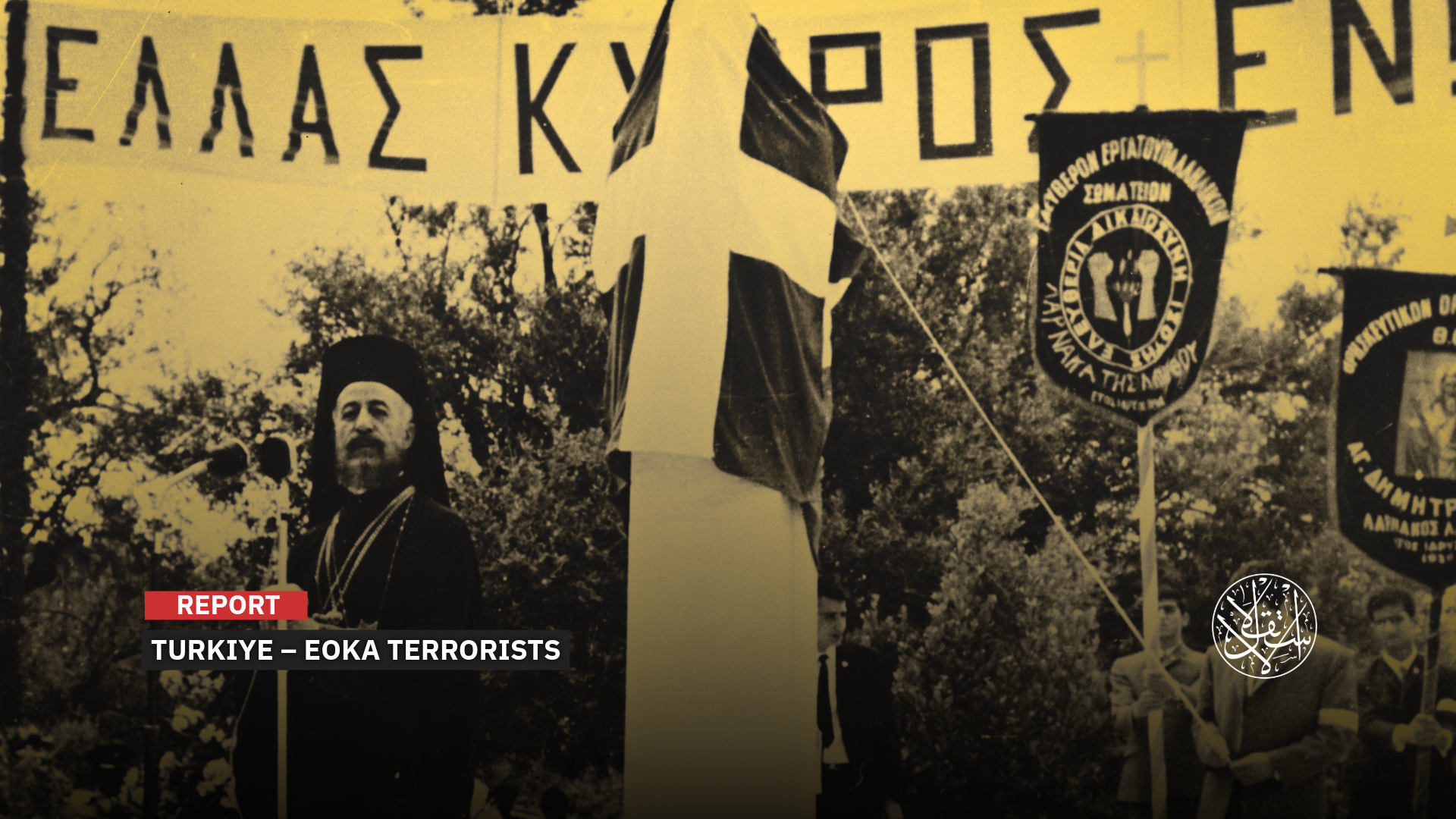
The Scottish Encyclopedia Britannica defines ‘EOKA’ as a secret nationalist organization of Greek Cypriots whose goal was to end British rule in Cyprus and achieve ‘Enosis’, that is, the unification of the island with Greece.
The Turkish Ministry of Foreign Affairs states in its historical account of the Cyprus issue that the organization, under the direction of Archbishop Makarios, killed British citizens, Turkish Cypriot Muslims, and even some Greek Cypriots who opposed the idea of Enosis.
The Enosis Project
The story effectively began on April 1, 1955, when the organization launched its first armed operations under the leadership of the Greek Cypriot officer Georgios Grivas, known as Digenis.
That night, simultaneous attacks were carried out against British positions in Nicosia, Larnaca, and Famagusta, officially inaugurating what later became known as the State of Emergency in Cyprus.
Britannica summarizes the primary aim of this armed action as ending British colonialism, but with a clearer strategic objective: the unification of the island with Greece.
This point is precisely what makes the history of EOKA more complex than a simple narrative of national liberation, because for Turkish Cypriots, the Enosis project was not merely a different constitutional option, but a direct threat to their political and security status on the island.
In the organization's early years, its operations focused on the British administration, but EOKA's image as an organization directed solely against colonialism did not hold up for long in the face of subsequent developments.
As the 1950s drew to a close, and in parallel with the escalating polarization between the Enosis project, embraced by large segments of the Greek Cypriot population, and the partition project, championed by Turkish Cypriots and Turkiye, the island entered a new phase of civil conflict.
In 1958, EOKA began carrying out increasing attacks against Turkish Cypriots, and also killed Greek Cypriots who opposed his ideological orientation.
When Cyprus gained independence on August 16, 1960, under the Zurich and London Agreements, there seemed to be an opportunity to resolve the conflicts through a shared state based on power-sharing between Greek and Turkish Cypriots, guaranteed by Turkiye, Greece, and Britain.
However, this formula was fragile from the outset. Greek and Turkish Cypriots participated in a power-sharing system until 1963, when a dispute over the functioning of the state erupted into a full-blown conflict, leaving Greek Cypriots in control of the internationally recognized republic.
The violence that broke out in December 1963 prompted the United Nations, six months later, to send a peacekeeping force to the island, while Turkish Cypriots withdrew to isolated enclaves. This meant that the de facto partition had begun long before 1974.
Bloody Christmas
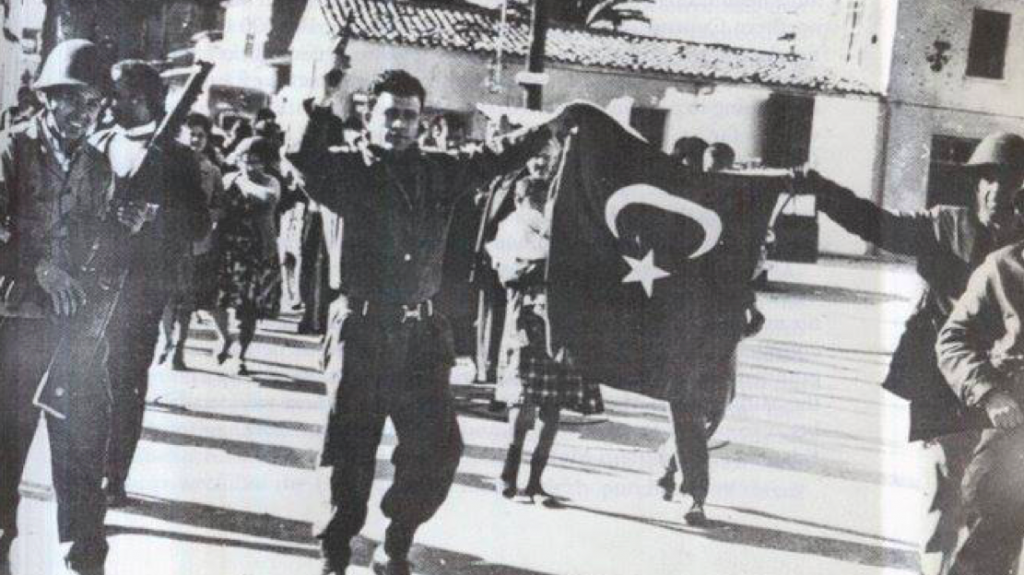
That pivotal moment entered Turkish memory as Kanli Noel, or Bloody Christmas.
On December 21, 1963, a wave of widespread violence erupted against Turkish Cypriots. Members of the EOKA carried out the Bloody Christmas Massacre, the first in a series of brutal attacks against Turkish Cypriots.
According to the Turkish Foreign Ministry's account of the massacre, Turkish support and the resistance of Turkish Cypriots prevented the perpetrators from achieving victory.
In Turkish media coverage of the anniversary, the image of the murder of military doctor Nihat Ilhan's wife and their three children in the bathtub is frequently revisited as one of the most deeply ingrained in the collective memory of Turkish Cypriots.
However, the historical impact of Bloody Christmas extends beyond its symbolism, influencing the demographic and political shifts that followed.
According to a 1964 report by the UN Secretary-General, cited in official Turkish documents, thousands of Turkish Cypriots fled their homes at the start of the unrest in 1963, and this exodus continued throughout the early months of 1964.
Another UN-related document states that fear and mistrust following the disappearance of 32 Turkish Cypriot hostages in Famagusta in May 1964 led to a complete halt in the movement of Turkish Cypriots by land, and that their movements were now conducted under UN escort.
UN reports, cited in Turkish and academic sources, also document that 527 homes were destroyed and 2,000 were looted or damaged in Turkish Cypriot areas during this period.
Other common narratives, later corroborated by studies and documentation, speak of the displacement of approximately 25,000 Turkish Cypriots from 104 villages.
These figures are not merely a human detail; they are the essence of the Turkish narrative: that, due to the crimes of the EOKA, Turkish Cypriots were transformed, from 1963-1964 onwards, into a community confined to isolated enclaves comprising only 3 percent of the island's area.
The Akritas Plan
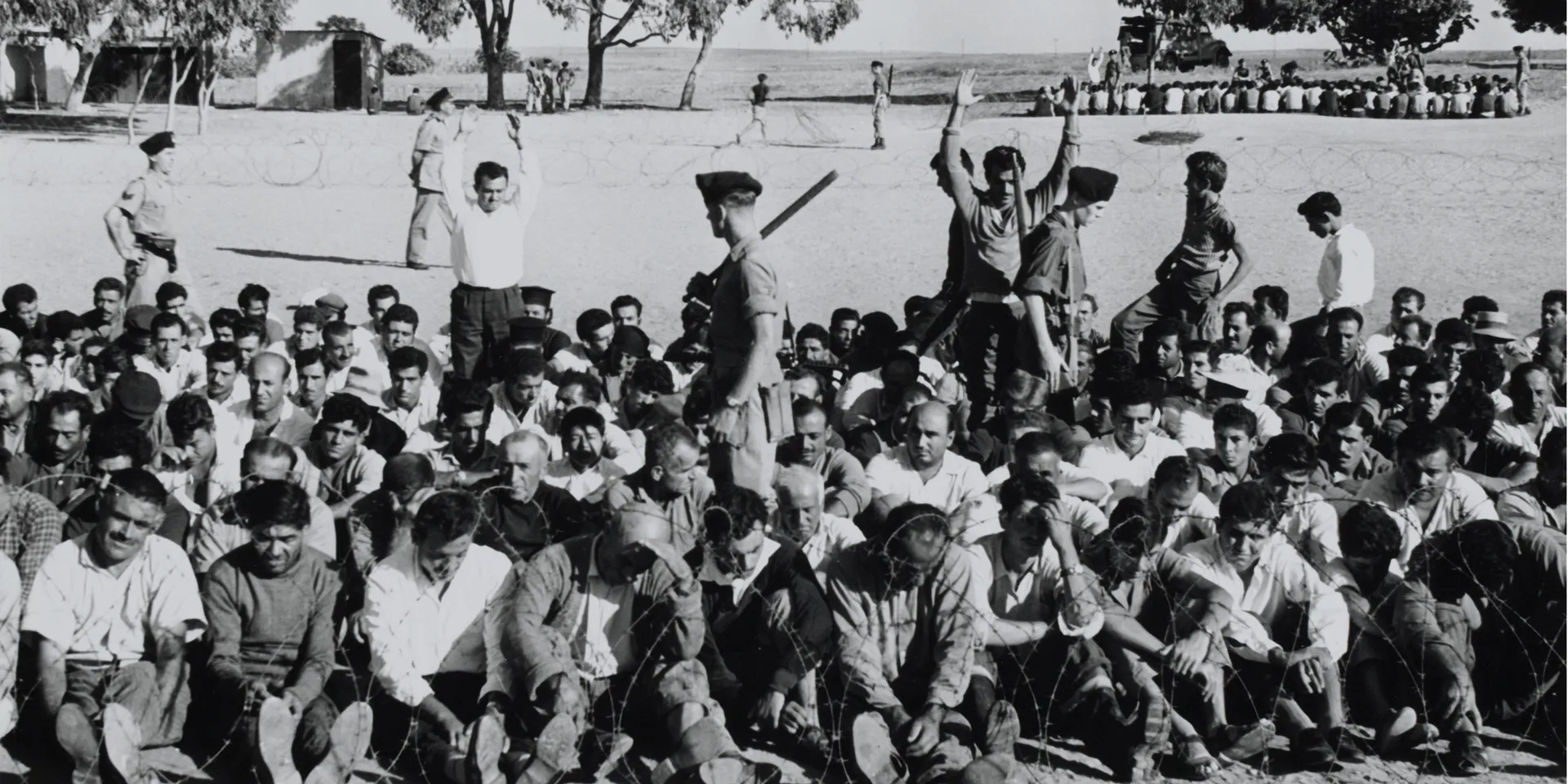
In official Turkish discourse, the EOKA is also linked to the Akritas Plan, which Ankara claims was used by Greek Cypriots to forcibly dismantle the partnership in the Republic of Cyprus.
Beginning on December 20, 1963, the EOKA gangs implemented the Akritas Plan, aimed at excluding Turkish Cypriots from the republic founded on partnership.
This plan forms the basis of a fundamental part of the historical interpretation of the division of Cyprus.
The issue was not a spontaneous civil explosion, but rather a transition from the Enosis project to attempts to alter the constitutional and demographic balance of power through the armed force of EOKA, the armed wing of the Greek Christians.
The 1970s then added a new layer to this bloody legacy. In 1971, Grivas founded a new organization, EOKA II, a far-right group that adopted the same goal—Enosis—but in a new context marked by clashes with Cypriot President Makarios himself.
Britannica explains that the coup that took place in July 1974 was planned by the ruling military junta in Athens and carried out by units of the Cypriot National Guard led by Greek officers and supported by elements of EOKA.
Reuters, however, clearly indicates that the Turkish military intervention on July 20, 1974, followed a brief coup supported by Greece.
This event is a major point of division in contemporary Cypriot memory. In Northern Cyprus and Turkiye, this intervention was based on the right to guarantee the security of Muslim Cypriots after a coup targeting the constitutional order, led by Greek Christian extremists.
This context helps explain contemporary Turkish statements regarding the organization.
On March 19, the Prime Minister of the Turkish Republic of Northern Cyprus, Unal Ustel, attacked a letter from the President of the European Parliament, Roberta Metsola, published on the anniversary of the founding of EOKA.
He described it as a clear scandal and a distortion of historical facts because it spoke of the organization's actions in terms of heroism and courage.
According to the Turkish Anadolu Agency, Ustel said that any approach that glorifies terrorism or ignores the suffering endured by Turkish Cypriots is worthless to Northern Cyprus.
Less than two weeks later, Ustel himself criticized the Greek Cypriot leader, Nikos Christodoulides, for statements that were considered in Northern Nicosia to be praised for EOKA, saying that they ignore the persecution suffered by Turkish Cypriots.
These statements mean that the organization is no longer just a matter of archives, but a living political issue in regional and European debates.
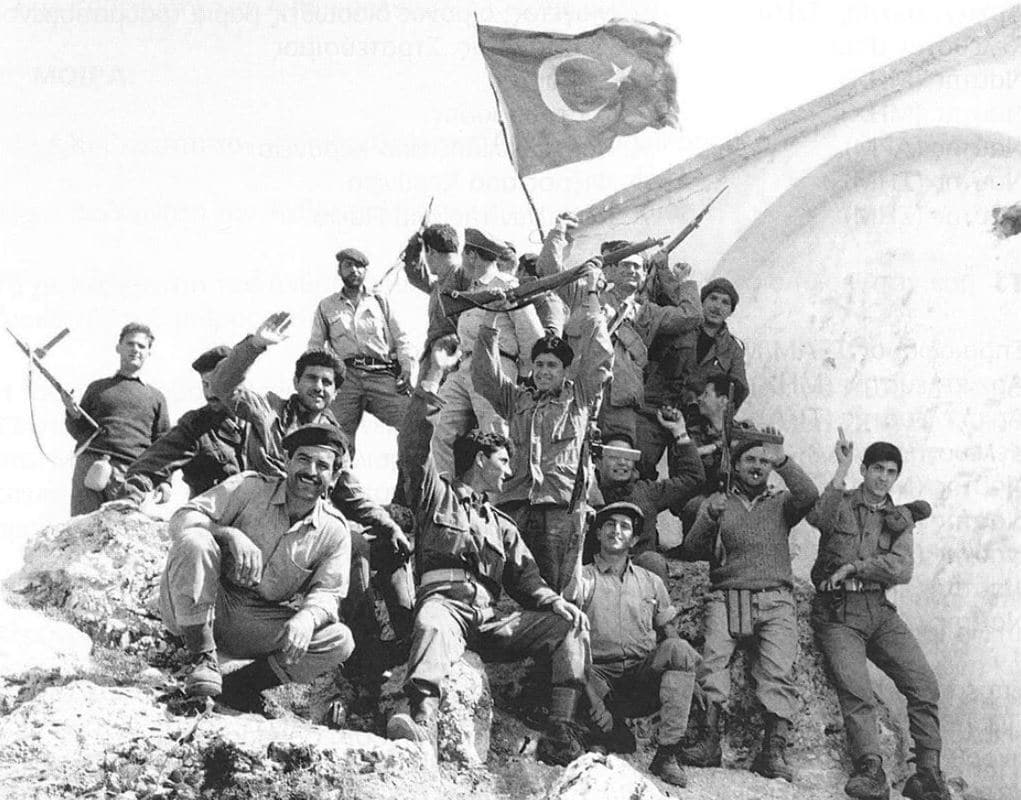
The official Turkish position is heading in the same direction. In December 2025, the Turkish Foreign Ministry commemorated the Bloody Christmas with a strongly worded statement using the term barbaric attacks and asserting that Turkish Cypriots, with Turkiye's support, had defeated the EOKA terrorists.
The renowned Turkish writer and historian Kadir Misiroglu (who passed away in 2019) wrote about the crimes committed by the EOKA organization, stating: “Cyprus was not just a political issue, but a matter of survival for the Turks there, who were subjected to attacks and massacres.”