Policing Fasting and Hijabs: How France Fuels Fear of Muslims
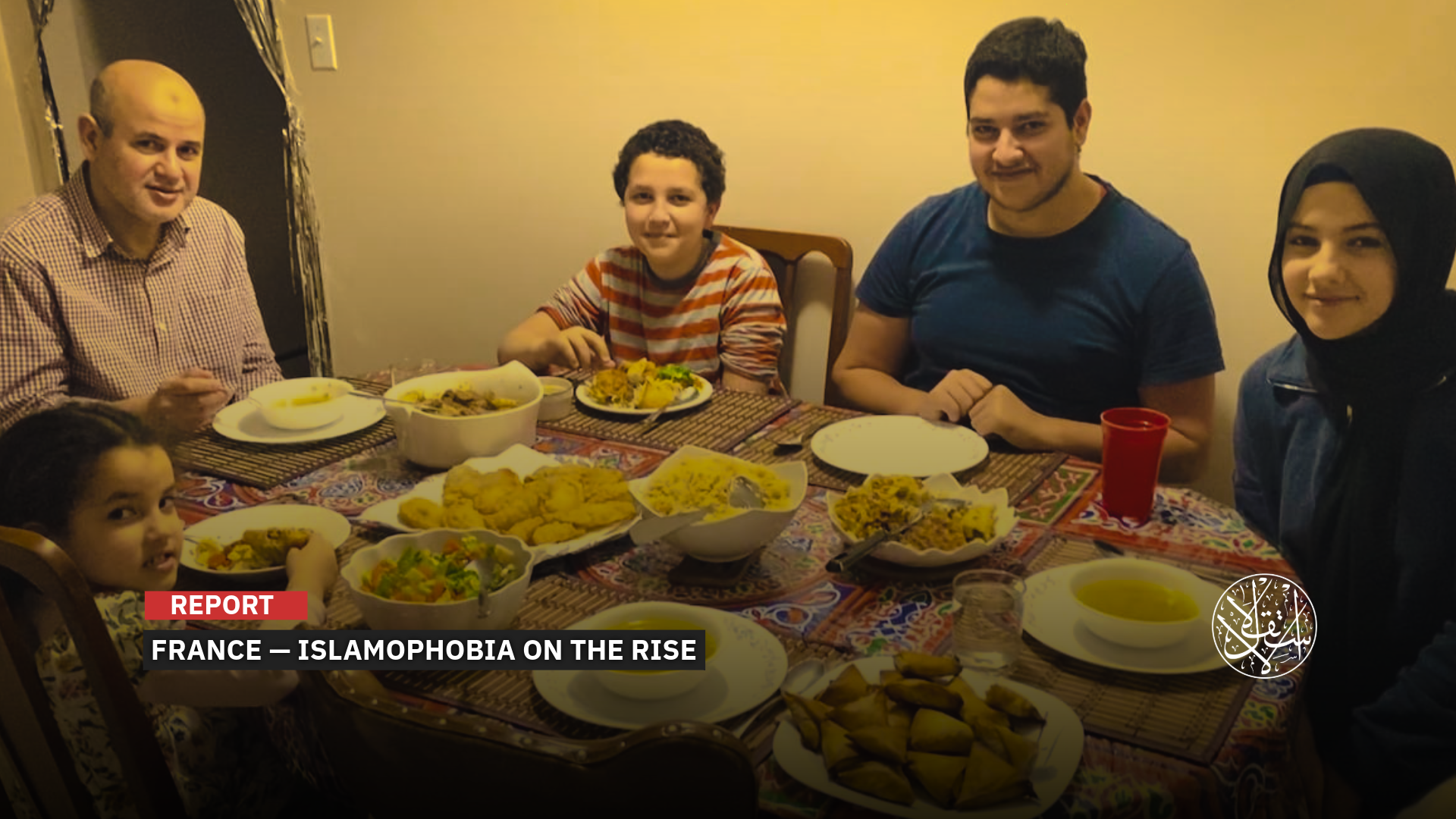
The report claimed that girls under sixteen who wear the hijab or fast during Ramadan are being subjected to “psychological and educational abuse.”
In a political climate already thick with election-season anxieties, France has once again plunged into a fierce public fight over the state’s relationship with its Muslim citizens.
Fresh parliamentary recommendations issued on November 25, 2025, reignited the controversy after lawmakers proposed banning the hijab and Ramadan fasting for anyone under sixteen—measures critics say mark a new peak in a long campaign to curb religious freedoms and intrude into private life under the banners of secularism and child protection.
None of this erupted out of nowhere. It builds on three decades of mounting tensions, as Islamophobia hardened into policy and a steady expansion of laws and administrative measures trained disproportionate scrutiny on Muslims. What began as sensational media fodder has steadily morphed into a central political tool, one that fuels polarization and deepens social fractures across the country.
A Controversial Blueprint
The French Senate set off the latest storm with a 100-page report titled “Islamism: An Obstacle to Our National Cohesion.” The document includes a slate of proposals targeting how Muslim minors practice their faith.
Among its most striking claims: that girls under sixteen who wear the hijab or fast during Ramadan are victims of “psychological and educational violence.” For critics, the language lays bare just how far the political discourse has drifted, reframing ordinary religious practices observed by millions of Muslims worldwide as forms of harm.
Overseen by Senator Jacqueline Eustache-Brinio and backed by the Republicans, the report outlines seventeen recommendations aimed at curbing what it labels “Islamist influence” in public institutions. These include banning headscarves for school chaperones, tightening surveillance of families and mosques, and placing greater oversight on religious activities.
Opponents argue that the proposals entrench an exceptionalist system that treats French Muslims as a category apart, subject to heightened legal and cultural policing, and risks deepening the sense of marginalization and mistrust already rippling through French society.
Ramadan Under Watch
Perhaps the most alarming element of the Senate’s proposed report is its call for monitoring children during Ramadan to check whether they are fasting, a suggestion that has stunned rights advocates and triggered a wave of outrage.
For Chems-Eddine Hafiz, rector of the Grand Mosque of Paris, the proposal marks an unprecedented intrusion into private life and a direct assault on freedom of conscience. He delivered a blistering critique of the report, accusing its authors of deliberately blurring the line between Islam as a faith and Islamism as a political ideology. Imposing restrictions on minors who fast, he warned, reflects a deep misunderstanding of Islamic practice and an unjustifiable intrusion into the spiritual lives of Muslim families.
Hafiz also cautioned that such measures could open the door to state surveillance of households and meddling in parental choices—a clear breach, he argued, of the French constitution’s protections for religious freedom.
The controversy has revived a broader debate about the role of opinion polls and research institutes in shaping public perceptions of Muslims in France, amid growing accusations that some of these studies are biased and driven by ideological agendas.
Le Monde recently revealed that a major survey on the so-called “Islamic orientation of French Muslims,” conducted by the polling firm IFOP, was funded by websites and magazines presenting themselves as anti-extremism platforms but which are in fact linked to political and media networks accused of stoking Islamophobia and reinforcing stereotypes.
French scholar Francois Burgat, a leading expert on Islam and politics, issued a sharp methodological critique of the survey. While he cautioned against dismissing its findings outright, he argued that the framing and intent behind the study were part of what he called a broader “climate of symbolic intimidation” confronting Muslims in France.
Burgat noted that the renewed religiosity observed among young Muslims is neither exceptional nor a social threat, but rather a natural response to exclusion, stigmatization, and a growing search for identity in an increasingly hostile political and cultural environment.

A Softer Tone, the Same Old Islamophobia
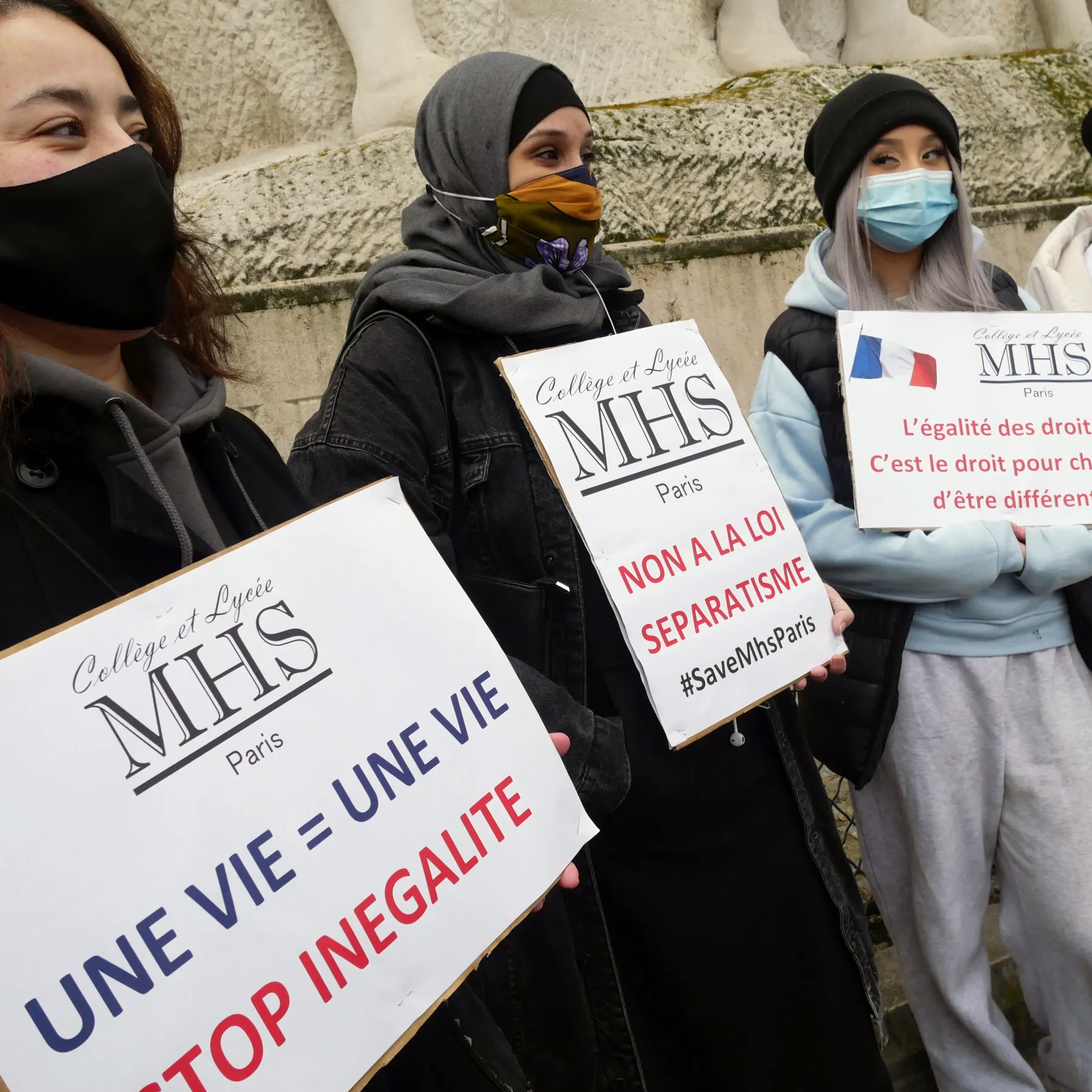
For activist and academic Ismahane Chouder, one of the most prominent advocates for Muslim rights in France, the latest uproar is merely the newest chapter in a long-running pattern of legislation and political maneuvering that targets Muslims—even when packaged under slogans like child protection or the defense of secularism.
Chouder says none of this began yesterday; the pressure has been mounting for three decades. But in recent years, she argues, it has taken on a sharper, bolder edge, fuelled by political brinkmanship and the frantic race to capture right-wing voters or neutralize the far right’s narrative. With every election cycle, these issues are hauled back to center stage as reliable tools of political mobilization—instruments that redirect public attention away from France’s deepening economic and social crises.
What was once bluster or provocation, she says, has hardened into full-fledged bills that now shape the everyday lives of French Muslims, reinforcing a sense of isolation, exclusion, and collective suspicion.
One of the most contentious findings in the IFOP study was the marked rise in religiosity among young French Muslims, both in religious practice and in visible expressions of Muslim identity.
Researchers say this trend is less a challenge to Republican values than a predictable response to mounting social and political pressure—a way for young people to anchor themselves as they navigate exclusion and hostility.
French scholar Francois Burgat describes the shift this way: before 2020, state scrutiny tended to focus on the behavior of a small minority of Muslims. Since then, he argues, the target has quietly expanded to encompass practices that are widespread across the Muslim community.
According to Burgat, this escalation only deepens social divides, leaving Muslims with the sense that they are constantly under watch, a climate that sharpens feelings of stigma and further erodes trust between citizens and the state.
Political Gamesmanship
The debate took another jarring turn when the French Council of the Muslim Faith revealed that the country’s main Jewish umbrella organization, CRIF, had commissioned a private firm to conduct an investigation that involved gathering data on French Muslims. According to the council, part of that research was carried out by an individual with links to Israeli Occupation intelligence.
The disclosure reopened a fraught question at the heart of the French model: where do the boundaries of oversight lie in a state that claims to safeguard privacy and keep religion separate from political life?
For activist Ismahane Chouder, this was no one-off misstep but a stark example of how data and research are weaponized to construct a narrative that paints Muslims as a problem to be managed. She argues this is happening against the backdrop of global anxieties about terrorism and amid “Israel’s” war on Gaza, which has increasingly been used to brand any Muslim dissenting voice as antisemitic.
Chouder warns that this deliberate conflation of antisemitism with Islam casts Muslims as a latent internal threat, paving the way for laws that erode civil and religious rights. The impact, she says, is a growing retreat by many Muslims into tightly knit circles where they can feel some measure of safety and dignity.
To French scholar Francois Burgat, the dispute may sound theological, but its core is unmistakably political. He describes it as a competition between the far right and the government to see who can stake out the toughest posture on identity and migration, a bidding war built on fear of the Other.
Burgat argues that today’s escalations are not an aberration but the extension of a long-running trajectory: the steady transformation of Islam into a political pressure point, pulled out whenever a government or party needs to rally support or project authority.
For many Muslims in France, this landscape creates a pervasive sense of being singled out as a group, held collectively responsible for crises and tensions to which they have no connection.
There is a growing fear that what are marketed as “exceptional” measures will quietly harden into permanent legal structures that restrict their presence, narrow their rights, and place lasting limits on their ability to practice their faith and participate fully in public life.
A Dangerous Turn
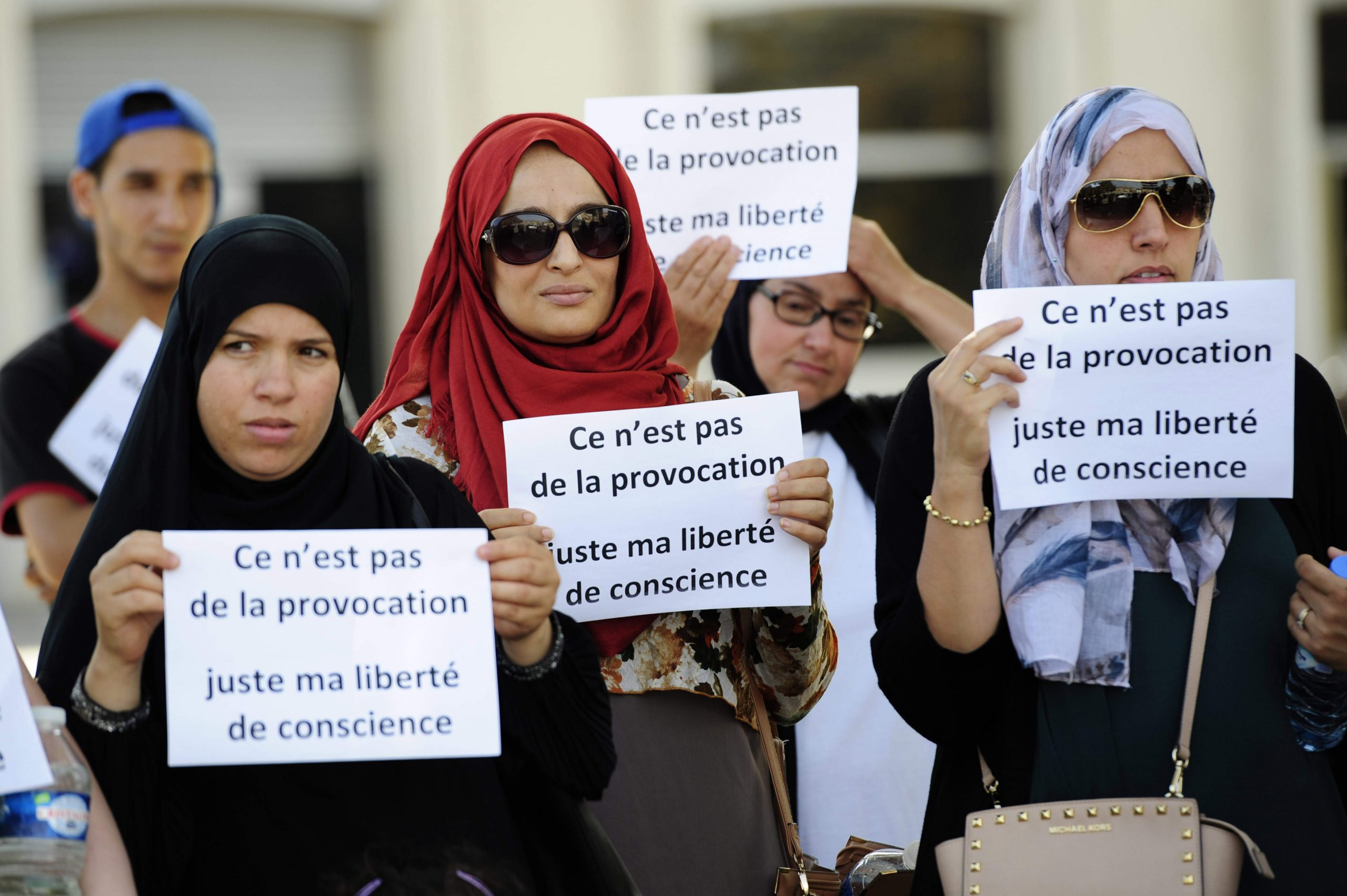
Human-rights advocate Mostafa Fouad told Al-Estiklal that France’s push to ban the hijab and forbid children from fasting marks “a dangerous turn” in the state’s relationship with its Muslim citizens, one that risks ushering in an era where religious practice is treated as behavior requiring surveillance and punitive regulation.
Fouad warned that subjecting expressions of faith, whether the hijab or Ramadan fasting, to monitoring or restrictive laws could, if enacted, place a large segment of Muslims under a special system of oversight. That, he argued, would open the door to extraordinary measures targeting families, mosques, and religious institutions, all under the pretext of maintaining public order.
“The danger lies not only in the proposals themselves but in the political climate that allows them to surface and resurface and in the media narratives that increasingly frame Muslims as a threat to national identity or national security,” he said.
“This rhetoric deepens polarization and fuels a growing sense of alienation among young Muslims in France, many of whom already feel their religious identity is constantly being scrutinized.”
“With elections approaching, several political actors are exploiting the controversy to energize their base and strengthen their standing, a dynamic that all but guarantees the debate over Islam and Muslims will intensify in the months ahead,” Fouad added.
The result, he warned, may be more tension and more pressure on the basic rights of millions of French Muslims, who could find themselves facing an even more fraught social and political landscape.
Sources
- French conservatives relaunch offensive on Islamism with controversial report
- Another national rift over Islam: France weighs ban on Ramadan fasting for minors
- Macron party backs banning hijab in public spaces for under 15s
- The Dean of the Paris Mosque: French Senate Recommendations Are Divisive and Questionable [Arabic]