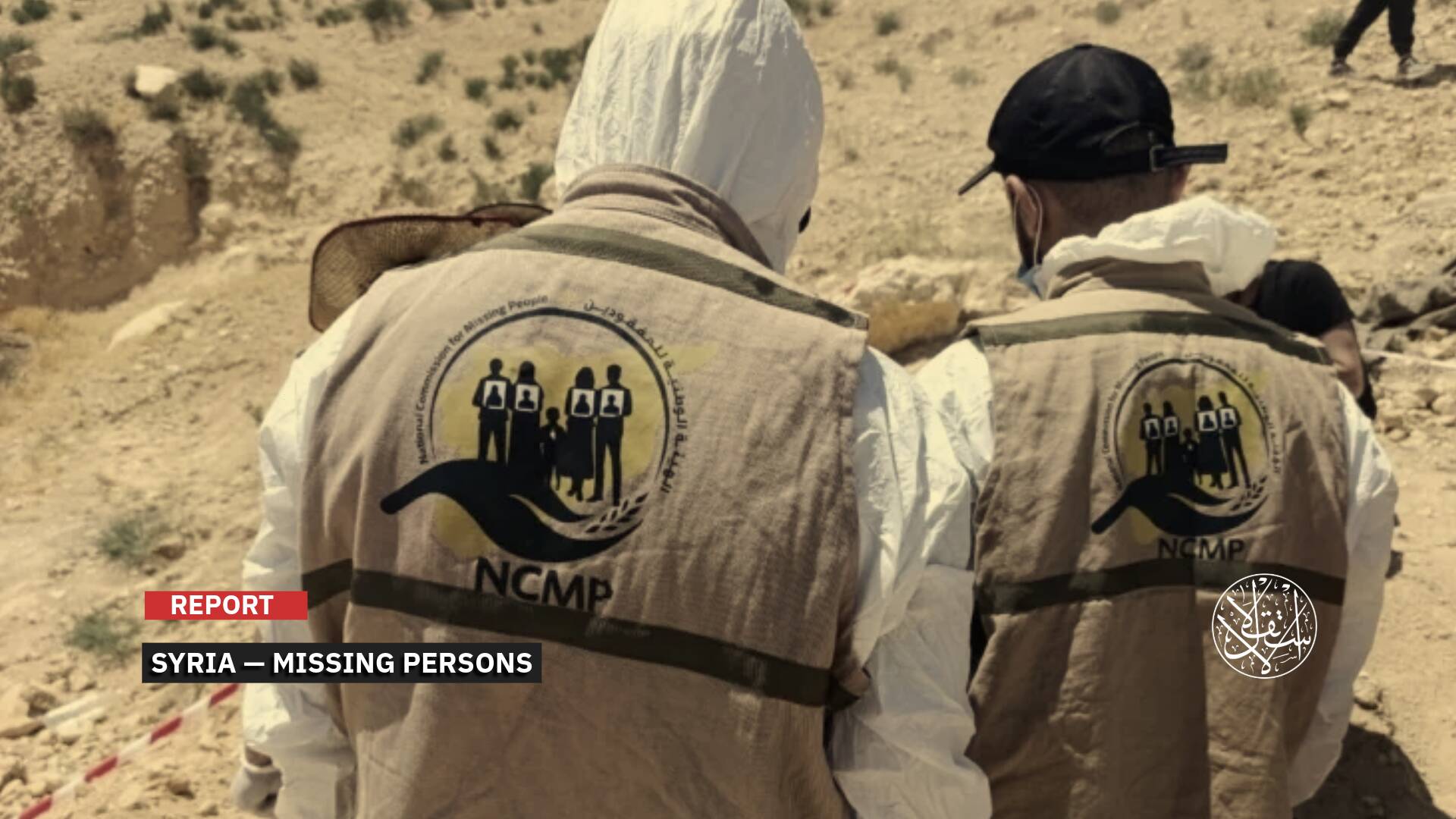
Legal Expert: UAE Commits a Crime Against Qaradawi’s Son, and Netanyahu Is Internationally Wanted (Exclusive)
“The UAE has committed a clear violation of international law.”
International law expert Abdelmajid Mrari stated that the ceasefire in the Gaza Strip does not preclude accountability and legal proceedings against Israeli Prime Minister Benjamin Netanyahu, noting that the principle of no impunity is a well-established international principle.
In an exclusive interview with Al-Estiklal, he emphasized that peace agreements or ceasefire agreements do not absolve those accused of such crimes.
He affirmed that the participants in the Freedom Flotilla, which was intercepted by “Israel” in international waters and whose members it assaulted and arrested, have the full right to prosecute it before all international courts, pointing out that each of them has the right to sue “Israel” in their own country.
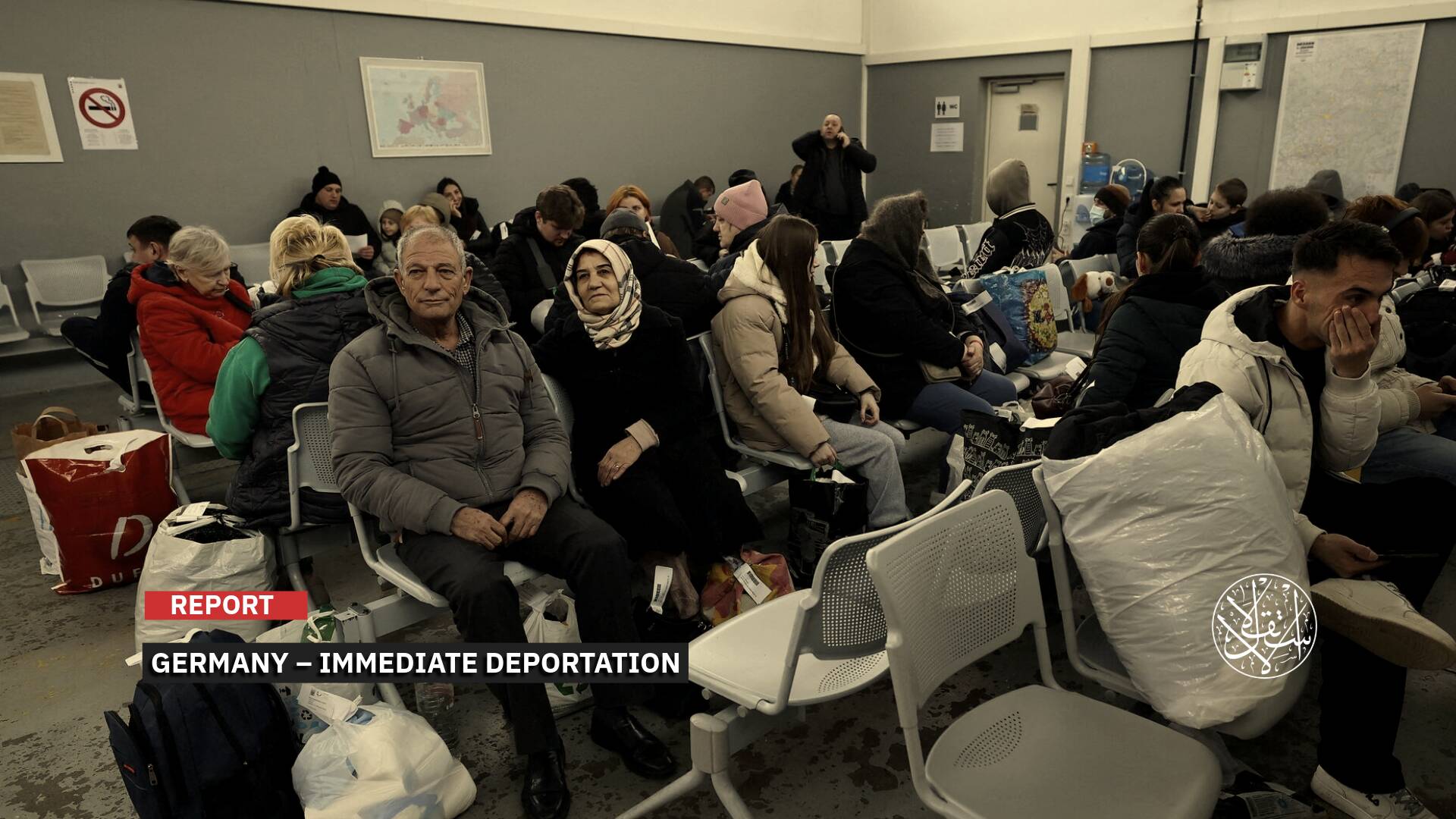
He explained that the world still needs more legislation to protect refugees and irregular immigrants, especially since many Western governments are a major cause of these people's migration from their countries due to their past colonial practices and other reasons.
The trials being conducted by Tunisian President Kais Saied against opposition figures and political activists are considered to be without any legal basis, either domestically or internationally.
Mrari, head of MENA at the International Federation for Human Rights (FIDH), called on Tunisian authorities to release all those being tried on political grounds, arguing that these measures are unworthy of Tunisia and its victims.
Regarding the case of poet Abdul Rahman Yusuf Qaradawi, he emphasized that the UAE committed the crime of arbitrary arrest and enforced disappearance against him and bears legal responsibility at the international level, given that he has been detained there for nearly a year without trial or clear charges.
Mr. Mrari is a member of the legal team working to prosecute “Israel” before the International Criminal Court (ICC). He is also known as the lawyer for Palestinian victims at the court and the Middle East coordinator for FIDH in France.
Legal Perspectives
How do you see the trial of Netanyahu and some members of his government proceeding after the ceasefire agreement in Gaza? Do you expect verdicts against him?
A ceasefire does not preclude accountability and legal proceedings, noting that the principle of no impunity for perpetrators is a well-established international principle.
Peace agreements or ceasefire agreements do not absolve the accused of these crimes, and generally speaking, peace without justice and without retribution is incomplete.
On a practical level, if Netanyahu is arrested at any moment, he will be tried according to the rules of procedure within the ICC. We expect the maximum penalties if he and the other accused members of his government are arrested.
The charges against Netanyahu are serious, carrying a potential sentence of up to thirty years in prison, given that they are related to war crimes and crimes against humanity.
The maximum penalties are what we, as the defense and as lawyers for the victims harmed by his crimes, will demand.
On a legal level, is there a way to prosecute the Israeli occupation internationally for its nearly two-decade-long siege of the Gaza Strip?
I believe that procedures have already begun in this regard. We, as a legal team, filed a complaint in June 2023, on behalf of ten members of the Palestinian Legislative Council.
At that time, we presented a clear case regarding the blockade, describing it as a war crime under Article 8 of the Rome Statute of the ICC.
We requested the Court to activate the financial fund within the Court to compensate the residents of the Gaza Strip for the blockade, within the framework of what is termed reparation for the victims, given the numerous economic, social, and other problems it has caused them.
Holding “Israel” criminally accountable for the blockade is a possibility available at the level of the International Court of Justice (ICJ) or even at the level of the European courts, which have already begun considering a number of cases submitted to them on this matter.
The most recent of these cases is the investigation opened by the French, Spanish, and Dutch public prosecutors.
How would you explain to the public the legal reality and the legal responsibilities incumbent upon any state with the status of occupier, such as “Israel”?
The ICJ has already described Israel as an occupying power. According to international law, particularly the Geneva Conventions, the occupying power bears a very significant legal responsibility to implement and respect the rules of international law regarding the rights of the people whose land it occupies—in this case, the Palestinian people.
Among these rights are the rights to education, health, food, and other basic necessities. These rights are part of the protection of civilians stipulated in Article 7 of the Fourth Geneva Convention, which calls for respect for human dignity and protection from violence.
“Israel” does not respect this article and fails to provide for the basic needs of the population whose land it occupies. Anyone familiar with Articles 55 and 56 will know that Israel has significant legal obligations, which it completely disregards.
Article 33 of the Fourth Convention also prohibits the use of blockades as a form of collective punishment. Another point concerns freedom of navigation and trade. The UN Convention on the Law of the Sea considers entry into Palestinian territorial waters an international crime.
There is also Article 8 of the Rome Statute of the ICC, which defines starvation as a war crime punishable by law. It is under this article that Netanyahu and Gallant were prosecuted, and based on which the warrant was issued classifying them as war criminals.
It is clear that “Israel” has disregarded all these articles and other legal provisions. Therefore, it is, of course, an occupying power that has blatantly violated international law, showing complete disregard for the international community.
Criminal Politician
Trump once called for the cancellation of Netanyahu's trial within “Israel”. Do you expect this to actually happen, or does the legal system prevent it?
The Israeli judiciary enjoys strong independence, and Trump's calls in this regard will never find a positive response.
Judicial sovereignty prevents any foreign official from interfering in its affairs. Given that the judiciary there is that of an oppressive occupying power, it's worth noting that their courts do not tolerate corruption. Numerous sanctions have already been imposed on several political figures there, including Ehud Olmert, who was accused and convicted of corruption.
Netanyahu is a clear and blatant example of a criminal politician, and he is being pursued both internationally and domestically. Therefore, Trump's pressure on this matter will be ineffective.
Regarding the legal rights of the participants in the Freedom Flotilla and other attempts to break the siege on Gaza. What do you expect in this context? Is it possible that they will obtain their rights after the illegal measures they have been subjected to?
Those whose rights have been violated, who have been arrested, harmed, or abducted in international waters, have the right to pursue all legal avenues against Israel at the international level—through the ICC—as enforced disappearances may constitute a war crime.
They can also resort to the criminal justice systems in their home countries or European countries, especially since some of them are of European origin and have the right to prosecute the officers who assaulted them.
We have suggested to some citizens and members of parliament that they approach the French courts to prosecute certain Israeli officers who hold French citizenship.
The ship owners must also take legal action to reclaim their property, as this constitutes illegal expropriation and clear theft.
The states whose sovereignty was violated and whose flags these ships were flying also have the right to take legal action through the ICJ, based on the assessment that Israel violated the 1982 UN Convention on the Law of the Sea.
Syria and Tunisia
How do you view the legitimacy of trying some figures from the Assad regime in other countries? Do they have any chance of escaping justice through legal loopholes?
The Geneva Conventions grant the right to international courts, or the courts of several European countries, to prosecute those who commit crimes stipulated in their national laws, such as torture and crimes against humanity.
Figures from the Assad regime are implicated in such crimes. They have tortured and killed many Syrian citizens. Some perpetrators of these crimes have been identified and tried in Germany, and one of them received a life sentence.
After Assad's fall in Syria and his escape to Russia, how can the new government legally try Bashar al-Assad internationally or extradite him from Russia?
This depends on whether or not there is an extradition treaty between Russia and Syria.
I believe this does not exist, and the new Syrian government should establish relations with Russia that will ultimately lead to such an agreement.
The absence of a judicial cooperation agreement between the two countries will be a major obstacle, and not easily overcome, as Russia is under no obligation to do so.
Since Kais Saied staged a coup against the constitution and elected institutions in Tunisia, how do you view the trials of opposition figures? What are their legal and perhaps political ramifications?
The constitutional crisis in Tunisia began on July 25, 2021, when Saied took exceptional measures, amounting to a coup against the constitution, misusing Article 80.
What Saied did can only be described as a constitutional coup; this is the correct characterization of his actions. Consequently, the trials of opposition figures have unfortunately become a political phenomenon in Tunisian life.
These trials have been marred by a series of very serious violations, suggesting they are politically motivated trials with retaliatory intent.
It is clear that the defendants—politicians, journalists, lawyers, and even judges—have not committed a single crime that violates the laws of their country. Even if they had, they would have had the right to defend themselves legally.
But Saied has created a situation of profound injustice; therefore, all these people are not accused or criminals, but rather political prisoners.
UN reports describe the human rights situation in Tunisia as dire and critical. There are also judges who have been forcibly disappeared after refusing to issue rulings according to Saied's whims.
Unfortunately, Kais Saied has appointed himself the leader of everything in Tunisia. He and his government must correct this flawed course, which is unworthy of Tunisia and its sacrifices.
Emirati Dilemma
Since the extradition of the poet Abdul Rahman Qaradawi to the UAE, there has been a strict veil of secrecy surrounding his situation. How do you view this from a legal perspective? How can the UAE be compelled to disclose his exact status?
Qaradawi is being subjected to enforced disappearance, even though the UAE allowed his family to visit him. However, they did not meet him at his place of detention, and consequently, they have not informed the family of his whereabouts at all.
There has been no clear path to a trial for Abdul Rahman since his abduction, as the UAE has committed a clear violation of international law.
A number of lawyers and human rights organizations concerned with combating enforced disappearances have contacted the Emirati authorities regarding this matter, but they have refused to respond, knowing that they are in serious violation of international law and their own national laws.
The man wrote poetry criticizing political officials and has clear political views; therefore, there is nothing preventing him from expressing his opinion.
Everyone has the right to express their opinion about political figures or specific policies, and no one has the right to prevent them from doing so.
Qaradawi is being held incommunicado, a situation that constitutes arbitrary detention due to the complete lack of any legal basis.
The UAE has treated the law in this matter with utter disregard, a behavior unbecoming of any state, regardless of its status.
International figures, MPs, and others have appealed to the UAE to disclose the charges, hold a clear trial, or release the poet, but they have not responded.
Qaradawi does not hold Emirati citizenship, and from here comes the illegitimacy of his arrest by the UAE in the first place, since the countries that have the right to try him are only the countries whose citizenship he holds.
Recent developments in Turkiye have involved opposition leader Ekrem Imamoglu in accusations of forgery and other charges. Do you foresee any way for him to escape this crisis, or do you anticipate any pressure on Ankara in this regard?
There is considerable confidence in the Turkish judiciary, which is highly regarded for its integrity.
The man will face corruption charges related to bribery and other offenses, and I believe the evidence and means of proof in this case will not be difficult for the Turkish judiciary to establish.
Trials with political motivations are highly controversial in legal circles, but I hope that the legal procedures will be the strongest evidence of separating these two aspects in this case, which primarily concerns the Turkish judicial system.
As legal and human rights organizations, we have received confirmation that Imamoglu has been afforded all his legal rights, including access to lawyers, and that there have been no violations of his rights in this regard. I hope that his trial will proceed within a purely legal framework, unrelated to politics.
Security Issue
What does the world need legally regarding securing the status of undocumented immigrants and refugees?
We must distinguish between a refugee and an undocumented immigrant. The 1951 Refugee Convention states that a refugee is a person who has fled their country due to fear or persecution based on religion, race, or political affiliation.
An undocumented immigrant is someone who has entered a country without legal authorization and lacks proper documentation. They may have fled poverty or violence in their home country, but they do not meet the definition of a refugee.
Western countries, in particular, treat undocumented migration as a purely security issue, even though they are a primary cause of this migration in the first place.
Most of the countries whose citizens migrate illegally were once occupied by Western countries. These countries have exhausted their resources and sometimes even support the regimes that oppress these individuals, forcing them to migrate.
These immigrants come to Western countries in search of the resources they once possessed, which have often been plundered by these countries.
Syria has a unique situation in this context, as the entire world bears responsibility for what has happened there. Conflicting interests have arisen, and it is the Syrian citizen who has paid the price, many of whom have been forced to migrate.
There is the 1951 Refugee Convention and the 1990 International Convention on the Protection of the Rights of All Migrant Workers and Members of Their Families, but there is no comprehensive treaty for immigrants.
We need a new global treaty that recognizes and protects the immigrant's right to dignity, work, and education, and that does not criminalize them simply for entering the country illegally if they are seeking a means of survival.
Migration is not a crime. Unfortunately, some countries have begun to criminalize migration itself, even though these countries do not provide migrants with security or employment.
Of course, we need binding mechanisms for readmission. For example, many refugees, when they want to return to their countries, are refused by the ruling regimes.
The Assad regime, for instance, pretended to accept the return of Syrian refugees but stalled and placed obstacles in their way.
There is no international legal obligation that compels a state to readmit its citizens when they decide to return from asylum.