In Response to the ‘Snapback Mechanism,’ Is Iran Set to Use Migrants as a Weapon Against Iraq and Turkiye?
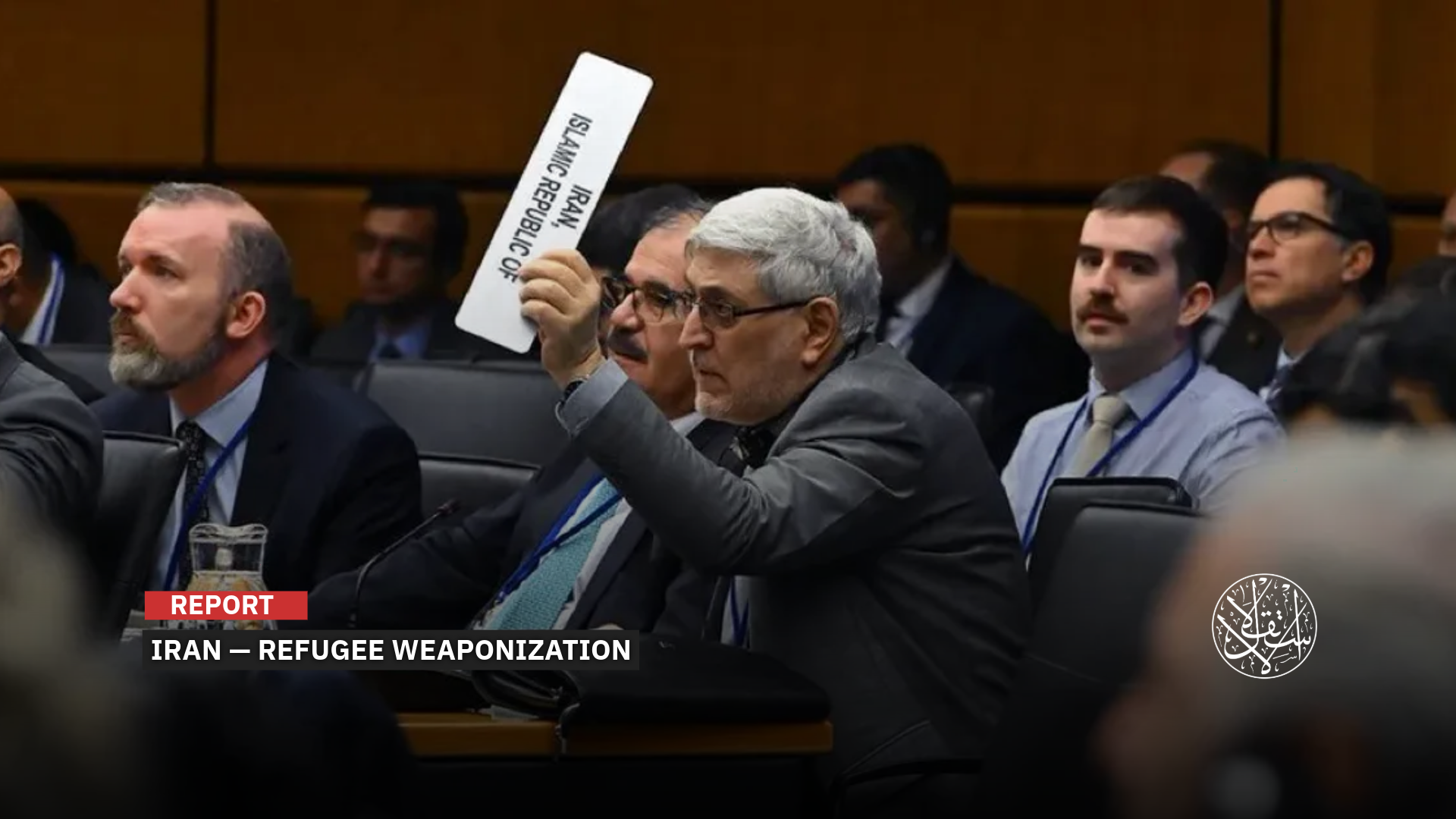
The Iranian regime may create a new version of ISIS and use Afghan migrants.
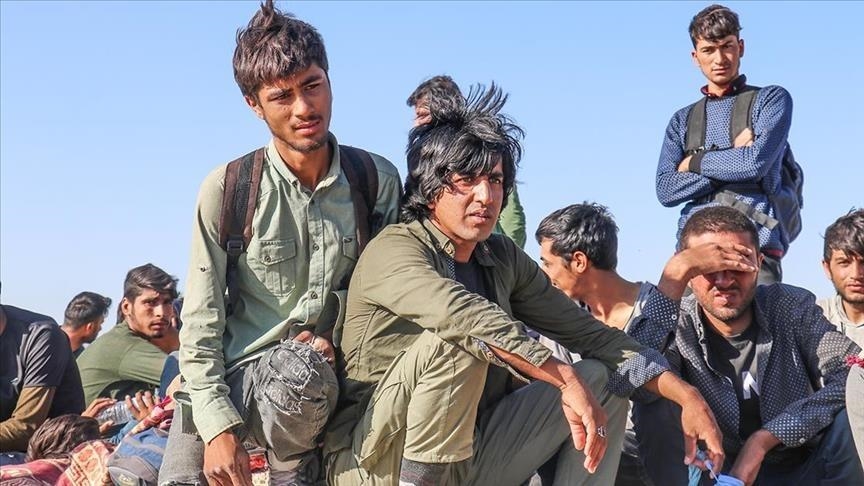
Amid reports that Iran is considering releasing hundreds of thousands of Afghan refugees at its borders with Iraq and Turkiye in response to Western sanctions, diplomats and UN officials have warned of the potential infiltration of Islamic State members among the large flows of migrants.
According to the United Nations, more than 1.5 million Afghans have left Iran since January 2025, with over 918,000 entering Afghanistan between June 22 and July 22, as reported by BBC Persian, citing an unnamed spokesperson from Afghanistan’s Ministry of Refugees and Repatriation.
Following the U.S.-Israeli strike on Tehran on June 13, Iranian authorities have ramped up mass deportations of Afghan refugees. This escalation comes amid a wave of allegations accusing Afghans of spying for “Israel”.
Offensive Strategy
In light of the attack on its nuclear sites and the reactivation of the "snapback mechanism," Iranian authorities are reportedly weighing a plan to release hundreds of thousands of Afghan refugees at their western borders, pushing them toward Iraq and Turkiye, as part of a broader, multi-layered offensive strategy adopted by Tehran, according to The Guardian.
During the 12-day war on Iran, U.S. airstrikes targeted several of the country’s nuclear facilities. On September 28, Germany, France, and the United Kingdom announced the reactivation of United Nations sanctions on Tehran under the “snapback mechanism,” citing Iran’s failure to meet its obligations under the nuclear agreement.
In a report published on October 2, The Guardian stated that “this strategy includes expanding the missile program, strengthening air defenses, and suspending cooperation with inspectors from the International Atomic Energy Agency.”
The newspaper noted that Tehran’s threat to weaponize the refugee issue echoes previous threats made by Turkish President Recep Tayyip Erdogan, who warned of sending millions of Syrian refugees toward Europe.
Back in early March 2020, Erdogan warned European leaders of a possible influx of millions of migrants, criticizing what he described as Europe’s indifference to the plight of Syrian refugees, while asserting that Turkiye was fighting in Syria to protect its own borders and to alleviate a humanitarian crisis affecting millions.
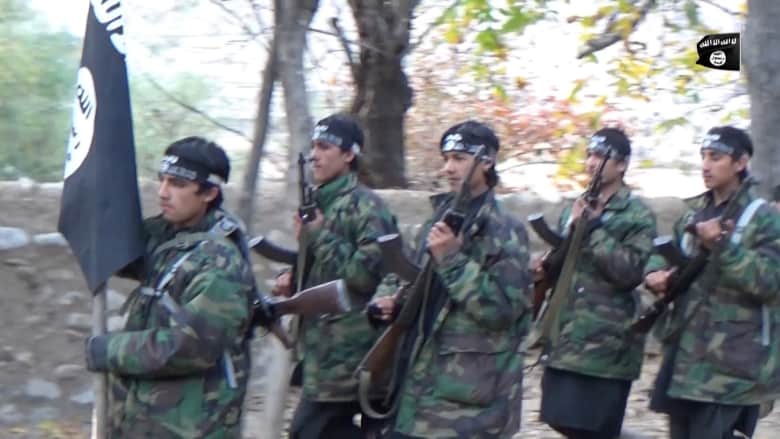
Regarding the context of the Iranian plan, diplomatic and security sources have raised concerns that the Islamic State may exploit the mass expulsion of Afghan refugees from Iran and Pakistan to advance its objectives.
In an interview with Agence France-Presse on September 24, Hans-Jakob Schindler, former coordinator of the United Nations Monitoring Team on armed groups, warned of the risks associated with Tehran’s move. He said that the Islamic State-Khorasan group sees recently returned Afghans as “a highly fertile recruitment pool.”
Schindler added that since August 2021, ISIS-K has been actively recruiting disaffected former Taliban members and other Afghans marginalized from the new power structures.
Agence France-Presse also quoted a European diplomatic source as saying, “We know that some Afghans don’t join extremist groups out of ideological conviction, but rather out of economic desperation.”
At various points, Iran is believed to have hosted up to six million Afghan refugees. However, Amnesty International reported that in 2025 alone, around two million were returned to Afghanistan, having previously fled poverty or political instability.
Iranian authorities have offered conflicting estimates regarding the number of Afghan refugees on their territory, but it is believed that at least two million are residing in the country illegally. The UN refugee agency has projected that up to four million Afghans could be returned from Iran during 2025.
The Migrant Weapon
Commenting on whether Iran is seeking to destabilize the region by allowing thousands of Afghan refugees to cross its borders, potentially mingled with Islamic State elements, Bahauddin Barzanji, a researcher on Middle East affairs, said, “The Iranian regime may well create a new version of ISIS and use migrants from Afghanistan.”
Barzanji told Al Estiklal that “Iran has prior experience and history with al-Qaeda, which is not far behind us. It brought them into Iraq after the 2003 occupation and later transferred them to Syria to sabotage the uprising against then-Syrian president Bashar al-Assad.”
However, the researcher emphasized that “current regional conditions, along with Iran being under the microscope of Western powers, mean that Tehran is unlikely to repeat what it did in the past. Especially now that the United States and the West, in general, are no longer turning a blind eye to its actions, which previously served their interests under the policy of ‘creative chaos.’”
“Creative chaos” is a term used by former U.S. National Security Advisor Condoleezza Rice following the September 11, 2001, attacks to describe the sweeping transformations the U.S. administration sought to bring to the Middle East by fueling crises and conflicts.
“Iran wants to produce a new version of ISIS to throw the region into disarray, distract the West, and present itself as part of the solution. But the world is now far more alert. The disasters it caused in Iraq and Syria will be difficult to replicate, especially now that Syria is no longer part of the Iranian axis.”
Previously, Najah Mohammad Ali, a London-based expert on Iranian affairs, said that with the activation of the snapback mechanism, “Iran has several options to confront this decision. The first is to follow in North Korea’s footsteps by withdrawing from the Nuclear Non-Proliferation Treaty and advancing its nuclear program without restrictions.”
Writing on the platform X on September 20, 2025, Mohammad Ali warned that “more dangerous still would be an open field response without central command, meaning unofficial, unaligned but Iran-aligned actors could take independent action.” A reference to potential regional disruption through Iran’s proxy networks.
“This opens the door to unexpected operations on European and even British soil. Those insisting on reactivating the snapback mechanism should remember the saying, ‘She brought ruin upon herself,’” Mohammad said in a reference to the Arab proverb.
On September 28, 2025, Germany, France, and the United Kingdom, the so-called European troika, announced the reactivation of United Nations sanctions on Iran, following the expiration of the 30-day deadline they had given Tehran. The move was justified by Iran’s failure to meet its obligations under the nuclear deal.
The troika called on Iran to resume negotiations with the United States over its nuclear program, grant inspectors from the International Atomic Energy Agency access to its nuclear sites, and hand over enriched uranium to Washington. Tehran agreed to the first two demands but rejected the third.
Notable History
Since the U.S. invasion of Afghanistan in October 2001, and the overthrow of the Taliban regime, justified by claims that it had harbored al-Qaeda, the group accused of carrying out the September 11 attacks in New York that same year, Iran is reported to have taken in al-Qaeda operatives and leaders, settled them along with their families, and established camps for them on its soil.
Following the U.S. invasion of Iraq and the toppling of the Ba'athist regime, Iran allegedly moved those same operatives into Iraq, including Abu Musab al-Zarqawi, who led al-Qaeda in the Land of the Two Rivers, until his death in a U.S. airstrike in Iraq’s Diyala province in 2006.
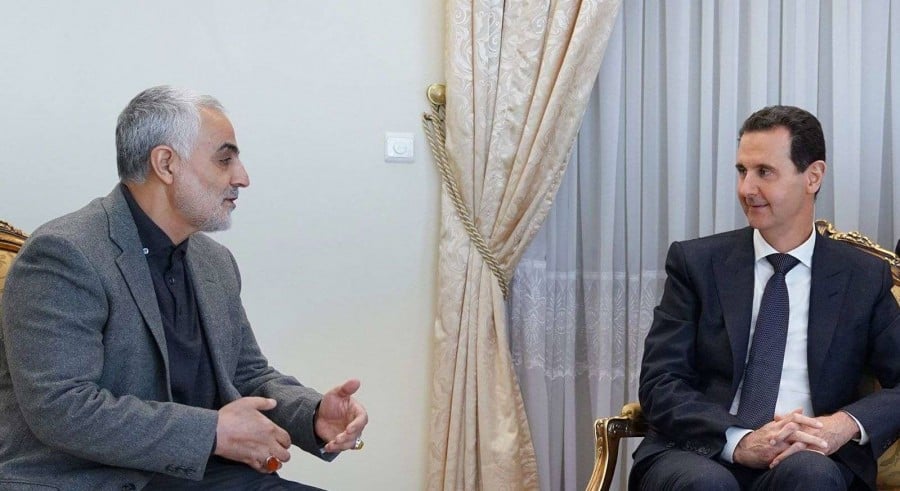
In this context, Qassim Daoud, a politician and former spokesperson for the Iraqi government in 2004, reveals in his memoir, Years of Engagement, published in August 2025, new details about a meeting he had with Qassem Soleimani, the late commander of Iran’s Quds Force.
Daoud writes that during one of his visits to Tehran, without specifying the date, he met Soleimani, who questioned him about his remarks during an interview with the U.S.-based Alhurra channel, in which Daoud had expressed support for a prolonged U.S. military presence in Iraq. Soleimani reportedly asked, “Why do you want American troops to stay in Iraq for twenty years?”
“I told him,” Daoud recounts, “that the United States had destroyed everything and left Iraq without an army to defend itself in the event of a terrorist attack. I asked him, would you send the IRGC to fight on our behalf? He lowered his gaze, smiled, and said, ‘You are millions, what would happen if one million Iraqis died defending their country?’ I replied, ‘Iraqi blood is not that cheap.’”
Daoud also recalls an article by Bouthaina Shaaban, former adviser to Syrian President Bashar al-Assad, in which she reportedly wrote that al-Assad once told her he deeply regretted giving in to pressure from Soleimani, who had requested that Syria open training camps for al-Qaeda shortly after the U.S. occupation of Iraq.
According to Daoud, al-Assad asked Soleimani at the time, “How can you deal with extremist groups when you’re Shiite?” Soleimani replied, “We work with them, support them, and even have some members of Osama bin Laden’s family with us.” Shortly after, training camps for al-Qaeda were established in Syria, and suicide bombers began crossing the border into Iraq from Syrian territory.
Daoud adds that in 2016, around 1,000 of the most hardened al-Qaeda leaders escaped from Abu Ghraib prison, west of Baghdad.
Buses were reportedly waiting to transport them, individuals who would later form the nucleus of what became the Islamic State. According to Daoud, this was not a spontaneous event but rather part of a premeditated plan.
Former Iraqi Prime Minister Nouri al-Maliki has been accused of collaborating with the regime of Bashar al-Assad and Iran’s Islamic Revolutionary Guard Corps in the creation of the Islamic State, which seized control of Iraq’s Nineveh province, centered on Mosul, on June 10, 2014, before declaring what it called a “caliphate” across parts of Syria and Iraq.
Hassan al-Shammari, who served as a minister in 2013 in al-Maliki’s government, which maintained close ties to Iran, said in a televised interview in January 2014 that the al-Qaeda assault on the Abu Ghraib and Taji prisons, an operation the group dubbed “Breaking the Walls,” was orchestrated and involved high-level figures within the Iraqi state.
“Senior officials in the government facilitated the escape of al-Qaeda detainees from Abu Ghraib and Taji prisons in Baghdad,” al-Shammari noted, suggesting that the objective was “to strengthen the Syrian regime by empowering the group, and to frighten the United States from launching any military strike on Bashar al-Assad’s regime by presenting al-Qaeda as the likely alternative.”
Sources
- Erdogan warns Europe of a potential flood of millions of refugees as EU backs Greece [Arabic]
- Creative chaos: the dimensions of a U.S. political and strategic doctrine in the Middle East [Arabic]
- UN sanctions hit Iran, but Iraq pays the price: what’s the story? [Arabic]
- Houthis recruit al-Qaeda members into security and intelligence services: what is the nature of the relationship? [Arabic]
- The Guardian: Iran considering sending hundreds of thousands of Afghan refugees to Iraq and Turkiye [Arabic]