How is the West Dealing by Double Standards with Russians Fleeing Military Mobilization?
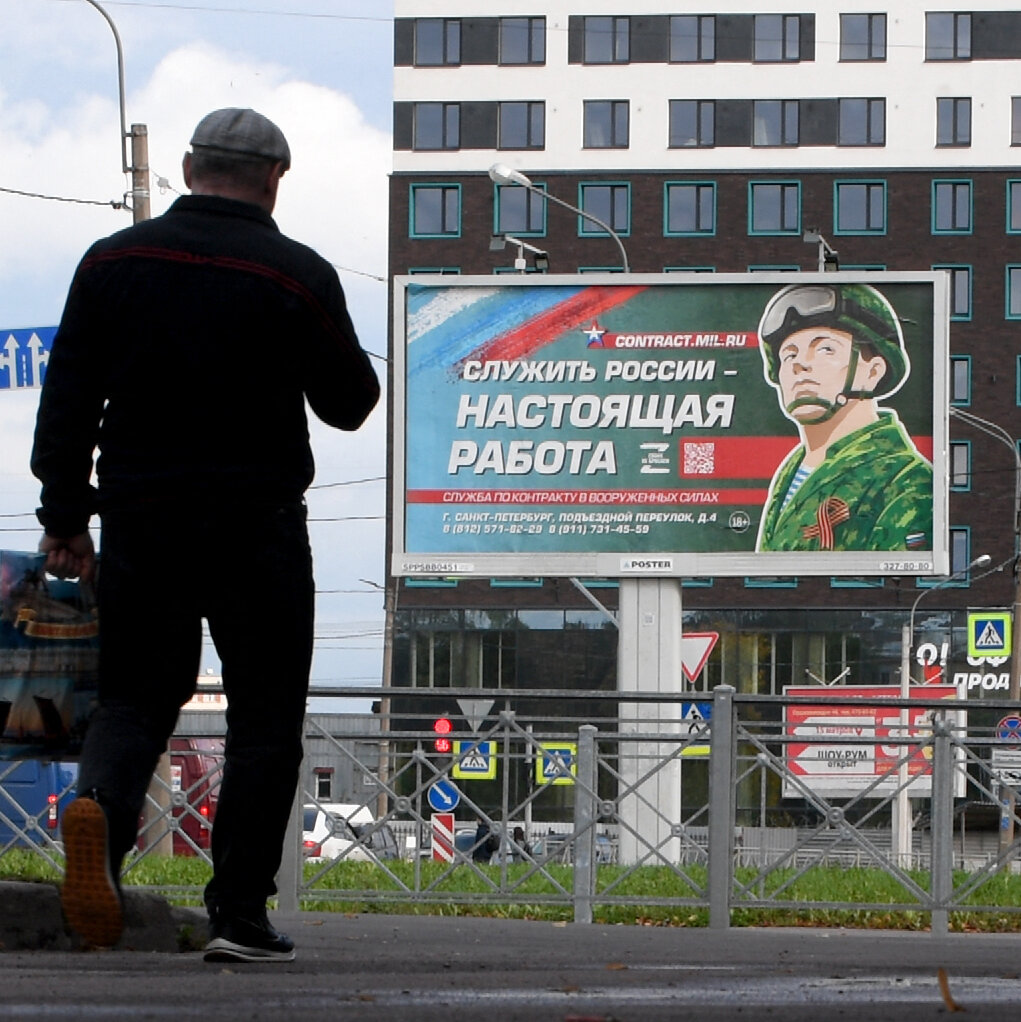
After Russian President Vladimir Putin imposed a precautionary "partial mobilization" of his country's citizens, men and young people caught up in the decision to enlist had one option: flee abroad to avoid being drawn into the battles of Ukraine.
The purpose of Moscow's mobilization decision was to adjust the balance of the war in Ukraine came after the decline in the area of territory controlled by the Russian army there and its accelerated retreat on the ground.
Avoiding conscription and the prospect of throwing these new recruits on the battlefields along Ukraine's thousand-kilometer front prompted thousands of young people to decide to leave Russia immediately via land or air border crossings.
Rushing to Escape
Putin announced a "partial mobilization" on September 21, 2022, warning the West that it was "not a deception" for Russia to use all means at its disposal to protect its territory.
Russia aspires to recruit 300,000 conscripts, according to a figure initially set by the Defense Ministry, ranging in age from 35 to 70, depending on rank and military qualifications.
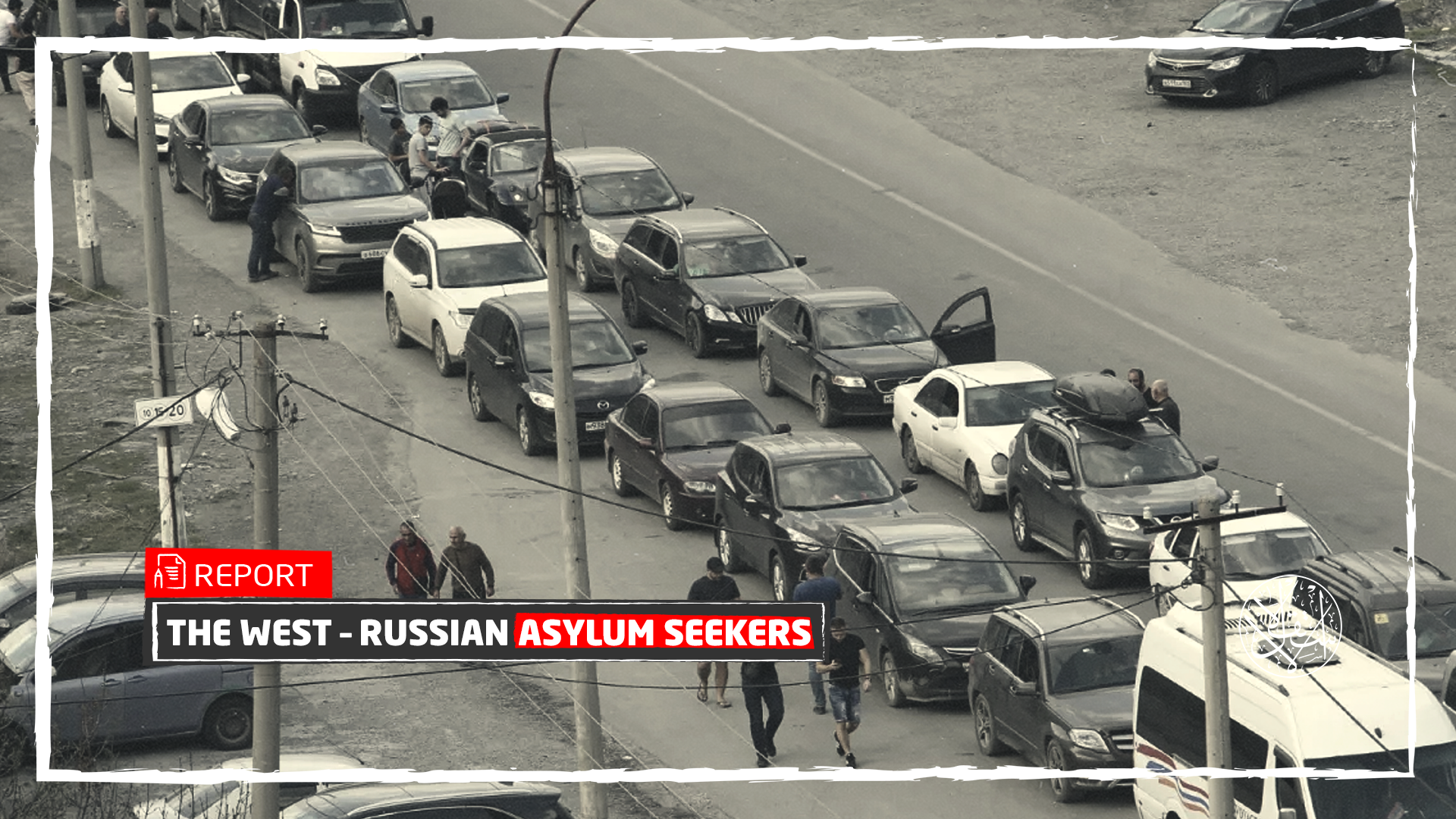
It was only hours after Putin's announcement that flights outside the country were filled quickly, and Russia's land ports were flooded with cars to cross the country to escape recruitment.
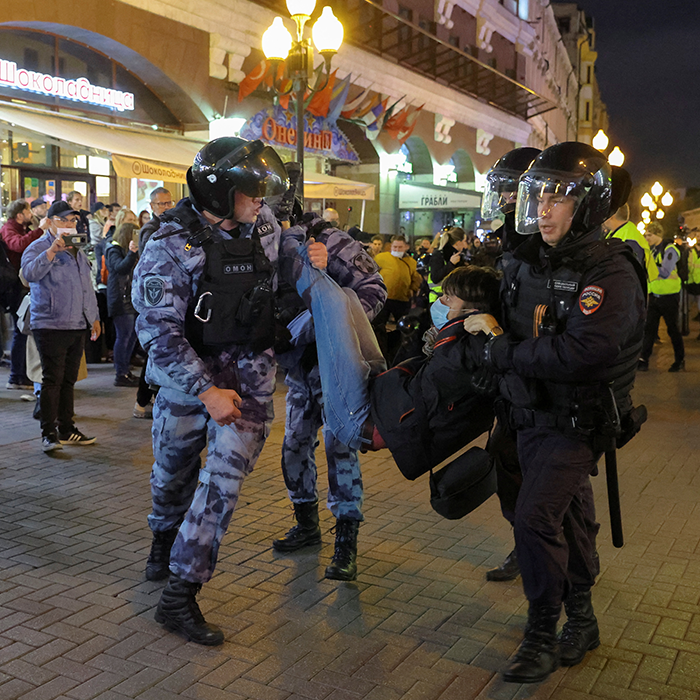
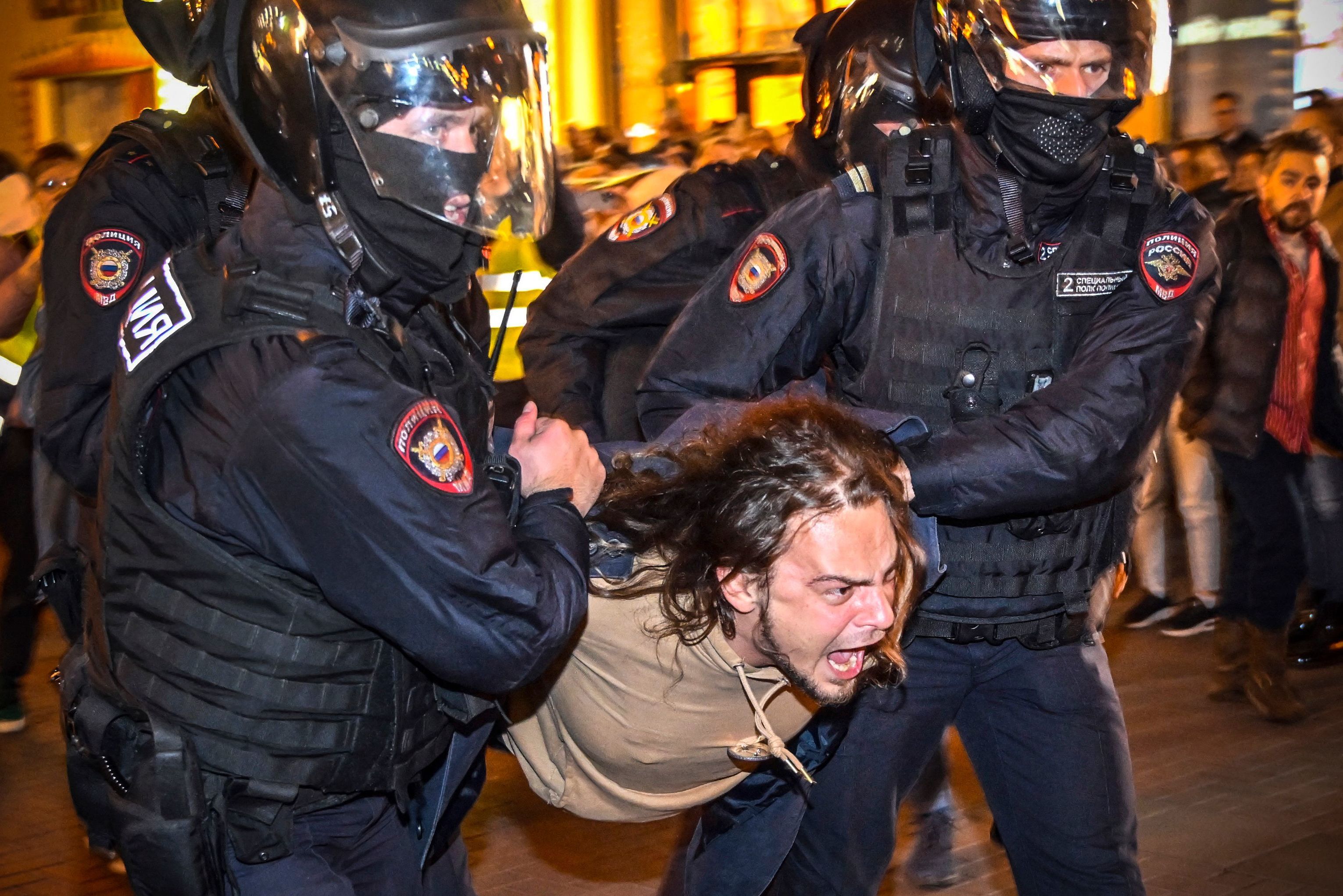
The Russian government has not remained silent in the face of popular anger at the "mobilizations," which had a clear manifestation of their rejection through demonstrations denouncing the decision.
This prompted the authorities to launch arrests of hundreds in demonstrations that gave evidence of the discontent of the street with the cost of the war that affected everyone in Russia, amid Moscow's desire to make it an "open and long war" seven months after it broke out.
In an unprecedented scene, thousands of desperate Russians scrambled to flee their country to avoid being conscripted. Not only that, but the Russians devised new ways to avoid conscription.
Hours after Putin's speech, it was rumored that searches on Google escalated for "how to break an arm at home."
A wife in the Siberian region was quoted by the Daily Mail as saying: "I will not let my husband go, I will break his legs, his duty is to raise his children."
However, social media groups have emerged offering advice on how to get out of Russia, while a Russian news site has prepared a list of "Where are you now running away from Russia?"
Night on the Russian-Georgian border��
— Slava Ukraini ���� (@Heroiam_Slava) September 22, 2022
russian sheeps trying to flee "great" russia pic.twitter.com/LpqJU9Kint
In the face of such a great rush for "self-survival" by the Russians, the prices of air tickets rose dramatically due to the high demand for them.
According to the French website Capital, the statistics tool of Google Trends shows the most searched words for Russians on Google: "tickets" and "plane."
Domestic flights to cities near the Russian border have also recorded price hikes, such as flights from Moscow to Vladikavkaz, whose ticket price is $750 compared to about $70 previously.
Officials of the tour operator Prussia also said that although the price of a ticket to Turkish Antalya has risen to 70,000 Turkish liras ($3,800) on some trips, it is almost impossible to find a seat.
While those who could not find a seat on the planes set off for Antalya by road.
Russians who came to Antalya on vacation and for commercial purposes canceled their flights to Russia following the "decision to mobilize."
Officials noted that some Russian airlines had banned the sale of tickets to men between the ages of 18 and 65 who are eligible for military service.
Russians are also fleeing to other countries, such as the UAE, Georgia, Finland, Armenia, Azerbaijan, and Kazakhstan, according to the website Aviasales.ru, which is very popular for buying tickets in Russia.
Thousands Crossing
Those wanted for conscription in Russia are surrounded by a conscription paper that once the person receives it, his exit from the country becomes almost impossible through official ports, as it exposes the fugitive in the event of arrest to military trial and a prison sentence of up to 10 years, in accordance with the laws in force in this regard.
In monitoring the desertions from Russia, Finnish border guards confirmed in a statement that traffic into the country across its border was heavy, with the number of Russians crossing steadily increasing since Putin ordered a military mobilization.
Border guards reported on September 23, 2022, that about seven thousand people entered from Russia within a single day, including about six thousand Russians, which means a 107 percent increase compared to the same day a week ago.
Finnish border guards confirmed that some Russians had applied for asylum in the country, whose land border crossings with Russia remained among the few entry points to Europe available for Russians.
This comes after a number of countries closed their borders, as well as airspace to Russian aircraft, as punishment for Moscow after launching a large-scale invasion of Ukraine at dawn on February 24, 2022.
Finnish border officials confirmed that cars had lined up to 400 meters in Vaalimaa, the busiest crossing.
Officials told Reuters that 4,824 Russians arrived in Finland across the eastern border on September 21, compared to 3,133 a week earlier.
Positions of the West
In the face of the start of a huge wave of flight from Russia, the most present question remains the extent to which Western countries can open the door for asylum seekers from Russian citizens like Ukrainians.
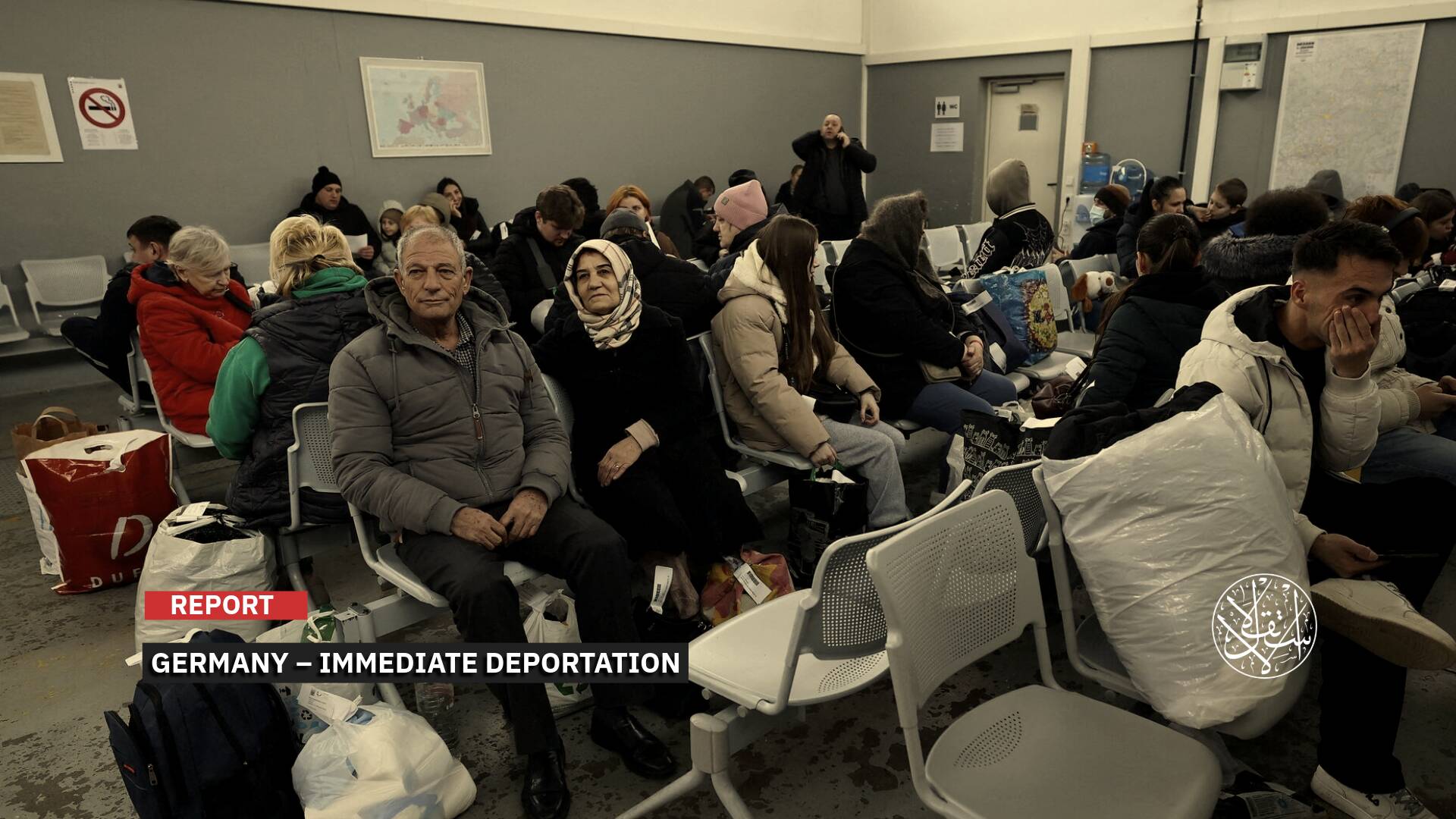
In this context, Germany immediately announced its readiness to grant asylum to Russians fleeing the army who opposed the decision to mobilize.
Interior Minister Nancy Weiser confirmed in a statement to the public newspaper Frankfurter on September 22 that defectors threatened with severe repression could receive international protection in Germany.
"Anyone who bravely opposes the Putin regime and for this reason falls into great danger can apply for asylum in Germany on the basis of political persecution."
Weiser explained that her country has for months accepted asylum for Russian dissidents who have been persecuted and threatened.
On September 24, 2022, the European Commission issued an alert to the governments of the 27 EU member states that a unified position must be reached quickly on asylum applications that have begun to flow from Russians fleeing thousands to escape the mobilization.
UNHCR also warned that asylum applications should be rejected before they were considered, in accordance with the criteria and procedures followed before deciding whether to reject or accept them.
Finland has confirmed that it will examine asylum applications from Russian citizens before making a decision.
For his part, Lithuanian Foreign Minister Gabrielius Landsbergis announced that his country would consider asylum applications individually in accordance with the established rules.
But he said Lithuania, with a population of no more than three million, was neither determined nor able to grant humanitarian visas to all Russian citizens who requested them.
The Czech government, which currently holds the rotating presidency of the European Union, has announced that it will "not grant" humanitarian visas to Russians fleeing mobilization.
European rules allow member states to refuse the entry of aliens into their territories on the grounds of public order or national security.
Still, countries led by Germany, which is demanding help from fleeing Russians on humanitarian grounds, are finding a gap to open those borders with their arms to embrace fleeing Russians like Ukrainian refugees.
Their claim is based on the fact that proceedings at the external borders of the Union are subject to the provisions of the Geneva Conventions.
The conventions provide that persons who do not take a direct part in hostilities, including members of the military who have disarmed or become outside military confrontations due to illness, detention, or any other reasons, shall be subject to humane treatment.
Conditional Acceptance
Opinions within Europe on granting asylum to Russians are at odds, with the president of the European Council, Charles Michel, arguing that Europe should open its doors to Russians fleeing Putin's announced mobilization.
Michel called on Europe to show "openness to those who do not want the Kremlin to exploit them," Politico reported.
Estonian Prime Minister Kaja Kallas, who has stressed that her country will not accept any Russian fugitives from forced conscription, believes that "all people bear responsibility for the actions of their countries."
"Russian men should stand up and express their opposition to their country's actions in Ukraine instead of seeking refuge in foreign countries," she said in an interview with CNN.
Poland, Estonia, Latvia, and Lithuania, which all share land borders with Russia, have decided not to allow those fleeing the mobilization to enter their territory.
On August 31, 2022, EU foreign ministers agreed to suspend a 2007 agreement to facilitate the issuance of short-stay visas in EU countries to Russians.
This made it difficult for Russians to obtain visas that were easy before the war on Ukraine began.
Nevertheless, all EU countries agree to keep the door wide open to Russians, members of civil society, opponents, and other humanitarian situations.
For comparison, the 26 Schengen space countries (22 countries from the European Union, Norway, Iceland, Sweden, and Liechtenstein) received three million visa applications in 2021, of which 536,000 were from Russian citizens, about 3 percent of which were rejected.
Sources
- Europe monitors 'Russian exodus' through Finland and Georgia after mobilization decision and Kremlin rejects 'exaggerations' [Arabic]
- War in Ukraine: Hundreds arrested in Russia amid ongoing protests over partial military mobilization [Arabic]
- Russians fleeing to Türkiye after partial mobilization
- Should Europe Accept Russian Refugees Fleeing Putin’s Draft?
- After the announcement of the mobilization.. 3 countries shock Russians fleeing forced conscription [Arabic]