Golan: The Hidden Face of a Mercenary Network Stretching from Yemen to the Heart of Europe
The former head of the Mossad later confirmed that he knew Golan, describing him as an ardent Zionist.
Nearly a decade after the photographs were taken and movement routes mapped, British activist Anas Altikriti finally learned the identity of the team that had monitored his home, his car, and his route to work in London.
On August 19, 2026, an investigation by British broadcaster ITV News revealed that Israeli-Hungarian mercenary Abraham Golan had led a covert operation in 2016 to surveil Altikriti, while receiving money from the UAE and claiming that he was working on its behalf.
But how did Golan go from running assassination teams in Yemen to targeting a British activist inside his own country? Who provided him with the funding, intelligence, and cover? And where does the mercenary’s role end and the responsibility of the state that hired him begin?

Strictly Confidential
The newly uncovered story began on November 17, 2016, when Golan contacted a British strategic consultant whom he had previously hired for overseas operations. ITV News’s investigation referred to him as “Victor” to protect his identity.
Golan asked whether he could gain access to Anas Altikriti and the Cordoba Foundation, attaching a link to the British activist’s Wikipedia page before asking that the matter be kept strictly confidential.
This was not a general request for information. What followed were questions about Altikriti’s home address, the foundation’s headquarters, and the café and mosque he frequented. In a subsequent message, Golan wrote, “The war is coming to Europe, and we are at the beginning of a massive program.”
Golan arrived in London in early December 2016 and met “Victor” at a pub in central London, accompanied by a former U.S. special forces operative.
During the meeting, he said that he was working with the UAE, and that Abu Dhabi considered Altikriti and the Cordoba Foundation to be linked to terrorist groups in Syria, accusing them of recruiting young Muslims to fight alongside the Islamic State and al-Qaeda.
According to “Victor’s” testimony, Golan spoke of a surveillance operation being set up by the UAE in London. He then offered him £50,000 to assist, later raising the amount to £100,000, with the payment to be made through an offshore account and a third party.
The messages and documents reviewed by the investigation show that Golan’s team photographed Altikriti’s home, car, and workplace; mapped his expected routes; identified the entrance to his office; and used satellite imagery to study the areas surrounding the locations.
Golan also asked “Victor” to pose as an author preparing a book about the Muslim Brotherhood, with the aim of luring Altikriti into a meeting in a public place.
During a second meeting, Golan’s associate asked what might happen if Altikriti tried to flee. Golan paused and ran a finger across his neck. “Victor” understood the gesture as an indication that the surveillance operation could ultimately end in a physical killing, and decided to withdraw.
On December 14, Golan left for Washington, but told “Victor” that the entire team was in London and that the operation was continuing.
Ardent Zionist
Behind the London operation was a man about whom no complete public profile exists. Abraham Golan was born in Hungary to a Jewish family and holds both Hungarian and Israeli citizenship. He lived in “Israel” for years before moving to the United States.
Golan presented himself as a former officer in the French Foreign Legion with the rank of “major,” but military personnel who had dealt with him said that his field experience and conduct indicated that he had genuine combat training.
Golan entered the private security market by protecting commercial interests. In 2008, he worked to secure vessels and energy-related facilities off the coast of Nigeria against sabotage and armed attacks.
During the same period, he founded Global Strategic Group, a company that provided security, training, and protection services to corporations, individuals, and governments, with a particular focus on the energy sector in Africa.
The company was linked to Danny Yatom, the former head of Mossad, who served as its chairman, according to a report by Intelligence Online. Yatom later confirmed that he knew Golan from their work in the private sector, describing him as someone who appeared to be an “ardent Zionist” willing to take significant risks for “Israel”. He said, however, that their relationship was not extensive and denied any connection to Golan’s operations in Yemen.
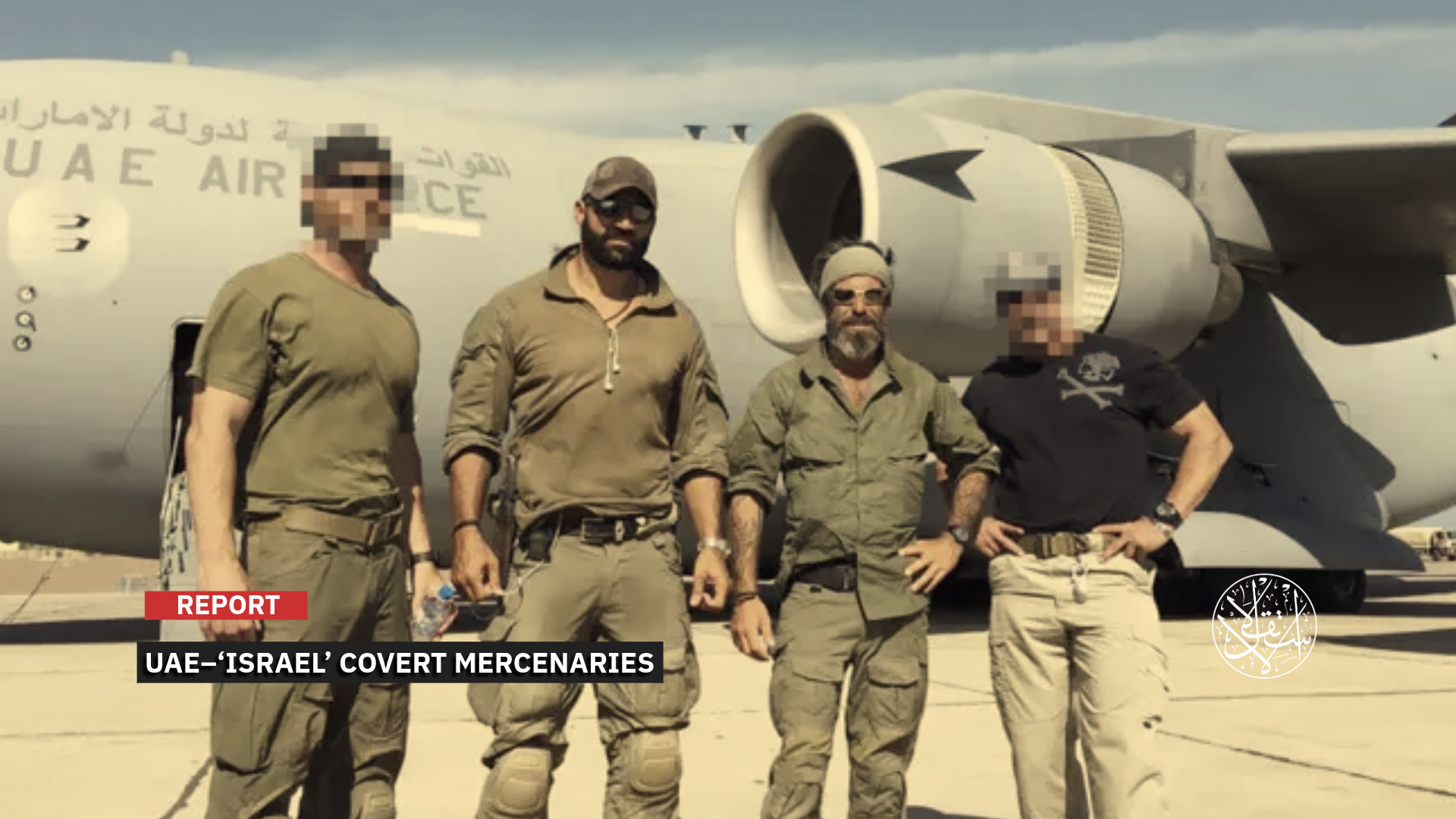
The most significant shift came in 2015, when Golan established Spear Operations Group in the U.S. state of Delaware. The company did not maintain a standing army; instead, its business model was based on bringing in specialized military expertise depending on the nature of each mission.
His network included Isaac Gilmore, a former Navy SEAL who served as the company’s director of operations, and Dale Comstock, a former U.S. special forces operative who took on a field role, along with former members of the French Foreign Legion and U.S. special operations units.
By the end of 2015, Golan and Gilmore had assembled a team of roughly 12 personnel. The danger of this model lay in converting expertise acquired within regular armed forces into a commercial service: a legally registered American company, fighters of multiple nationalities, and overseas operations outside the chain of command and oversight governing official military forces.
It was from this structure that the team emerged that the UAE would contract to carry out an assassination program in Yemen.
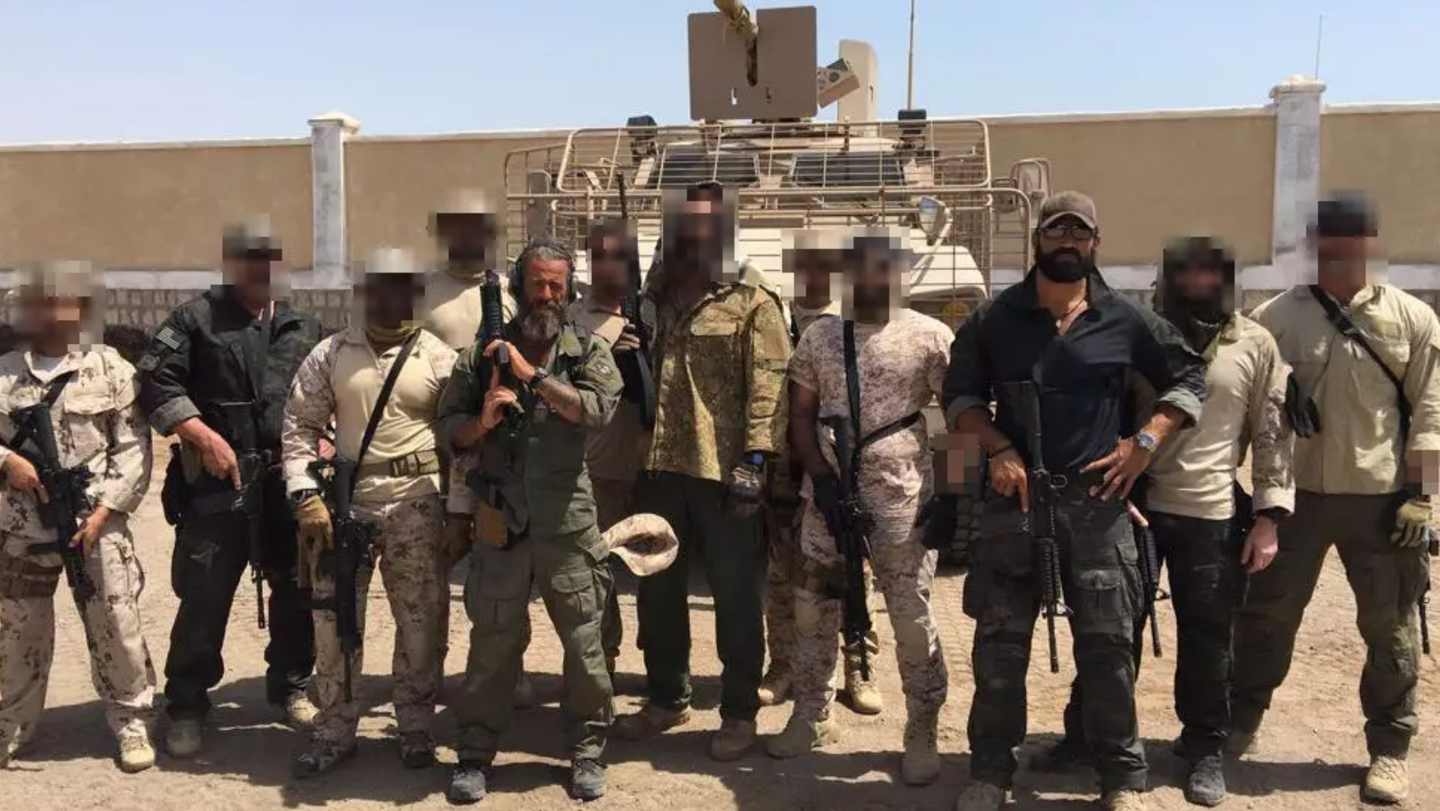
Militia in Yemen
The UAE contract began with a meeting held at a military base in the UAE in 2015, attended by Mohammed Dahlan, the former Palestinian political figure and adviser to the leadership in Abu Dhabi.
According to Golan and Gilmore’s accounts, the two sides negotiated a program targeting individuals whom the UAE considered terrorists or linked to Yemen’s Islah party, while Abu Dhabi described the mission as part of counterterrorism operations within the framework of its military intervention in Yemen.
According to an investigation by BuzzFeed and the lawsuit subsequently filed in California, Spear received $1.5 million per month, in addition to bonuses for successful killings.
Each American operative received around $25,000 a month, along with incentives. Confidential records reviewed by ITV also revealed that Golan received a six-figure annual retainer and multimillion-dollar payments. Weeks before arriving in London, he also received a $1 million bonus for an operation targeting an individual in Yemen.
The team did not operate independently of the Emirati system. Military aircraft transported them, while the UAE provided weapons, explosives, vehicles, uniforms, identification cards, and military ranks.
Dale Comstock told ITV, “For all intents and purposes, we were Emirati soldiers.”
From a base in Eritrea, the team received a list containing 23 dossiers, each with the target’s name, photograph, role, and home and office addresses, along with intelligence intended to help track the individual.
The first known target was Ansaf Ali Mayo, a Yemeni lawmaker and al-Islah party leader in Aden. In the days before the attack, Golan asked “Victor” to prepare a briefing on Mayo.
The report described the intended target as moderate and pragmatic, but the consultant did not know that his analysis would be used as part of an assassination plan the following day.
On December 29, 2015, the team monitored Mayo’s movements and went to his workplace, where they planted an explosive device at the entrance. According to the lawsuit, the plan was to kill those present in the blast and shoot any survivors. Mayo, however, left after receiving a warning before the device was detonated and then fled to Saudi Arabia.
Golan later acknowledged the existence of the program, telling BuzzFeed, “There was a targeted assassination program in Yemen. I ran it. We did it. The UAE authorized it as part of the coalition.”
He also said that his team carried out other assassinations but declined to disclose the names of those killed. The open-source evidence does not establish that Spear was responsible for the entire wave of assassinations that took place in southern Yemen, but it does establish the existence of the program, the attempted killing of Mayo, and the team’s integration into the Emirati military apparatus.
In 2024, a BBC investigation revealed that company operatives later trained local Yemeni forces in assassination tactics, suggesting that the program evolved from direct foreign execution into the development of a local capability that continued operating after the mercenaries withdrew.
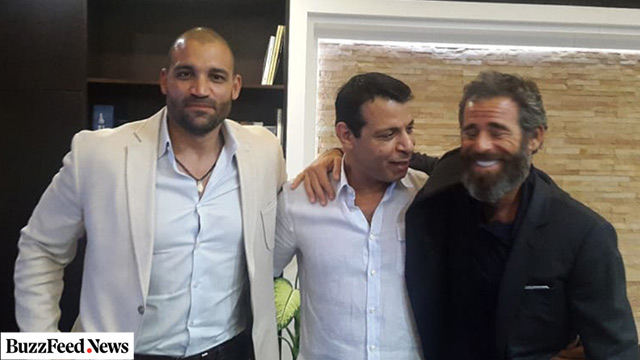
Cross-Border
London was not the only overseas stop in Golan’s network. In early 2018, he traveled to Serbia with Daniel Corbett, a former member of SEAL Team Six.
Corbett was arrested in Belgrade for possessing a handgun with its serial number removed and remained in detention for about 18 months. Serbian and Russian media linked his presence to possible plans to assassinate a political figure, while Corbett later said that he had been conducting reconnaissance on a religious figure.
Golan declined to clarify the purpose of the trip, and no public judicial evidence emerged establishing that there was a plan to assassinate the Serbian president or any specific individual.
These episodes reveal the ability of Golan’s network to move from a war zone to European capitals, changing companies, personnel, and fronts along the way. Yet the exposure of its operations was not followed by any publicly announced criminal proceedings.
After a 2018 investigation, U.S. Senators Elizabeth Warren and Bob Menendez called on the Departments of Justice and State to investigate possible violations of the War Crimes Act, regulations governing the export of defense services, and the use of former U.S. military personnel in assassination operations on behalf of a foreign state.
Nevertheless, the Center for Justice and Accountability said that no U.S. government investigation into the activities of Spear Operations Group had been publicly announced.
The first significant judicial proceeding came on December 18, 2025, when Ansaf Ali Mayo filed a lawsuit in the U.S. District Court for the Southern District of California against Golan, Gilmore, and Comstock.
The lawsuit accused them of attempting an extrajudicial killing, committing war crimes, and aiding in the persecution of the UAE’s political opponents. In March 2026, the court allowed the case documents to be unsealed and permitted alternative means of serving Golan. In May 2026, Mayo then asked the court to enter defaults against Golan and Gilmore for failing to respond.
The case remains a civil proceeding and is ongoing; no judgment has established liability on the part of any defendant or exonerated them.
The danger of Golan’s model lies in the distance it creates between a state and the act itself: the UAE provides the funding, targets, intelligence, and means, while a company registered in another country recruits operatives of multiple nationalities.
If the operation is exposed, each party can claim that it did not issue the final order or was unaware of the full nature of the mission. In this way, the mercenary becomes an arm that can be used across borders without declaring war or deploying official troops, while sovereignty, law, and accountability move more slowly than a network capable of moving between Aden, London, and Belgrade.