During the King’s Visit: What Lies Behind the Expected Landmark Agreement Between Morocco and France?
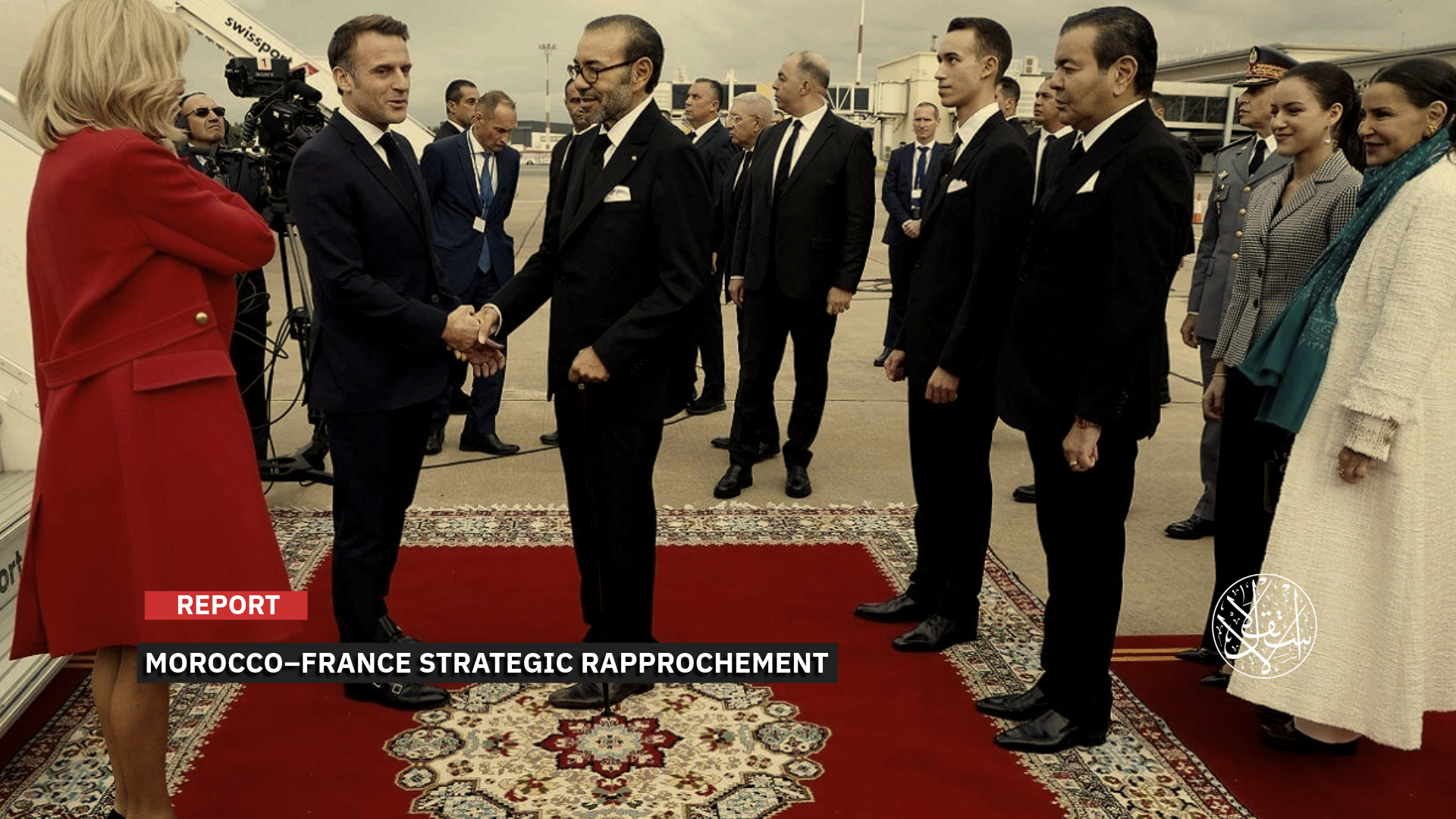
Morocco and France are seeking to take their cooperation to an unprecedented level.
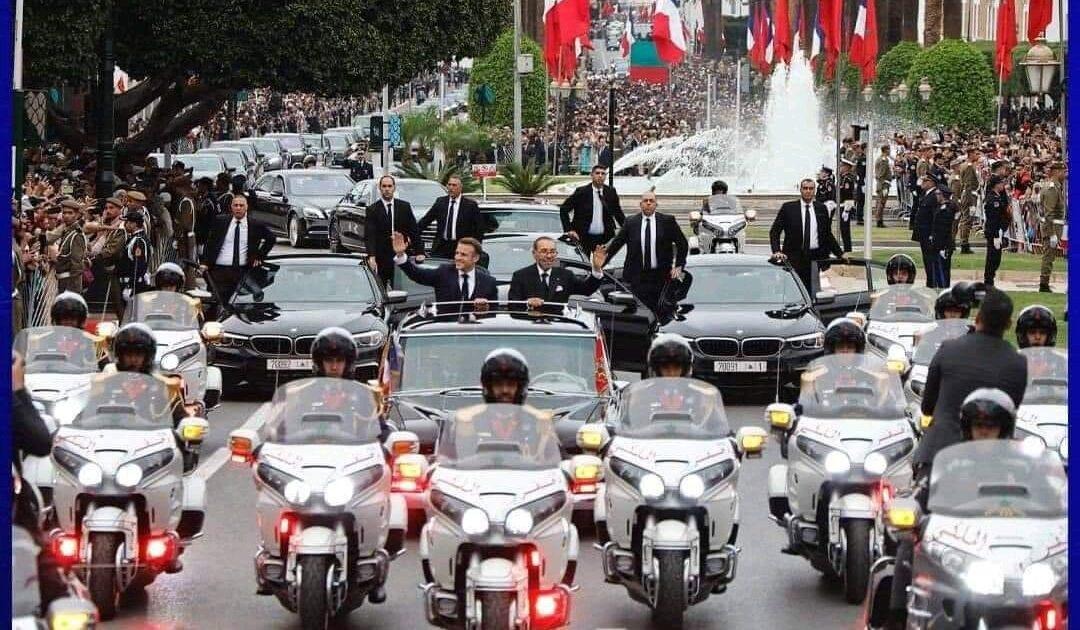
Amid sensitive international developments, Morocco and France are preparing to elevate their relations to an “unprecedented” level, following the announcement that the two countries are expected to sign a “historic strategic treaty” during a planned visit by King Mohammed VI to Paris in the autumn of 2026.
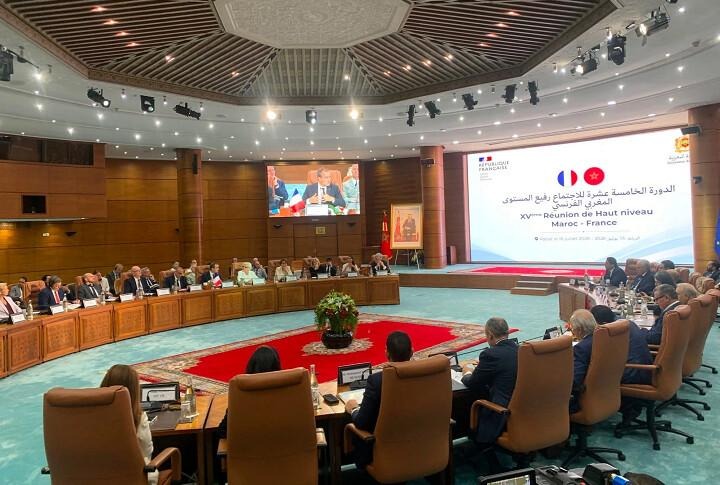
On July 16, 2026, French Prime Minister Sebastien Lecornu said that the 15th session of the Moroccan-French High-Level Meeting represented a major and pivotal milestone in the course of relations between Rabat and Paris.
Speaking at the opening of the High-Level Meeting in the Moroccan capital, which he co-chaired with Moroccan Head of Government Aziz Akhannouch, Lecornu explained that the two countries were seeking to take their cooperation to an unprecedented level, paving the way for the conclusion of a friendship treaty that he described as “exceptional.”
Moroccan Foreign Minister Nasser Bourita had earlier announced, alongside his French counterpart Jean-Noël Barrot in Rabat, that King Mohammed VI would make a “scheduled” state visit to Paris, without disclosing a specific date.
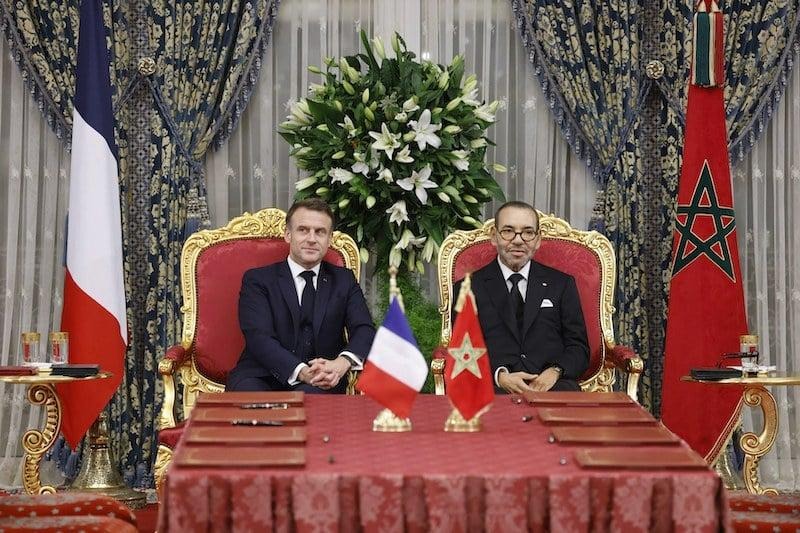
On May 20, 2026, Bourita said during a joint press conference with Barrot, “There is the scheduled state visit by His Majesty King Mohammed VI, which will be marked by a special, unprecedented event: the Moroccan-French treaty.” He noted that the agreement would be the first of its kind to be concluded by Morocco with a European country.
Barrot confirmed that France was preparing to welcome King Mohammed VI on a state visit, saying that he expected it to be a “historic landmark in French-Moroccan relations.”
The French minister also noted that the anticipated bilateral treaty would be “the first of its kind for France with a non-European country,” explaining that its purpose would be to “establish a framework for French-Moroccan relations over the coming decades.”
A Unique Agreement
Observers expect the visit to help consolidate the political rapprochement between Rabat and Paris and transform it into long-term institutional cooperation, particularly in the political and economic spheres, as well as on regional issues related to security and migration and efforts to strengthen their presence in Africa.
Hasni Abidi, a professor of international relations at the University of Geneva, said that the leaders of the two countries appointed, more than a year ago, a committee of eminent figures, including prominent Moroccan and French personalities, to draw up a set of proposals for Moroccan King Mohammed VI and French President Emmanuel Macron, with the aim of giving fresh impetus to relations between Rabat and Paris.
Abidi added, during an appearance on the “Al-Masaa” program on the German broadcaster Deutsche Welle, that for some time, several media outlets covering Moroccan-French affairs have been reporting on preparations for an important state visit that will take into account all the advice and proposals put forward by the “Committee of Wise Men,” with the aim of consolidating exceptional relations between the two countries.
Abidi explained that France has become convinced that its approach to Africa has failed miserably and that it therefore needs to seek a new approach.
As a result, it has turned its attention toward Morocco in order to benefit from its position, particularly given that the Kingdom has managed to establish a strong foothold in West African countries as the region’s largest economic investor. France, he added, wants to benefit from Rabat’s influence in Africa.
Describing the agreement as “unique of its kind,” Abidi noted that a large number of West African countries have strained relations with France. He therefore asked: Will these African countries accept France returning through the Moroccan gateway?
The Secrets Behind the Treaty
Despite the strict secrecy surrounding the contents of the agreement, local media sources have revealed its main outlines, indicating that the economic component includes a French commitment to inject substantial investments into Morocco’s industrial sector and transfer advanced technologies, particularly in the automotive, railway, defense manufacturing, and maritime transport sectors, in order to support competitive Moroccan exports.
In return, Rabat would grant French companies “priority” access to the promising Moroccan market, particularly in infrastructure, maritime and rail transport development, and renewable energy projects, as well as tax incentives for defense-industry projects.
The agreement also includes a qualitative leap forward in the field of defense, with France providing strong support to Morocco in “defense manufacturing” through the gradual transfer of military technology, with the aim of turning Rabat into a regional hub for the production of light and heavy weapons, particularly in military aviation, ammunition, military trucks, and armored vehicles.
On the political front, the treaty would reportedly commit France to providing Morocco with firm and unconditional support at the United Nations Security Council on major issues concerning its sovereignty, foremost among them the Western Sahara issue.
It would also provide Rabat with a strong diplomatic support framework within the European Union to safeguard its interests in the agriculture and fisheries sectors and in parallel joint committees.
In return, France is strongly proposing that Morocco support its interests in West African countries through a “strategic partnership” involving Moroccan companies and institutions to invest in countries with which Paris has faced difficulties over the past decade, partly due to the weight of its long colonial legacy.
France also seeks to strengthen its presence in these markets through partnerships with Moroccan institutions, which have a strong presence across West Africa, with Morocco regarded as the region’s leading and most influential investor in this geopolitically complex area.
A Historic Turning Point
Observers believe that talk of a new treaty between Rabat and Paris reflects a move toward elevating relations from the level of a traditional partnership to a more comprehensive and stable strategic framework that would define future cooperation priorities and mechanisms for coordination on major issues.
Mohamed Tajeddine el Husseini, a professor of international law and international relations at Mohammed V University in Rabat, noted that the outlines of an exceptional strategic treaty for alliance and cooperation between the two countries are beginning to take shape, in a manner unprecedented with any other country outside the European framework.
In a video segment titled “Strategic Dimensions,” el Husseini explained that the treaty would be concluded on the occasion of the Moroccan monarch’s state visit to France next autumn.
He said Morocco is proposing a formula based on cooperation within the framework of the Atlantic Initiative, which incorporates the Sahel countries.
The Atlantic Initiative is a strategic vision launched by King Mohammed VI to provide landlocked Sahel countries, such as Mali, Niger, Burkina Faso, and Chad, with direct access to the Atlantic Ocean.
It aims to overcome their geographical isolation and promote regional integration through practical economic partnerships.
El Husseini said that despite the secrecy surrounding the preparation of the strategic treaty and its provisions, it appears that a joint team of eminent figures from the two countries is indeed working on drafting it.
He stressed that this historic turning point in relations between the two countries would be based on several criteria.
He continued by outlining these criteria as follows:
First: A Moroccan-French partnership based on equality and the pursuit of mutual interests under a “win-win” principle, while encouraging French and European investment in Morocco, particularly in the southern provinces of the Sahara, given their clear proximity to the African space.
Second: Supporting and developing industrial production organizations based on innovation and training, particularly in the automotive, aviation, shipbuilding, logistics, and port sectors, in addition to supporting clean-energy and green-hydrogen projects, as well as the gas pipeline project expected to link Morocco with Nigeria.
The Morocco-Nigeria gas pipeline project, also known as the Atlantic African Gas Pipeline, is a major continental infrastructure project extending over 6,900 kilometers.
It is intended to transport natural gas from Nigeria through 13 West African countries to Morocco, and from there to Europe.
Third: Supporting and encouraging investment in artificial intelligence, particularly between the French company Bull, which the French government recently nationalized, and the two major projects Morocco has established in Nouaceur, in the kingdom’s economic capital, Casablanca, and in the Dakhla region of the southern provinces.
Morocco has implemented major strategic projects in Nouaceur, Casablanca, and the Dakhla region, including the establishment of a Safran plant for aircraft landing systems and a large industrial zone in Nouaceur, as well as the construction of the Dakhla Atlantic Port and green-hydrogen and wind-energy projects.
El Husseini said that, despite this development, Morocco would retain full freedom to diversify its cooperation and investment relations with other actors, particularly major regional and global powers, most notably China and the United States.
El Husseini noted that although French President Emmanuel Macron’s term will come to an end at the beginning of 2027, such a historic treaty would, with certainty, strengthen relations between the two countries for several decades, with its effects extending across generations.
Mohamed Bentalha Doukali, a professor of political science and public policy at Cadi Ayyad University in Marrakesh, said that King Mohammed VI’s planned visit to France represents a historic and exceptional event because it carries highly significant strategic, political, and economic dimensions. He added that it would also open a new chapter in the course of relations between Rabat and Paris.
Speaking to Al-Estiklal, Bentalha Doukali said the visit would see the signing of a bilateral treaty that would be the first of its kind concluded by France with a country outside the European Union.
Accordingly, he said, the treaty would establish a clear and sustainable roadmap for structuring strategic, economic, and political relations for decades to come and deepening cooperation in strategic sectors, reflecting Paris’s recognition of the pivotal role Rabat plays at both the regional and international levels.
Bentalha Doukali emphasized that Morocco is France’s leading economic partner in Africa and a logistical and financial gateway connecting Paris with parts of the African continent. Cooperation between the two countries in Africa therefore appears effective and strategic for both sides.
He noted that Morocco has become the largest investor in West Africa and the second-largest investor on the African continent after South Africa.
After pointing out that countries around the world exchange visits by leaders and senior officials to strengthen bilateral relations, Bentalha Doukali noted that among the most important are visits at the level of the heads of state.
He emphasized that a “state visit” is the highest-level form of visit between national leaders, with its own ceremonies and distinctive programs.
He added that a “state visit” takes place only at the formal invitation of the head of the host state to the head of the visiting state.
As a general rule under diplomatic practice, a state visit takes place only once, and it carries considerable political significance, with highly ceremonial and formal arrangements for the reception and departure, based on strict adherence to all protocol procedures agreed upon by the two sides before the visit begins.
Bentalha Doukali concluded that there is considerable anticipation surrounding King Mohammed VI’s state visit to France, while international media are also closely watching for the high-level protocol expected to accompany the Moroccan monarch’s reception.