Despite Western Condemnation: This Is How Senegal Is Tightening Penalties for Homosexuality
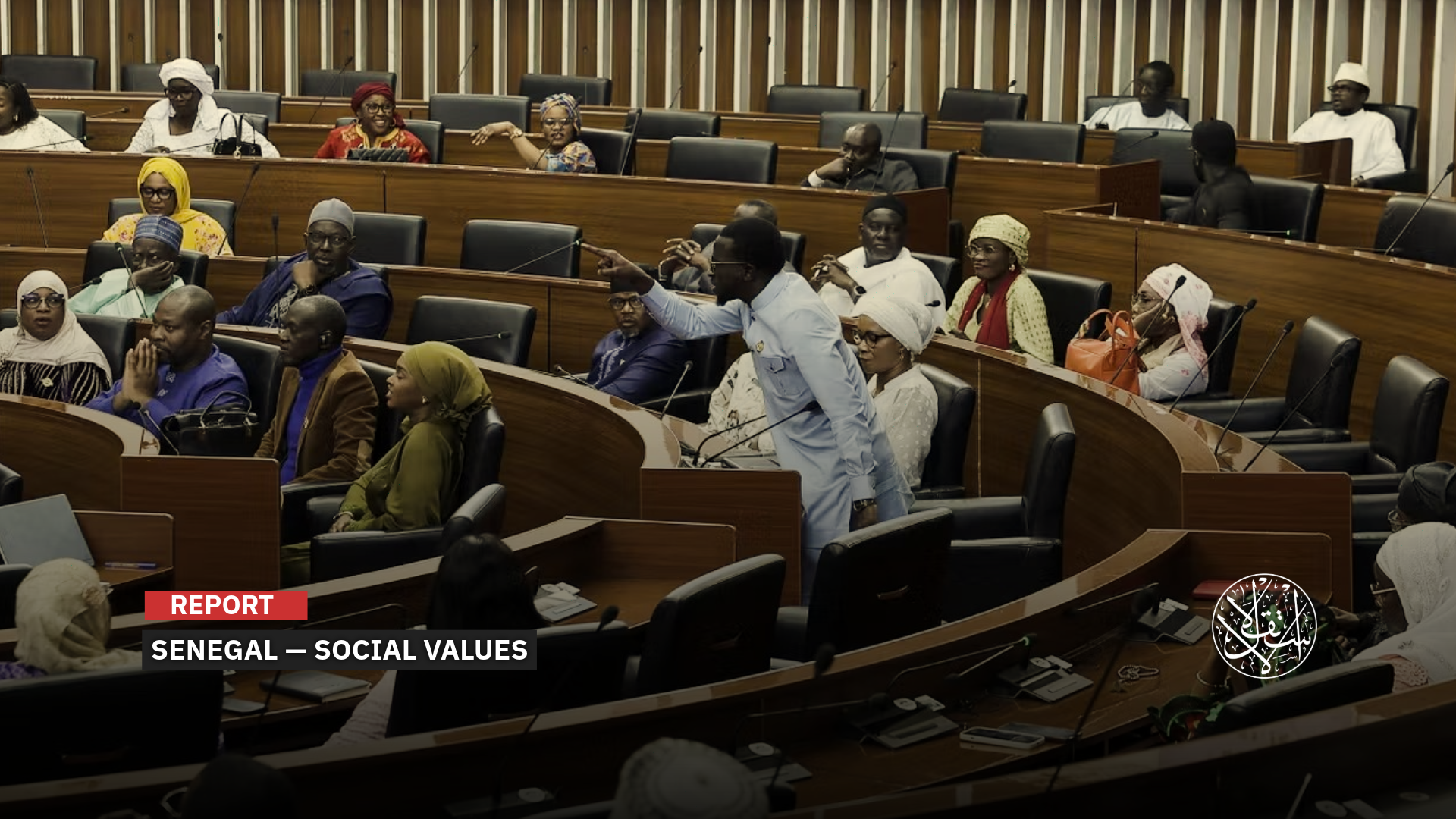
"If the West glorifies homosexuality and rolls out the red carpet for it, that is not the case in all countries."
The new political leadership in Senegal continues to emphasize its commitment to fulfilling its electoral promises, particularly in preserving Islamic identity and strengthening social values.
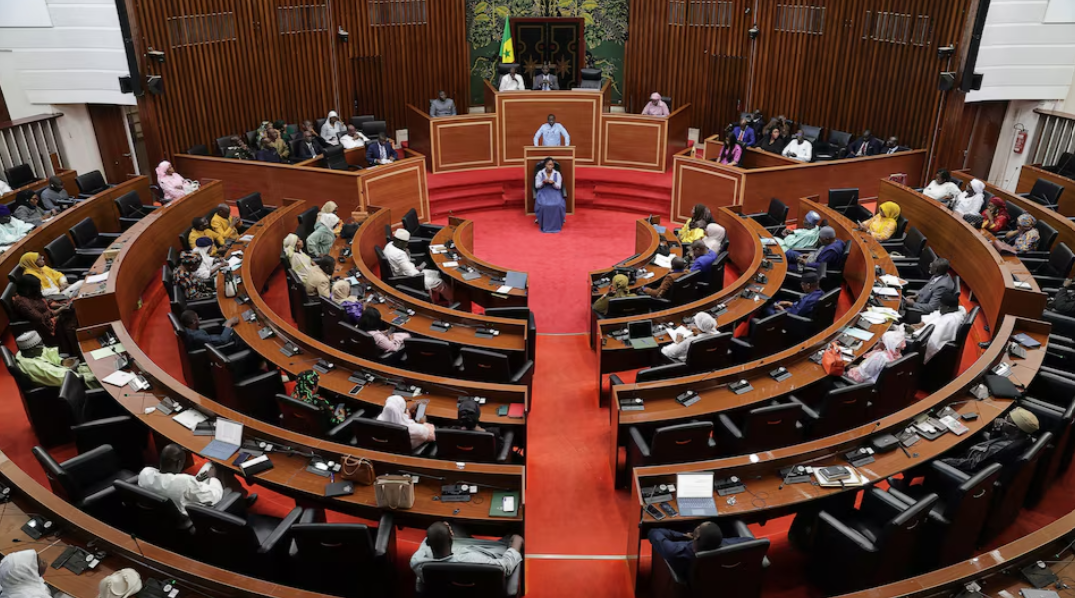
In this context, on March 11, 2026, the Senegalese parliament approved a draft law submitted by the government that doubles the maximum prison sentence for what are referred to as “acts against nature,” and criminalizes any attempts to promote them.
The vote passed by an overwhelming majority, with 135 members supporting the bill, no opposition recorded, and three members abstaining.
This marks the final step in adopting the legislation, which was one of the key promises of the government that came to power in 2024, led by President Bassirou Diomaye Faye and Prime Minister Ousmane Sonko.
The Senegalese penal code, last amended in 1966, previously stipulated a prison sentence of up to five years and a fine of up to 1.5 million CFA francs (about $2,676) for “acts against nature.” However, supporters of the new bill considered this provision vague and insufficiently deterrent.
The new law raises the penalty to up to 10 years in prison and a fine of up to 10 million CFA francs (about $18,000), while preventing judges from issuing suspended sentences or reducing the penalty below the minimum.
It also broadens the scope of criminalization to include promoting or financing such acts.
Since coming to power in 2024 on a “sovereignty” platform, Sonko’s camp, led by the African Patriots of Senegal for Work, Ethics and Brotherhood (PASTEF), has placed this issue at the top of its political priorities.
Sonko stated before parliament in February 2026, while presenting the bill, “This is the first bill I personally submit.”
PASTEF dominates the National Assembly, holding 109 out of 165 seats, reflecting the level of popular support it enjoys following the removal of former President Macky Sall and his government.
Protecting Identity
Many activists and defenders of Islamic identity and social values in Senegal have long called for imposing harsher penalties on homosexuality.
In this context, the head of the religious group “And Samm Jikko Yi,” Babacar Sylla, called for the swift enactment of the law, saying, “The longer we delay implementing the law, the more complicated the situation becomes, and these individuals, whom I consider a danger to society, continue to escape punishment.”
Sylla added, in a statement reported by Reuters on March 12, 2026, “One cannot be homosexual, which is already dangerous, and then become ill and deliberately transmit the infection… therefore, I have no justification for leniency toward them.”
The “And Samm Jikko Yi” movement, which is committed to defending what it describes as “Senegalese moral values,” has repeatedly urged authorities to adopt stricter legislation criminalizing same-sex relations.
Its leaders assert that such laws are necessary to protect Senegal’s cultural and religious norms.
The tightening of the law in Senegal follows a wave of arrests a month earlier of 12 men accused of engaging in same-sex relations, who were detained by police, including two public figures and a well-known journalist.
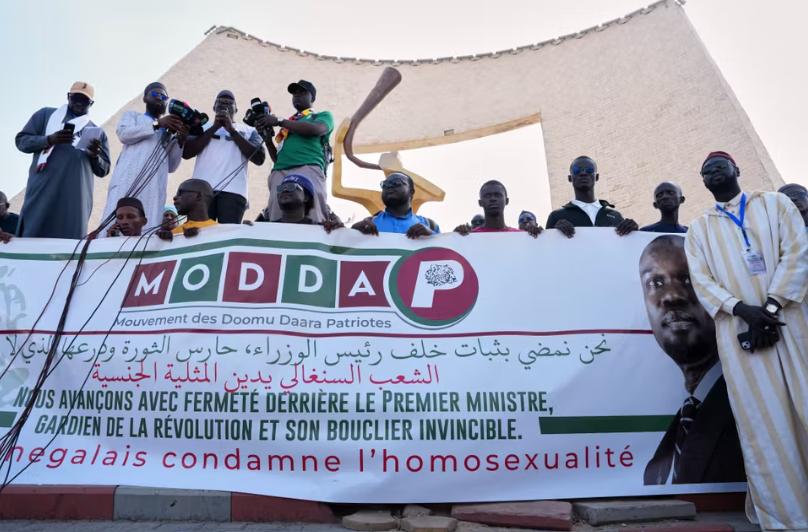
The website “African Readings” reported on March 12, 2026, that supporters of the law, including members of the ruling PASTEF party, organized several demonstrations in Dakar, during which participants chanted “No to homosexuality” and raised banners with crossed-out rainbow symbols.
The Senegalese law is part of a wave of similar legislation in the region. In 2025, Burkina Faso enacted a law criminalizing homosexuality for the first time, imposing prison sentences of up to five years.
Lawmakers in Ghana are also considering a new bill that would increase the maximum penalty for homosexuality from three to five years and impose prison sentences for the “deliberate promotion, sponsorship, or support of homosexual activities.”
It is worth noting that more than half of African countries prohibit or restrict homosexuality. The death penalty is applied in Uganda, Mauritania, and Somalia, while in about ten countries and territories, penalties range from ten years’ imprisonment to life imprisonment, including Sudan, Kenya, Tanzania, and Sierra Leone.
Western Rejection
This vote did not pass without a response from the United Nations High Commissioner for Human Rights, as its head, Volker Turk, urged Senegal’s president, Bassirou Diomaye Faye, not to sign the new law approved by parliament.
In a statement issued on March 12, 2026, in Geneva, Turk described the law as “deeply concerning,” saying that it violates rights to respect, dignity, privacy, equality, freedom of expression, and freedom of association and peaceful assembly, rights guaranteed under the Universal Declaration of Human Rights and international treaties to which Senegal is a party.
The High Commissioner warned that the law exposes individuals to hate crimes, abuses, arbitrary arrest, extortion, and discrimination in education, healthcare, employment, and housing, and that it also restricts the work of human rights defenders and press freedom.
Turk called on the authorities to repeal existing discriminatory legislation and to protect the human rights of all Senegalese citizens without discrimination.
Western media, including British and French outlets, also focused on what they described as human rights concerns regarding this legal amendment.
In this regard, the BBC cited Larissa Kojoue, a researcher at Human Rights Watch, who warned that this step could lead to increased discrimination and violence against sexual minorities.
Kojoue told the BBC on March 12, 2026, that the proposed changes are concerning, noting that “criminalizing same-sex conduct and arresting people because of their sexual orientation violates many internationally protected rights, including equality and non-discrimination.”
She added that such measures could expose people who already face social stigma to the risk of “violence and fear.”
Meanwhile, the website “TV5Monde” published an analysis on March 13, 2026, describing the new legal amendment as “repressive” and as violating the human rights of what it referred to as the LGBTQ community.
The source also cited testimonies from individuals using pseudonyms who said they decided to flee Senegal out of fear for their safety after the passage of this amendment.
However, the government preempted these calls, with Interior Minister Mahamadou Bamba Sy affirming during the discussion and vote on the law that “Senegal is a country open to the world. But this openness does not justify abandoning our values.”
Member of parliament Bacary Diedhiou also spoke during the session, strongly defending Senegal’s right to define its own policy framework on this issue.
Diedhiou saw that external reactions to the law appear to be an attempt to impose a certain cultural model, stressing that cultural and moral standards in one part of the world cannot be universally applied without regard for local history.
He further emphasized that “Nations do not live under the same moral sky, and norms are not mechanically transferred from one cultural space to another.”
Morality First
In this context, social activist Saidou Diallo believes that the issue of homosexuality is a social matter, meaning that each society has its own particularities.
He added that if the West glorifies it and “rolls out the red carpet” for it, this is not the case in all countries.
Diallo told Al-Estiklal that most of Africa does not share the Western system’s stance on this issue and believes that every nation has the absolute right to accept or reject it.
Therefore, the activist continued, “the United Nations and other decision-making bodies must understand that there is no global law obliging all countries to normalize homosexuality.”
He added that democratic or semi-democratic states resort to parliamentary voting to take a legal position on controversial issues, foremost among them the issue of homosexuality, and therefore the outcomes and decisions of each people should be respected.
He further emphasized that neither the United Nations nor any other international organization has the right to interfere in the internal affairs of states or impose guardianship over them, especially on matters of freedoms, as each people has its own definition of freedom.
He concluded that while homosexuality may be seen in the West as synonymous with freedom and human rights, in Africa and Senegal it is viewed as a threat to culture, morality, and social balance.
Sources
- The Senegalese Parliament Approves a New Bill to Combat Homosexuality. [Arabic]
- Senegal Approves Tougher Anti-Gay Law as Rights Groups Raise Concerns.
- ‘I Am Not Safe’: Homosexual Individuals in Senegal Flee the Country in the Face of the Tightening Law. [French]
- Senegal Doubles Maximum Penalty for Same-Sex Activity to 10 Years’ Imprisonment.