Despite Its ‘Great Concern,’ the UEA May Allow Sisi To Develop Egyptian Ports
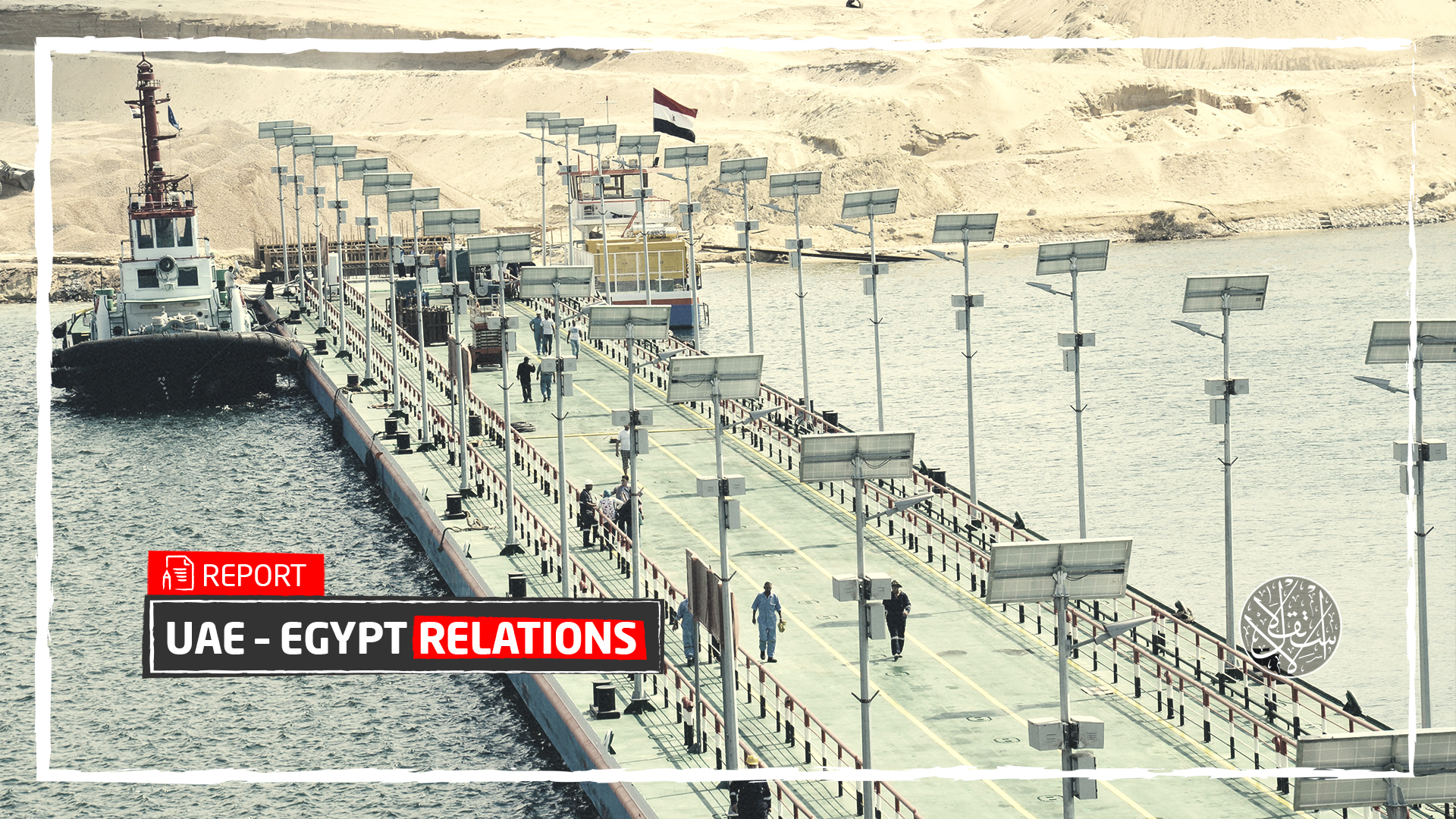
The inauguration of the President of the Egyptian regime, Abdel Fattah al-Sisi, sparked the development of the Alexandria Port in the north of the country, coinciding with the announcement of the development of the Ain Sukhna port near the southern entrance to the Suez Canal. There are many speculations about the possibility of a clash between Cairo and Abu Dhabi over the “shipping cake.”
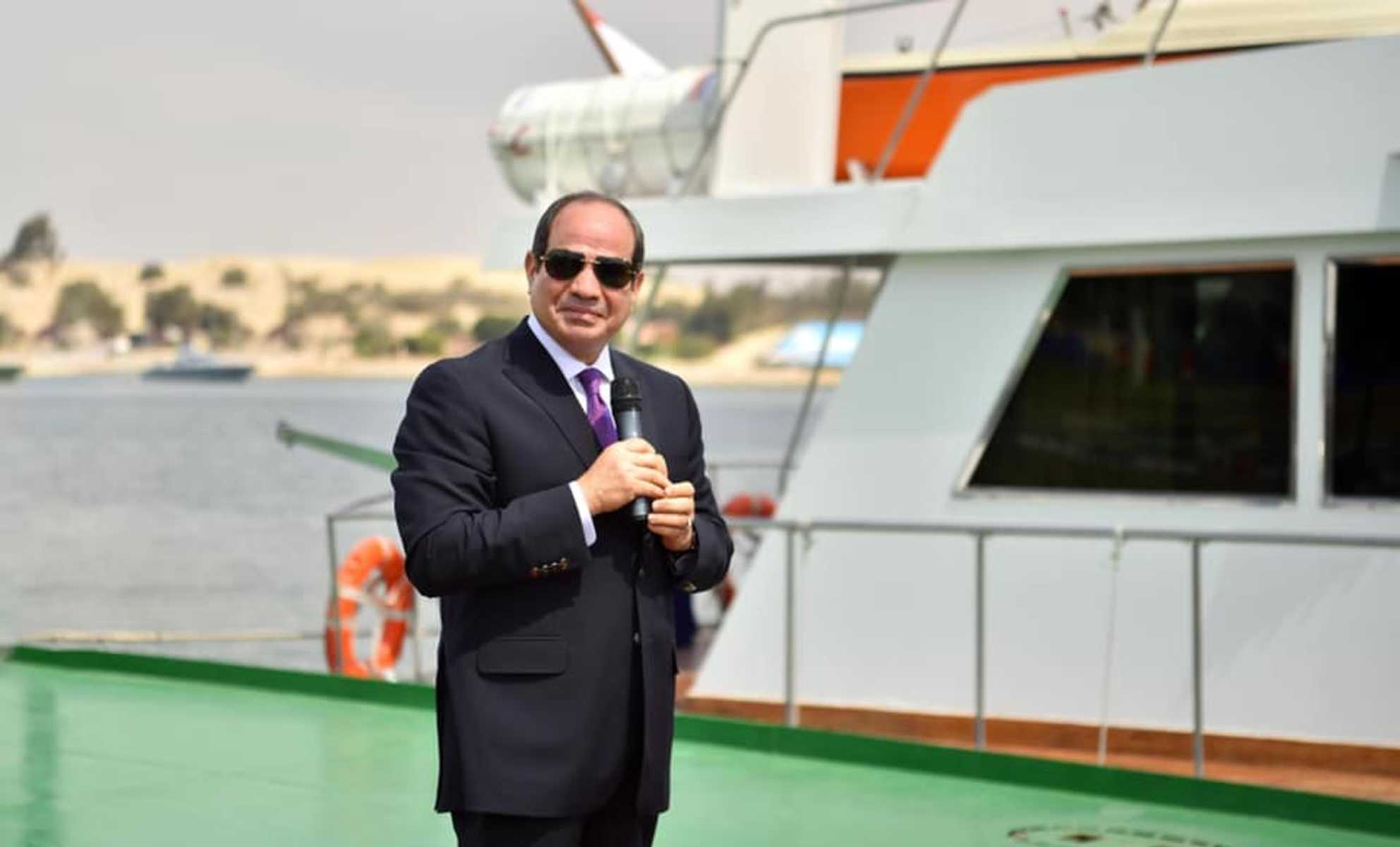
On September 7, 2021, Sisi inaugurated the development of Alexandria Port, which receives 60 percent of Egypt’s trade, to include 87 berths, with a total length of 24.9 km, depths ranging between 8.5 and 20 meters, and a cost of 400 million pounds ($25.64 million).
During the inauguration, Sisi said that the state implements its projects on its own, and relies on self-financing in developing and modernizing its seaports, and that the port of Alexandria, which occupies the forefront of the third-generation ports, is on its way to match the latest international seaports.
Upcoming Plans
Confirming El-Sisi’s speech, Egyptian Transport Minister Kamel El-Wazir said, in a telephone interview on “Echo of the Country” channel with Ahmed Moussa, that Egypt is on its way to becoming a center for global trade and logistics in 2024, taking advantage of its geographical and strategic location and its human capabilities.
Without an occasion, the minister stressed that "Egypt has its own decision, and that it must take its natural place," as if he was responding to those who say that "Egypt is a dependent country," but he did not clarify to whom his speech is directed.
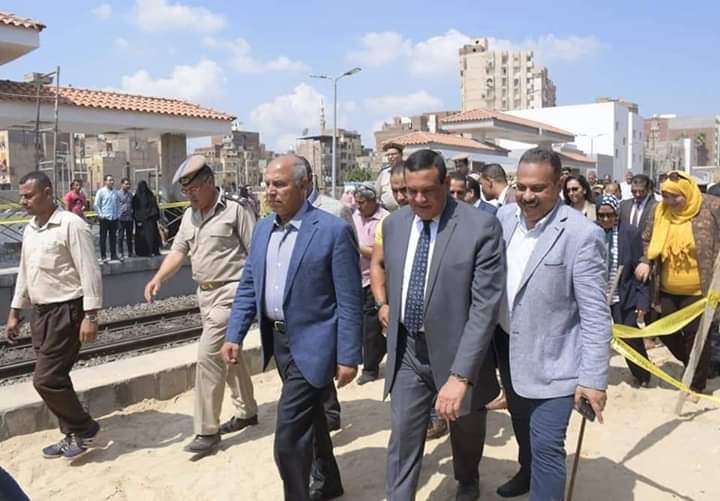
He continued: Sisi’s instructions in this context are to develop Egyptian ports from Damietta to Alexandria in the Mediterranean, especially Ain Sukhna in the Gulf of Suez, by transforming it from a depth of only 3 km to 12 km.
He said that Sisi's instructions also include changing the status of Egyptian ports, especially Sukhna, from receiving Egyptian exports and imports to global storage and logistical work areas to receive and store international goods and then re-export them.
During his speech, the minister alluded to the UAE several times, and said: "Egypt is powerful, all countries are our friends. There are countries that are based on one port, but we have 15 ports."
In response to Ahmed Moussa's question about Egypt's gains from the development of Sokhna compared to what it was getting from Dubai Ports (company), the minister said: "We were taking the minimum we really deserve."
He said: "We don't talk about the countries that are our friends, but we take the minimum of what we deserve, and don't get me involved in this. We are brothers and friends,” in reference to the Emirates, according to what was considered by those who followed this matter.
He pointed out that the country was very late in developing the "Sukhna" port, pointing out that there are countries, he did not name, that were responsible for this, and now it is time to develop it and raise its efficiency, with 12 Egyptian companies and 52 thousand workers."
The port of Ain Sokhna, on the western coast of the Gulf of Suez, covers an area of 22.3 square kilometers, about 43 km from the city of Suez, and accommodates 350,000 containers. It has been managed by DP World since 2008, amid many crises with workers, the last of which was in January 2013.
In June 2021, the Egyptian Ministry of Transport has already started implementing the first step of port development work, at a cost of 20 billion Egyptian pounds ($1.27 billion).
The development includes the construction of new berths with a length of 12 km in length and a depth of 18 meters, trading yards with a surface area of 5.6 million m2, and commercial and logistic areas with an area of 5.3 km2.
The port is served by a network of railways with a length of 10 km connected to the electric express train (Ain Sukhna / New Alamein) to transport goods and containers to all parts of the Republic.
Saddam's Features
Observers believe that Sisi's ambition in the field of ports may lead to a possible clash between Cairo and Abu Dhabi, the two powerful political and military allies in the Middle East, for three reasons.
The first: Dubai Ports took control of Ain Sukhna, and the Emirati company suspended the port’s development work since 2008 for more than 13 years, and even reduced the work of loading, unloading and storage, and reducing the number of workers, in order to ensure the Jebel Ali area in Dubai.
This was expressed by the Qatari media, Jaber al-Harami, in an old tweet on March 18, 2019, in which he referred to the expulsion of Dubai from managing the ports of Somalia and Djibouti, and accusing it of anti-competitive practices in the port of Mumbai and other African ports.
He said that despite this, "Abu Dhabi controls the Suez Canal in order to neutralize it and remove it from the competition of the Emirates ports so that Abu Dhabi controls the Egyptian decision during the era of Sisi."
Secondly, a large part of the UAE’s crisis with the regime of the late President Mohamed Morsi is its tendency to develop the “Suez Canal Axis” and turn it into a global attraction, which raised Abu Dhabi’s fears for the future of Jebel Ali and the Emirate of Dubai based primarily on its port.
A Noon Post website report published on May 15, 2016, confirmed that the economic measures promised by Morsi and the development of the Suez Canal, "made the UAE fear what such a project would constitute in this distinguished geopolitical location in the foreseeable future in the Jebel Ali region."
Third, the UAE is heading to control a large number of ports in the Red Sea, including 4 Yemeni ports, in addition to leasing ports in Djibouti, Somalia and Eritrea at the southern entrance to the Red Sea, which makes the Sokhna port a strong competitor for Dubai and its investment in those ports.
The UAE, a newly established country since 1970, realized early the economic value and strategic importance of seaports. Dubai Port was more important than others, the oldest in Egypt, Saudi Arabia, and others. It also launched the Dubai Ports World Company in 1999.
"Dubai Ports manage and invest in a large number of ports and marine facilities, according to the company's website, 78 ports and marine terminals in 40 countries on most of the world's continents.
In the strategic region of the Horn of Africa, where the Bab al-Mandab strait crosses world trade between East and West from Southeast Asia through the Egyptian Suez Canal to Europe, the UAE owns seven ports.
These are the Yemeni Hodeida and Mocha at the entrance to Bab al-Mandab on the eastern side of the Red Sea, and the Yemeni ports of Aden and Mukalla in the Gulf of Aden.
The UAE also leased islands and established a military port in the Asab region, in addition to large investments in the Eritrean port of Massawa, with a port in the state of Djibouti and Berbera in the Somaliland region, on the western side of the Red Sea.
In Egypt, Dubai World continues to acquire important projects in the Suez Canal axis. In November 2019, it acquired industrial land in the industrial zone there, with an area of 35 km.
‘UAE is Harmed’
In an interview with the Minister of Transport, Kamel al-Wazir, with the media, Nashat al-Daihi, on September 7, 2021, revealed Egypt's dream to have better ports than Jebel Ali.
He said, "I have a dream that all Egyptian ports, especially Ain Sukhna and Alexandria, will be better than Jebel Ali, because we are Egypt and we have beaches in the Red and Mediterranean Seas."
The minister's speech prompts questions about the impact of the Sukhna and Alexandria development projects on Jebel Ali Port.
Here, the Egyptian economic expert, Reda Issa, told Al-Estiklal: "Every new service added to the Egyptian sea and dry ports, regions, and logistical and technical services with a developed smart port, they all steal from Jebel Ali's fortunes."
He explains that "the ships of Southeast Asia travel long distances and are forced to enter the Arabian Gulf, where Jebel Ali is to refuel technical services and other services that, if they were better available in the ports of Sukhna, they would have reduced somehow the need of tankers for Dubai Port."
He points out that "on the other hand, ships coming across the Mediterranean from America and Europe to pass through the Suez Canal, can supply these services from the ports of Alexandria and Sokhna if they are provided as provided by Jebel Ali, which is deducted from the balance of the UAE port."
He asserts that "this is what the UAE is keen to not let this happen, since the late President Mohamed Morsi proposed the idea of developing the canal axis in 2012."
An Egyptian politician and two economic experts spoke to Al-Estiklal about Sisi's tendency to develop Egypt's ports and restore their roles in international trade, stressing that the matter greatly worries the UAE, but they differed about the possibilities of the two regimes clashing in this file.
The former Egyptian Assistant Foreign Minister, Ambassador Abdullah al-Ashal, believes that "what is happening in Egypt in the development of ports is allowed for Sisi to a specific and known extent, although it is not allowed for Morsi."
In an interview with Al-Estiklal, Abdullah al-Ashal believes that "Cairo and Abu Dhabi will not clash politically because of this development, because they have much greater commonalities."
He believes that "economically, coordination and arrangement is conducted to the satisfaction of all parties, and therefore I completely rule out a clash, because these are basic assumptions, especially since the UAE paid a lot of money and support to the state (June 30)."
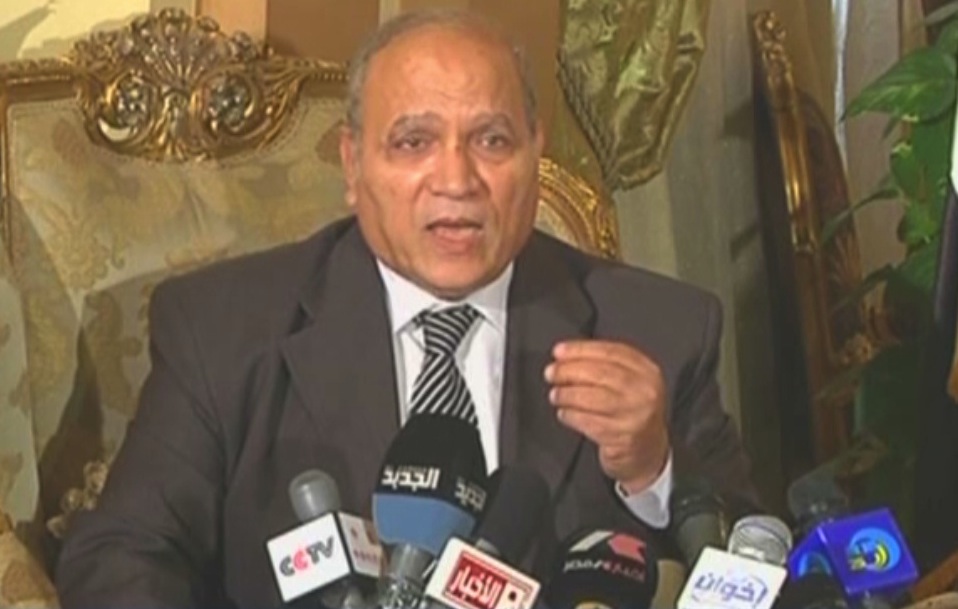
In his assessment of Sisi's orientation in international trade, the Egyptian economist, Abdel Nabi Abdel Muttalib, believes that "the development of Egyptian ports comes within the framework of a comprehensive plan to rediscover the country's natural and geographical resources."
He added to Al-Estiklal: "Al-Sisi's visit to Djibouti on May 27, 2021, and what he touched of the role of the port sector in its national income, and its achievement of growth rates that are the highest in Africa, had the greatest impact in directing his attention to this important point."
Abdel Muttalib does not believe that "Sisi's direction in particular to develop the port of Sukhna and multiply its capacity four times will harm Dubai and the UAE ports in general in the Red Sea."
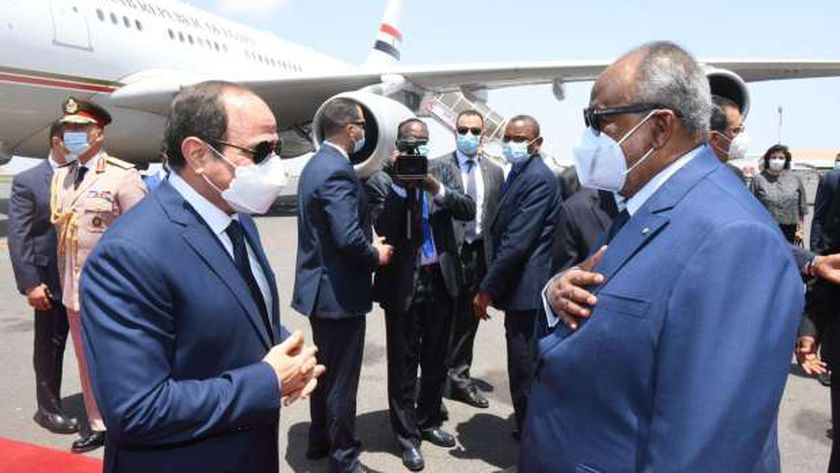
He explains that "the aim of developing Egyptian ports and increasing their capacity is to head towards Africa through the Bab al-Mandab Strait, and from there to the Horn of Africa through the Indian Ocean."
He points out that "there are high possibilities that the goal of Sisi's steps will be to meet the needs of the landlocked African countries through the road and railways to be established with Sudan."
Other Concerns
However, the Egyptian expert, on the other hand, believes that the possibilities of Sisi's ambitions to develop Egypt's ports collide with the UAE's fears that the end of the glamor of the Dubai Ports World Company is "possible."
He explains that "Egypt, through its distinguished position, can affect all logistical areas in the world, and it may also be a message to every country that begs itself to ally with Israel or others to harm Cairo's interests."
He believes that these steps do not reduce concerns about the future of the Suez Canal, especially with the Russian Cedar road that Moscow is adopting as an alternative to the Chinese Silk Road, and it affects the canal, along with Israel's projects in this framework.
Abdel-Muttalib concludes by emphasizing that "these steps do not reduce the concerns over the Suez Canal, but they at least reduce their potential negative impact on the global trade transport sector in Egypt, especially the canal corridor."
For his part, the economic expert, Issa, criticizes the fact that Egypt has granted Dubai ports to the port of Ain Sukhna so far, and stresses that the development of the latter and the rest of the country's ports is "a big dream that we wished would happen in Damietta port as well."
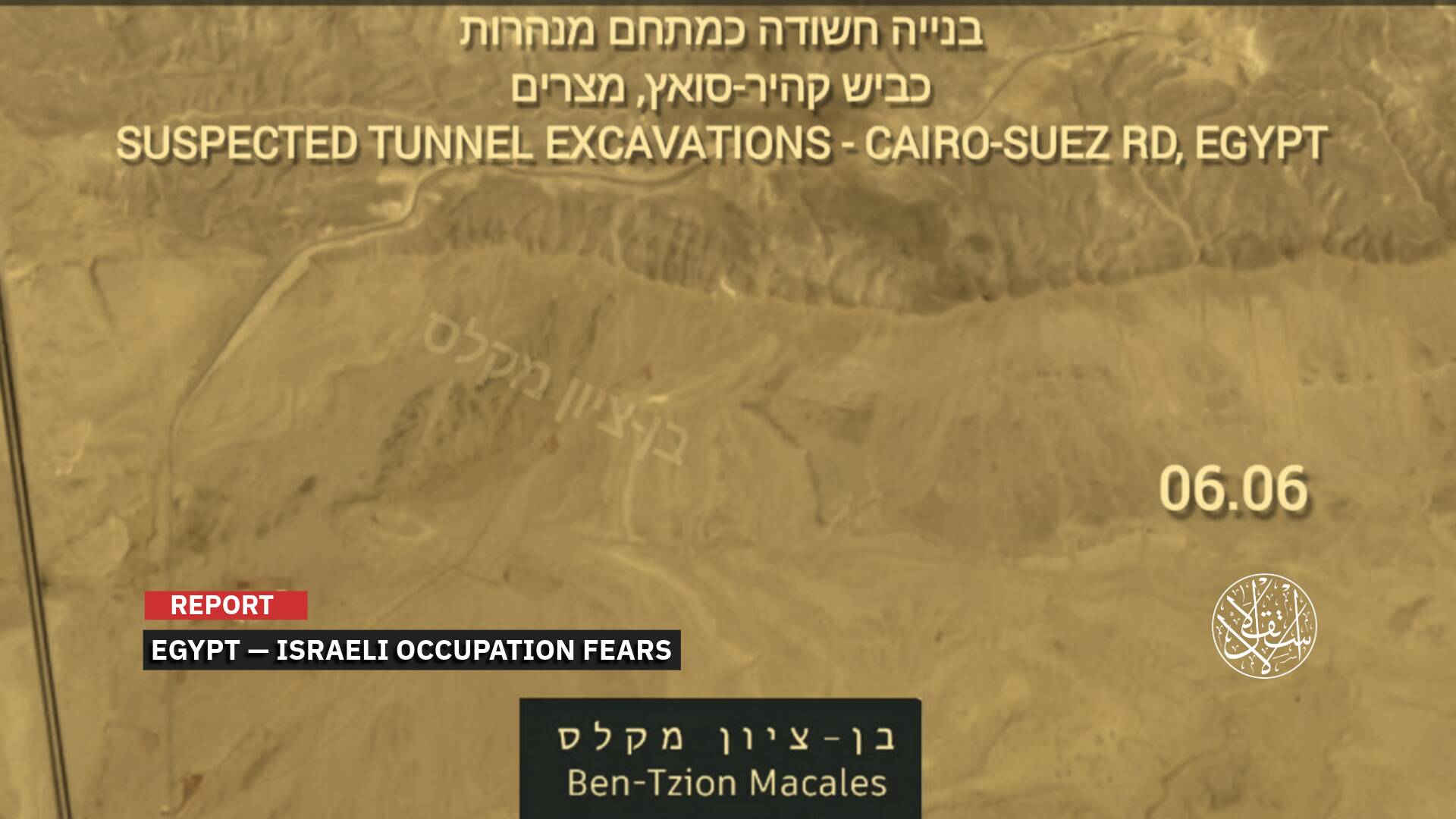
But Issa tells Al-Estiklal that the UAE will not allow Egypt to do so, and the expected reaction from it to any Egyptian move that threatens Dubai ports is to expedite the construction of the Ben Gurion Canal to strike the Suez Canal.
He points out that despite the fact that the ports of the UAE emirate have acquired 7 ports at the southern entrance to the Red Sea and the port of Sokhna, they will not allow Egypt to take part of the cake, especially with the end of the oil era, and Dubai is the remaining hope for it.
He points out that "the former Egyptian minister, Hassaballah al-Kafrawi, inaugurated in the eighties of the 20th century a development project northwest of the Gulf of Suez, to employ 900,000 workers, and it has a tourism and investment part."
He continues, "Al-Kafrawi wanted that area like Hong Kong, China, and better than Jebel Ali, but unfortunately the land was divided between businessmen Naguib Sawiris, Muhammad Abu al-Enein and Farid Khamis, and the idea died."
That is why the expert believes that "what is being spent now on developing Egyptian ports will not yield the expected return, as Egypt cannot compete with Dubai's ports."
He concludes by saying, "We must either enter the UAE system, or provide funds for these developments, because they have been working for decades in managing global ports, and let us admit that they are, in management, much better than Egypt."
Issa's vision was supported by activists on Twitter, stressing that "Ain Sukhna was the real competitor to Jebel Ali, and the UAE will not allow it to be surpassed, and that this is its policy in the Red Sea ports, and that is why it was expelled from African ports because they understood that its goal was to freeze."