Arrests Continue: Fate of Mossad Spies in Iran
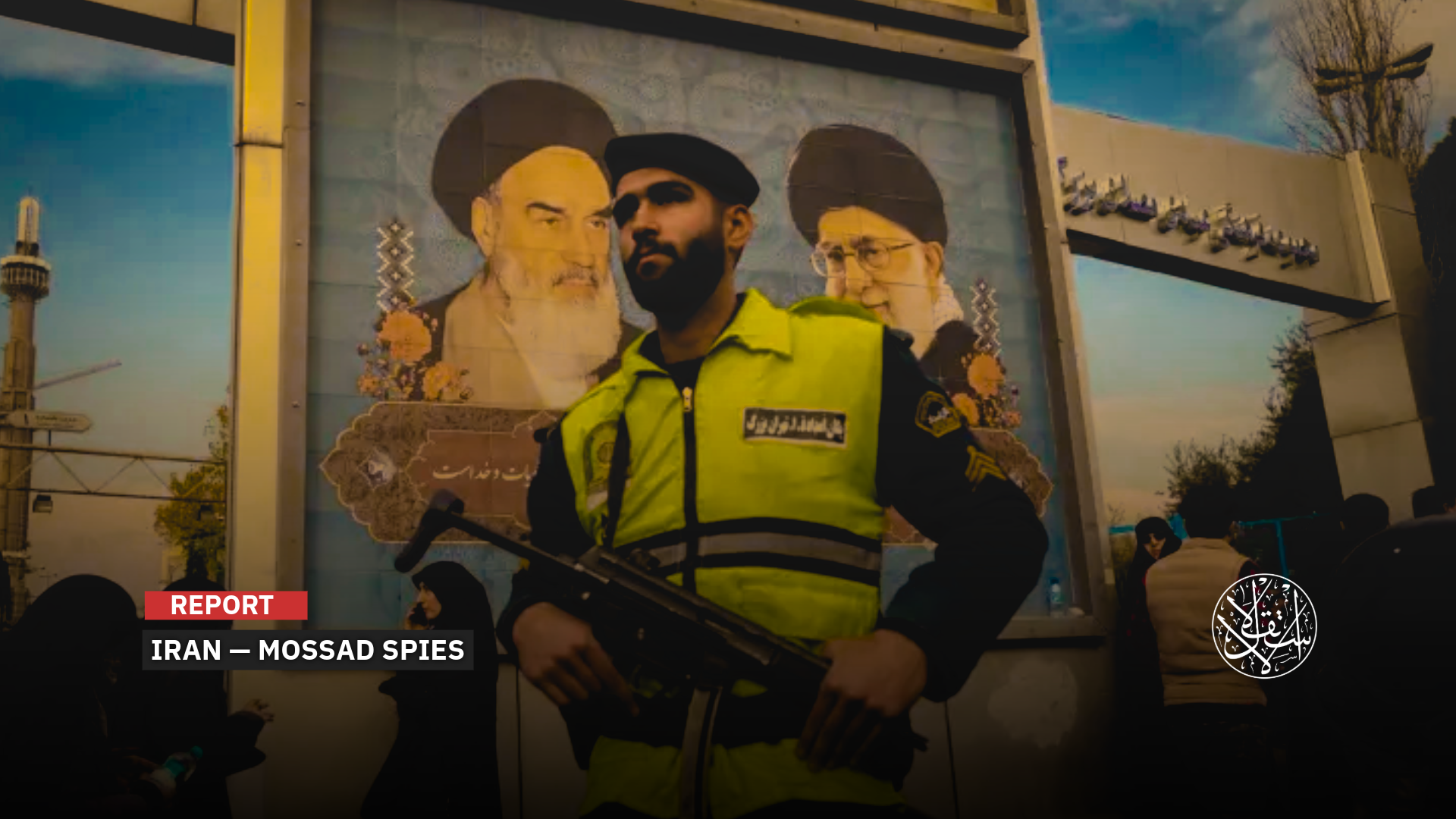
The intelligence war between Iran and “Israel” is expected to escalate.
The Iranian government continues to grapple with the presence of spies across its vast territory, according to official statements, amid concerns that they could carry out attacks soon under orders from “Israel’s” intelligence service, Mossad.
Evidence suggests Tehran’s battle with espionage is ongoing, with spies playing a central role during “Israel’s” 12-day war on Iran that began on June 13, 2025.
The aggression included a series of strikes that breached Iran’s security and nuclear infrastructure, resulting in the deaths of senior military officials and nuclear scientists.
Despite the Iranian authorities’ awareness of the espionage threat and its impact on both domestic security and “Israel’s” war on the country, the agents remain active.
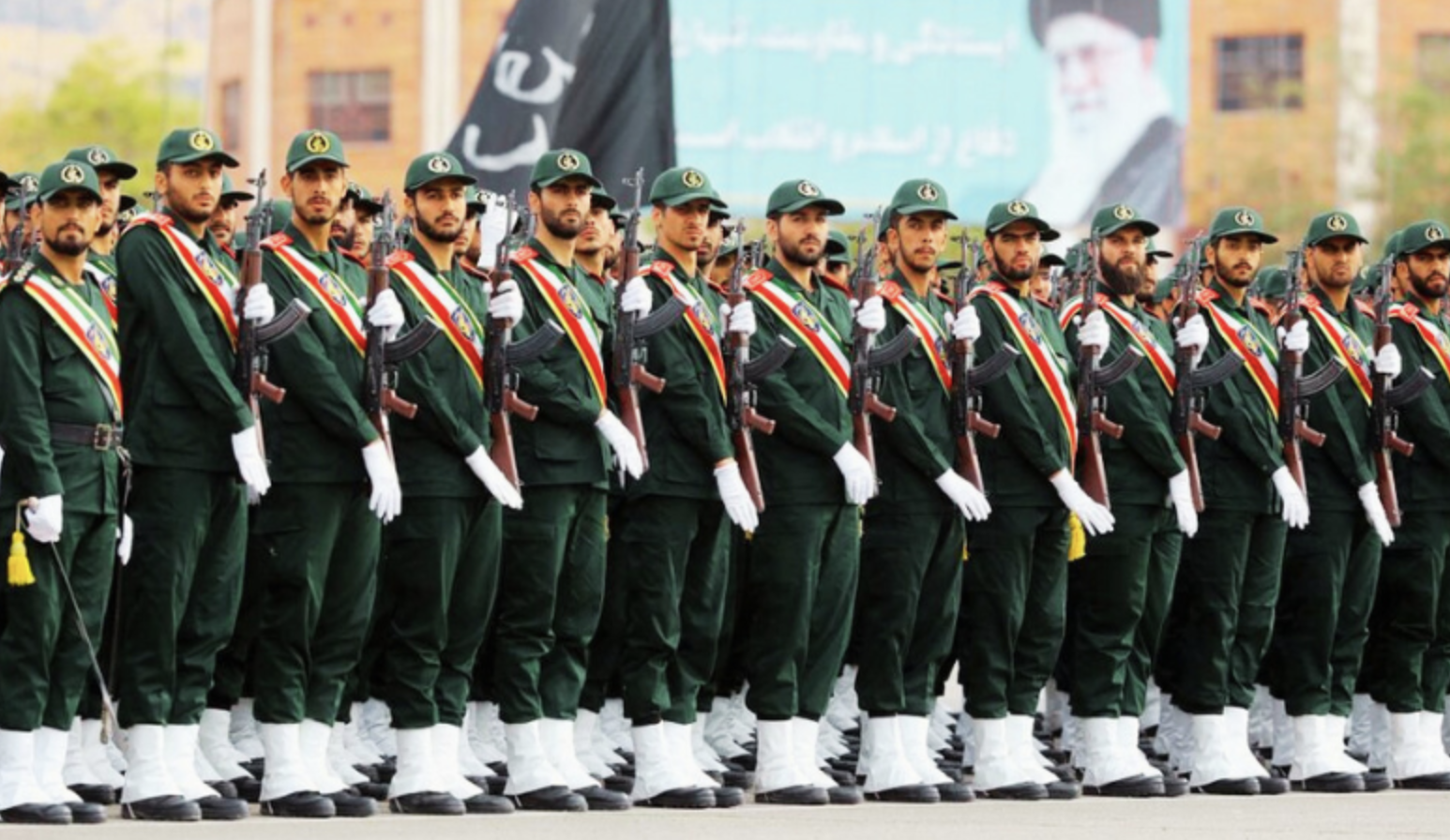
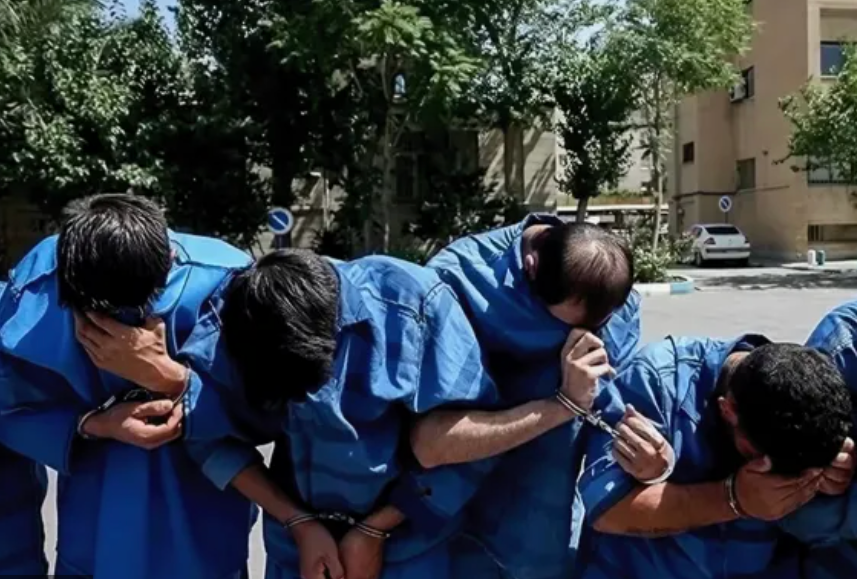
In the latest attack, the public relations department of the Islamic Revolutionary Guard Corps’ Imam Reza Division in Khorasan Razavi province announced the arrest of eight individuals on charges of “connection with Mossad.”
On August 30, 2025, the Revolutionary Guard issued a statement saying the arrested had received specialized online training from Mossad operatives and had transmitted coordinates of sensitive facilities along with information on senior military figures during the recent Israeli war on Iran.
Mossad Spies
The Revolutionary Guard said the eight spies had been planning attacks targeting civilian and military officials and intended to destroy key sites in the city of Mashhad, but were arrested before carrying out any field missions.
Authorities said they recovered “quantities of explosive precursors and launch platforms” from the suspects, the Guard reported.
Since the end of the Israeli war, Iran has announced it will conduct swift trials for those suspected of collaborating with the Israeli Occupation.
Authorities have reported multiple arrests on charges of spying for “Israel,” and several individuals convicted of working with Mossad have been executed.
In August 2025, Iranian authorities executed Rouzbeh Vadi, convicted of espionage for the Israeli Occupation for transmitting information on nuclear scientists Ahmad Zolfaghar and Abdulhamid Minouchehr, who were killed in the recent Israeli war on the Islamic Republic.
Fars News Agency reported that Vadi worked at the Nuclear Science and Technology Research Institute, part of the Atomic Energy Organization of Iran, and had collaborated on an academic paper involving the two scientists.
On August 9, 2025, Iran’s judiciary announced the arrest of 20 people described as “spies and Mossad supporters,” stating their cases were under review without providing details on their identities or detention locations.
On July 28, 2025, the Iranian Ministry of Intelligence reported the arrest of 20 spies and Mossad operatives, along with personnel linked to Israeli intelligence officers, across multiple provinces, including Tehran.
In late June 2025, Iranian Judiciary Chief Gholam-Hossein Mohseni-Eje’i told state television that cases related to national security, particularly those involving support for the usurping regime (the Israeli Occupation), would be handled with urgency.
A report by Britain’s Sunday Times in August 2025 indicated concerns that up to 100 people in Iran could face execution for spying for “Israel.”

Intelligence Struggle
Questions are mounting over whether Iran is taking new and effective measures to prevent Mossad infiltrations, as spies remain deeply embedded across the country.
Dr. Alaa al-Saeed, an expert on Iranian affairs, said recent developments indicate that Mossad cells remain active inside Iran despite the Revolutionary Guard’s announcement of arrests of some of its agents.
“This underscores the immense security challenge Tehran faces. These are no longer isolated incidents; they reflect an ongoing intelligence struggle waged by Israel deep inside Iranian territory, far from conventional warfare, using advanced tools including digital technology, satellites, and covert cells,” he told Al-Estiklal.
“Israel exploits vulnerabilities in Iran’s security apparatus while leveraging ethnic tensions and economic crises. Weak coordination between the Revolutionary Guard and the Ministry of Intelligence has provided Israel more room to maneuver. Its complex networks operate in total secrecy, relying on encrypted communications, making them difficult to detect or counter.”
“The continued Mossad activity in Iran after the recent war indicates that Israel has successfully penetrated the Iranian interior, turning its territory into an open operational space thanks to security gaps and the complexity of decision-making structures,” al-Saeed added.
“Iranian authorities are heavily focused on controlling internal dissent and suppressing popular protests rather than countering external threats, which consumes a significant portion of their resources and security capabilities,” according to the expert.
“Mossad capitalizes on these conditions, recruiting individuals from marginalized ethnic minorities and exploiting distrust within Iranian security agencies to gain tactical advantages, enabling precise operations ranging from gathering sensitive intelligence to sowing doubt within decision-making centers.”
“With this complex situation persisting, the intelligence confrontation between Iran and Israel is likely to intensify, not only in the scale of operations but also in its deep impact on political and security decisions across the region,” he concluded.
Security Failures
In June 2025, Israeli Chief of Staff Lieutenant General Eyal Zamir revealed that ground commando forces had operated inside Iran during the war. “These forces operated covertly deep in enemy territory and carried out operations that granted us operational freedom of action.”
This aligns with a report by The New York Times published on August 31, 2025, which indicated that “Israel was able to track the movements of key Iranian figures and assassinate them during the 12-day war this spring by following the cellphones carried by members of their security forces.”
Among the attacks was one on June 16, 2025, at a meeting of Tehran’s Supreme National Security Council, which resulted in the deaths of several guards.
The Times, citing five senior Iranian officials, including two Revolutionary Guard members, as well as nine Israeli military and security officials, reported that Iranian security guards’ careless use of mobile phones over several years, including posting on social media, played a central role in allowing Israeli military intelligence “to hunt” Iranian nuclear scientists and military commanders in the first week of the Israeli aggression.
“Israel’s” recent war on Iran had major repercussions on the structure of Tehran’s top security institutions, prompting a reorganization to protect the government’s weakened leadership.
In line with this, the Revolutionary Guard’s Fars News Agency announced the completion of structural changes within the Supreme National Security Council and the formation of a new body called the National Defense Council.
The agency reported in early August 2025, citing informed sources, that the new council was established with strategic responsibilities in the country’s defense policies and that its structure will be completed soon. It described the council as part of the new governance arrangement in defense and security.
Iranian security and judicial authorities have also intensified statements regarding arrests, case preparation, indictments, and the execution of sentences, emphasizing “rapid resolution of these cases.”
Public Prosecutor of Tehran Ali Salehi stated on August 27, 2025, that 110 of 120 cases were related to the recent Israeli war.
Similarly, the head of the judiciary in Isfahan, Asadollah Jafari, said on August 25, 2025, that more than 75% of “spying for Israel” cases from the 12-day war had reached the indictment stage, with some resulting in sentences to be carried out “swiftly and out of turn.”
According to the opposition channel Iran International, the rapid issuance and enforcement of sentences indicates the government’s use of harsh penalties, including execution, to suppress dissent, with no guarantees of fair trials, especially in cases involving torture.
The channel added that following the 12-day Israeli war, Iranian authorities conducted mass arrests, including 20 individuals labeled “Mossad operatives,” 21,000 people detained based on “popular reports,” and at least 2,000 others across various cities.
Tahir Abu al-Nadal al-Ahwazi, a member of the political bureau of the Iranian opposition Ahwazi Democratic Popular Front, told Al-Estiklal that what is happening across Iran reflects the Iranian government’s failure in every domain, particularly in security.
“The government’s claims about nationwide arrests reveal widespread discontent among Persian and non-Persian populations, and the regime is using this security failure to justify suppressing the opposition and intensifying repression and intimidation against its critics and policies,” he added.