After Years of Political Withdrawal, Why Is Muqtada al-Sadr Backing al-Zaidi’s Government?
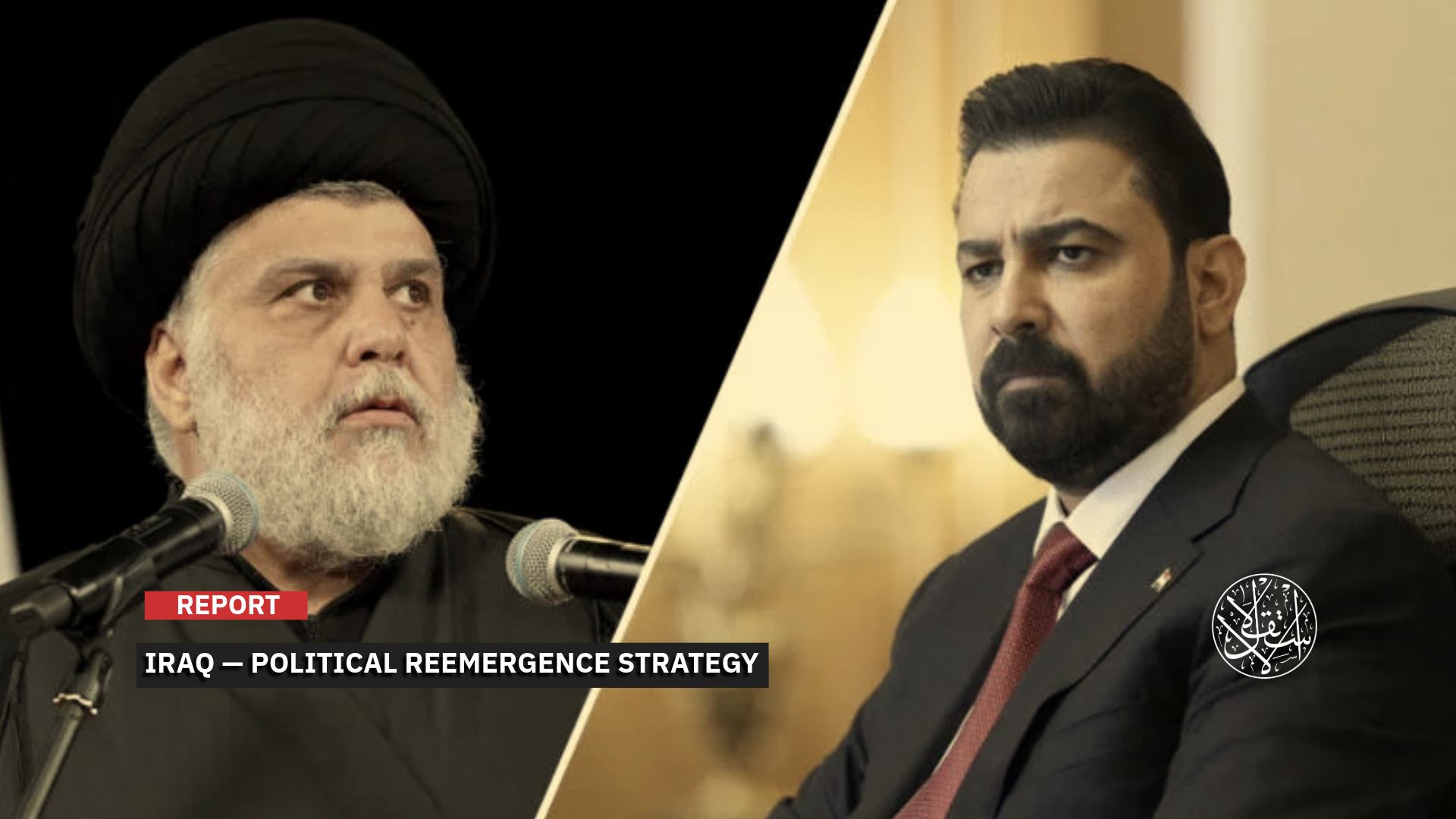
Al-Sadr maintains ongoing communication with al-Zaidi and urges him to distance armed factions from the government.
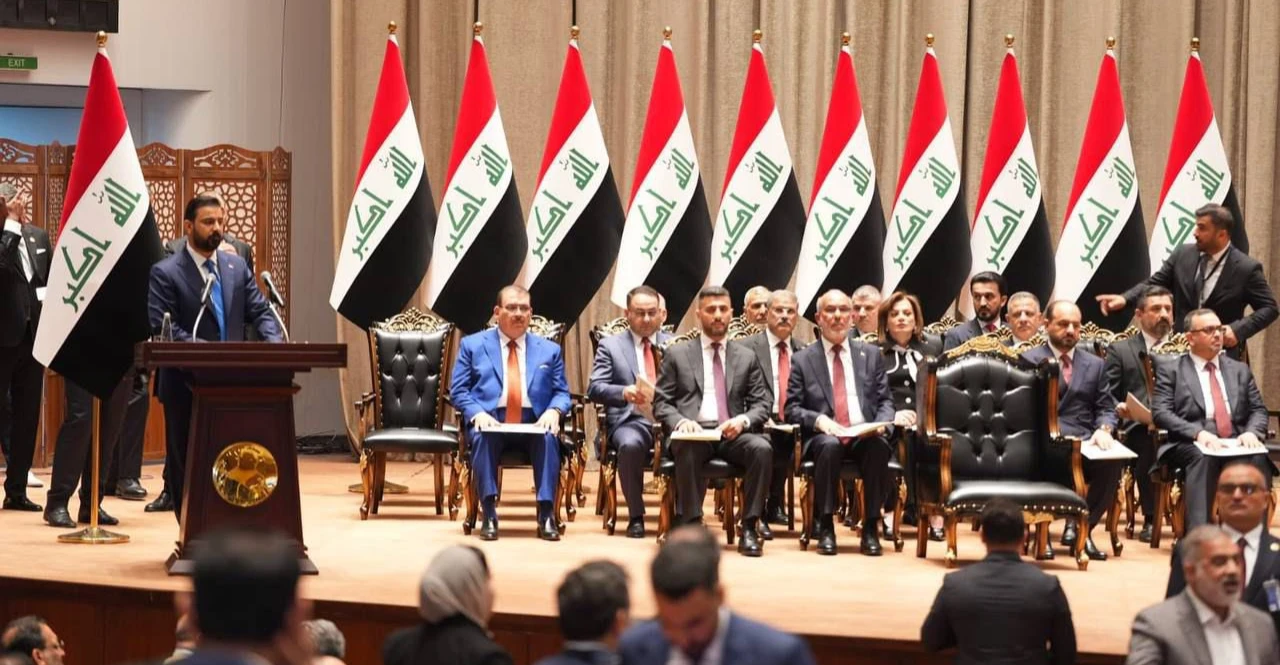
Since the Iraqi Parliament granted confidence to the government of Prime Minister Ali Falih al-Zaidi in May 2026, notable signs have emerged of the return of Sadrist Movement leader Muqtada al-Sadr to the political scene through a different avenue, following years of declaring a boycott of the political process and distancing himself from state institutions.
In the weeks following the formation of the government, direct and indirect channels of communication between al-Sadr and al-Zaidi have remained active, whether through public messages, meetings, or political mediation efforts.
This development has attracted the attention of Iraqi political circles, which had grown accustomed to a more hardline stance from the Sadrist leader toward successive governments.
This activity comes at a time when Iraq is facing complex political, economic, and security challenges, prompting observers to question whether al-Sadr's moves reflect a reassessment of his previous position on the political process, or whether they represent an attempt to influence the course of the new government from outside the structures of power without formally returning to them.
Amid continuing uncertainty over the nature of the relationship between the two sides, questions are mounting as to whether al-Sadr is preparing to inaugurate a new political phase that could redefine his position within Iraq's political landscape, or whether his ongoing contacts with al-Zaidi's government are merely part of short-term calculations linked to the balance of power and the future trajectory of the country's political scene.
A Political Mishmash
Since Iraqi Prime Minister Ali Falih al-Zaidi was tasked with forming the new government, Sadrist Movement leader Muqtada al-Sadr has been keen to keep channels of communication open with him, sending a series of messages and recommendations that reflected his interest in the course of the new administration despite his earlier declaration that he was withdrawing from the political process.
On May 8, 2026, al-Sadr urged al-Zaidi to avoid what he described as a political mishmash in forming the government, a reference to the political quota-sharing system (muhasasa), and called for the exclusion of all groups linked to armed wings from the ministerial lineup.
He also stressed the need to address the issue of armed factions by transforming them into state-controlled formations, either within a religious framework affiliated with the Hajj and Umrah Authority or as part of humanitarian and relief institutions. He emphasized that any group refusing such a transition should be considered outside the law.
At the same time, al-Sadr declared his willingness to take similar steps himself, expressing readiness to dissolve the Promised Day Brigade (Liwa al-Yawm al-Maw'ud) and place the Peace Brigades (Saraya al-Salam) under the authority of the Commander-in-Chief of the Armed Forces. He also called on the new government to launch a decisive campaign against corruption, restore the authority of the state, and strengthen Iraq’s Arab, regional, and international relations free from external interference.
After al-Zaidi's government won the confidence of Parliament, al-Sadr took the initiative to contact the prime minister, congratulating him on the formation of the government and urging him to safeguard Iraq's sovereignty and improve public services and living conditions for citizens. He also stressed the importance of combating corruption, protecting state resources, and meeting the needs of the Iraqi people.
This political support was later translated into practical steps. On May 27, al-Sadr announced the complete separation of the Peace Brigades (Saraya al-Salam) from the Sadrist Movement and their integration into the Iraqi state, stating that the decision was made in the public interest and to avoid the risks facing the country.
Just three days later, the Iraqi newspaper Azzaman revealed that al-Zaidi and al-Sadr had held an undisclosed meeting in the city of Najaf. The meeting reportedly focused on the integration of armed formations, most notably the Peace Brigades, into the Iraqi Armed Forces, as part of efforts to place all weapons under state control and strengthen the authority of the country's official institutions.
Capitalizing on the Opportunity
Regarding the reasons behind Sadrist Movement leader Muqtada al-Sadr’s communication with Prime Minister Ali Falih al-Zaidi and his repeated support for the government’s actions, Iraqi political analyst Latif al-Mahdawi told Al-Estiklal that what is happening can be explained by two main possibilities.
The first possibility, according to al-Mahdawi, is that al-Sadr’s moves are part of a new political project aimed at reshaping Iraq’s political process and altering its structure and balance of power.
The second relates to an attempt by the Sadrist Movement to take advantage of al-Zaidi’s rise to the premiership in order to strengthen its position and influence in the Iraqi political scene despite remaining outside formal power.
Al-Mahdawi leaned toward the first possibility, arguing that upcoming developments will clarify whether al-Sadr is indeed moving toward a new political project that could eventually lead to a strong return of the Sadrist Movement through electoral means, restoring its leading position in Iraq’s political landscape.
He noted that the current conditions differ significantly from the period of the “trilateral alliance” sponsored by al-Sadr after the 2021 elections, which later failed to form a government.
Iraq today, he said, is under increasing U.S. pressure, a relative decline in Iranian influence, and intensified competition within the Shiite political camp, factors that give al-Sadr an opportunity to rebrand himself as the most independent political actor.
He added that al-Sadr consistently seeks to portray himself as a nationalist Shiite figure who prioritizes Iraq’s interests over foreign powers, whether Iran or the United States. For this reason, he believes the current phase is suitable for relaunching his political project through support for efforts to monopolize arms under the state and combat corruption.
However, al-Mahdawi also believes that many of al-Sadr’s past moves were aimed more at improving his political image than achieving tangible reforms, arguing that he often adopts emotionally driven positions that have at times ended up benefiting his opponents within the “Coordination Framework” forces.
On the other hand, Iraqi writer Mujahid Abu al-Hil argued that al-Sadr is attempting to re-enter the political scene from a different angle after years of voluntary withdrawal from power.
In an article published by al-aalem al-jadeed on May 31, he noted that al-Sadr withdrew at the height of his political strength after his bloc won more than 70 seats in the 2021 elections, later choosing a complete retreat from power and even refusing to play a traditional opposition role.
Abu al-Hil suggested that al-Sadr is now trying to regain influence through what he described as “influence from absence,” citing his decision to separate the Peace Brigades (Saraya al-Salam) from the Sadrist Movement.
He considered this step politically significant beyond its organizational aspect, as it reflects an attempt to present himself as a supporter of the state project and its institutions.
He added that the man who built much of his political presence through confrontation has this time chosen absence as another means of influence, seeking to unsettle ruling forces and reaffirm the idea of the state project, which remains a central theme in his political discourse.
Al-Sadr had announced in August 2022 that he was retiring from political work and withdrew his bloc’s MPs from parliament. He subsequently boycotted successive governments and later local and parliamentary elections, effectively exiting the formal political equation while still maintaining significant popular and political influence inside Iraq.
Reproduction
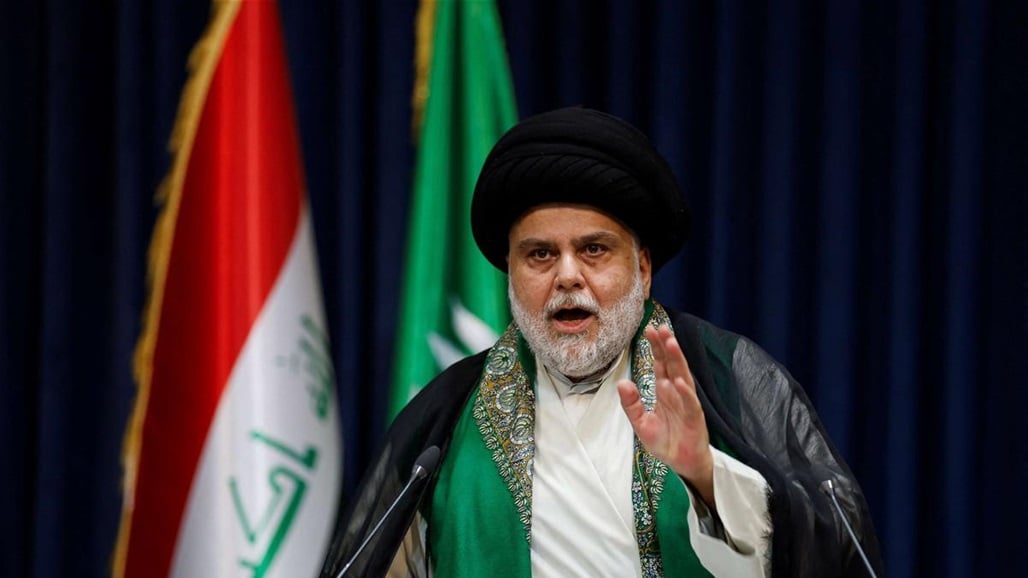
In the same context, Iraqi writer Samir Dawood Hannoush believes that all current indicators suggest that Sadrist Movement leader Muqtada al-Sadr is preparing to return to the Iraqi political scene, and that this return could become one of the most significant drivers of change in the structure of the political system in the coming phase.
Hannoush explained, in an article published on the Kitabat website on June 2, that al-Sadr’s recent movements carry clear political messages indicating that the decisive starting point of his return has already begun, especially amid what he described as weakening cohesion within the “Coordination Framework” forces and increasing disputes and internal divisions among its components.
He pointed out that the Iraqi political landscape now appears ready for a potential “political shock” amid escalating conflicts within the ruling alliance, making it possible that the government of Ali Falih al-Zaidi may not complete its full electoral term if rivalry and fragmentation among influential political forces continue.
Hannoush argued that al-Sadr’s recent decisions, particularly the separation of the Peace Brigades (Saraya al-Salam) from the Sadrist Movement and the handing over of its weapons to the state, have unsettled his rivals within the Coordination Framework and armed factions, while also increasing uncertainty about his next move, as the Iraqi public watches closely to see what role he may play in the future.
He added that al-Zaidi’s government, which emerged outside the traditional frameworks of Coordination Framework forces, may represent a suitable opportunity for al-Sadr to offer political support, especially given the overlap between his declared positions and the government’s program regarding restricting weapons to the state and fighting corruption, two slogans al-Sadr has long championed.
The writer did not rule out the possibility that al-Sadr could play an influential role in shaping the next phase, questioning whether al-Zaidi is capable of managing Iraq’s complex political balances amid the absence of a strong political backing that would provide him with the necessary cover and support to implement his program.
He also noted that U.S. support for the Iraqi government will not be unconditional, particularly regarding the issues of state monopoly on arms and reducing Iranian economic influence in Iraq, two of the most sensitive issues at present.
On the other hand, he highlighted widespread doubts about the possibility of quickly implementing these commitments, amid reports of indirect Iranian pressure on some armed factions not to relinquish their military capabilities at the current time, pending the outcome of ongoing negotiations between Washington and Tehran.
Hannoush concluded that the success of al-Zaidi’s government in implementing its economic reform agenda and establishing state control over weapons requires broad political and popular support, arguing that al-Sadr’s backing could provide an important part of this cover in the coming phase.
He ended by saying that the challenges facing the current government may be the most difficult since its formation, given the overlapping internal and external pressures, making its future dependent on its ability to manage these complex balances and overcome upcoming political and security tests.