After Major Israeli Targeting, Will Hezbollah Move Its Leaders from Lebanon to Syria?

Hezbollah's movements are monitored and tracked by “Israel,” which has its spies in Syria.
For the first time in its history since its establishment by the Iranian Revolutionary Guard in the 1980s, Hezbollah, the Lebanese party, has suffered significant casualties among its leaders and members in a short period at the hands of "Israel."
After engaging in limited skirmishes, involving gunfire exchanges along the southern borders, since October 8, 2023, "Israel" directly targeted senior leaders in its military infrastructure.
These assassinations varied from precision strikes targeting the vehicles of these leaders or members to shelling residential homes in southern Lebanon, later revealed not to be civilians but Hezbollah affiliates.
Elimination of Leaders
Hezbollah did not hesitate to mourn its leaders and members by issuing statements confirming their deaths, mentioning their real and war names (nom de guerre), birthplace, and date of birth, as well as holding "solemn funerals" for them in their hometowns.
While precise numbers of Hezbollah members and leaders killed since October 8 are unavailable, Israeli War Minister Yoav Gallant stated in a release on April 24, 2024, that "half of Hezbollah's leaders in southern Lebanon" had been "eliminated," noting that the remaining "hide and leave the field to our forces."
A Hezbollah source denied Gallant's claims to the Agence France-Presse (AFP) adding that the number of officials killed in their ranks "does not exceed the fingers of one hand."
Based on available figures, since the recent escalation began until April 20, at least 380 people have been killed in Lebanon, including 252 Hezbollah members and 72 civilians, according to a tally compiled by AFP based on party statements and official Lebanese sources. Meanwhile, the Israeli side reported the deaths of 11 soldiers and eight civilians.
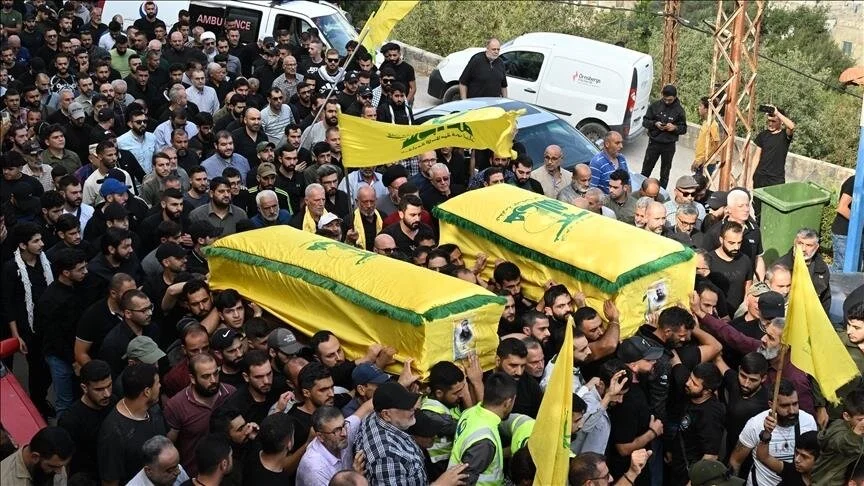
On April 20, 2024, three Hezbollah members were killed and two others critically wounded in an Israeli strike targeting a house in the town of Jebbayn in southern Lebanon, indicating the continuation of a series of direct assassinations.
Subsequently, the party mourned the three fighters, stating that each of them had "ascended as a martyr on the path to Jerusalem," a phrase used to eulogize its members killed by Israeli fire since the recent escalation began in the south.
In Lebanon alone, over 89,000 people have been displaced from their border towns since October 8, 2023, some of which have been reduced to rubble due to repeated strikes.
Reports indicate that over 520 houses have been completely destroyed in southern Lebanon, with an additional 3,300 partially damaged.
It has become evident that Hezbollah has been making tactical relocations of its leaders after October 8, 2023, especially after the evacuation of villages in southern Lebanon due to Israeli airstrikes and the deaths of dozens of civilians. These airstrikes targeted residential homes, some of which served as secret headquarters for Hezbollah.
Reports suggest that Hezbollah has evacuated families of its leaders to Syria from southern Lebanon, aiming to move them away from Israeli airstrikes, specifically to the southern border areas.
According to LebanonFiles website on April 24, 2024, Hezbollah is carrying out this operation clandestinely using small vehicles crossing into Syria through unofficial crossings controlled by the party, overseen from the town of Arsal.
The information provided by the website indicates that around 700 families have been relocated from Lebanon to Syria since February 2024, settling in areas such as Qudssaya, Yafour, and Qura al-Assad in the Rif Dimashq Governorate, residing in properties previously seized by the party following its military intervention in 2012, ordered by Iran to fight alongside Bashar al-Assad's forces and repel the opposition.
The website noted that the evacuation operations are carried out secretly and away from the eyes of the environment sympathetic to Hezbollah, to avoid appearing as if the party is abandoning the remaining families to their fate, which could negatively impact its supporters.
Hezbollah, which belongs to the so-called Axis of Resistance led by Tehran, currently has a hundred thousand fighters.
Background
Following its direct intervention in Syria under direct orders from Iranian Supreme Leader Ali Khamenei, Hezbollah has occupied villages, towns, and territories in Syria and continues to deploy its troops there to this day.
The Qalamoun Mountains region northwest of Damascus, adjacent to the Lebanese Beqaa, serves as the logistical and operational backyard for Hezbollah, as well as in southern Lebanon.
The importance of the Qalamoun region lies not only in its proximity to Hezbollah's strongholds in Lebanon but also in the mountainous terrain, which aids the party and its Iranian backers in concealing weapons and diverse military arsenals in tunnels prepared deep within the mountains, making them difficult to target.
This concentration also facilitates the movement and rotation of Hezbollah forces, which take no more than an hour to return to their stronghold in southern Beirut, the militia's stronghold.
It also serves as a central station for the route of drug shipments manufactured by Hezbollah, originating from its areas of influence in Baalbek, Lebanon.
The city of al-Qusayr in Homs (15 km from the Lebanese border) is one of Hezbollah's most important strongholds in Syria, with the party controlling the city completely since June 2013.
Given Hezbollah's consolidation of its presence in Syria, supported by Iran and facilitated by the Assad regime over the past decade, it is evident that the party has managed to secure strongholds for its forces by taking over several Syrian cities as bases for its fighters, focusing them in border areas with Lebanon.
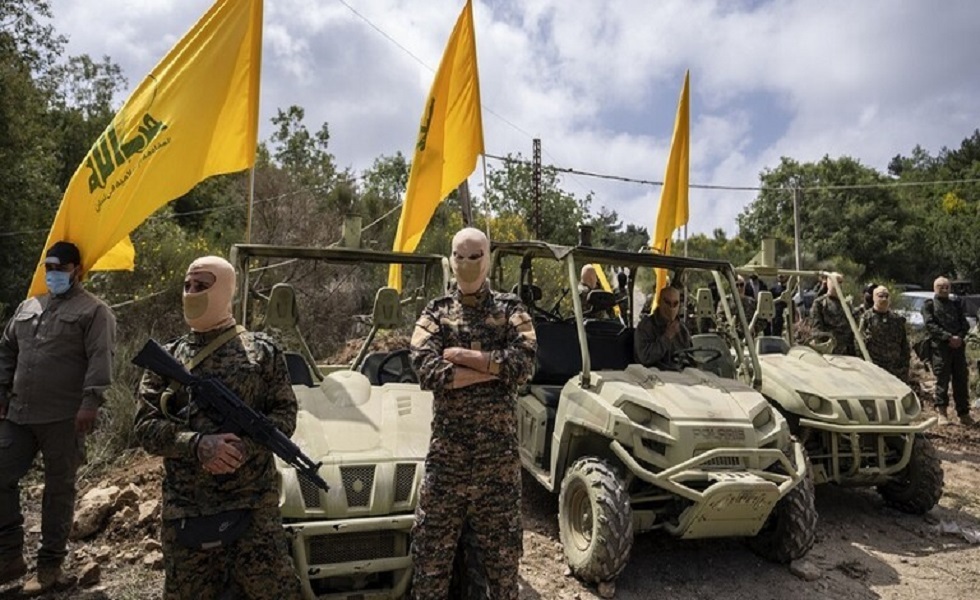
Hezbollah possesses unofficial crossings with Syria, distinct from the official ones distributed along the 375-kilometer border strip, totaling five.
With this move, Hezbollah provides itself with a new cover within Syria, overlapping with its points of control and depth of influence inside Lebanon, thereby allowing open borders under its sole control.
It's worth noting that the areas controlled by Hezbollah in Syria, near the Lebanese border, have witnessed operations by Iranian militias and party elements to displace locals, rendering them almost devoid of their original inhabitants for years.
Military Necessity
In the face of continued escalation in southern Lebanon and Israeli Occupation's success in killing more Hezbollah leaders and members, many questions have arisen about internal breaches within the party.
Moreover, many military experts attribute the precision of assassinations within Hezbollah ranks to advanced Israeli security capabilities, including sophisticated electronic means, drones, reconnaissance aircraft, and satellites, all heavily deployed in the recent conflict.
According to Israeli army spokesperson Daniel Hagari, over 3400 targets associated with Hezbollah in Lebanon have been attacked since October 8, 2023.
As a result, observers believe that Hezbollah is under significant pressure, especially on its military human resources, which have spent years in training.
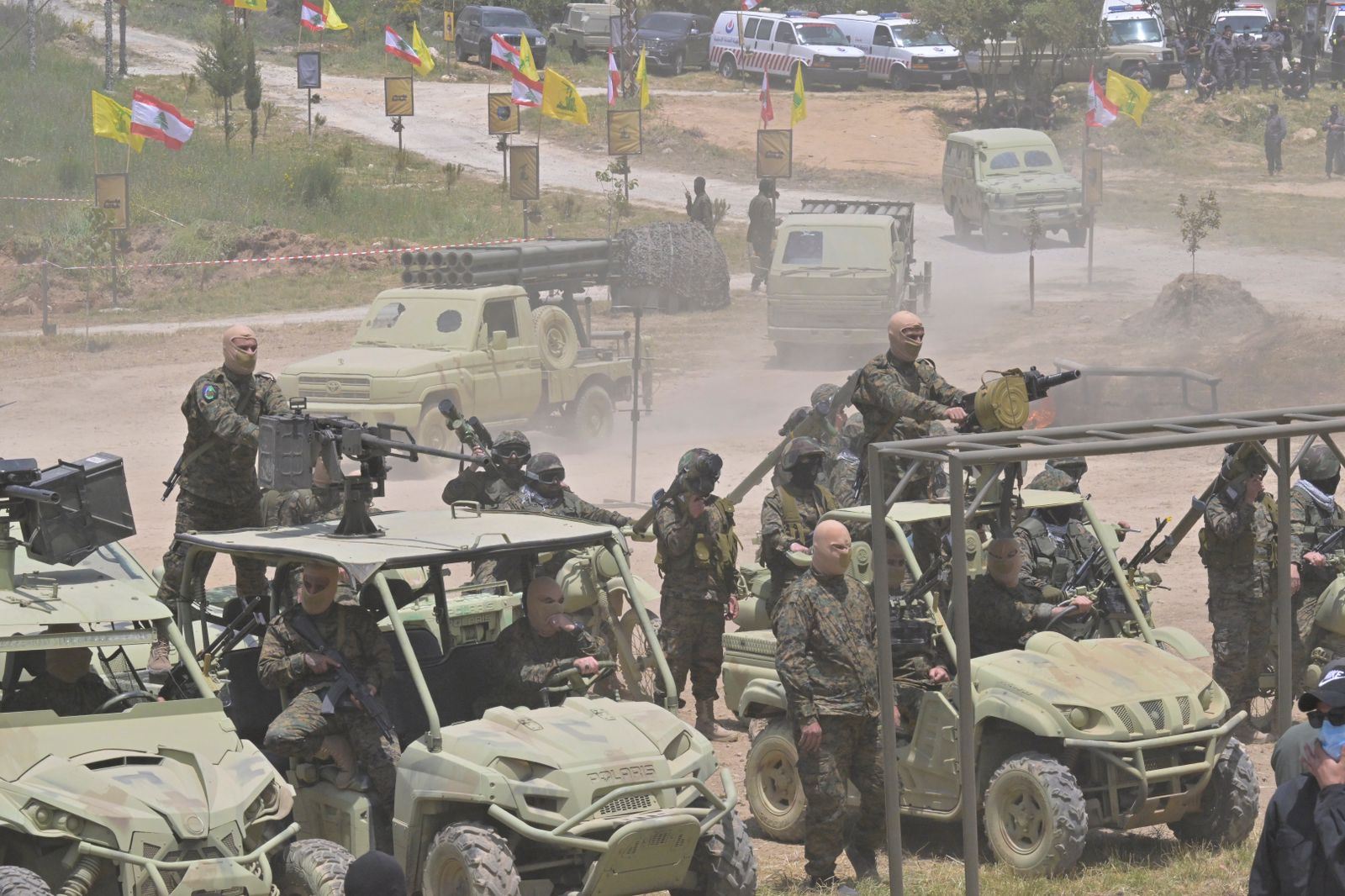
In this context, Syrian military expert Brigadier Abdullah al-As'ad confirms that "the elimination of Hezbollah leaders by Israel in Lebanon is a result of the Israeli Occupation's vulnerability in Gaza, meaning it exports its crisis abroad."
Al-As'ad added to Al-Estiklal saying, "Therefore, Israel, which possesses coordinates and information about Hezbollah leaders, has begun to expand its war. This is part of the Israeli doctrine, which dictates taking the war beyond borders.
"In doing so, the escalation in southern Lebanon, in terms of eliminating Hezbollah members and leaders, is due to Israel's margin enabled by its technologies and weapons to strike Hezbollah."
Continuing, he explained, "Hence, Hezbollah is moving some of its leaders from Lebanon to Syria, its rear base, or even changing their locations in southern Lebanon amidst ongoing assassinations and liquidations against them.
"However, even this tactic by Hezbollah, which is considered a military necessity, is unsafe, given that its movements are monitored and tracked by Israel, which has its spies in Syria. This was proven through the assassination of Iranian Revolutionary Guard Corps leaders and their targeting in secret locations there."