Afghanistan's Hunger Crisis: A Western, Not a Natural-Made Disaster

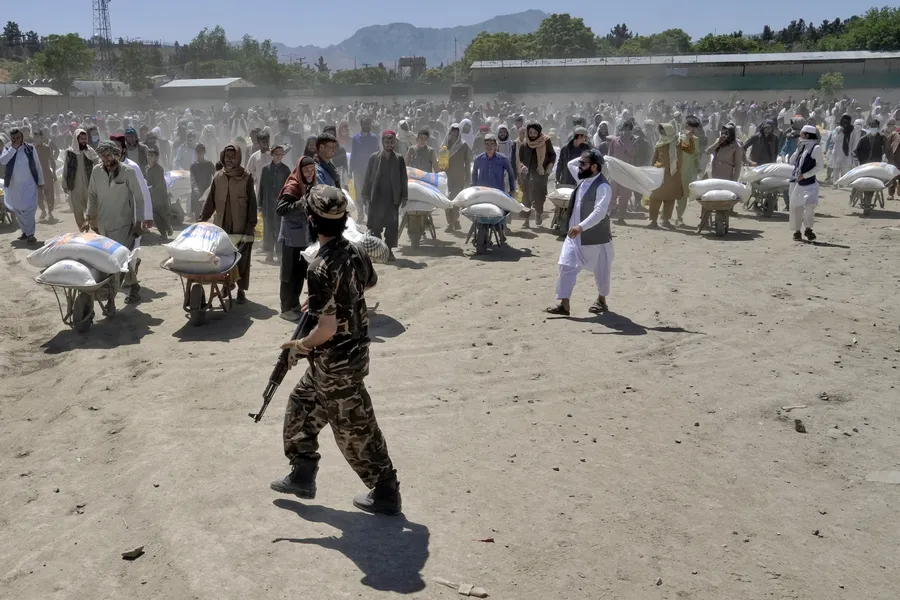
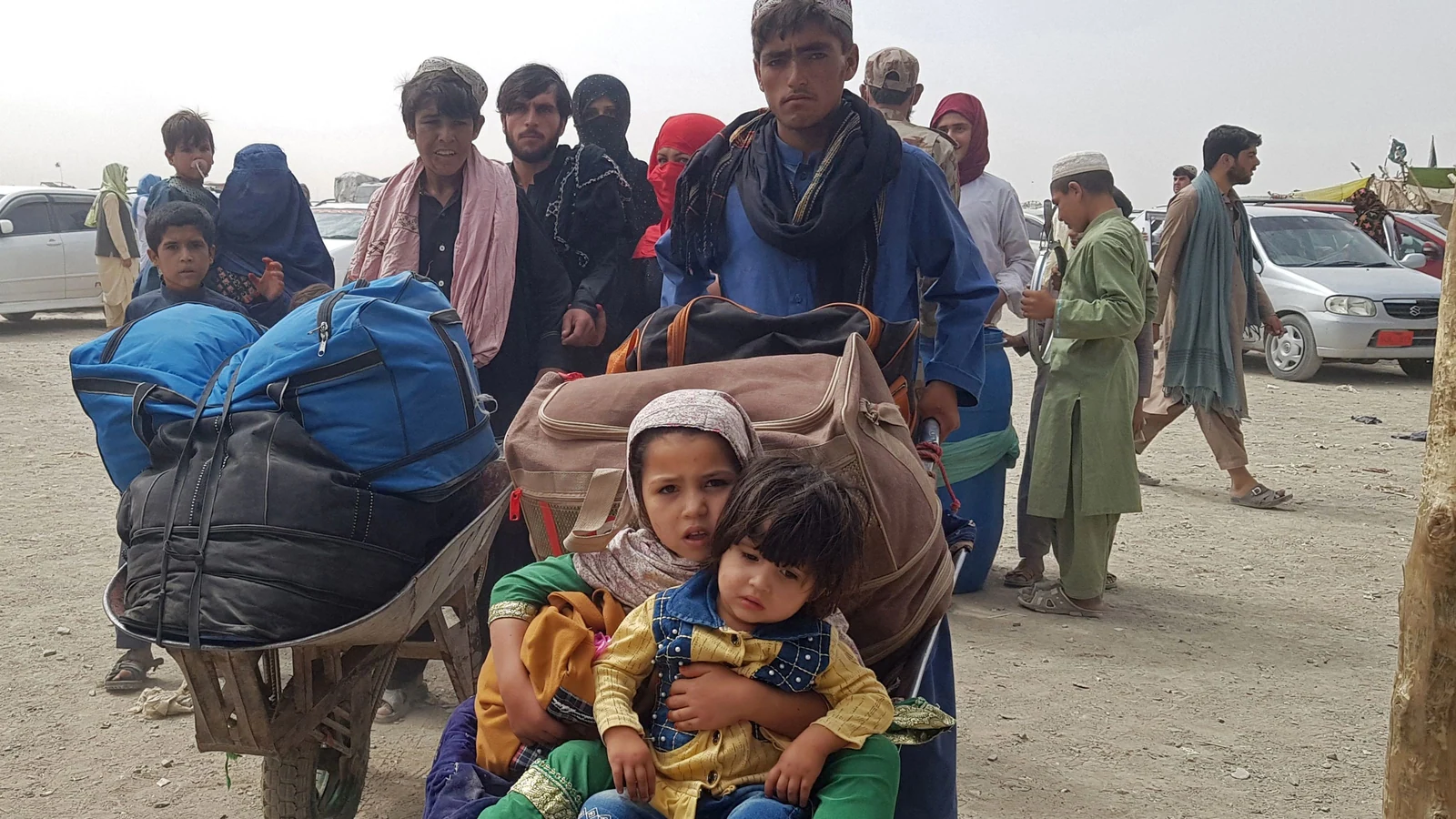
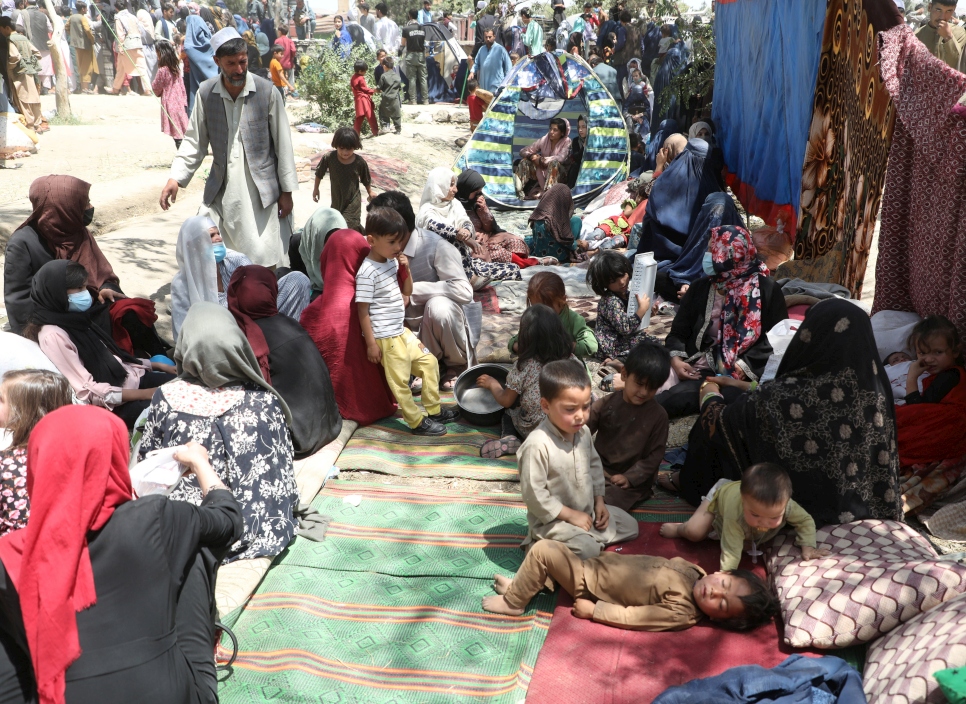
As Americans celebrated Thanksgiving gathered around dinner tables two weeks ago, the BBC reported that families in Afghanistan sell their underage daughters to marry in order to pay for food and feed their children sedatives and antidepressants because they are cheaper than bread.
According to TOLOnews, Afghanistan's unemployment rate stood at 40 percent in October. A recent Gallup poll from inside the country showed that while Afghans are facing their second winter since the Taliban returned to power in August 2021, 86 percent say they are struggling to get enough to eat.
Western governments focus on the Taliban's record on political freedoms and gender apartheid, while access to food is also an international human right that national governments are obliged to provide to their citizens. However, Afghanistan's inability to obtain adequate food for its citizens depends on who is asking for help.
Western Responsibility
The Taliban—and quite a few commentators—say Afghanistan's food shortages are the fault of the West, which has cut bilateral aid and frozen Afghanistan's foreign currency reserves.
Western countries say they will ease aid restrictions if the Taliban allow girls to return to school, cut ties with al-Qaeda and stop other restrictive policies that violate basic human rights.
However, what observers can agree on is that this catastrophe is man-made, its causes are multiple, interrelated, and policy-driven, and it has been exacerbated by the drought, the coronavirus pandemic, and the war in Ukraine.
In the end, according to Charli Carpenter, professor in the Department of Political Science and Legal Studies at the University of Massachusetts-Amherst, the blame game only adds a political class to the problem, making it harder to solve.
When the Taliban took control of the country last year, Western countries took two steps that in turn contributed directly to Afghanistan's food insecurity.
The United States froze the Afghan Central Bank's $9 billion in foreign reserves. The country's foreign reserves act as a reserve fund for days of need that can be used to finance imports and support the local currency, without which the inflation rate tends to rise and thus frequent rushes to banks to withdraw deposits.
That is why the former governor of the Central Bank of Afghanistan, in one of his last decisions before fleeing the country before the Taliban seized power, imposed a cap on withdrawing funds. This decision was reinforced and forcibly implemented by his Taliban successor.
Afghans now cannot withdraw upwards of $400 a week from the bank and queue for up to three days to withdraw their money. The Taliban cannot easily print the Afghani national currency because in the past they imported banknotes and coins from third countries.
Half of Afghanistan's foreign reserves remain frozen pending adjudication of domestic lawsuits in the United States, but the other half is now held in a Swiss trust ostensibly "for the benefit of the Afghan people."
But Carpenter says that what this means in practice remains unclear. Although the trust fund was established in September, the trustees met for the first time just two weeks ago and have a lot of work to do to figure out how to utilize these funds.
No Aid for People
US President Joe Biden's initial executive order on the issue hinted that the money would be used to fund humanitarian aid, but that meant it would be used to solve the wrong set of problems.
Humanitarian aid is meant to be a form of charitable donation by international donors, not something Afghans pay out of their own money held for troubled days.
According to Reuters, the Fund's statutes stipulate that the funds will be used more appropriately "for macroeconomic support purposes, such as the foreign exchange rate and price stability."
However, there are other non-monetary goals on the table, and some fear they could have adverse side effects. For example, if the money is used to pay for electricity imports, it could allow the Taliban to continue charging electricity fees for ordinary Afghans and using their money for other purposes
Replacing services for the Afghan people that the Taliban will no longer have to provide also inadvertently risks strengthening the Taliban's legitimacy.
Carpenter says that what makes Afghanistan's food crisis intractable is also what makes solving hunger so difficult: the multifaceted nature of the problem and the lack of consensus on who is responsible and what needs to be done.
If reserves are used only for monetary policy, price stability itself could have a tremendous and beneficial impact on Afghans. The Taliban have done better than expected in collecting taxes and import duties, but without their foreign reserves, the central bank cannot stabilize the currency or fight inflation, which now stands at 15 percent.
This money is supposed to act as a reserve fund for difficult days rather than being held on hold or spent on paying national bills, and that's the only thing that can help.
Carpenter sees that if the other half of foreign reserves that were not included in the trust fund were freed—rather than giving them to the families of victims of the September 11 attacks, as Biden's executive order stipulated—it would be far better for Afghans who have moved to defend against the seizure of reserves for that purpose.
But unfreezing reserves alone will not solve Afghanistan's food crisis, as it is only one reason for the collapse of the Afghan economy.
The broader issue, according to Carpenter, is that after the Taliban seized power, the West halted the flow of development aid money that paid Afghans salaries and fueled their economy.
This means that nearly $8 billion in development aid and almost the same amount of military aid evaporated overnight in a country that relies almost entirely on this money.
Full Siege
Emergency humanitarian aid continues to flow from donors through multilateral contracts of NGOs and UN agencies. The United States itself has provided more than a billion dollars as of September 2022.
But this only creates a deeper cycle of dependence, as previously employed Afghans now rely on cash or in-kind assistance. Although humanitarian aid may keep people alive, it is development aid that fuels economies and provides long-term economic growth and infrastructure.
Afghans themselves disagree on whether to continue or lift aid conditions for their country. A poll this spring by the Human Security Lab, which Carpenter runs in Afghanistan, showed that nearly a third of 3,750 Afghan netizens randomly polled on this question want to maintain economic pressure on the Taliban, while another third disagreed, and the last third remained undecided.
At the same time, political science research shows that economic sanctions generally exacerbate rather than reduce human rights violations such as murder, torture, or arbitrary detention.
Even if sanctions are effective in the long term in improving human rights conditions or achieving other goals, such as preventing terrorism, there are ethical questions about whether the ends justify the means.
Ultimately, what makes Afghanistan's food crisis intractable is also what makes hunger a global social problem that is difficult to solve: the multifaceted nature of the problem and the lack of consensus on who is responsible and what to do leads to indifference.
Political scientist Michelle Jurkovich shows in her book Feeding the Hungry that this problem is not limited to current conditions in Afghanistan but is rampant in global support for economic and social rights in general—what human security experts refer to as an agenda of "freedom from need."