70% of Moroccan Youth Show Tendency to Migrate, How Would This Impact the Economy
.jpeg)
Moroccans form not only one of the largest populations, but also one of the most dispersed migrant communities in Western Europe.
Among 30 million of the population in Morocco, around 5 million people of Moroccan descent live abroad, according to the Oxford Business Group report.
Seven out of ten young Moroccans say that they would be happier if they live out of their country, according to Middle East Eye, giving Morocco the highest percentage amongst Arab countries youth seeking to emigrate.
The report published by the National Human Development Observatory, a Moroccan organization, in partnership with the UN's Development Programme (UNDP), also found that 70% of Moroccans were reluctant to marry and start families.
7 in 10 Emigrate
According to new statistics, seven out of ten young Moroccans want to emigrate abroad and leave their homeland. Indeed, recent estimates have put Morocco’s diaspora population at between 4million and 5 million; it means between 12% and 15% of the population.
Again, unemployment is practically the main cause of emigration in Morocco and most of the Arab countries. The lack of jobs affects nearly 12 percent of the population, according to Middle East Eye. However, the percentage is much higher among youth where unemployment reached 31%, and 18.7% among university graduates, as reported by the same source.
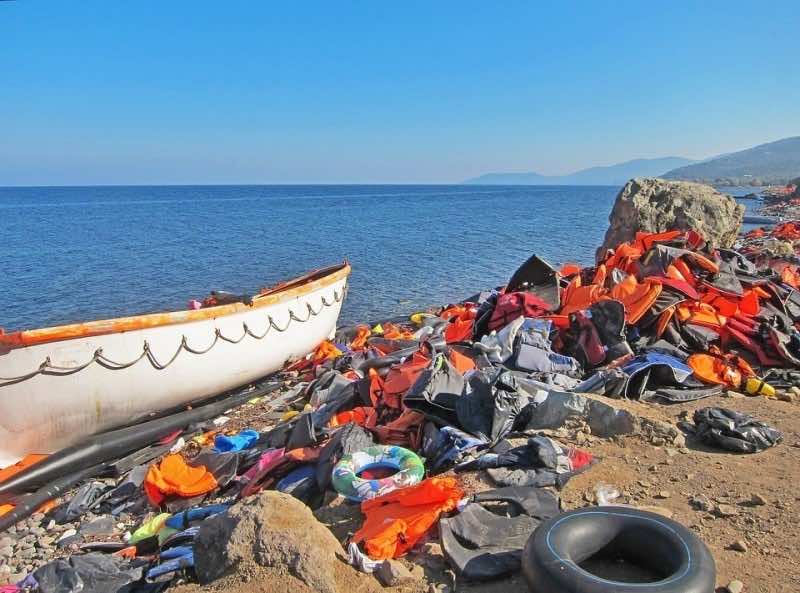
Actually, almost half of the population is under the age of 30, and this statistics is nearly common across many countries in North Africa and the Middle East.
Like Tunisia, Morocco is at the crossroads of one of the most regularly used transit routes to Europe, so the coast guards constantly save people who attempt to migrate via the Mediterranean Sea.
A case of example, Moroccan coast guards stopped 30,000 people from attempting to cross into Europe and seized 60 trafficking networks.
Nevertheless, Moroccans succeed in leaving the country with important numbers leaving Morocco sinking in a dangerous economic situation.
Economic Impact
Over decades, Morocco has experienced “large-scale migration” of mostly youth migrants, especially to western Europe. This migration was firstly oriented towards France, but also increasingly towards the Netherlands, Belgium, Germany, Spain and Italy. Around 15% of the Moroccan population emigrated and the actual number may be higher due to undocumented migration.
According to a report by the researcher at the Department of Humanities of the University Ca' Foscari of VeniceIt, Francesco Vacchiano, “it is certainly well documented that, in many places of the world, [the youth] may represent a resource for their family, not only in the so-called “traditional” societies.”
“Even in the Global North, at the lower levels of the social scale, it is common to come across children and adolescents who contribute economically to the family revenues, and all the more so in times of crisis of parental productive capacity,” according to the report.
The same case is for the countries, where the young people represent a dynamic role for economic growth. Unfortunately, Morocco is losing its economic remedy key because of the youth’s dream of Europe that led to the development of a passive, non-productive community, which has become increasingly dependent on remittances.
The latter are said to be spent mainly on luxury goods and ‘consumer’ investments, and rarely invested in productive enterprises. In doing so, migration undermined the Moroccan local economy by depriving the country of their valuable labor force, the youth.
Solutions
Most of those risking this sea route are people from sub-Saharan Africa seeking to reach Europe through Spain, which is only 20 kilometers from Morocco.
However, Moroccan youth themselves are also being drawn to Europe, due to the lack of economic opportunities in their homeland.
The Middle East Eye said that Morocco's King Mohammed VI introduced a new government in October, led by Aziz Akhannouch, a billionaire tycoon close to the palace.
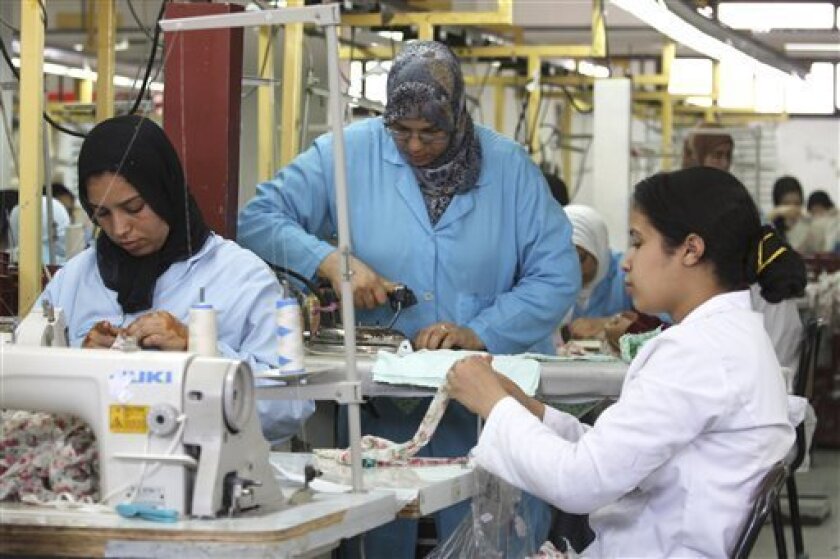
In fact, like all the economically deteriorated countries, Moroccan authorities have repeatedly promised to improve the conditions of young people in the country, but still struggle to solve many problems like the high unemployment rate.
However, according to the World Bank’s report in October 2021, growth is projected to rebound to 5.3% in 2021, led by an extraordinary agricultural campaign rather than by “a broad-based acceleration of economic activity.”
Morocco may return to its pre-pandemic level of GDP only in 2022, followed by a gradual acceleration of growth, unless with the successful implementation of ongoing and planned reforms, according to the report.