The Resurgence of Conscription in European Countries

As Russia’s aggression against Ukraine in February 2022 rattled Europe, many EU nations boosted their defense budgets and upgraded their military capabilities.
At the same time, some Western leaders across the political spectrum pondered whether reinstating the draft was the answer to their security challenges, sparking a fierce debate in some cases.
The revival of conscription in Europe contrasted with the trend of many European countries that had phased out mandatory military service in favor of volunteer forces over the last few decades.
Historical Context
The reasons behind this reversal raised curiosity among observers and analysts, since historical conscription has a long tradition in Europe, going back to the early modern period.
However, after the fall of communism and the end of the Cold War and the ensuing changes in the security landscape, many European countries started to gradually abandon conscription in favor of smaller and more professional military forces.
This shift was motivated by several factors, including the significant reduction in conventional military threats and the wish to cut defense spending.
But in recent years, especially after Russia’s annexation of Crimea in 2014, Europe saw a remarkable return of conscription in many countries, indicating a shift in military recruitment policies.
Military spending in Europe also reached unprecedented levels in 2022 that the continent had not witnessed since the Cold War, according to a study by the Stockholm International Peace Research Institute, which stated that European military spending in 2022 rose by 13% compared to the previous 12 months.
As the Cold War ended and the Berlin Wall crumbled, Europe seemed to bid farewell to mandatory military service.
In the last two decades or earlier, most of the countries on the continent scrapped the draft.
But among the 29 members of NATO, which includes Turkiye, only six have kept conscription alive since 1993. The changing security environment is one of the main drivers behind the comeback of conscription in Europe.
This revival coincides with a time when Europe faces new threats, such as the escalating tensions with Russia along its eastern borders. This has undermined the assumption that peace in the region was assured.
Given these security challenges, some European countries feel the need to boost their military strength and keep a larger reserve of potential soldiers to effectively counter these emerging dangers.
German and British politicians have suggested bringing back compulsory military service, while countries that already have conscription, such as Denmark and Lithuania, want to prolong their service periods, Euronews reported.
The Ukrainian War
As Europe faces new security threats from Russia and other actors, some countries are reviving an old practice: compulsory conscription.
This policy, which requires citizens to serve in the military for a certain period of time, reflects a complex mix of security, deterrence, recruitment, and social factors.
But while it may seem like a backward step, the reasons for this shift are firmly grounded in the current geopolitical situation and the need to adapt to changing challenges.
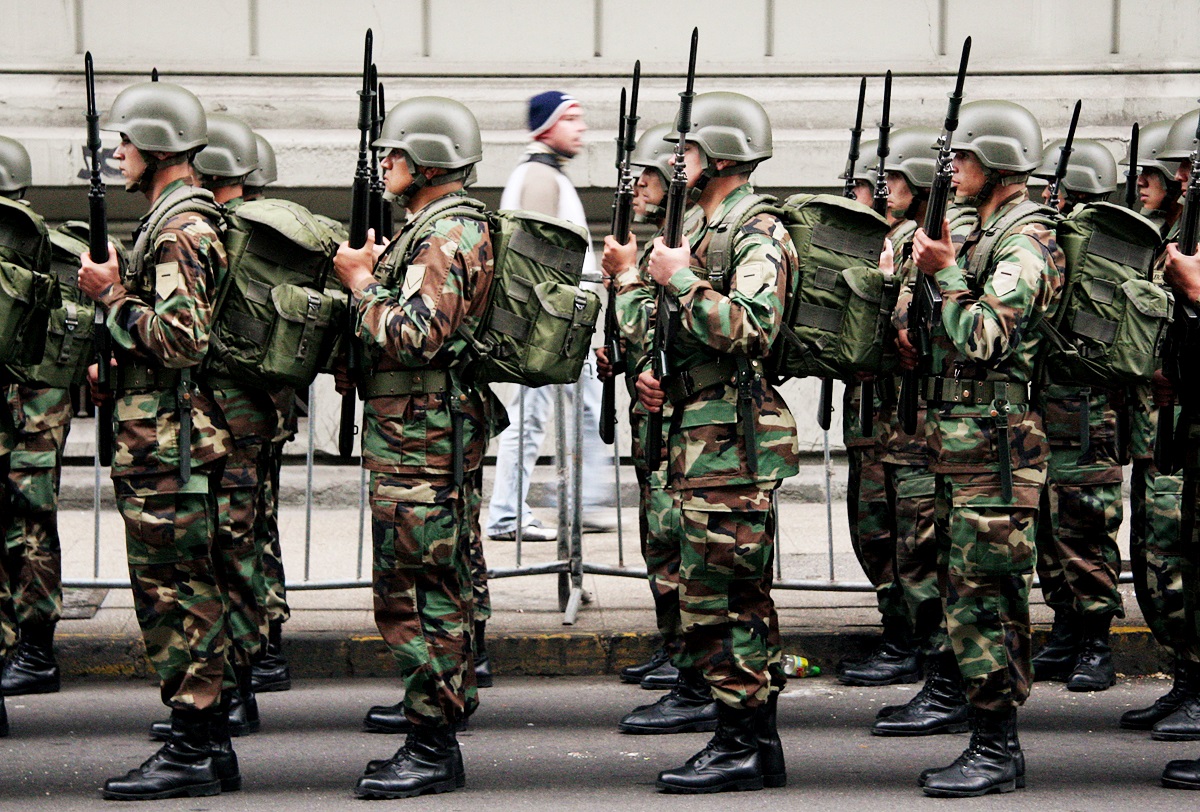
Ukraine was the first to reintroduce compulsory military service for men aged 18 to 26 in 2014, shortly after Russia annexed Crimea. Lithuania followed suit in 2015, requiring men aged 18 to 25 to serve.
After Russia’s attack on Ukraine on February 20, 2022, Lithuania, which shares a border with Russia through the small Kaliningrad enclave, started working on reforms to its conscription system that could affect people who live and study abroad.
Lithuania is not alone in having some form of compulsory military service. Denmark, Sweden, Norway, Finland, Latvia, Austria, Greece, and Estonia also have mandatory conscription for men and women or men only.
Latvia is planning to bring back compulsory military service after abolishing it in 2007.
In addition to Lithuania, Denmark, Sweden, Norway, Finland, Latvia, Austria, Greece, and Estonia currently have some form of compulsory military service. While Latvia plans to reintroduce compulsory military service.
Which European countries are rethinking military service amid the war in Ukraine? #UncoveringEurope https://t.co/QP8GZtr7l5
— euronews (@euronews) July 26, 2022
Useful Approach?
One of the reasons that drives Europe to resort to conscription — where men and women are usually legally obliged to fight — is that traditional recruitment campaigns are unsuccessful.
The German army, for example, fails to attract new soldiers despite the broad initiative to promote itself amid the Ukrainian war, as announced by the German Ministry of Defense in August, according to Euronews.
The return of compulsory conscription in Europe reflects a complex interaction between security concerns, deterrence strategies, recruitment challenges, and social considerations.
Although it may seem like a return to the past, the motivations behind this shift are rooted in contemporary geopolitical realities and the need to adapt to evolving security threats.
As tensions with Russia escalate, some European countries are considering reinstating mandatory military service to boost their defense capabilities. But is this a wise move?
That’s the question posed by Vincenzo Bove, a Warwick University political scientist and an authority on conscription, in an interview with Euronews.
He said that European armies, especially those near the Russian border, are facing a shortage of personnel and see conscription as a way to fill the gap.
However, he added, “whether this is a good idea in terms of deterring a potential Russian invasion, we’re not really sure,” citing the lack of proof that drafted soldiers are more effective than professional ones.
He also questioned whether conscripts could be adequately trained in the short time span to handle the sophisticated equipment and tactics of modern warfare.