The Joy of the Sad Children in Yemen Awaits the Pending Political Solution
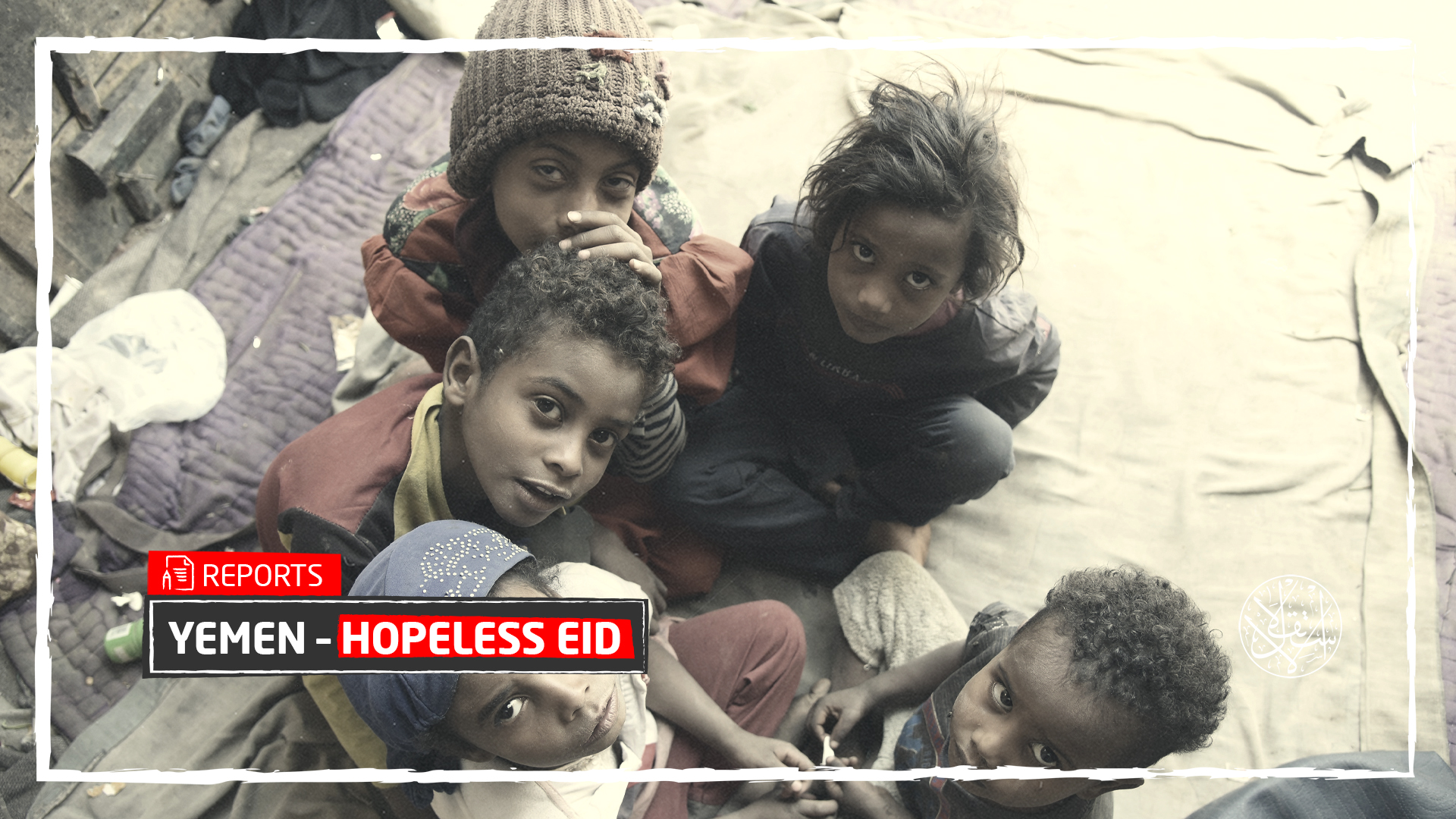
With the upcoming of the second Eid in 2021 for the Muslim world, Eid Al-Adha is meant to be celebrated joyously, wearing new cloths, sacrificing cattle animals and share the meat, giving and receiving gifts and sweets, and enjoying a three-days off with family. In Yemen, among other “3rd world countries,” the situation is drastically different, especially for the children who keep looking forward for glimmers of hope and happiness.
Yemen has been going through a devastating war that is making the situation more and more unbearable for the Yemeni living inside. Ever since the 2014 war on Houthis—who took over the Yemeni capital by then—led by Saudi Arabia and the Coalition, Yemen went through turmoils of events that has left it with one of the harshed humanitarian crises.
As it is with each and every countywide crisis, children get the biggest share of violations and abuse, for being the weakest party of the society. And while other children await Eid eagerly, the Yemeni children still wish for basic needs and better tomorrow.
Humanitarian Crisis
Reports covering the humanitarian status in Yemen sound overwhelming with its big piling numbers of children and humans in need, affected by the ongoing war.
In its latest report published last May 2021, the United Nations Country Team (UNCT) 2020 annual report of Yemen, the UN showed a study of the situation in Yemen and reviewed its projects in different areas.
The UNCT in its report stated that it “provided life-saving assistance to over 13 million people affected by conflict to enable them meet their food and nutrition needs.” The complex war of multiple parties has set limited access for food aid and medicine, along with high numbers in poverty, which left 24.3 million Yemeni “at risk of hunger and disease” in 2020.
All over Yemen, over 325,000 children suffered from Severe Acute Malnutrition (SAM), according to the report, as cases of acute malnutrition have witnessed an increase in percentage compared to earlier projections.
The UN also published another annual report in May under the name of Children and Armed Conflict (CAAC), where it studied “the impact of armed conflict on children and information on violations committed,” covering a number of countries, amongst which is Yemen.
The report verifies more than 4,418 grave violations against 1,287 children in 2020 only, and it also verifies the recruitment of more than 200 children by the multiple fighting parties, and the killing/ maiming of 1,124 children.
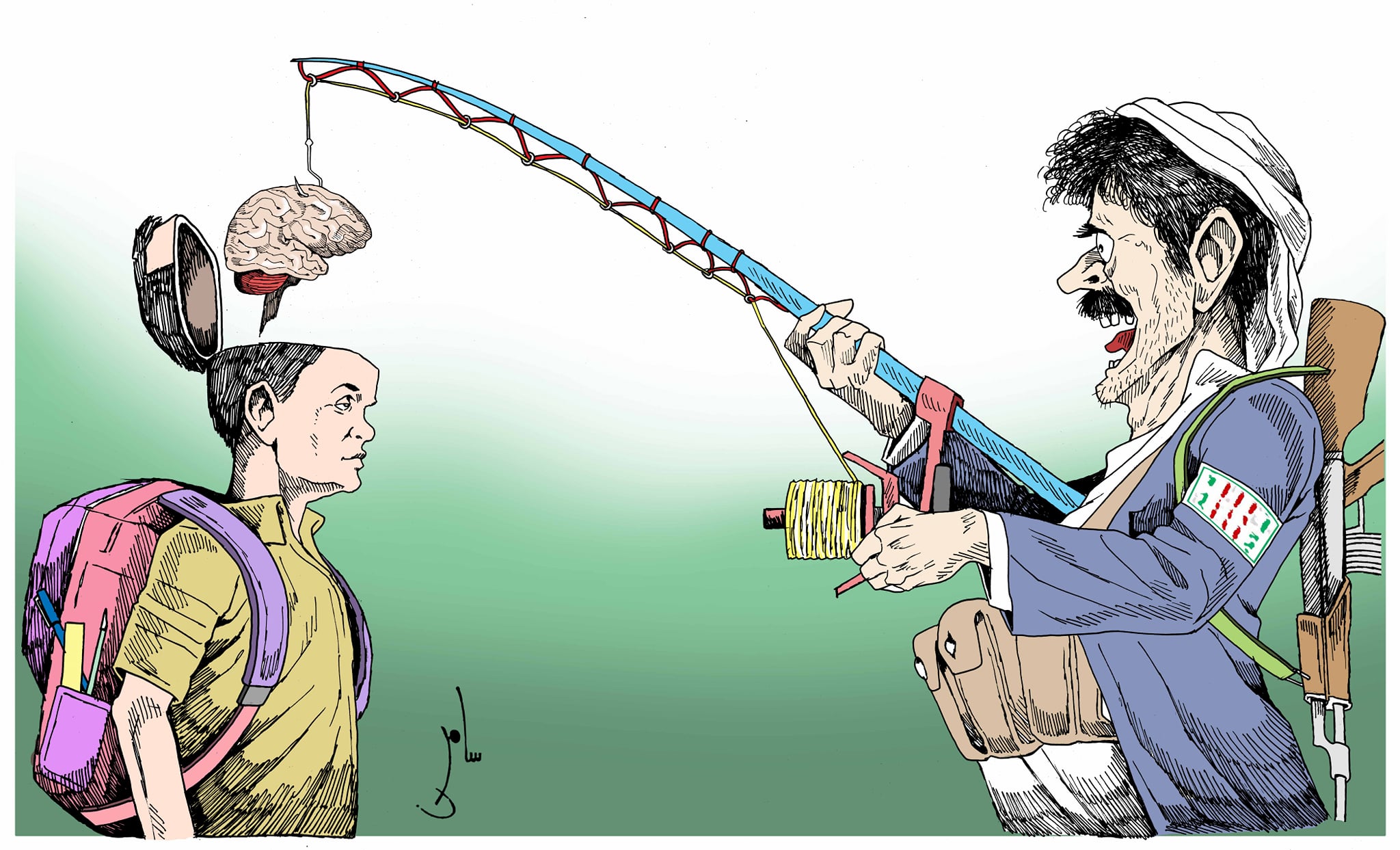
“Children brainwashed by Houthis” caricature by Samir Al-Shemiry
Generations Lost to Wars
The former UN report stated that by 2020 and out of the 7.8 millions school-aged children who have been affected by the education services disruption, there are an estimated 2 million children out of school, approximately 20 percent of which dropped out due to the ongoing conflict.
The war also caused the destruction and damage of 2000 schools in one year, adding to the significant challenges that face the education services in Yemen, given that the latest epidemic of COVID-19 did not make it any easier.
UNICEF published a report early in July 2021 named “Education Disrupted,” in which it addressed the “impact of the conflict on children’s education in Yemen.” The report shows that 8.1 million Yemeni children are in need of “emergency education support.”
Yemen, being a youthful country of 40 percent of its population under the age of 14, is in dire need of addressing its education crisis, otherwise there is “a very real possibility that the potential of an entire generation of children will be lost,” as UNICEF stated.
Children of the Camps
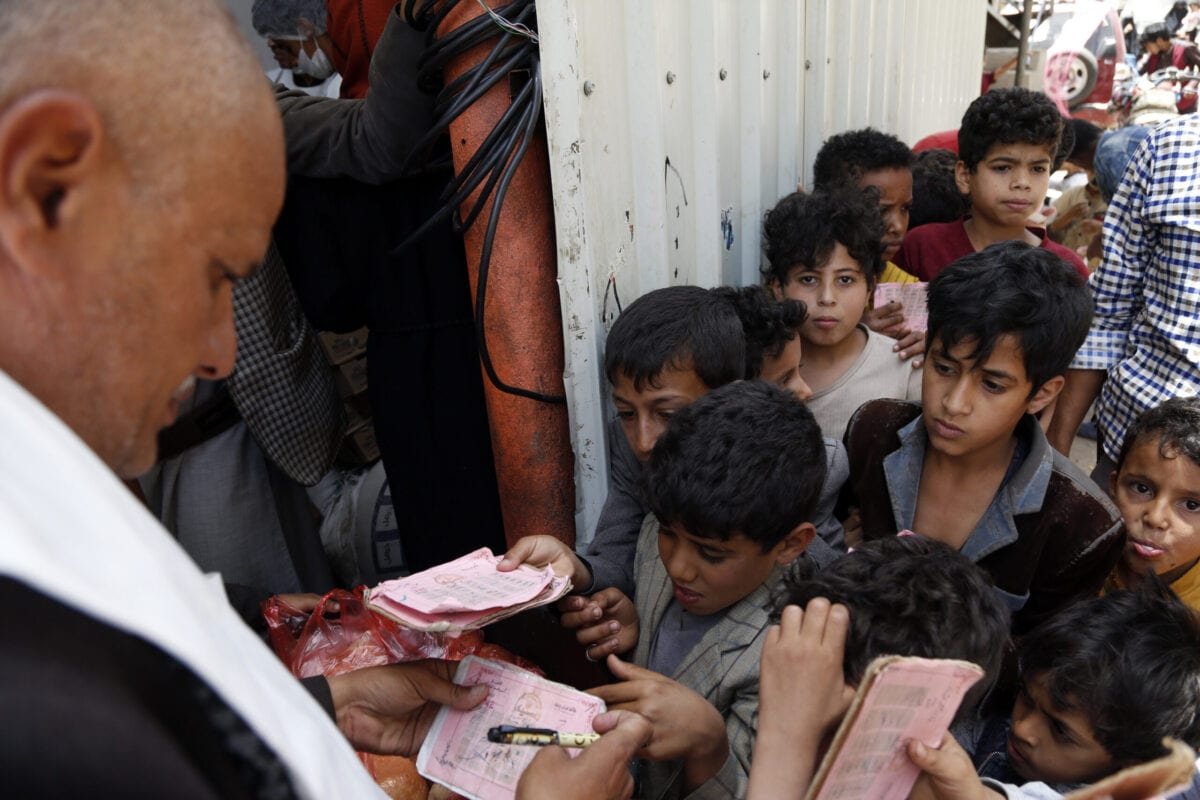
More than 4 millions Yemenis have been displaced since 2015, and according to a recent report by Save the Children aid organization, it states that “some 1.71 million children remain displaced in the country and cut off from basic services.”
Nine out of ten children in displacement camps do not have sufficient access to basics like food, clean water and an education, Save the Children said.
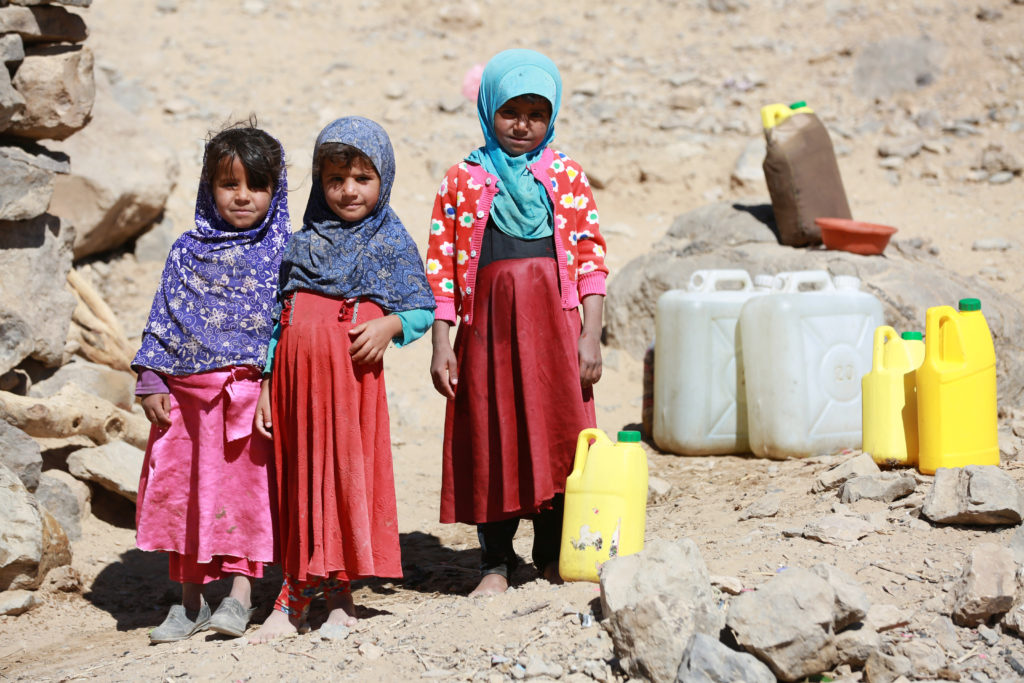
Despite the camps being close to the forefronts of confrontations, children of the camps still have to walk for hours to find safe drinking water or wood for cooking, while many other of these children have to work to help their families.
No Solutions Ahead
The war in Yemen is complex, so much so that experts have said that viewing the war as a two-party conflict is “unproductive given the fragmentation of the anti-Houthi forces and the involvement of foreign powers.”
The war in Yemen has multiple prominent players looking for their personal pragmatic interest in the conflict. While the Iran-backed Houthi militias control the capital Sanaa, the legitimate government’s forces are in control of the temporary-capital Aden, amid demands of separatists to take power in the south. Other pro-legitimate-government forces lay Maarib, mostly affiliated with the Al-Islah Organization and are in direct confrontation with the Houthis, whilst Al-Qaeda forces still lurk in the eastern parts of Yemen.
Adding to the already crowded scenery, Saudi Arabia and the UAE both are still active in the Yemeni theatre, aiming to slice their own interests off the cake. While the recent Saudi–UAE disputes seems to only complicate the inner-Yemeni status furthermore.
International intervention is still inconclusive and lacks seriousness. The American pre-Biden’s and Biden’s administrations had different approaches, while the latter’s is still not clear.
The UN on the other hand is being criticised for “failing to add perpetrators of violations against children to the so-called ‘list of shame,’” as stated by Save the Children, referring to the decision the UN Secretary General António Guterres made of not adding the Saudi-led coalition to the list again in their latest report.
Yemeni children are left drowning in their wishes of finding better conditions where basic needs are provided, let alone to fancy a happier joyful Eid. 2021 is certainly not the year of celebration for the Yemeni children, and nor does the current status of the war-torn Yemen anticipate a closer relief for the, said, “worst humanitarian crisis in the world.”
Sources
- UNCT Annual Report 2020
- UN Children and Armed Conflict (CAAC)
- Humanitarian Needs Overview - Yemen
- Education Disrupted - Impact of the conflict on children’s education in Yemen
- Yemen: Nine out of Ten Displaced Children Struggle to Have Food, Water, Schooling
- Yemen’s Tragedy: War, Stalemate, and Suffering
- Humanitarian crisis in Yemen remains the worst in the world, warns UN
- Violations against children in conflict ‘alarmingly high’: UN