The EU-'Israel' Association Agreement: A Real Turning Point or Just a Political Warning?

“Germany, Austria, and Hungary opposed any revision of the EU-pppppppppppoikl.Israel Association Agreement.”
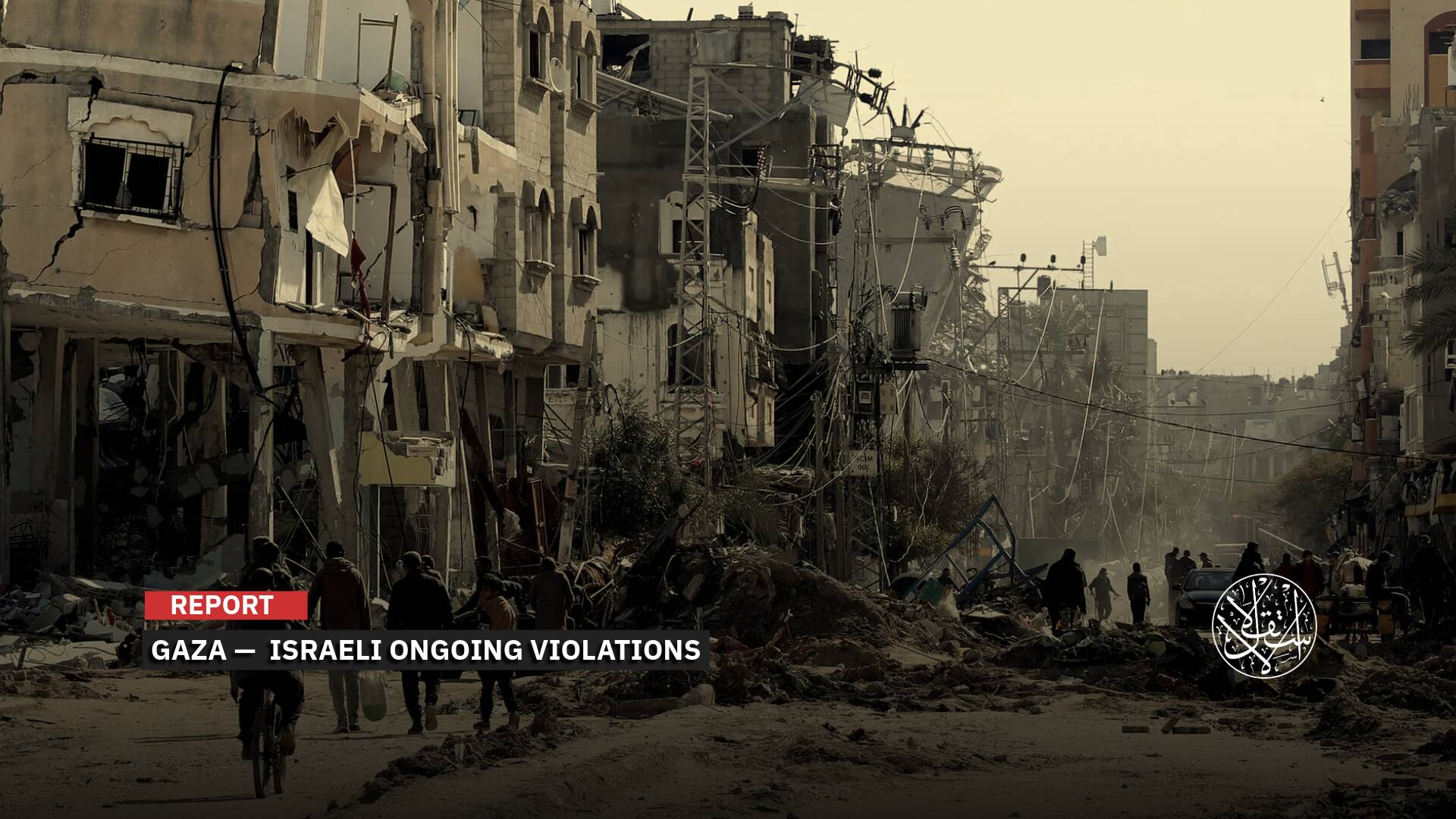
Calls have recently been made by European leaders to review relations with “Israel”, in light of what are described as serious violations of international humanitarian law and the escalating humanitarian crisis in the Gaza Strip, which represents a significant shift in Brussels' stance toward Tel Aviv over the past few months.
European governments are facing increasing domestic pressure from public opinion to take concrete steps to protect Palestinians, especially as images of suffering and famine in Gaza spread.
United Nations organizations have warned that severe shortages of food, medicine, fuel, and drinking water are threatening the lives of Gazans.
This European shift comes against the backdrop of the Israeli Security Council's decision this month to extend its control over parts of Gaza, as well as the blockade of food and humanitarian aid into the Strip over the past several months.
European-Israeli Relations
In a significant political development, several European countries, including Sweden, France, Finland, Ireland, Spain, and Luxembourg, have announced that they are reviewing relations with “Israel” in light of the ongoing war on the Gaza Strip, amid a sharp deterioration in the humanitarian situation.
This move coincides with the Netherlands' demand to activate Article 2 of the EU-“Israel” Association Agreement signed in 1995, which stipulates that both parties commit to shared values, primarily human rights and democratic principles.
This agreement is the basis for trade, political, and scientific relations between the two parties.
It grants “Israel” significant trade and investment privileges in the European market, worth about €50 billion annually, and extensive cooperation in programs such as Horizon and Erasmus.
Although the Netherlands is a traditional ally of “Israel” within the EU, it has announced its refusal to extend the joint work program with “Israel” unless a formal review of the agreement is conducted.
This Dutch move, even if it appears to be a protocolary measure, carries profound political messages and signals a potential shift in the traditional European approach to the so-called Palestinian-Israeli conflict.
In turn, Dutch Foreign Minister Caspar Veldkamp stated that the catastrophic situation in Gaza requires an immediate review, saying, “We are drawing a red line and sending a clear message to Israel.”
He added that his country would suspend progress on any future plans with “Israel” and demand an urgent review as long as it continues to block humanitarian aid to Gazans.
Following the Dutch announcement, other European countries joined the call, with Finland announcing it would demand a discussion of Article 2 if “Israel” continued to block the entry of humanitarian aid.
“The situation cannot get any worse. Israel has not allowed food shipments into Gaza for months, and under no circumstances should the suffering of the people be politicized,” Finnish Foreign Minister Elina Valtonen said.
Swedish Foreign Minister Maria Malmer Stenergard affirmed his country's support for this move, while French Foreign Minister Jean-Noel Barrot formally called on the European Commission to study the matter, considering it a legitimate demand.
It is estimated that Portugal, Belgium, and possibly Malta will join this movement.
Ireland, Spain, and Slovenia have also expressed their explicit support for the Palestinians, countries that also tried last year to pressure their EU partners to investigate Israel's violations of the rules.
In contrast, Germany, Austria, and Hungary have strongly opposed any review of the agreement, describing the move as potentially damaging to the EU's relationship with a key partner.
Despite this division, reports indicate that opening the review process does not require unanimity among the EU's 27 member states, but rather a simple majority, which increases the chances of success for countries critical of “Israel”.
This move coincided with former US President Donald Trump's visit to the Middle East, which did not include “Israel”, a sign seen in Europe as a widening rift between Washington and Tel Aviv.
Analysts believe that this US indifference has encouraged European countries to continue pressuring “Israel” without fear of any backlash, especially in light of the White House's recent implicit criticism of the humanitarian situation in Gaza.

European Pressure
In remarks that sparked widespread controversy, French President Emmanuel Macron called on the EU to intensify pressure on “Israel” over the deteriorating humanitarian situation in the Gaza Strip.
He noted that Europeans face an open question about whether discussions and cooperation agreements with “Israel” should continue in their current form.
In response to a viewer's question about why France has not imposed sanctions on “Israel”, Macron said, “We cannot pretend that nothing has happened, so we must increase pressure on these issues.”
However, he noted that the U.S. is the only one capable of bringing about real change on the ground by attaching conditions to its military aid to “Israel”.
Macron accused Israeli Prime Minister Benjamin Netanyahu of adopting unacceptable and shameful behavior by obstructing humanitarian aid to Palestinians in Gaza.
The Israeli prime minister’s office has strongly rejected these criticisms, accusing Macron of choosing to stand with a murderous Islamist terrorist organisation.
Macron's statements reflect a shift in his stance toward the Israeli government, having repeatedly supported Israel's right to defend itself following the events of October 7, 2023.
During a UN conference aimed at ending the war in Gaza, Macron publicly clashed with Netanyahu over France’s plan to potentially recognize a Palestinian state next June.
Previously, the German Foreign Ministry expressed its rejection of the Israeli government's plans to permanently occupy the Gaza Strip, considering it to belong to the Palestinians and stating that such plans are worrying.
Italian Prime Minister Giorgia Meloni also affirmed that “Israel” is obligated to respect international law in its military operations in Gaza, describing the humanitarian situation in the Strip as tragic and unjustifiable.
She noted that her talks with Netanyahu were often difficult, reiterating her call for an end to hostilities.
Spanish Prime Minister Pedro Sanchez described “Israel” as a genocidal state, stressing that his country does not conduct trade with such a state.
These statements sparked outrage in “Israel”, where the Israeli Foreign Ministry immediately summoned the Spanish ambassador for a reprimand.

Political Turning Point
Political experts and analysts believe that Israel's violation of international law and measures affecting the humanitarian situation of the population of Gaza, particularly the humanitarian aid issue, deepens the dispute with the EU, and they expect that European demands for the entry of aid into Gaza and a ceasefire will increase.
There is also growing parliamentary and popular pressure within Europe to reconsider its unconditional support for “Israel”, especially in the absence of any tangible progress towards a two-state solution.
If Brussels proceeds with reviewing its relations with Tel Aviv, “Israel” could face unprecedented economic and diplomatic repercussions.
The EU is Israel's primary trading partner, and any restrictions or revisions to the agreement could mean a decline in customs privileges and tightening the terms of technological, scientific, agricultural, and security cooperation.
Politically, this call represents a symbolic blow to Israel's international standing and reveals a cooling in relations with one of its most traditional supporters, which could push the right-wing Netanyahu government to reconsider its strategy towards Europe.
According to researcher Dr. Maya Sion-Tzidkiyahu of the Mitvim Institute, discussing Article 2 of the EU-“Israel” Treaty sets a dangerous political precedent for “Israel”, even though the legal process is long and complex.
She added that “Israel” is increasingly perceived as a party that is not committed to EU values, warning of the risk of “Israel” becoming an international pariah.
Although suspending the agreement remains a distant prospect at the moment, the mere inclusion of this item on the agenda of the upcoming EU foreign ministers' meeting on May 20 is an unprecedented development.
The EU's top diplomat Kaja Kallas is expected to decide whether to include this issue for discussion at the upcoming meeting.
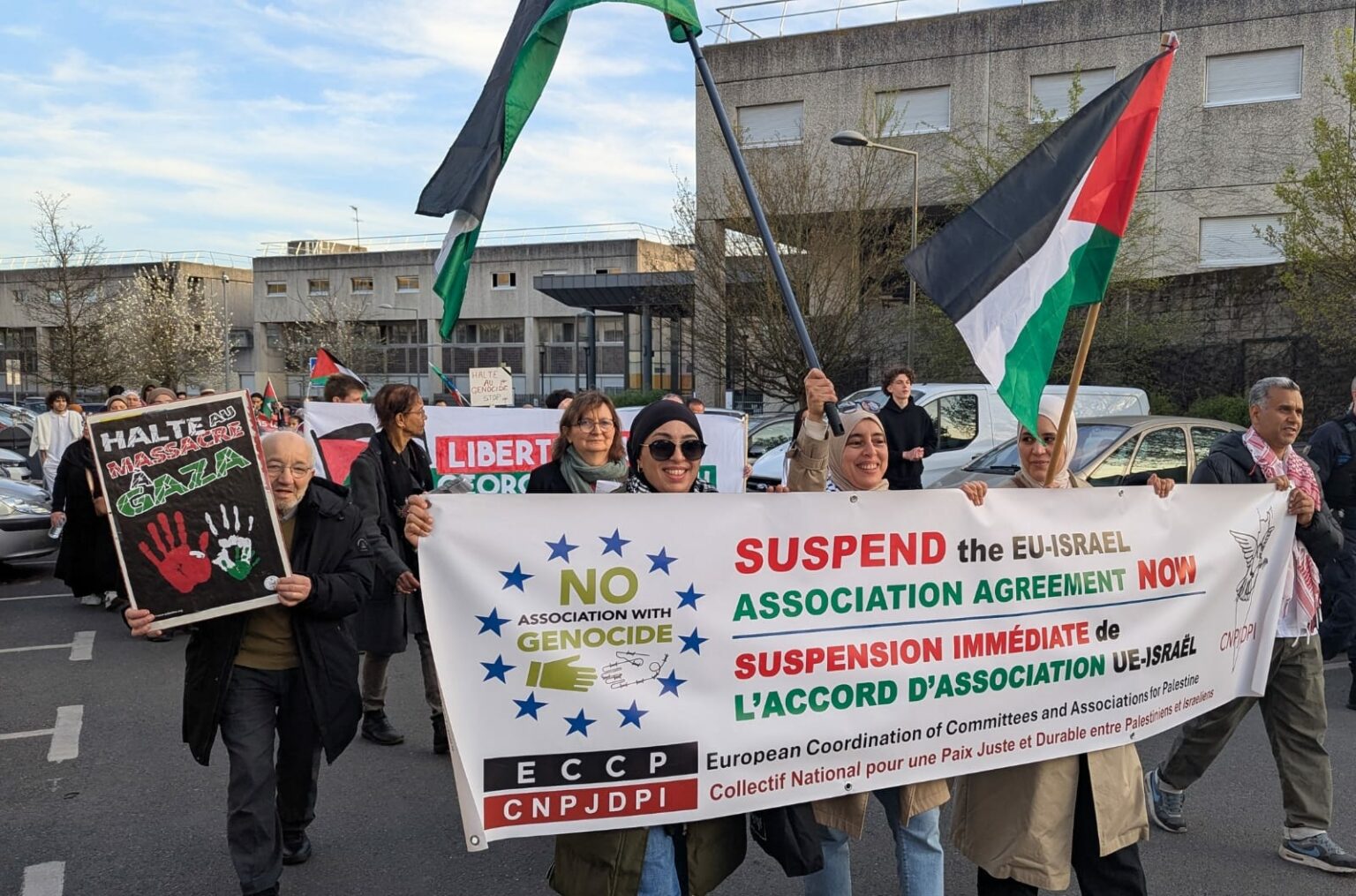
For his part, Zaher Birawi, Chairman of the Palestinian Forum in Britain (PFB), told Al-Estiklal that the recent statements by European leaders have opened the door to a more frank discussion about the nature of the relation with “Israel”, especially in light of the international community's silence regarding what is happening in Gaza and the occupied Palestinian territories.
He also explained that this European move is not merely intended to protest, but rather carries a serious warning to “Israel” that relations with Europe are no longer immune.
He pointed out that the continuation of current Israeli policies, whether in Gaza or the West Bank, could lead to an unprecedented rift in the political and economic relation between the two sides.
It's worth noting that diplomatic tensions between “Israel” and the EU have recently escalated after Tel Aviv, last February, banned two European parliamentarians—one Irish and the other French of Palestinian origin—from entering the occupied territories due to their support for the Boycott, Divestment and Sanctions (BDS) movement.
This Israeli decision sparked a wave of criticism within the European Parliament, which considered it a restriction on freedom of expression.
Sources
- Netherlands, France, Sweden flip on EU-Israel ties
- Support grows for Dutch call to review EU-Israel ties amid Gaza aid blockade
- France urges EU to reassess Israel trade partnership over Gaza rights abuses
- The EU-Israel Association Council: Harsh Criticism of Israel Alongside Desire to Advance Relations [Analysis]