Senegal’s Opposition Unites to Challenge Ruling Party’s Dominance

The opposition expressed concern over the "threat to democratic values and political pluralism."
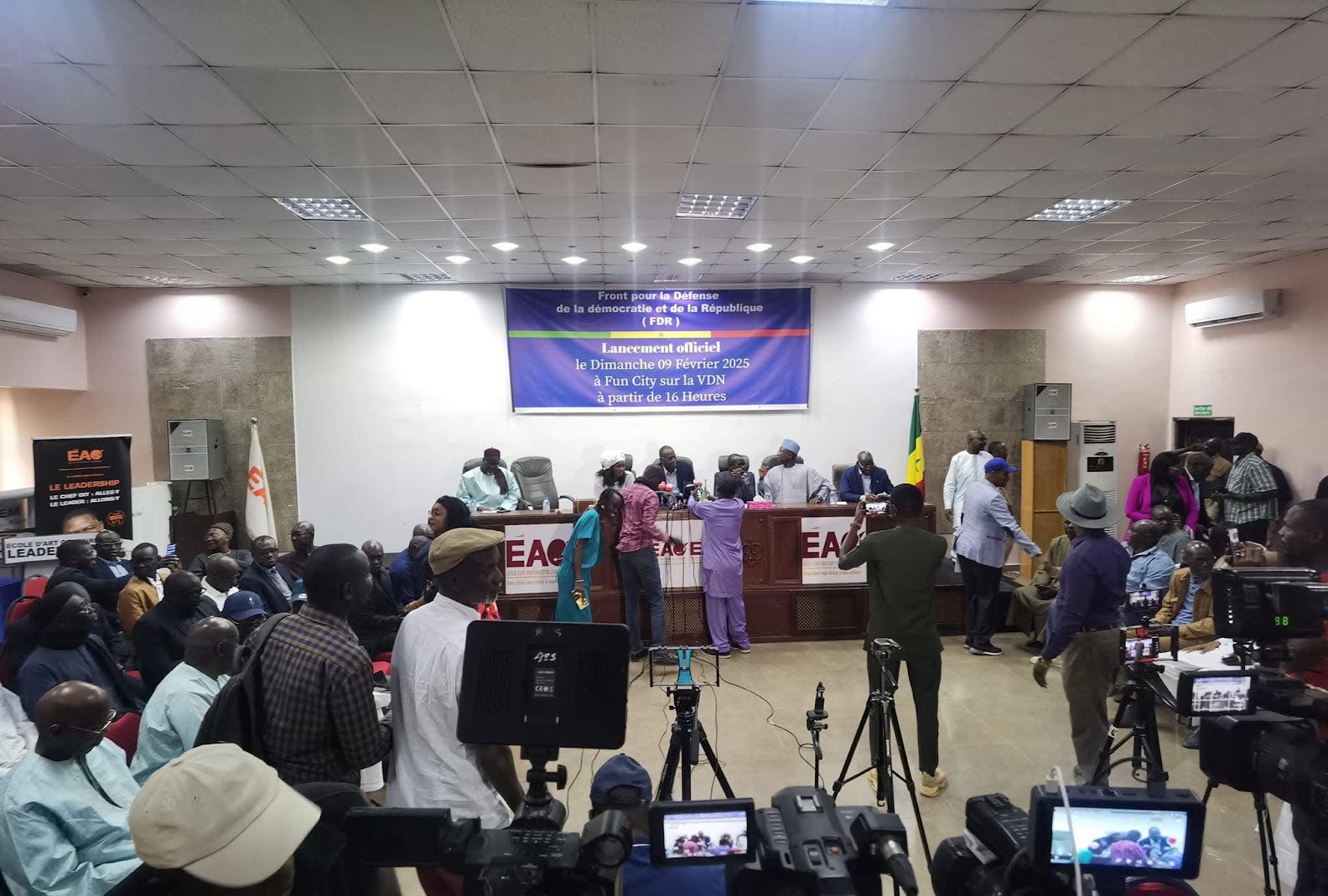
With more than 70 political parties and movements, Senegal’s opposition has announced the formation of a new alliance, the Front for the Defense of Democracy and the Republic (FDDR).
The coalition aims to “break the stranglehold” of the ruling party, Patriots of Senegal for Work, Ethics, and Fraternity—better known as PASTEF.
The announcement was made at a press conference in Dakar on February 9, 2025, attended by prominent political figures, civil society activists, and representatives from social and trade union movements.
Key Demands
In its founding statement, Senegal’s newly formed opposition alliance voiced deep concern over what it described as a “threat to democratic values and political pluralism” in the country.
The coalition accused the ruling government of eroding public freedoms, silencing dissent, and imprisoning political and media figures critical of the regime.
Declaring its mission to “restore democratic balance through organized political and grassroots action,” the alliance emphasized that it is not merely an extension of traditional opposition forces but a broad coalition of groups opposed to the government’s policies.
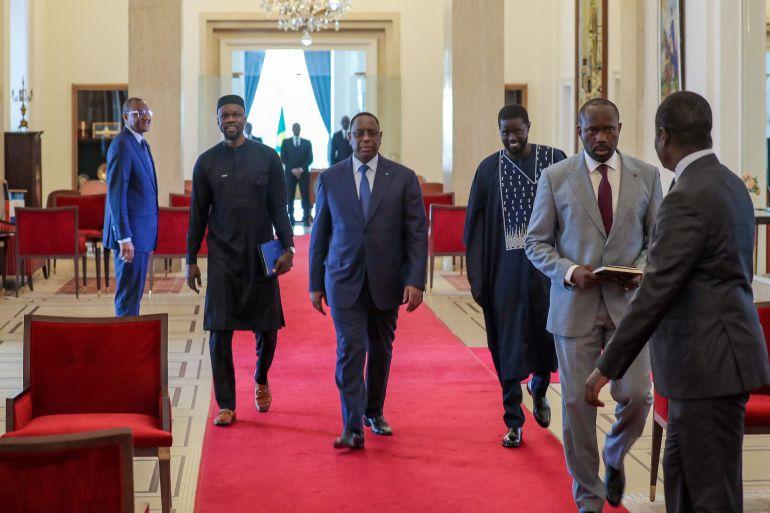
The alliance, comprising more than 70 political parties and movements, includes the Alliance for the Republic led by former President Macky Sall, Taxawu Senegal under Khalifa Sall, and Rewmi, headed by former Prime Minister Idrissa Seck.
Prominent figures such as former president Amadou Ba, former Prime Ministerial candidate Anta Babacar Ngom, and the leader of the ARC movement have also joined, alongside youth-led groups and protest movements opposing President Bassirou Diomaye Faye and his Prime Minister Ousmane Sonko.
However, notable absences include under Macky Sall and his chosen presidential candidate in the last election.
Ba stated that his political movement, “New Responsibility,” would not align with the opposition front.
Similarly, the Senegalese Democracy Party, led by Karim Wade, has opted to stay out of the alliance.
The opposition front has laid out a series of demands for the coming phase, chief among them the immediate release of all political prisoners and prisoners of conscience, as well as an end to repression and restrictions on journalists and independent media.
It also called for the protection of public freedoms, including the right to protest as guaranteed by the Senegalese constitution, alongside electoral reforms—particularly regarding party regulations and election oversight mechanisms.
The alliance further stressed the need for a comprehensive national dialogue, bringing together all political forces to find a way out of the country’s ongoing political crisis.
A Preemptive Move
The formation of the opposition front comes amid escalating political tensions in Senegal, following a series of elections that have reshaped the country’s political landscape.
One of the most significant shifts was the victory of Bassirou Diomaye Faye in the presidential election, backed by PASTEF—a party that was once in the opposition during former President Macky Sall’s rule.
On March 29, 2024, Senegal’s Constitutional Council confirmed Faye’s victory, after he secured over 54% of the vote, defeating Amadou Ba, the candidate of the former ruling coalition, who received 35%.
With PASTEF now dominating the National Assembly, concerns have grown within the opposition over what they see as a lack of democratic balance within state institutions.
This, in turn, has pushed opposition parties to unite against what they describe as authoritarian tendencies in the new administration.
On November 17, 2024, PASTEF—led by President Faye and Prime Minister Ousmane Sonko—secured a landslide victory in the legislative elections, winning 130 out of 165 seats in parliament.
Explaining the rationale behind the opposition’s decision to form a united front against PASTEF, Senegalese journalist and Africa affairs analyst Cherno Bashir argued that the new alliance is a direct response to the shifting political dynamics following the presidential and legislative elections.
Speaking on Mauritania’s TTV channel, Bashir noted that the opposition believes “the time has come to establish a front to counter what it sees as blatant violations of its rights,” particularly amid ongoing legal proceedings and investigations targeting several figures from the previous regime.
On February 14, 2025, Senegal’s Justice Minister Ousmane Diagne announced that the government would launch judicial investigations into financial crimes committed between 2019 and 2024—a period that coincides with the second term of former President Macky Sall, marked by political turbulence and widespread unrest.
Senegalese journalist Cherno Bashir sees the opposition’s latest efforts as an attempt to counter what it describes as abuses by the new administration, led by President Bassirou Diomaye Faye and Prime Minister Ousmane Sonko.
Bashir pointed out that the opposition's formation of a unified front is also a strategic move ahead of the next local elections, where regional mayors and council presidents will be elected.
While the date for these elections has yet to be announced, Bashir speculated that the ruling majority may move them forward to secure an early advantage, similar to what happened in the legislative elections.
“The opposition’s primary goal is to build a strong platform to challenge the new authorities led by PASTEF,” Bashir explained.
Meanwhile, Senegalese researcher and African affairs analyst Abdarahmani Kane argued that the opposition’s decision to establish the Front for the Defense of Democracy and the Republic comes in response to the new government’s legal actions against opposition figures accused of corruption.
Khan told Al-Estiklal that this prompted the opposition to get ahead of events, leveraging media pressure to sway the course of the initial corruption investigations.
Senegal’s Political Showdown
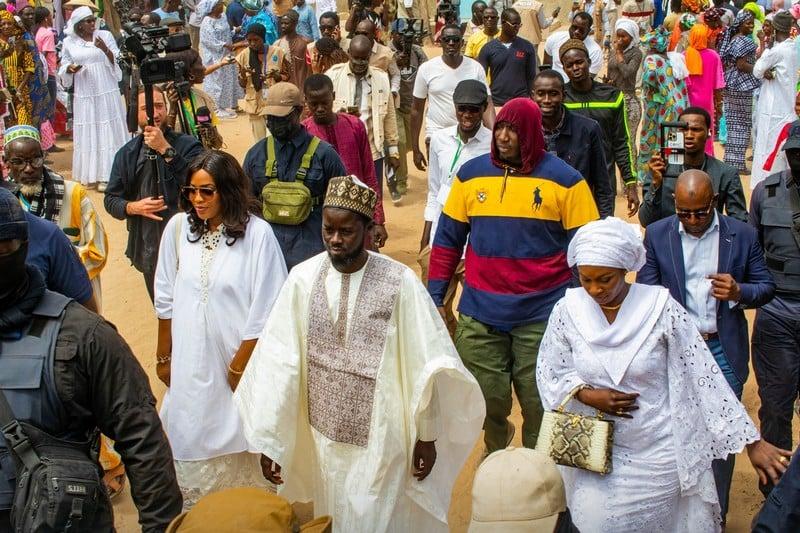
As Senegal’s government remains silent on the formation of the opposition alliance, political observers suggest the administration may seek to contain this development—either through dialogue or legal measures aimed at curbing the new coalition’s influence.
According to Abdarahmani Kane, a Senegalese researcher in African affairs, President Bassirou Diomaye Faye and Prime Minister Ousmane Sonko are likely to take the opposition’s move in stride, given that the ruling party enjoys an overwhelming parliamentary majority.
Kane believes these “political maneuvers” by the opposition could potentially lead to a national dialogue initiative—particularly as Senegal grapples with an ongoing economic crisis that demands urgent solutions.
However, journalist Cherno Bashir argues that PASTEF’s political strategy is built on confrontation rather than reconciliation, making a national dialogue highly unlikely.
Instead, he anticipates that the ruling party will opt for confrontation, tightening its grip on anyone who could undermine the new authorities’ mandate.
Bashir points out that judicial authorities have already begun prosecuting former officials from Macky Sall’s administration on charges of embezzling public funds.
He interpreted the developments as “preemptive moves to tighten the noose around the opposition,” which, he argued, had understood the regime’s message and responded by working to forge a stronger, more unified front.
Bashir warned that if the government fails to bring the opposition on board for national dialogue or reconciliation efforts, a political showdown between the two sides will be unavoidable.
He noted that the opposition could emerge as a serious threat if it manages to form a cohesive alliance with a clear strategy to challenge the new regime—particularly as it includes seasoned figures with extensive experience, many of whom have previously held senior positions within state institutions.