‘Repeated Mistakes’: Why Equatorial Guinea Has Turned on France
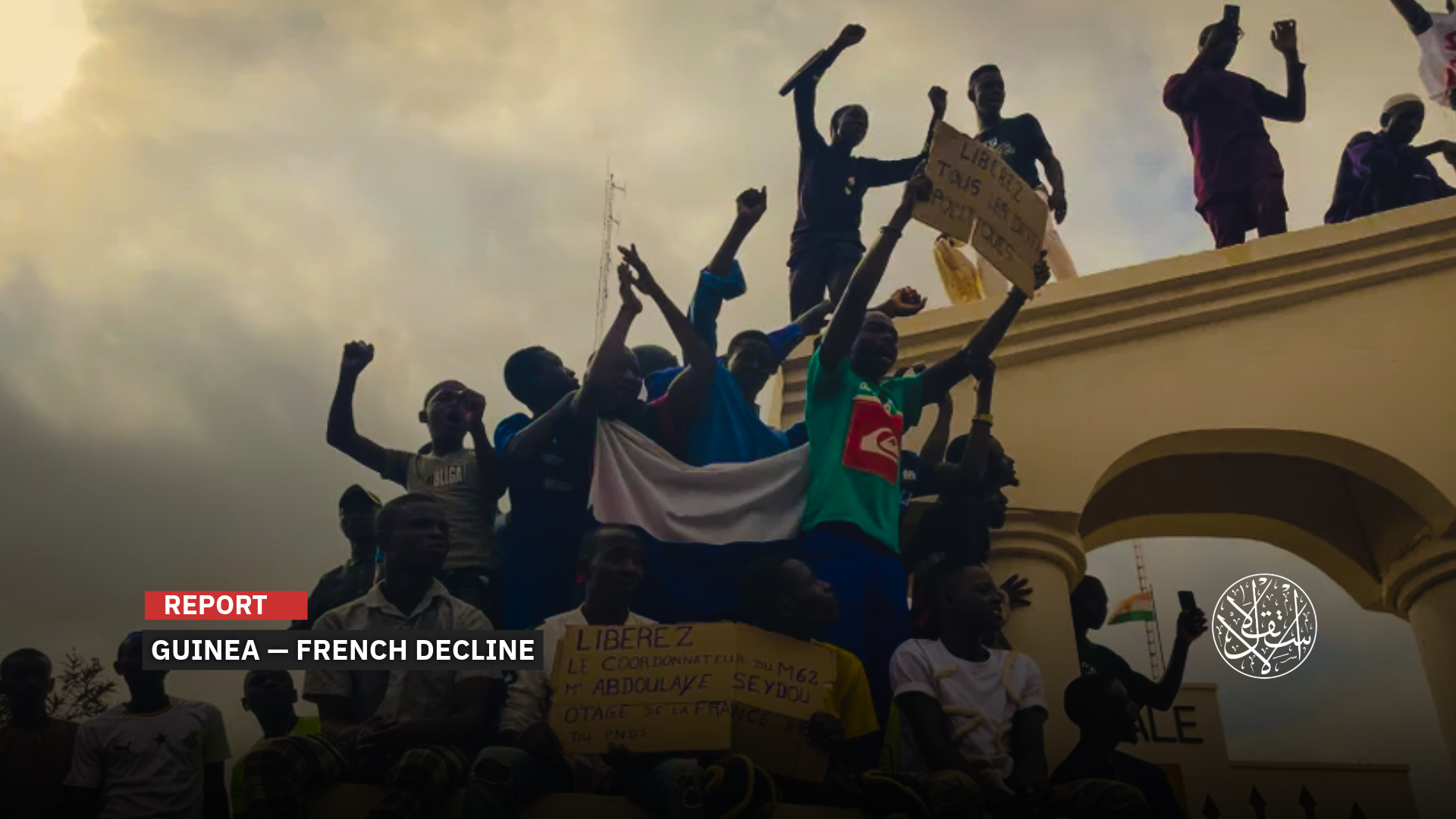
France’s cultural and linguistic influence is also waning across the continent.
Despite Paris’s declared intention to reset its relationship with African nations, France continues to find itself entangled in recurring disputes across the continent, drawing it back, time and again, into cycles of tension and confrontation.
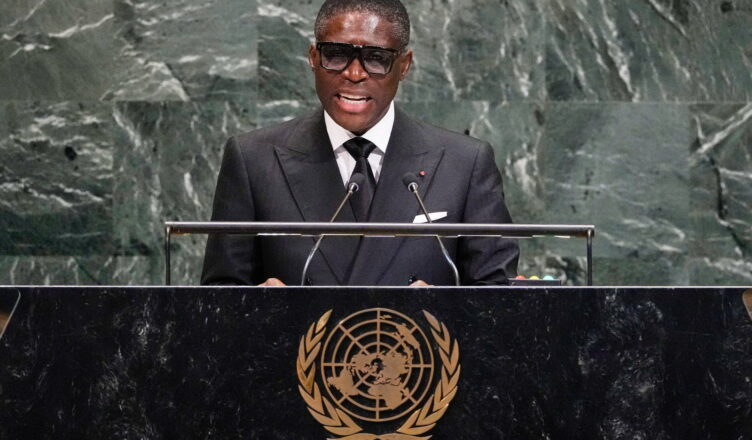
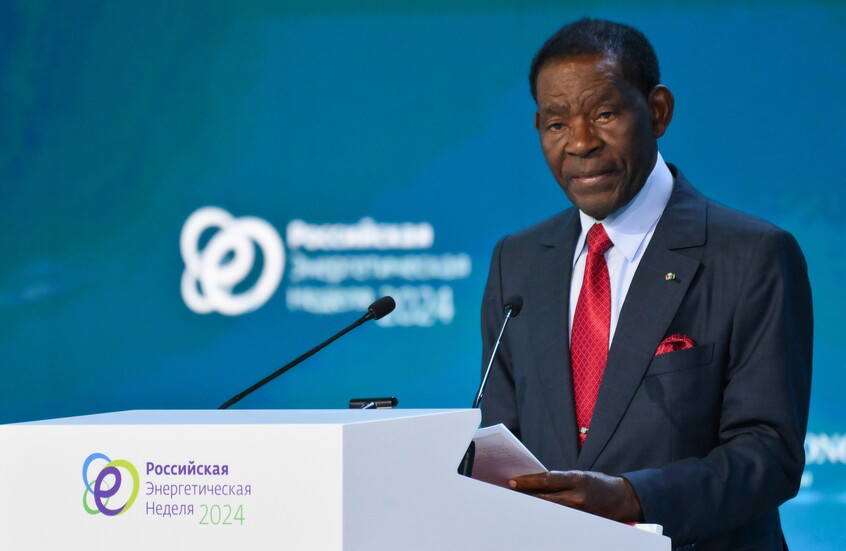
The latest flashpoint came as Equatorial Guinea’s Vice President, Teodoro Nguema Obiang Mangue, accused France of orchestrating “attempts to destabilize the country and undermine peace.” His comments, posted on X on October 21, 2025, marked a rare and pointed diplomatic rebuke of Paris.
The remarks followed just two days after opposition activist Alfredo Okenve, living in exile in Spain, was awarded the Franco-German Human Rights Prize, a move Malabo denounced as “a reward for treason.”
Disputes and Tension
Equatorial Guinea’s Vice President said that “France rewards those who incite hatred and encourages them to undermine peace and act against their own cultures and brothers,” holding Paris responsible for “all attempts aimed at destabilizing Equatorial Guinea.”
He recalled what he described as an “attempted coup” in December 2017, which he claimed was carried out with the involvement of members of the French external intelligence service.
The vice president also accused Paris of “seizing the country’s assets through organizations such as Transparency International,” adding that “Africa has grown weary of these maneuvers, which have also targeted countries like Mali, Niger, and Burkina Faso.”
The latest escalation comes as President Obiang himself faces legal troubles in France. In 2021, a Paris court handed him a three-year suspended prison sentence and a €30 million fine on charges of corruption, money laundering, and embezzlement of public funds.
Legal disputes between Paris and Malabo continue over assets linked to the so-called “ill-gotten gains” case, most notably a lavish mansion on Avenue Foch in the French capital, valued at €175 million.
In September 2025, the International Court of Justice rejected Equatorial Guinea’s request to halt the sale of the property, affirming France’s right to dispose of it.
Equatorial Guinea, a small oil-rich nation in Central Africa, has been ruled by President Teodoro Obiang Nguema Mbasogo for more than 46 years, making him the world’s longest-serving head of state outside a monarchy.
Now 83, he remains firmly in power, while his son serves as vice president, amid repeated accusations from human rights organizations of entrenching family rule and restricting political freedoms.
Contempt for Sovereignty
During a July 2025 hearing at the International Court of Justice over its property dispute with Paris, Equatorial Guinea accused France of pursuing “a new colonial approach” toward the country.
Malabo’s government urged the court to issue urgent measures to prevent France from selling the property, which reportedly features luxury amenities including a private cinema, a Turkish bath, and gold-plated faucets.
The government also claimed that French police had recently changed several door locks at the residence without formal notification.
Speaking to the press at the time, Equatorial Guinea’s ambassador to Paris, Carmelo Nvono-Nca, denounced what he called “a contempt for national sovereignty,” saying that France “has yet to understand that Africans no longer tolerate interference in their internal affairs.”
He added that his country was demanding “immediate, full, and unrestricted access to the building,” accusing Paris of planning to sell the mansion and manage the proceeds unilaterally.
The case has been at the center of a long-running dispute before the international court since 2016, when Equatorial Guinea sought to prove that the property served as an official embassy.
The court, however, ruled in France’s favor, finding that the building was not designated as a diplomatic premise until after investigations had already begun, noting that the country’s official embassy was located elsewhere in Paris.
Diego Colas, legal adviser at the French foreign ministry, dismissed the complaint as “baseless,” saying that any potential sale of the property “remains a distant prospect,” and that the police visit had been “purely exploratory.”
A French Setback
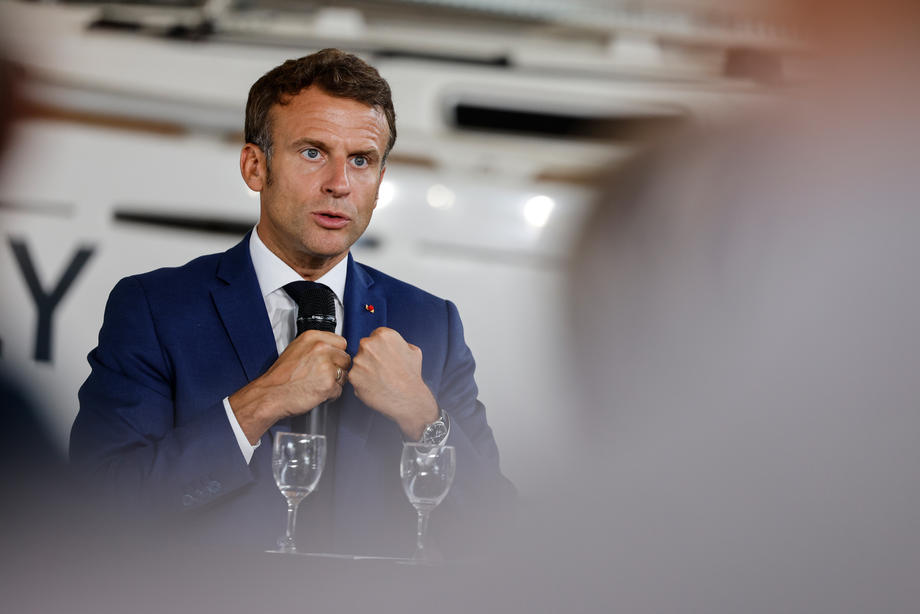
In his reading of these developments, political science and international relations researcher Abdelhafid Sriti said that French policy toward Africa has undergone noticeable shifts in both tone and practice since Emmanuel Macron entered the Elysee Palace in 2017.
Speaking to Al-Estiklal, Sriti explained that “France has suffered setbacks in Mali, Burkina Faso, Niger, Chad, and Senegal, with the closure of its military bases and the end of its presence in countries that, until recently, were little more than French protectorates and anchor points of French influence on the continent.”
“Colonial-era policies have sparked deep resentment among many African elites, both new and old, who now demand that France apologize and make reparations for the long years during which their peoples endured humiliation, greed, exploitation of resources, and impoverishment.”
“Macron, who has visited 18 African countries, launched France’s new Africa plan in 2023, fully aware of the enormous challenges posed by intensifying competition, particularly from China, Russia, India, and Turkiye,” Sriti added.
“Although this plan sought to adapt to new realities, as many African states expressed their desire to end France’s military presence, Paris knew the time had come to close that chapter, and that the era of crisis containment was over.”
According to Sriti, Macron “often contradicts his own rhetoric toward Africa. While calling for a new way of engaging with African nations, he has at the same time urged them to express gratitude to France for the help and services it claims to have provided.”
He stressed that such remarks “only poured fuel on an already burning fire, deepening resentment toward the condescending and paternalistic attitudes still ingrained in France’s colonial mindset, the very outlook that Equatorial Guinea has denounced and rejected.”
Sriti also pointed out that France’s cultural and linguistic influence is waning across the continent, citing Mali, Burkina Faso, and Niger’s decision to withdraw from the Francophone, the Paris-based organization that promotes the French language.
“The general trend,” he continued, “is to reconsider reliance on French as a language of instruction, especially given its weak record in education, which has remained stagnant and disconnected from global scientific and intellectual developments, developments for which language is a key vehicle.”
According to Sriti, “Rwanda, for example, has shifted from French to English, and a similar transition is underway in Senegal, where President Bassirou Faye has advocated adopting Arabic as an official language instead of French.”
“Despite Macron’s speeches and new initiatives aimed at rebuilding France’s image in its former colonies, they remain little more than rhetoric scattered to the wind.”
“What West African nations, including Equatorial Guinea, truly need is full liberation and independence from French dominance, along with acknowledgment of the violations and crimes committed against their peoples, which have hindered development and derailed progress,” Sriti noted.
“Coming to terms with the past and its pains requires an official apology from Paris and compensation for the harm inflicted on West African nations.”
“France has not changed its approach toward the continent, but rather replaced direct military control with softer tools of domination, economic, diplomatic, and cultural.”
“France will ultimately fail in its efforts to maintain hegemony over African states, and it will have no choice but to build balanced relations that respect African interests and meet their aspirations for sovereignty and development,” he concluded.
The Russian Alternative
Equatorial Guinea’s search for an alternative partner to France, particularly in the direction of Russia, began in late 2024. According to Africa News, Moscow has been seeking to expand its influence on the continent by deploying military personnel to Equatorial Guinea.
The outlet reported that up to 200 soldiers have been sent to the small Central African nation, tasked with training the elite guard in the capital, Malabo, and in Bata, the main economic hub, as well as providing protection for President Teodoro Obiang.
The report added that mercenaries from the Africa Corps, formerly known as the Wagner Group, are involved in the operation.
The paramilitary force has since been reorganized under the supervision of the Russian army, further strengthening Moscow’s ties with its African partners.
President Obiang and his son, Vice President Teodoro Nguema Obiang Mangue, had already deepened their relations with Russia through a series of military and energy agreements.
In September 2024, President Obiang publicly thanked his Russian counterpart, Vladimir Putin, for sending instructors to help bolster Equatorial Guinea’s defense capabilities.
A study published by African Readings and authored by researcher Hicham Kadri Ahmed stated that France’s paternalistic approach toward African nations “is no longer acceptable.”
Ahmed argued that “this mode of policy, which reflects the theory of white superiority and the idea of a civilizing mission toward so-called underdeveloped societies, has only fueled resentment toward France among both the public and the political and intellectual elites.”
According to the researcher, this discontent has been compounded by France’s ongoing support for authoritarian regimes, its indifference to the suffering of African populations, and its continued interference in the region’s affairs, all of which have eroded its credibility and exposed what many Africans see as France’s ambiguous and self-serving strategic motives.
He noted that this growing resentment has manifested in protests and demonstrations outside French embassies in Niger, Mali, Burkina Faso, and other Francophone countries, where crowds have waved banners and chanted slogans calling for closer cooperation with Russia instead.