New Delhi and Moscow: Strengthening Their Strategic Partnership to Counter Isolation
India looks to secure an additional S-400 air defense system from Russia.
Amid the tightened Western sanctions imposed on Moscow, Russia is seeking to break its economic isolation by deepening its ties with countries in the East, specifically through a growing strategic partnership with India.
While the West continues its efforts to apply economic pressure on Russia in a bid to throttle its economy, New Delhi has chosen a different path, one grounded in pragmatism and political independence in its international relations.
India aims to maintain a balanced stance that allows it to move forward with developing economic and political cooperation with Russia, despite global tensions and the sanctions imposed on Moscow.
This partnership underscores Russia’s attempt to expand its network of partners beyond Western circles, a move that bolsters its ability to confront the economic challenges brought on by Western sanctions and offers it new avenues for development through relationships with major countries across Asia.
Putin in India
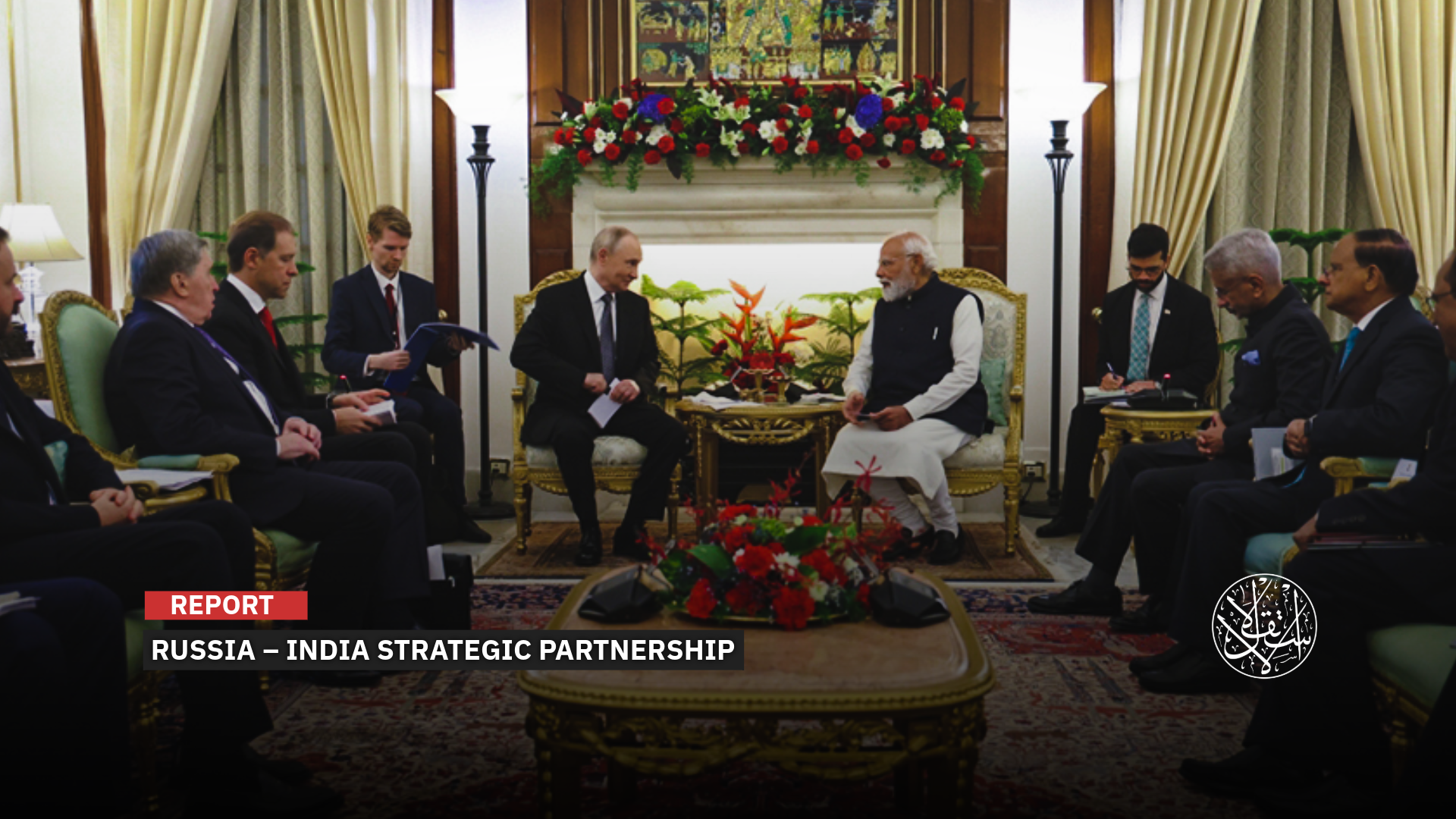
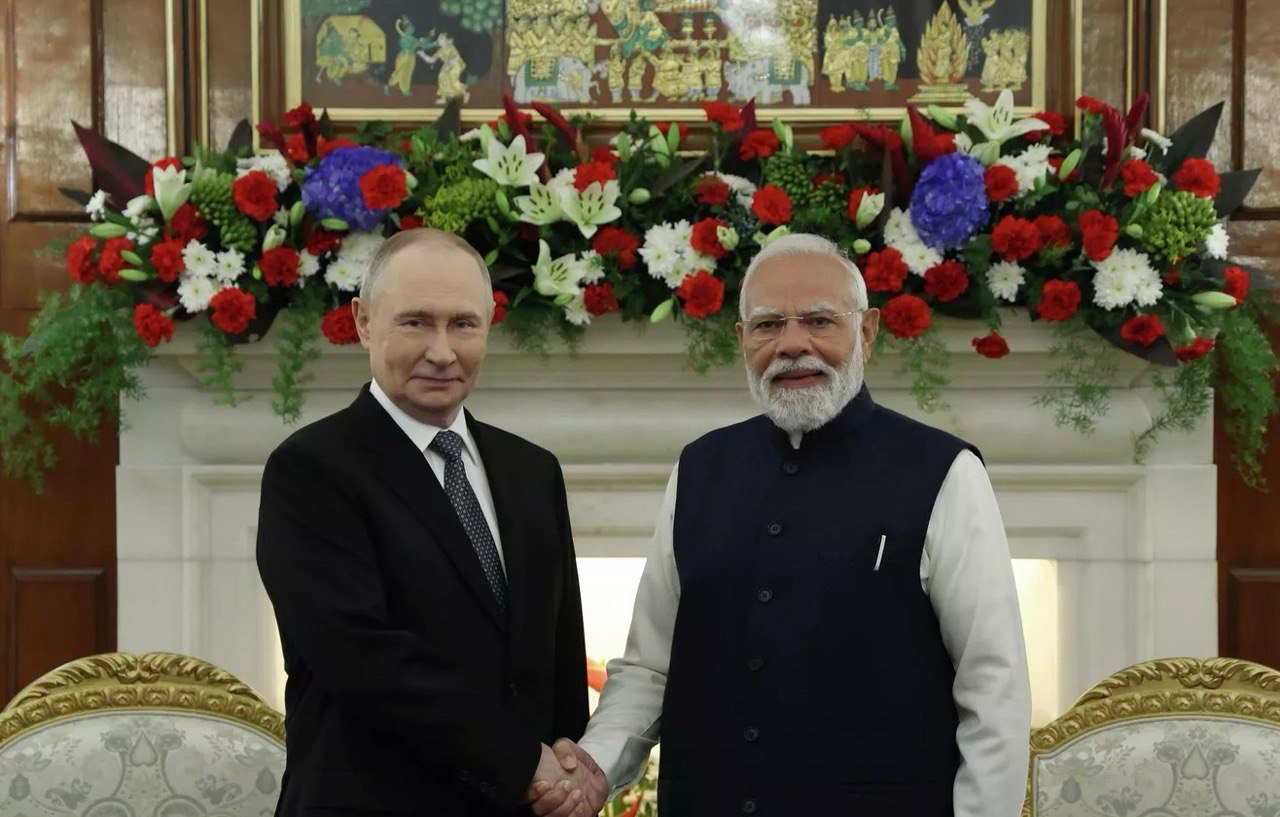
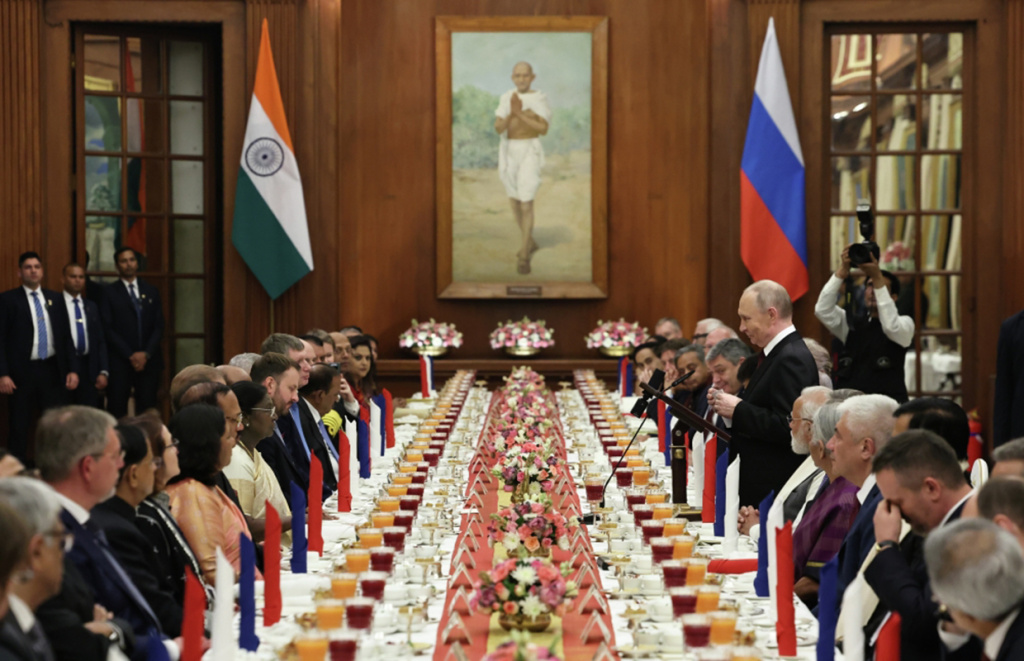
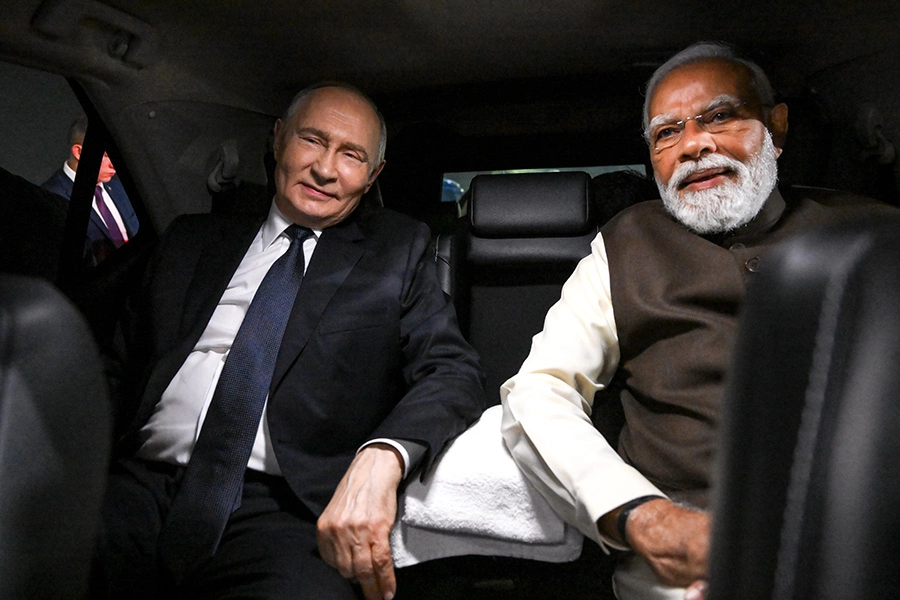
On December 4, 2025, Indian Prime Minister Narendra Modi welcomed Russian President Vladimir Putin to New Delhi for a two-day official visit, his first trip to India since Russia’s 2022 invasion of Ukraine.
This summit was far more than a routine diplomatic encounter, it marked a pivotal moment that set the contours of a “2030 Roadmap,” which includes expanding cooperation in trade, technology, new energy, and nuclear power, along with historic logistical defense agreements covering maritime transport, labor mobility, healthcare, food safety, and naval training.
The two countries agreed to reshape their defense relationship in line with India’s push for greater self-reliance through joint research and development, as well as joint production of advanced defense platforms and the spare parts and components needed to service Russian weapons and military equipment within India.
During his visit, Putin challenged U.S. pressure on India to halt its purchases of Russian fuel in an interview with India Today, noting that the United States is able to buy Russian nuclear fuel, and questioning why India should not enjoy the same right. He affirmed Moscow’s readiness to discuss the matter with Washington, including with President Trump.
India considers its ties with Russia a cornerstone of its economic and military security amid rapidly shifting global alliances.
It remains the world’s largest buyer of Russian arms and seaborne oil, even as it holds talks with the United States over a trade deal aimed at reducing tariffs imposed by President Trump in response to India’s purchases of Russian oil.
Projections indicate that India’s imports of Russian energy products will fall to their lowest level in three years by December 2025, due to U.S. sanctions and tariffs, while Russia has announced its desire to increase its imports of Indian goods in an effort to raise bilateral trade to 100 billion dollars by 2030.
After Washington imposed sweeping tariffs and sanctions on Moscow to isolate it and weaken its economy, the energy sector became one of the hardest hit, forcing Russia to offer its crude oil at discounted prices after losing its Western buyers.
India seized the opportunity as its energy needs grew, sharply increasing its imports of Russian oil, a move that helped contain inflation and secure affordable energy supplies, making India a crucial market for Russia and a practical partner under Western sanctions.
Putin was accompanied on the trip by the head of oil giant Rosneft, underscoring Moscow’s focus on boosting its oil exports to Asian markets.
Politically, India has not joined Western sanctions against Russia, despite considerable pressure from the United States and its Western partners.
In this context, journalist and Russia expert Ali Ibrahim says that Russia, having been cut off from Western financing and technology, is in urgent need of partners who will import from it and are able to absorb its exports, noting that Moscow aims to use the trade corridor with India to boost the supply of other goods that can help it weather this difficult economic period.
Ibrahim told Al-Estiklal that India’s continued purchases of discounted Russian oil partly help sustain the revenues Moscow needs to finance its war in Ukraine.
He pointed out that the defense industries remain the cornerstone of India’s relationship with Russia, as Moscow is still the primary supplier of India’s military hardware, with estimates suggesting that between 60% and 70% of India’s current military stock, from fighter jets and submarines to tanks, is of Russian or Soviet origin.
This reality, he explained, requires maintaining a warm relationship between Moscow and New Delhi to ensure a steady supply of spare parts, upgrades, and maintenance support.
India is also keen to increase its exports of pharmaceuticals, agricultural products, and textiles to Russia, and is seeking to remove non-tariff barriers, in addition to its desire for long-term supplies of Russian fertilizers, making the mapping of mutual interests, the core of Putin’s visit.
He noted that India is also looking to secure the Russian S-400 air defense system, which proved its effectiveness in the brief military confrontation with Pakistan in May 2025, although delays in Russian deliveries are tied to the war in Ukraine.
Modi is seeking assurances from Putin on delivery timelines, knowing that such guarantees will not come without concessions, particularly at a time when Modi wants to show both domestic audiences and the wider world that he still considers Putin an ally and has not yielded to U.S. pressure.
Ibrahim said that the deep entanglement of interests between the two countries carries geopolitical dimensions as well, with the Kremlin eager to demonstrate the failure of Western efforts to isolate Russia over the war in Ukraine.
For this reason, Russia is focusing on China and India to break out of its Western isolation, leveraging the weight of both countries to open economic channels with Asia and the Global South.
He added that after Russia’s isolation from Europe, the Kremlin is seeking to compensate its loyal business class by expanding trade with China and India, allowing Moscow to remain a key player in these economically vital regions.
Mutual Interests
Economic ties between India and Russia have seen a remarkable leap in recent years, with bilateral trade reaching a record 68.72 billion dollars by the end of March 2025, compared with just 8.1 billion dollars in 2020.
This growth is attributed to strategic logistical projects, most notably the development of the North–South Corridor linking Russia and Belarus to the Indian Ocean, as well as the strengthening of the Northern Sea Route as a key pathway facilitating Arctic trade.
Cooperation between the two countries includes developing infrastructure along the Arctic transport corridor, opening broad prospects for expanding bilateral trade.
The partnership does not stop there, it extends to advanced industrial ventures, such as establishing a joint Russian–Indian pharmaceutical plant in Kaluga to produce cutting-edge cancer treatments, alongside “Make in India” programs that allow Russian companies to manufacture their goods locally.
In addition, innovative financial initiatives have emerged to bolster energy-related transactions between the two countries, including converting payments from Indian rupees into Chinese yuan through accredited banks, a mechanism that eases trade and deepens financial integration.
These shared dynamics reflect the vision of India and Russia, founding members of the BRICS group, to expand their global economic influence, capitalizing on their growing roles within international trade networks and the diversification of strategic trade routes.
On December 4, 2025, media outlets reported that Andrey Kostin, head of Russia’s VTB Bank, had proposed to Yury Ushakov, an aide to the Russian president, the creation of a mechanism to settle energy payments with India through accredited banks that would convert rupees into yuan.
In this context, Russian writer and political analyst Andrey Ontikov said that Putin’s visit to New Delhi is important for both sides, especially given the continuation of Western sanctions on Russia and India’s emergence as the largest consumer of Russian oil at favorable prices.
Ontikov added in televised remarks that India faces U.S. pressure, but its deepening ties with Russia represent a strategic choice to secure its economic and security interests.
He affirmed both countries’ commitment to continuing economic and defense cooperation, with Russia seeking ways to circumvent Western sanctions, particularly in the oil and banking sectors.
He noted the existence of the North–South project corridor for transporting Indian goods across Russian territory, arguing that such initiatives strengthen the alignment between Moscow and New Delhi amid U.S. pressure, and reflect India’s recognition that it cannot rely on Washington, which seeks to impose its dominance.
Ontikov concluded by saying that what matters most for Russia is the continued export of oil to India, which forms a strong common ground between the two countries and reinforces their shared interests.
Sources
- Putin and Modi agree to boost trade and strengthen relations between India and Russia [Arabic]
- Putin’s visit highlights India’s imports of discounted Russian oil despite US sanctions
- Why Putin proposed in New Delhi to “open up” markets, Russian and Indian leaders focused their talks on developing non-energy trade [Russian]
- Peace, labor, tea [Russian]