Mystery Missiles Hit Diego Garcia, Raising Questions Over Who Is Responsible
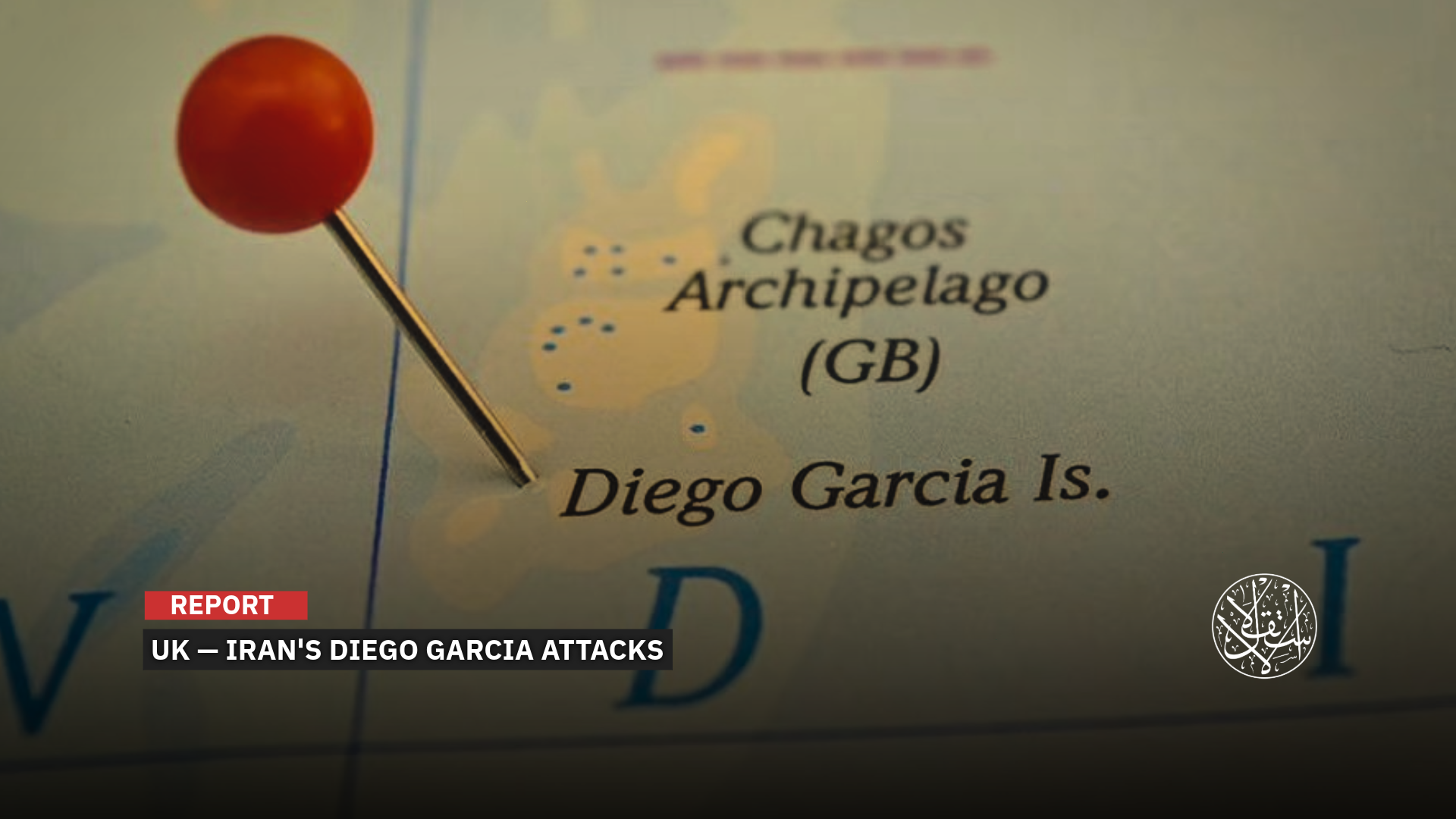
The Diego Garcia base hosts about 2,500 personnel.
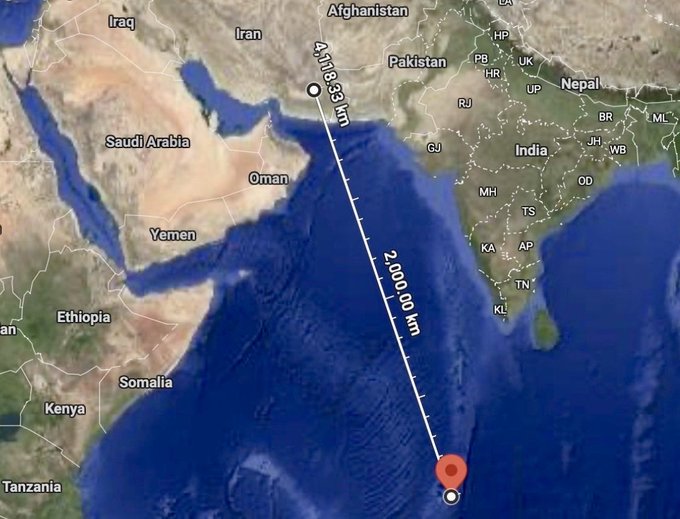
Just hours after London allowed Washington on March 20, 2026, to use its Diego Garcia base in the Indian Ocean to strike Iran, U.S. sources claimed Tehran launched two missiles toward the facility, nearly 4,000 kilometers away, with one failing and the other intercepted.
The same day, The Wall Street Journal (WSJ) and defense outlets reported the incident, warning that Iran’s missile capabilities are raising serious concerns in Washington and across Europe, given that such a range could put several European cities within reach and potentially shift the balance of the war.
At the heart of those concerns is range. Tehran has long said its missiles do not exceed 2,000 kilometers, making the claim, if true, a significant escalation that could extend the conflict well beyond the Middle East.
But Iran’s denial of any attack on Diego Garcia, along with its accusation that the Israeli Occupation was behind the strike, has deepened skepticism among analysts.
Some see the episode as exaggerated or deliberately leaked, part of a broader U.S. and Israeli effort to build a stronger case for war.
That narrative echoes earlier remarks by President Donald Trump, who said in a February 25, 2026, address to Congress that Iran had developed missiles capable of threatening Europe and U.S. bases abroad and was working toward longer-range systems that could eventually reach the United States.
Analysts fear that the leak to the WSJ may have been politically orchestrated to bolster this narrative, justify a wider war, and rally NATO support for involvement.

An Island, Two Missiles, and 4,000 Kilometers
Hours before reports surfaced claiming Iran had launched two medium-range ballistic missiles toward the Diego Garcia base, jointly used by the United States and Britain, raising Western concerns about the evolution of Iran’s missile program and its potential reach into Europe, Iran’s Foreign Minister Abbas Araghchi had already issued a pointed warning.
In a post on X, Araghchi said most British people do not support involvement in the U.S.-Israeli war against Iran, arguing that Prime Minister Keir Starmer was putting British lives at risk by allowing UK bases to be used for strikes on Tehran. He added that Iran would exercise its right to self-defense.
In this context, reports of two missiles launched toward the base, roughly 4,000 kilometers away, drew particular attention, with one said to have fallen short midflight and the other intercepted by a U.S. Navy SM-3 missile, a high-cost defense system priced at more than $20 million per launch and produced in limited numbers each year, a detail seen as underscoring the seriousness of the threat.
The Diego Garcia base is one of the most important U.S. military installations in the Indian Ocean, hosting B-2 Spirit stealth bombers, nuclear-powered attack submarines, guided-missile destroyers, and advanced intelligence-gathering infrastructure from which numerous U.S. operations are launched.
Situated roughly 1,600 kilometers south of the Maldives, 1,900 kilometers from Sri Lanka, and 2,700 kilometers from India, the base occupies a highly strategic location for overseeing military operations across Asia and the Middle East.
On February 19, 2026, Britain initially barred the United States from using its bases at Fairford and Diego Garcia for strikes on Iran, with Prime Minister Keir Starmer delaying the decision for weeks amid sovereignty disputes over the Chagos Islands with Mauritius, legal concerns, and domestic pressure reflecting public opposition to military intervention.
By March 20, London reversed course, granting Washington access to Diego Garcia for specific defensive purposes, chiefly targeting Iranian missile sites that could threaten shipping in the Strait of Hormuz, marking a clear shift in the British stance.
The decision significantly eased U.S. air operations. During the strikes on February 28, B-2 bombers had to fly from Whiteman Air Force Base in Missouri on round trips of roughly 36 hours due to the initial denial of British bases. With Fairford and Diego Garcia now available, B-52 and B-1 bombers can reach Iranian targets much faster, refuel, rearm, and redeploy within hours, accelerating military operations.
Although Starmer had previously stated that Britain would not be drawn into war with Iran, citing the need to verify the legality of any military action, he later adjusted his position after escalating Iranian strikes, allowing the use of British bases to support U.S. attacks.
Diego Garcia hosts around 2,500 personnel, mostly Americans, and has played a pivotal role in U.S. wars in Vietnam, Iraq, and Afghanistan.
The striking paradox, according to British media reports, is that the United Kingdom lacks a permanent land-based system to intercept long-range ballistic missiles, even as recent developments suggest Iran may now be capable of striking targets up to around 4,000 kilometers away, putting a far wider area at potential risk.
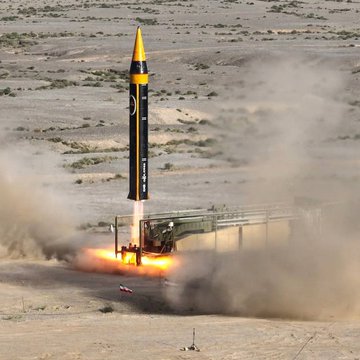
Iran’s Missile Arsenal
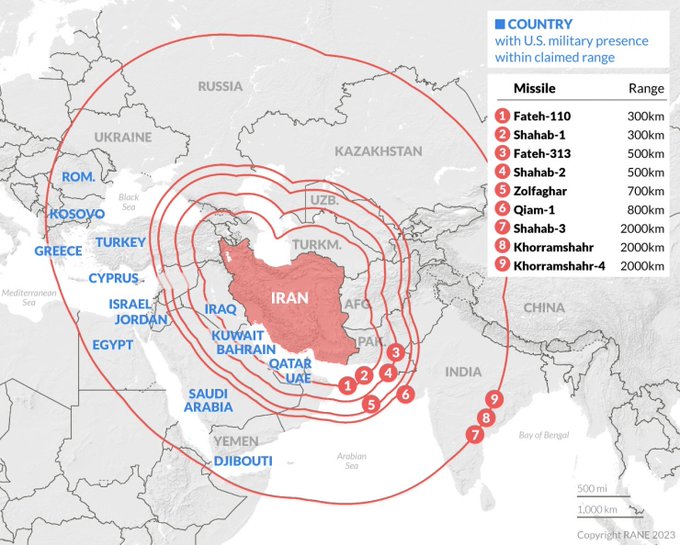
Estimating the size of Iran’s missile arsenal independently is difficult due to scarce reliable data on actual missile numbers. U.S. Air Force assessments and some NGO reports have focused mostly on launch platforms rather than the missiles themselves, as these are easier to track. Publicly acknowledged Iranian systems center on short-range missiles with a reach of up to 1,000 kilometers and medium-range missiles between 2,000 and 3,000 kilometers.
Israel’s Alma Research and Education Center reported on March 4, 2026, that Iran’s long-range systems are in advanced development, and tests targeting Diego Garcia suggest this capability is no longer theoretical, though accuracy and reliability remain uncertain according to Western military estimates. In 2022, General Kenneth McKenzie of U.S. Central Command said Iran possessed more than 3,000 ballistic missiles, excluding its growing stock of land-based cruise missiles. Israeli officials estimated that by June 2025, around 1,500 missiles and 200 launch platforms remained, with subsequent indications of stockpile replenishment.
Iran’s investment over the past two decades has focused on readiness, accuracy, and effectiveness, making its missile program a significant conventional deterrent. The 2015 self-imposed range limit of 2,000 kilometers appears abandoned with the Khorramshahr missile, which can reach farther when fitted with a lighter warhead and uses solid fuel instead of liquid, improving readiness. Western assessments suggest many Iranian missiles could carry nuclear warheads, raising long-standing international concern, with UN Security Council Resolution 1929 of September 2025 prohibiting any Iranian ballistic missile activity capable of delivering nuclear weapons.
After the Diego Garcia strike, “Israel’s” Chief of Staff, Major General Eyal Zamir, stated publicly on March 21, 2026, that Iran had launched a two-stage long-range ballistic missile over 4,000 kilometers, targeting a U.S. military base—not Israeli territory—putting major European capitals such as Berlin, Paris, and Rome within direct threat range. Zamir noted preliminary analysis suggests the Khorramshahr-4 could be adapted to solid fuel, or a new solid-fuel missile could achieve quasi-orbital speeds of 7–8 kilometers per second, potentially extending its range to 8,000–12,000 kilometers with midcourse maneuvering to evade missile defenses. He described the test as a significant technical achievement and a direct warning, demonstrating Iran’s ability to strike deep into U.S. infrastructure in the Indian Ocean, a critical logistical hub for American military operations across the Middle East and the Indo-Pacific.
Attack Signals
The recent Iranian missile strike sends multiple military, political, and strategic signals, chief among them the ability to target U.S. bases far beyond the Middle East, marking a shift from a regional conflict to a global horizon.
By reaching Diego Garcia, the U.S. military’s most important base in the Indian Ocean, Iran has demonstrated the potential to strike advanced American aircraft, ships, and equipment while also threatening several European capitals.
With ranges exceeding 4,000 kilometers, Iran’s missiles are clearly not aimed primarily at “Israel” but can directly threaten Berlin, Paris, London, and Rome, placing Europe within immediate reach.
The strike also signals that Iran possesses previously unannounced missile capabilities, a key factor in bolstering deterrence against Washington, Tel Aviv, and London, according to analysis cited by The Sunday Times on March 22, 2026.
Beyond military messaging, the attack carries political pressure for the West, showing that Iran can hit strategic targets far beyond the Gulf, including disrupting shipping in the Strait of Hormuz and threatening energy and infrastructure—raising the global economic cost of conflict, not just Iran’s.
Even though the missiles failed to reach their targets, the strike remains highly symbolic, serving as a political and psychological warning: the very ability to threaten a base like Diego Garcia delivers a strategic shock and underscores that no region is fully safe.
Zamir leveraged this reality to urge a hardline stance against Iran, noting that its missiles can reach up to 4,000 kilometers, putting much of Europe within range.
Western military assessments suggest the missile launch aimed to convey multiple messages to the Trump administration and Europe:
-Demonstrate long-range missile development capable of striking U.S. bases outside the Middle East.
-Warn Europe that involvement in a war against Iran could extend the war far beyond the region.
-Exert international pressure to curb U.S. and Israeli attacks and prevent further escalation.
With Iranian missiles now able to reach 4,000 kilometers, the threat calculus shifts: danger is no longer limited to the Gulf but extends to major European capitals.
Iran reinforces this deterrence strategy through the principle of retaliatory equivalence: any strike on its infrastructure, oil fields, or nuclear facilities is met with a proportional response, as illustrated by the symbolic targeting of “Israel’s” Dimona reactor after strikes on the Natanz uranium facility.
Thus, even without physical impact, the message is clear: no base is entirely secure, no area is safe, and any attack on Iranian infrastructure will be met with a matching response, strengthening Iran’s deterrence while reducing the invulnerability of U.S. bases in the Indian Ocean.
Is It Propaganda?
Doubt has surfaced over the reported Iranian missile strike on Diego Garcia, with analysts and social media users questioning its veracity in the absence of any official confirmation from Tehran. They argue that a claim of this magnitude cannot be taken seriously without a clear Iranian statement, noting that despite past hints, Iran has not claimed responsibility.
Some observers suggest the story may be politically engineered to bolster claims that Iran is developing long-range missiles capable of threatening the United States, supporting President Donald Trump’s narrative and framing Europe as directly at risk, potentially rallying broader NATO backing.
Iranian Foreign Ministry spokesman Esmail Baghaei’s denial of the strike reinforced these doubts, while British Prime Minister Keir Starmer and NATO Secretary General Mark Rutte both declined to confirm the Israeli assessment of the missile’s origin and nature, adding further ambiguity.
Before the Iranian denial, questions arose about who might actually be responsible. Al-Jazeera cited military analyst Colonel Nidal Abu Zeid, who noted the timing of the incident with Britain’s permission for U.S. use of its bases was unlikely to be coincidental, raising the possibility of a third party seeking to manipulate the situation and draw London into the confrontation.
Abu Zeid outlined two potential explanations for Iran’s denial: one, that missiles were launched but failed to reach the target, prompting Tehran to deny the strike; or two, a more alarming scenario, in which a third party carried out the attack at a calculated moment to escalate the conflict.
Other assessments suggest that reports of a strike on the base may reflect broader developments in Iran’s missile capabilities, potentially signaling shifts in its military doctrine—particularly if Tehran is confirmed to possess missiles with ranges exceeding 2,000 kilometers, a limit it had previously pledged to observe.
On the official front, British Home Secretary Yvette Cooper reaffirmed the UK’s support for defensive measures against “Iranian threats” while stressing the need to avoid being drawn into a wider Middle East conflict, according to BBC reports—reflecting ongoing Western concern without a definitive conclusion on the incident.
Sources
- Iran Targeted Diego Garcia Base With Ballistic Missiles
- UK approves US use of British bases to strike Iran missile sites targeting ships
- Diego Garcia: The remote island hosting a key US-UK military base targeted by Iran
- Iran – Types of Ballistic Missiles – Overview
- Iran has the missiles to hit London, Israel claims