Morocco’s Election Law Crackdown: What Is Akhannouch Trying to Hide?
The legislation signals the state intends to run the 2026 elections quietly, free from criticism over dirty money.
Morocco’s new electoral law has sparked a wave of criticism and warnings over its potential threat to the integrity of the 2026 parliamentary elections, after being submitted to parliament by the government of billionaire businessman Aziz Akhannouch.
Since late October 2025, public debate has intensified over Article 2 of draft law No. 27.11, which governs the election of members of the House of Representatives.
The contentious article introduces prison sentences ranging from two to five years, and fines between 50,000 and 100,000 dirhams (around $5,500 to $11,000), for anyone who “produces, contributes to, or participates by any means in the dissemination or broadcast of rumors or false information with the intent to undermine confidence in the credibility or integrity of elections.”
The proposed legislation comes as Morocco prepares for national elections expected in September 2026, though some analysts suggest an earlier vote, possibly before June, could be called amid growing social discontent and mounting pressure on Akhannouch’s administration.
Critics say the law could be used to stifle dissent and criminalize political debate, particularly on social media, where frustration with economic hardship and corruption has been increasingly vocal.
Supporters of the bill, meanwhile, argue it aims to “protect the democratic process” from misinformation and manipulation.
As tensions rise, the measure is emerging as a test of Morocco’s political openness, and of how far the government is willing to go to control the narrative ahead of a pivotal election.
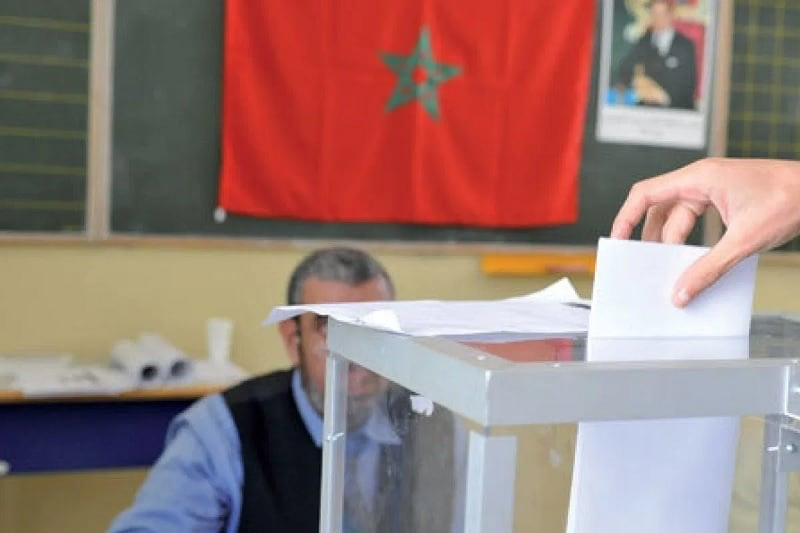
Malicious Intentions
Commenting on the controversy, former Minister of Employment and senior figure in the opposition Justice and Development Party (PJD), Mohamed Yatim, said that questioning election results is not a crime but rather an exercise of free expression and part of the normal role of political parties.
Speaking to Al-Estiklal, Yatim stressed that such skepticism is entirely natural given what he described as “corrupt electoral laws,” including the use of an electoral quotient calculated on the basis of registered voters rather than those who actually cast ballots.
The former government official argued that if authorities want to prevent doubts about election integrity, they must first send “clear signals,” including tackling the use of money in campaigns and revising the electoral quotient, which, he said, allows non-voters to influence the outcome of elections.
He added that the Interior Ministry must also fulfill its duty by ensuring that local authorities refrain from pressuring candidates or directing voters, as has occurred in previous elections.
“Instead of criminalizing doubts about the elections,” Yatim said, “the strongest message expected today from the Interior Ministry is to review the electoral quotient, which allows those who did not vote to determine the results of the process. The ministry knows this better than anyone else.”
Morocco’s current electoral system, used in the 2021 elections, allocates seats based on the total number of registered voters. The quotient is calculated by dividing the total number of registered voters in a district by the number of seats available, a method not applied in any other international electoral system.
From a legal standpoint, Mohammed Bask Manar, a professor of constitutional law at Cadi Ayyad University in Marrakesh, argued that the controversial article “was drafted in vague terms, allowing anyone to be considered as having ‘cast doubt on the elections’ based on the smallest action or statement.”
Speaking to Sawt Al Maghrib on October 27, 2025, Bask Manar said that the use of multiple verbs in the article makes it applicable to virtually anyone, “not only to those who publish questionable content, but also to anyone who shares, distributes, contributes to, or participates in it.”
He added that this could even extend to someone who simply clicks “Like” on a Facebook post, as that could be interpreted as “participation” and thus punishable under the same law.
The professor stressed the need to clarify legal definitions, asking, “What is meant by ‘intent’? How can we determine whether someone ‘intended’ or ‘did not intend’? And what exactly constitutes ‘casting doubt’?”
“It is unacceptable,” he said, “to use the term ‘casting doubt’ without a precise definition, as this leaves the door wide open to arbitrary interpretations.”
Bask Manar warned that “the current drafting of the bill, marked by an intimidating tone, may reflect an underlying fear of potential challenges surrounding the upcoming elections.”
He therefore called for “lawmakers or, if necessary, the Constitutional Court to address and amend the issue if the bill is approved, ensuring a proper balance between safeguarding the credibility of elections and protecting freedom of expression.”
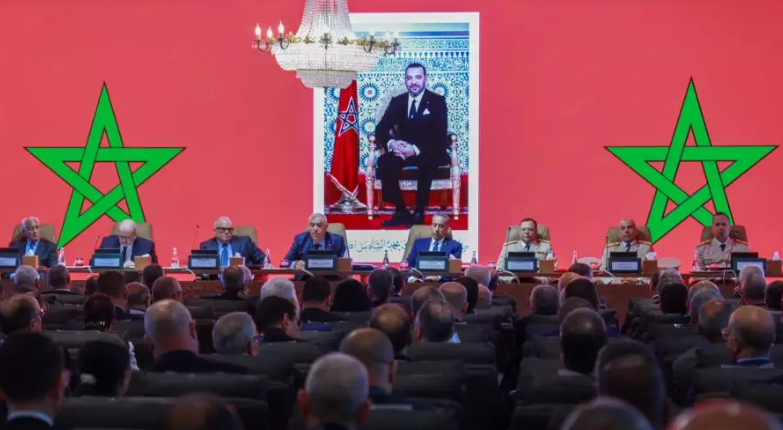
Rigged Elections
The proposal became a central topic of debate across social media platforms, as human rights activist Aziz Ghali questioned the very purpose of holding elections.
In a Facebook post dated October 25, 2025, Ghali wrote, “They might as well just announce the composition of the House of Representatives directly, so that the prisons don’t overflow with skeptics […] this goes beyond absurdity by light years.”
Meanwhile, the head of the Moroccan Association for the Protection of Public Funds, Mohamed el Ghloussi, said that powerful mafias and corruption lobbies are building “a state within a state,” transferring the logic of the criminal code into all other laws to deepen corruption and authoritarianism, suffocate politics, silence dissent, and put an end to what they themselves call “chaos.”
In a Facebook post dated October 27, 2025, el Ghloussi wrote that these groups “hate freedom and despise anyone who demands it or even dreams of it, yes, even the mere dream.”
“They want a state for themselves alone, because public money is their money, and we are just the audience, expected only to applaud and thank God that they haven’t cut off the oxygen,” he said.
Human rights activist Omar Arbib described the new proposal as something that could fall under the heading of “hostility toward questioning the integrity of elections and elected officials.”
In a Facebook post on October 25, 2025, Arbib wrote, “I think the first step the state should take is to dissolve all parties that question the integrity of elections, prosecute anyone who exposes the rampant electoral corruption in the country, and go after anyone who criticizes what is falsely called electoral platforms or the government program.”
In conclusion, according to the activist, with every election there is new “authoritarian creativity” that further deepens the crisis of what is mistakenly referred to as the “democratic” process.
Journalist Taoufik Bouachrine said that the controversial proposal contradicts Interior Minister Abdelouafi Laftit’s discussions with political parties over the summer regarding the 2026 elections, talks that had raised broad hopes among citizens and emphasized the government’s commitment to ensuring fairness, transparency, and equal opportunity.
In an analysis published on his YouTube channel on October 27, 2025, Bouachrine argued that invoking the protection of private life as justification for the proposal is misplaced, since both the press and publication law and the criminal code already address such matters.
He contended that the real purpose behind the draft law is to curb the expected rise of the Justice and Development Party (PJD) in the upcoming elections, stressing that legislation should be general and impartial, not designed to target a specific party or group.
Bouachrine also emphasized that what truly undermines the credibility of elections is not the media or observers, but rather the Interior Ministry itself, through its interference and attempts to control the results.
He concluded that political affairs should not be managed through the criminal code, warning that the growing reliance on legal repression represents “a very dangerous trend” aimed at establishing total control over society, something, he said, that cannot be accepted.
Official Stances
Expressions of anger and opposition to the proposal have not been limited to human rights activists and social media campaigners in Morocco, but have also extended into the political and party arenas.
In this context, Abdelilah Benkirane, secretary-general of the Justice and Development Party (PJD), stated that “criminalizing the expression of a position on the upcoming elections will have the opposite effect and must be reconsidered.”
In an interactive video posted on October 29, 2025, Benkirane warned that behind every law there must be logic and a legal, rational basis, and that the state cannot act recklessly or irrationally, raising the question of what justification there could be for punishing someone who simply expressed a position on the forthcoming elections.
The head of the Islamist party stressed that the Interior Ministry cannot deprive citizens of the right to doubt, noting that skepticism without foundation will be ignored, unlike doubt based on evidence and reasoned arguments.
Benkirane cautioned that pushing this law could lead some to question whether there is an intention or expectation to manipulate the next elections, and that the criminalization is effectively aimed at protecting those who might do so through the law.
“I do not see any legitimacy for this law in my view under King Mohammed VI, because it harms the image of our country,” Benkirane said, adding that similar laws and decisions tend to produce counterproductive results.
Among these consequences, he noted, is that five years of work to improve the country’s conditions may appear to many as unproblematic, but the important thing is that citizens are able to express a position, highlighting the necessity to reconsider the proposal, Benkirane emphasized.
Meanwhile, Jamal el-Asri, secretary-general of the Unified Socialist Party, described the amendment as “a step backwards.”
Speaking to Hespress on October 27, 2025, el-Asri said the proposed penalties are “strange and absurd in a country without genuine democracy, and not a military regime either,” adding that “the amendment reflects the government’s attempt to give it a sense of sanctity.”
“This approach has been evident in recent parliamentary bills; the government accepts no criticism and seeks to gag any dissenting voice or anyone unwilling to accept the current situation.”
“A two- or five-year sentence exceeds what is prescribed for bribery, a matter the government has obscured through various measures,” el-Asri continued.
The political figure warned that the amendment represents “a move toward gagging voices, paving the way for a theocratic system that claims sanctity and accepts no criticism whatsoever.”
At the same time, the political bureau of the Federation of the Democratic Left issued sharp criticism of the government, accusing it of entrenching electoral corruption and showing no genuine political will for democratic reform.
In a statement released on October 27, 2025, the party said that the draft law on the election of members of the House of Representatives “lacks the essence of reform and reproduces the same mechanisms that have stripped previous elections of credibility.”
The party emphasized that “the new provisions in the draft law were not subject to any genuine consultation with political parties, making claims of a participatory approach little more than political rhetoric.”
The Federation of the Democratic Left also criticized what it described as “intimidatory provisions” that restrict citizens’ ability to report electoral corruption, arguing that the government, through these laws, seeks “to control the political scene rather than reform it, and to gag voices rather than empower them for democratic participation.”
At the movement level, al-Wonkhari, a member of the political bureau of Al-Adl Wal Ihsane, said that the electoral process currently being orchestrated in Morocco “offers no promise of reform or democracy.”
According to a post on the movement’s website, al-Wonkhari explained that “the current electoral laws tighten the grip on the political scene, rather than opening the doors to free competition and the renewal of political elites.”
The political activist stressed that “democracy is not built through punishments or guardianship, but through bold political will that restores value to the citizen’s voice and grants elected institutions their independence.”
Anything else, al-Wonkhari added, is merely a recycling of the same system that “paralyzed popular will and turned elections into a formal ritual to endorse a closed and controlled reality.”
Without Any Fanfare!
In its editorial on October 27, 2025, the website Nichan argued that the draft law signals the state’s desire to carry out the 2026 elections without any noise or criticism regarding the use of “dirty money.”
The site warned that the law threatens to imprison anyone who speaks about the use of money to buy votes or who exposes the dirty dealings of certain candidates, imposing harsh penalties in blatant violation of provisions meant to protect whistleblowers reporting corruption.
It added that those who inserted these flawed provisions into the electoral law may be suffering from a form of schizophrenia, having apparently forgotten the dozens of statements documenting the flood of dirty money in the electoral market, none of which prompted any investigation into suspects or accountability for those accused.
Even more, the source noted, an official complaint filed by the Moroccan Association for the Protection of Public Funds regarding the use of money to buy votes was effectively buried, despite an investigation launched by the regional judicial police unit in Rabat, following instructions from the public prosecutor at the Rabat Court of Appeal.
The editorial insisted that if the state seeks to buy the “innocence” of the upcoming elections in advance through intimidation, it is akin to placing a feather on its own head, because ensuring the integrity of electoral processes primarily requires shielding them from all the shady practices that have become embedded in the behavior of a large segment of politicians.
It stressed that “safeguarding clean elections is not achieved by witch hunts or gagging voices, but by preventing corrupt individuals from running, and by setting conditions to raise the quality of the political elite, starting with educational standards; allowing a parliamentary candidate who cannot write a proper sentence is the real corruption.”
The editorial continued, “Today, with the government’s push to impose ‘emasculated’ elections on everyone, it can be said with certainty that we have passed the zero point of political practice, and reached the final stage of the bankruptcy journey that has long been postponed.”
It emphasized that “this absurd behavior will only deepen Moroccans’ disillusionment with politicians and political actors, and will lead many to withdraw their trust in institutions, discourse, action, and official intentions, undermining the most important gain that could come from the elections.”
The site argued that the so-called “Shut Your Mouth” law once again confirmed that political and party practice in the country urgently requires a comprehensive rehabilitation, under new rules and mechanisms, to move beyond the era of mere “extras” and cultivate a truly national elite.
The editorial also highlighted the extreme secrecy surrounding the entity responsible for inserting the “Shut Your Mouth” provisions into the electoral law, which it said would leave all Moroccans in a state of temporary freedom, insisting that “this alone is enough to reveal the government’s bad faith in its majority.”