Mandatory Draft for Haredim: Will It Trigger Early Elections and Topple Netanyahu?

Shas and United Torah Judaism parties were considering withdrawing from Netanyahu's government.
After attempts by Netanyahu's far-right coalition to postpone this contentious issue through government decisions extending their exemption, the Israeli Supreme Court has mandated the draft of the Haredim (ultra-Orthodox Jews), potentially accelerating the collapse of PM Benjamin Netanyahu's government.
The Israeli court not only mandated Netanyahu's government to start drafting the Haredim once the exemption law expires but also ordered the cessation of budget allocations to yeshivas, a traditional Jewish educational institution, as a penalty for non-compliance.
Dustbin of History
The ruling issued on June 25, 2024, is critical as it places the ruling right-wing coalition in the dustbin of history and could accelerate early elections that may topple Netanyahu, whose coalition is losing ground in the polls.
The court's ruling puts Netanyahu in a difficult position: enforcing it means the religious parties will leave the government, while not enforcing it leads to conflict with the judiciary and possibly prison for Netanyahu, effectively signing a death sentence for his government.
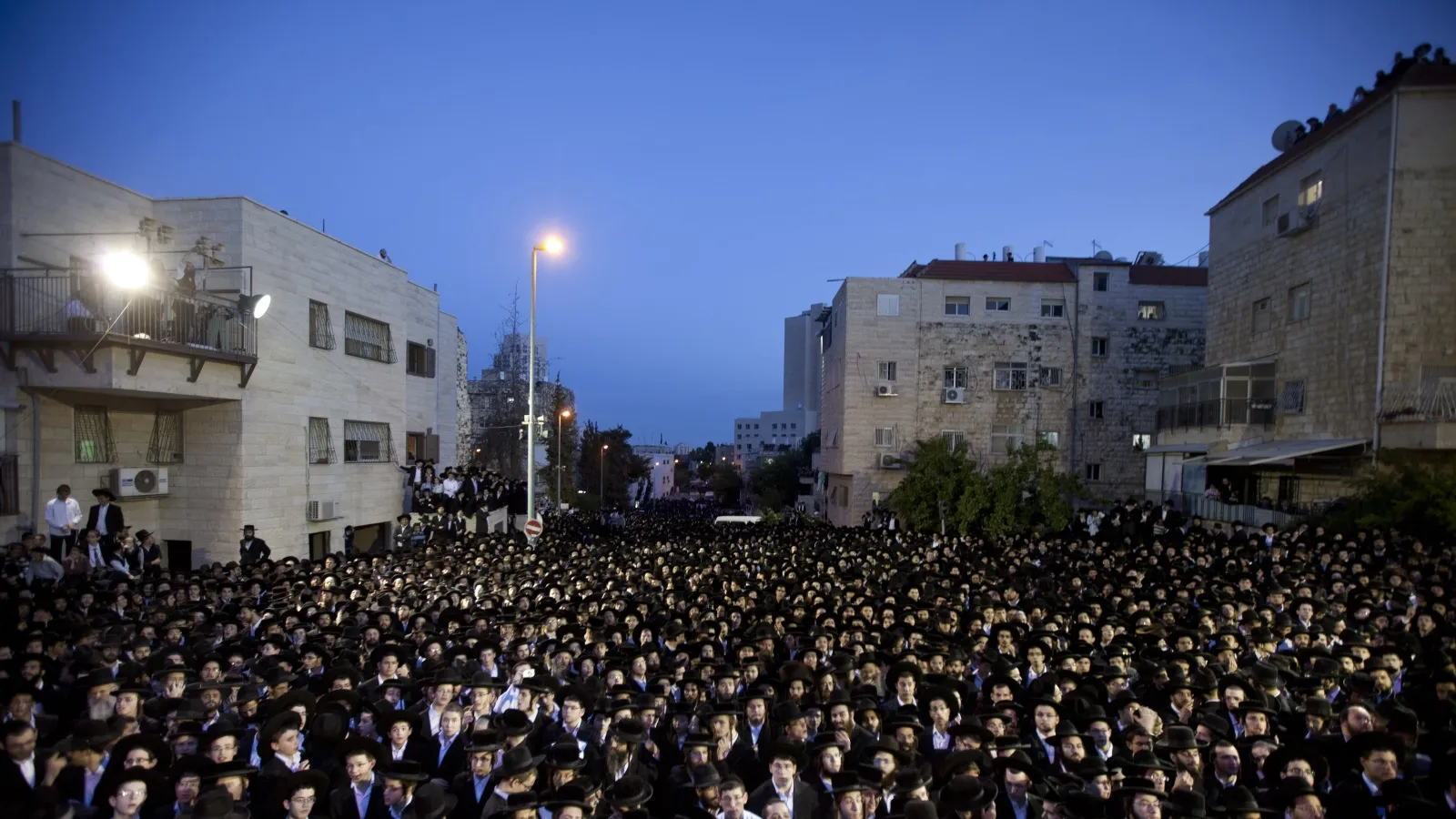
The Haredim are an ultra-Orthodox Jewish sect that strictly observes religious rituals and lives daily life according to the "precise details of Jewish law."
They call themselves "Haredi," meaning "God-fearing" in Hebrew.
They believe their mission is "to protect Jewish law by studying the Torah," so students of Haredi religious schools receive stipends for studying and are legally allowed annual deferments from conscription until they reach the age of exemption.
Before this ruling, Netanyahu relied on a "religious safety net" to stay in power, in exchange for accommodating the demands of far-right parties to continue exempting the Haredim from military service, passing a law with 63 votes to 57.
The customary practice in the state of “Israel” since 1948 has been to exempt all approximately one million Haredim from conscription.
The court ruling, driven by the need for soldiers amid the losses suffered by the Israeli military during the Gaza conflict, came as a historic decision, breaking previous customs and igniting a dormant issue by overturning the law Netanyahu used to extend the Haredim's exemption from mandatory conscription, forcing him to draft them.
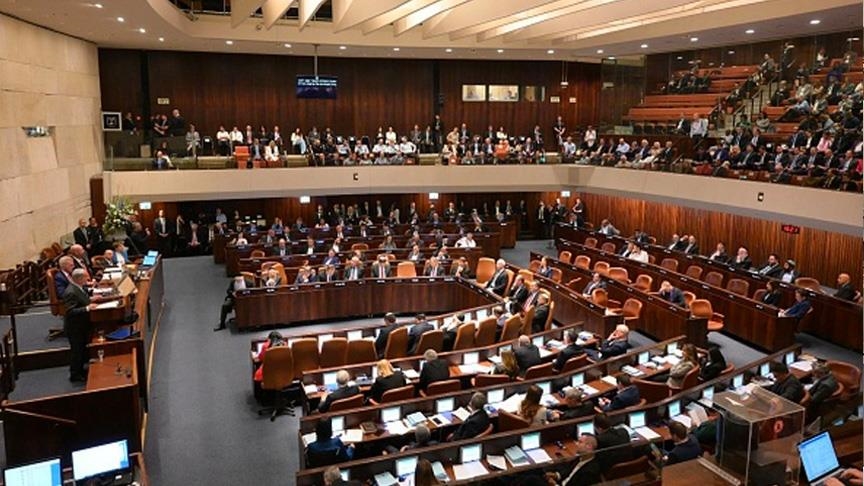
After decades of enjoying numerous privileges, substantial funding from the state budget, and exemption from compulsory military service, the Haredim are now forced to join the army or be classified as deserters, risking arrest.
On June 25, 2024, Haaretz described the court ruling as a blow and a slap to Netanyahu, noting it was a unanimous decision by nine Supreme Court judges following years of legal and political debate.
The court ruled that the executive branch has no authority to exempt yeshiva students from military service in the absence of an appropriate legislative framework, compelling Netanyahu to enforce the ruling.
Netanyahu's right-wing and religious coalition relies on ultra-Orthodox parties to stay in power.
The New York Times reported on June 26, 2024, that the Supreme Court ruling ending the exemption of ultra-Orthodox Jews from military service heralds a seismic shift in the Israeli Occupation trajectory with social, political, and security implications.
The ruling is expected to increase pressure on Netanyahu's fragile coalition, which depends on the support of two ultra-Orthodox parties advocating for the exemption, even as “Israel” faces a crisis in Gaza.
The Washington Post quoted Hebrew University law professor Barak Medina on June 25, 2024, predicting that Netanyahu's government might not survive this crisis.
The reason is that many religious institutes depend heavily on government funding, now entirely at risk.
On March 28, 2024, the Supreme Court temporarily froze government support for theological institutes attended by exempted ultra-Orthodox students.
Now, the court has not only decided on June 25 to draft all eligible Haredim but also to permanently suspend these funds.
Ironically, Israeli Minister of Justice Yariv Levin announced legislation in December 2022 to overhaul the judiciary and reduce the courts' power to interfere with government legislative decisions.
This legislative initiative, driven by the political ambitions of Haredi religious parties and settlers, ultimately failed, but if it had succeeded, it might have prevented the Supreme Court ruling.
Two Tough Choices
If Netanyahu refuses or delays implementing the ruling to avoid the collapse of his coalition, he will clash with the Supreme Court and face legal penalties. The court will then cut funding to religious schools, and Likud party members may rebel against him.
If he complies with the ruling, the religious and right-wing parties will withdraw, causing him to lose his parliamentary majority and his government to fall.
Netanyahu's coalition depends on two ultra-Orthodox parties, Shas and United Torah Judaism, which consider exemption from conscription essential to keep their students in yeshivas and away from military service to maintain their religious observance.
Shas and United Torah Judaism hold 18 of the 64 Knesset seats supporting the current government. Their withdrawal would reduce the majority to 46 seats, below the 61 needed to sustain the government.
Operation al-Aqsa Flood has burdened the Israeli military, requiring continuous reinforcements due to the manpower shortage. Escalation with Hezbollah in southern Lebanon has exacerbated the issue.
Before the conflict, Netanyahu's government comfortably debated the number of Haredim soldiers needed and whether to send them to civil service or the workforce. After October 7, 2023, drafting them became essential.
The Haredim, their rabbis, and their parties' refusal of compulsory conscription, coupled with secular Israelis' criticism of unequal military burdens, have deepened the divide between the two groups.

Therefore, Israeli analyst Amos Harel expects that secular and other Israelis will reject any "symbolic conscription" of the Haredim as done previously.
In an article published in Haaretz on June 25, Harel explained that Netanyahu's coalition's attempt to circumvent the court's decision by enlisting a "symbolic percentage" of Haredim on a voluntary basis will not resolve the crisis but will exacerbate the division and conflict.
Harel emphasized that the chances of this attempt succeeding are slim, and the coalition government faces the risk of disintegration from two directions. First, the protest movement demanding early elections, and second, and more importantly, the rabbis urging right-wing parties to leave the government.
Harel stated that “the judges believe military necessity and the cost of war make it essential to increase the conscription rate in the army, based on ethical principles and professional and operational assessments.”
He added that “increasing the number of Haredi conscripts is not only related to Gaza and the greater risk of war in Lebanon but also to the understanding that Israel faces at least a decade of significant security challenges, including the growing threat of Iran and its completion of encircling us with armed militias around Israeli borders.”
Out of 2,000 Haredi applicants for conscription since October 7, 2023, only 450 have been accepted, a small fraction of the army, which is estimated to number around 170,000 personnel, according to The Washington Post on December 28, 2023.
Army estimates published in Hebrew newspapers indicate a current need for 8,000 new soldiers.
Ultra-Orthodox Jews (Haredim) make up 13% of the population in the occupied territories and have been exempted from military service since 1948 on the grounds that they dedicate themselves to studying the Torah in their religious schools and colleges.
Their population is expected to increase to 19% by 2035 due to high birth rates, according to Reuters on June 25, 2024.
The Haredim claim that the Torah is more important than the rifle in defending the Jews, asserting that the most crucial matter for Jews is studying the Torah, claiming it to be the real Iron Dome that protects them from evil, a notion ridiculed by the rest of secular Israelis.
Therefore, Minister of Jerusalem Affairs and Jewish Heritage Meir Porush from the United Torah Judaism party predicted that the Supreme Court's decision would lead to “Israel” being divided into two states.
Palestinian analyst Saeed Ziad tweeted on June 25 that “the conscription crisis represents the most serious crisis in Israel and could lead to a real division, turning the State of “Israel” into two states.”
Rebellion of the Rabbis
Hebrew newspapers predicted that the Supreme Court's ruling on mandatory conscription for the ultra-Orthodox would lead to the disintegration and collapse of Netanyahu's government.
Before the Supreme Court's ruling on mandatory conscription, Haredi rabbis threatened to leave “Israel” if conscription was imposed on them. Their ministers also threatened to leave Netanyahu's government, which would cause its collapse.
Chief Rabbi Yitzhak Yosef famously stated that his followers would leave “Israel” if conscription were imposed on them, and other rabbis claimed that death is better than military service.
Thus, the court ruling sparked widespread anger within the Jewish religious establishment and right-wing parties supporting it. Senior rabbis called on the Haredim to rebel, and parties considered withdrawing from the government, potentially leading to its dissolution, according to Channel 12 Hebrew on June 24, 2024.
Their outrage intensified after the court ruling when the government's legal adviser announced that all ministries, primarily the Ministries of Finance and War, were obliged to conscript around 4,000 Haredim as a first step.
It stated that those who refrain from doing so will be punished through various means, including withdrawing the allocations they receive as individuals or educational institutions.
On June 25, 2024, the Attorney General's office instructed the military to conscript 3,000 yeshiva students immediately starting from July 1, 2024, following the Supreme Court's decision, according to The Times of Israel.
The Attorney General also ordered Netanyahu's government to refrain from transferring pre-allocated funds to yeshiva students who were studying instead of performing military service, in compliance with the court's ruling.
Israeli Deputy Attorney General Gil Limon emphasized in a letter to his legal adviser the necessity for 3,000 male Haredi Jews to perform military service.
He noted that the number of conscripts should exceed 3,000 based on the current needs of the military and for progress and equality in military service burdens.
Currently, there are approximately 63,000 students in Haredi yeshivas, who, under the ruling, are required to perform military service.
However, the military informed the court that it could realistically conscript only 3,000 in the current conscription year, which began in June 2024.
This prompted Rabbi Moshe Maya, a member of the Council of Torah Sages, to describe the Supreme Court's ruling as "against Jewish law," stating that “those who join the army violate the sanctity of the Sabbath, sacred to Jews.”
In a radio interview, he said that “according to the law, a yeshiva student is not allowed to join the army.”
He also called on all religious individuals to reject conscription and rebel against the court's decision, claiming, "They [the judges] are making a big mistake. Without the people of the Torah, there would be more casualties because we pray with tears for a third of the soldiers and for the return of the captives.”
Jewish religious leaders and ultra-Orthodox political parties believe that the survival of the Israeli Occupation state is thanks to their religious role and continuous prayers, and that fighting them will lead to the destruction of the State of “Israel.”
Election Scenario
As all paths lead to the anticipated collapse of Netanyahu's government, parties have started to prepare, and polling centers have intensified surveys of Israeli public opinion in anticipation of early elections.
The latest public opinion poll conducted by Channel 13 on June 25, 2024, showed that the anti-government camp would secure 67 seats in any election held today.
Meanwhile, Netanyahu's camp would drop to only 53 seats instead of the current 62.
On June 26, 2024, the Israeli Public Broadcasting Corporation reported that the Shas and United Torah Judaism parties were considering withdrawing from Netanyahu's government and supporting it from outside the coalition in preparation for elections and as a protest against the court ruling on conscripting the Haredim.
The Haredi parties do not want to go to elections at this stage, believing that any other government will not be able to change the situation for them, hence they are not interested in new elections, according to the same source.
Netanyahu's coalition's declining seats problem is not limited to the religious parties allied with him; he is also suffering from sharp disagreements within his Likud party, facing what Hebrew newspapers call the “Edelstein obstacle."
Yuli Edelstein, Chairman of the Knesset Foreign Affairs and War Committee, supports conscripting the Haredim, joining the voice of resigned war minister Benny Gantz, who voted against the continued exemption from conscription.
In November 2023, a month after Operation al-Aqsa Flood, Yedioth Ahronoth reported that secret deliberations took place within Likud about the day after the war, which included studying the possibility of ousting Netanyahu.
This would involve a vote in the Knesset General Assembly on a no-confidence motion against Netanyahu and proposing another Likud Knesset member to form a government without holding general elections. The name floated was Yuli Edelstein, the Chairman of the Knesset Foreign Affairs and War Committee.
This indicates attempts to oust Netanyahu through an internal coalition adjustment, whereby he would be replaced by another Likud member while the Likud coalition with the religious parties continues to govern, ensuring no new elections are held.
Sources
- In Blow to Netanyahu's Government, Israel's Top Court Rules State Must Draft ultra-Orthodox Into IDF
- Israel's military must enlist the ultra-Orthodox. What will that mean for Netanyahu and the war?
- Analysis | Israel's Burden-bearing Public Is Frustrated. It Won't Let the Military Get Away With a Symbolic Haredi Draft
- What the Court’s Ruling on Drafting the Ultra-Orthodox Means for Israel