Human Smuggling Networks in Afghanistan: Exploitation of Citizens' Search for Peace
After the Taliban's gaining of control, Afghanistan fuels one of the gloomiest of illicit trades, smuggling humans.
Since 2020, an uptick in people trafficking or smuggling cases has started to come into light after Afghanistan being among the top ten nationalities most reported seeking help from Unseen, a UK charity fighting exploitation.
“If you want to say what caused it, Donald Trump's deal with the Taliban was a signal for people to think 'this is not going to end well, we need to get out of this situation, because if the Taliban take control, my life will be at risk,’” said Andrew Wallis, chief executive of Unseen.
Human smuggling and human trafficking are quite different because when someone chooses to give money to a smuggler to help him cross borders is not the same as taking someone via deception or against his will, according to POLITICO.
However, because people in Afghanistan are looking to be smuggled in whatever way, they will somehow put themselves in the hands of a black market to turn smuggling into trafficking.
Making Money out of Misery
Escaping poverty and famine, people in Afghanistan are seeking to leave their homeland and fall into Europe’s arms, passing through Iran and then Turkey. This has definitely flourished the smuggling human network for decades.
Rest of the Story program, produced by Al-Jazeera, has exclusively dealt with human smuggling networks’ issue in Afghanistan in an episode published on January 10, 2022, through which the report reviewed the stories of people who fell victims to these networks of smuggling across the Afghan borders.
On these borders, dozens of smugglers’ cars carry about 20 people per car, after gathering them in a big garage from which cars leave towards Pakistan, according to the report.
People who wish to leave Afghanistan are aware of the perilous long-trip they will take, and despite all the danger, they say that they have no choice but to risk.
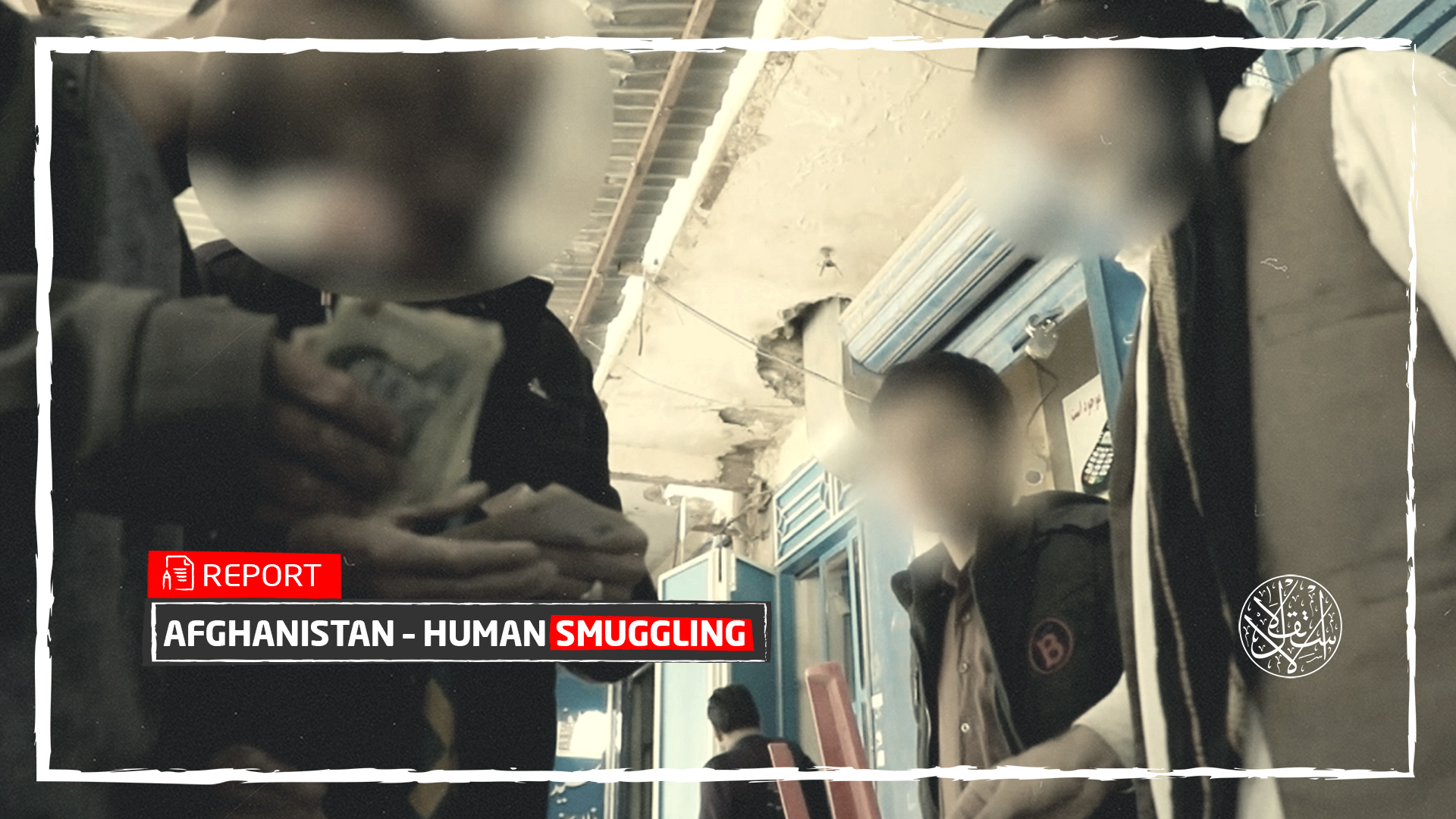
According to the report, the Taliban movement is taking control of this big garage where the cars are waiting for people to take the road, and each smuggler pays around 10 dollars to park and the payment document is shown before leaving.

However, the Deputy Minister of Refugees and Returns in the Afghan Interim Government, refused these allegations and said that the era of corruption was over with Taliban’s run and that the government “rejects bribery.”
According to the Organized Crimes and Corruption Reporting Project (OCCPR), passing by a series of crossing points, the smugglers transported the migrants “across Europe in the back of large lorries; transportation for which each migrant had to pay between €1,000 to €2,000 (US$1,150 to $2,300).”
Reportedly, the conditions in the back of the trucks are very dangerous with low temperatures and risked injury “from being sandwiched in between objects such as tree trunks and pallets over several days.”
How?
Back to the Rest of the Story, a smuggler, who works as a driver, confirms during the report that unemployment “is the main reason behind the flight of young people from Afghanistan,” and about how he works, he explained that “smuggling to Pakistan takes place in 3 stages,” where he takes people, including families and children, on the truck to the crossing with Pakistan where another person will carry them, to transfer those people to a third person after crossing the border.
˜The smuggler added that he also works “to deliver migrants to the border with Iran, but this port has another price,” stressing that it is the riskiest because of a cement wall on the border so the immigrants have to climb before entering Iran, with high possibility of shooting them by the Iranian border guards, which is confirmed by the death of 18 people during the past three months.
The Zaranj border is the most active, where lots of smugglers are spread and “everyone deals with the Iranian Toman as an official currency, in addition to the vivid hospitality sector that receives immigrants who are waiting for the departure time."
Coming to the Afghan-Pakistani border, the reporter of the Rest of the Story, met a smuggler who refused to give his name. The latter said that after the American withdrawal from Afghanistan, human smuggling flourished, thanks to strong ties with senior leaders in Afghanistan, Pakistan and Turkey who help smugglers cross the borders even if they are closed.
The International Smuggling Business
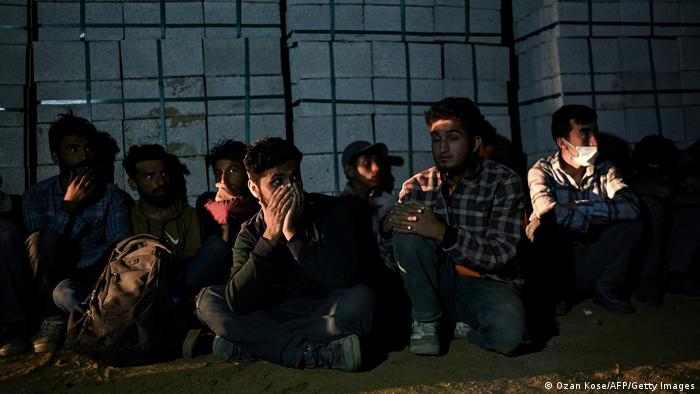
Afghanistan has been the origin of refugee streams for many years now, making it a place where human smuggling flourishes. The transfer fee for Afghan migrants bound for Istanbul is $1,500 (€1,275). The price has gone up since the Taliban took power—primarily because the Turkish border is now better secured.
The Afghan refugees in need of Baver's help have already come a long way before reaching the Turkish border. He explains how smuggling organizations are made up of thousands of people who work together across national borders.
In each country—in Afghanistan, Pakistan, Iran and in Turkey—there are people known as guarantors. They are intermediaries who receive the entire amount a refugee must pay, transferring the portion of it due to the respective smugglers via "Hawala" after the completion of each stage. Hawala is an informal money transfer system that exists worldwide and is used for remittances when traditional banking channels aren't an option.
Objections
Zabihullah Mujahid, Undersecretary of the Ministry of Information in the Interim Government, said that the United States is the responsible for creating terror in Afghanistan after its withdrawal.
Mujahid confirmed clearly in the report that the US, after its withdrawal, sent planes specifically to transport some Afghans to America and Europe. In addition to poverty and unemployment, the United States indirectly prompted many Afghans to seek to emigrate by all means, according to Mujahid.
The representative of the Afghan government at the United Nations, Sohail Shaheen, also denied the accusations against “some members of the interim government of working in facilitating or participating in smuggling,” insisting that smuggling did not come since Taliban gained control, but rather it was part of a policy of deliberately impoverishing the Afghan people.
Shaheen explained that “the sanctions imposed on Afghanistan exacerbate the situation and push many Afghans to emigrate, as well as exacerbate the humanitarian crisis in the country.”
He also stressed that “the Taliban is working on to manage the situation and impose security, which will stop those smuggling networks.”