From Gaming App to Youth Uprising: How Discord Became the Voice of Morocco’s Gen Z
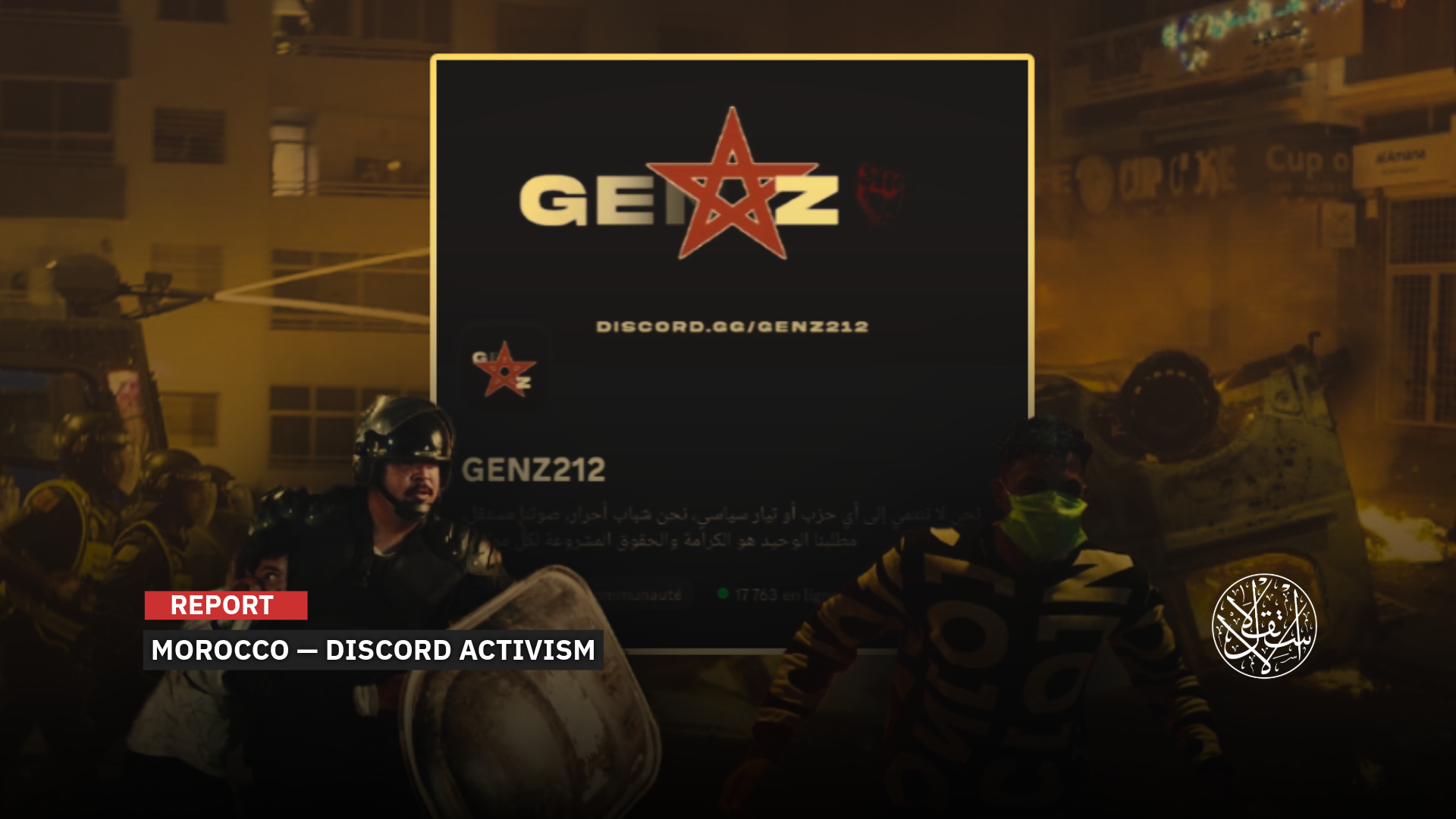
Discord is a voice, text, and video platform where users can create and moderate groups of any size.
The group chat app Discord, popular among Gen Z in Morocco, particularly those aged between 18 and 24, has become a snowballing force, growing larger by the day and playing a central role in moving youth anger over corruption and the cost of living from phone screens to the streets.
Discord, used by young people in Morocco, Nepal, Madagascar, Kenya and beyond to organize protests, has shifted from a gaming app to a new platform leading grassroots movements, threatening to topple governments.
It has become a key tool in the modern uprisings of Gen Z, especially in Morocco and Nepal, enabling fast protest coordination, collective internal organization, digitization of demands, and genuine youth participation.
While it is far from a perfect medium, with risks of fragmentation, distortion, and political blackmail, its influence in reshaping youth-led protest is undeniable, changing not only how protests look but how fast they move and what they demand.
This has prompted some Arab regimes to consider banning or monitoring the app, fearing that these signals of unrest could spread.
What is Discord?
Discord is a voice, text, and video communication platform that allows users to create “servers” divided into thematic channels and moderated by administrators. It offers a greater degree of privacy than most traditional social media networks.
The story of Discord began with American entrepreneur Jason Citron. According to Newsweek on October 3, 2025, it started as a gaming video app launched by a small company called OpenFeint, which specialized in tools for mobile games, back in 2011.
In 2012, Citron began working with his friend Stanislav Vishnevskiy on a new iPad-based multiplayer fighting game called Fates Forever. One major problem they encountered was the need for players to communicate during gameplay.
To fix this, Jason and Stanislav created an in-game chat feature that was fast, simple, and didn’t require external applications.
Ironically, by 2015, Fates Forever failed. But its chat feature didn’t. The team decided to develop it as a standalone, free application available on both desktop and mobile. They called it Discord.
The core idea behind Discord is built on small chatrooms called “servers.” Each server functions like a hotel room, where a group of people interested in a specific topic can communicate through text or voice.
As Gen Z adopted the platform, its user base grew dramatically. Today, the app is valued at $15 billion, with more than 150 million users. According to Reuters, the company has rejected acquisition offers from tech giants like Microsoft.
Discord itself reports over 200 million monthly active users worldwide, collectively spending more than 1.9 billion hours per month in chat and gameplay.
Its servers can host massive communities. One of the largest, the Midjourney server, has over 20.4 million members.
The app’s major boom came during the COVID-19 pandemic, when families, student groups, musicians, and others started creating private chatrooms for safer, ad-free digital spaces.
As more Gen Z users gravitated toward Discord, some youth groups shifted from casual chat to civic organizing. Global media outlets began describing Discord not just as a failed game spinoff, but as a virtual youth parliament. A report in The New York Times captured this evolution.
The app has also been linked to high-profile events. In 2023, The Washington Post published a story titled Discord Leaks, reporting on the release of classified documents about the Russia-Ukraine war and U.S. intelligence via Discord chatrooms.
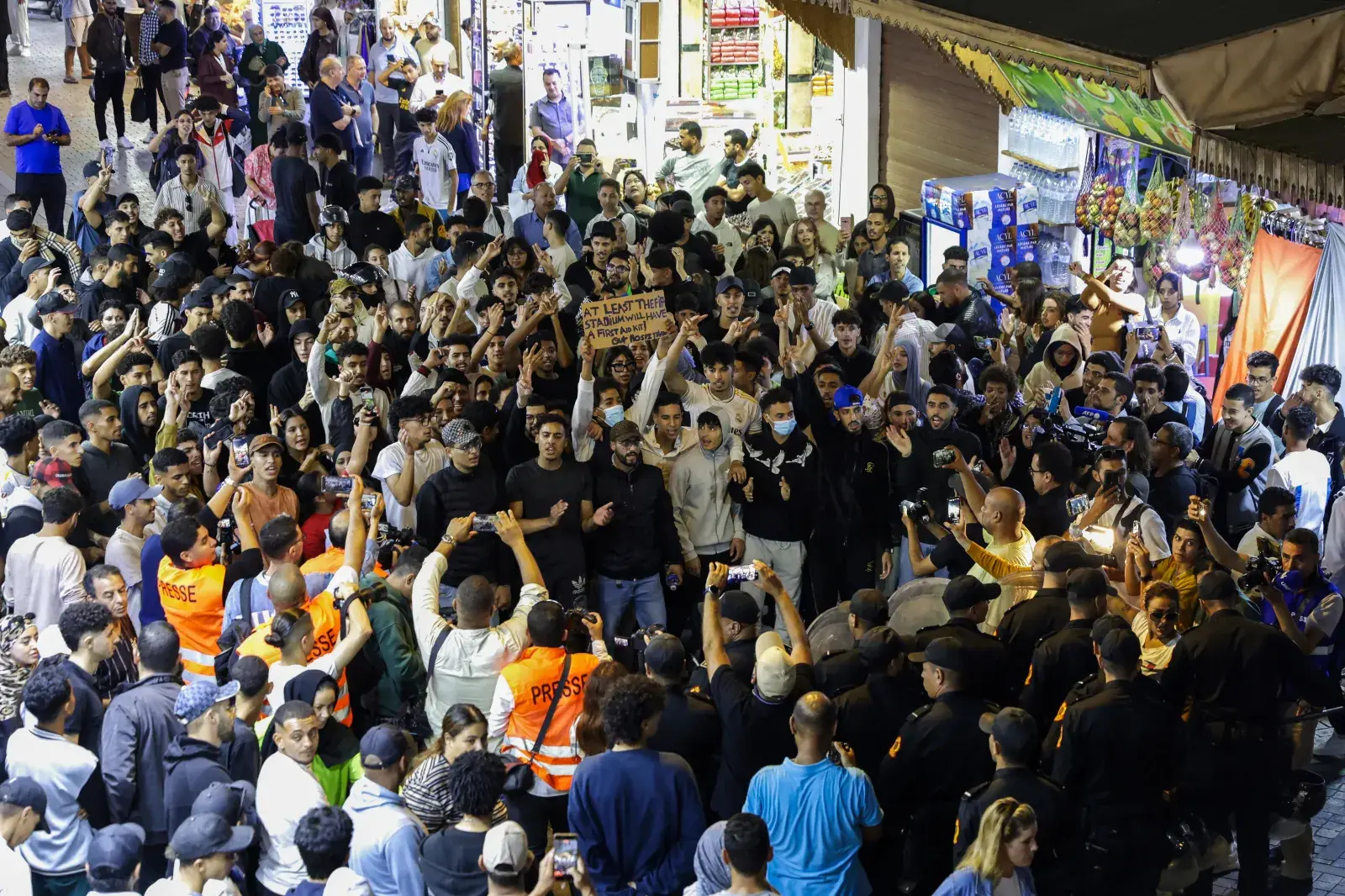
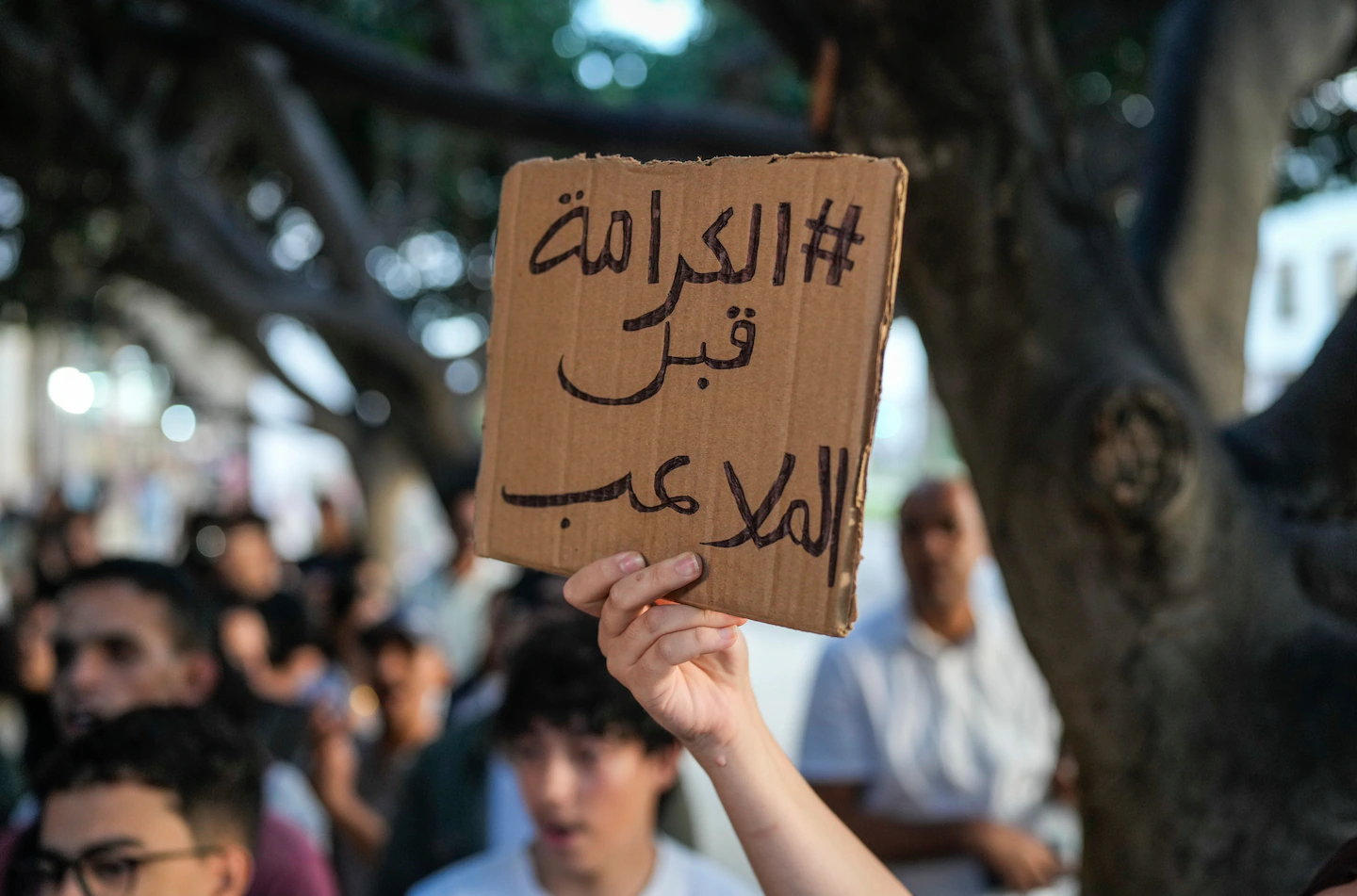
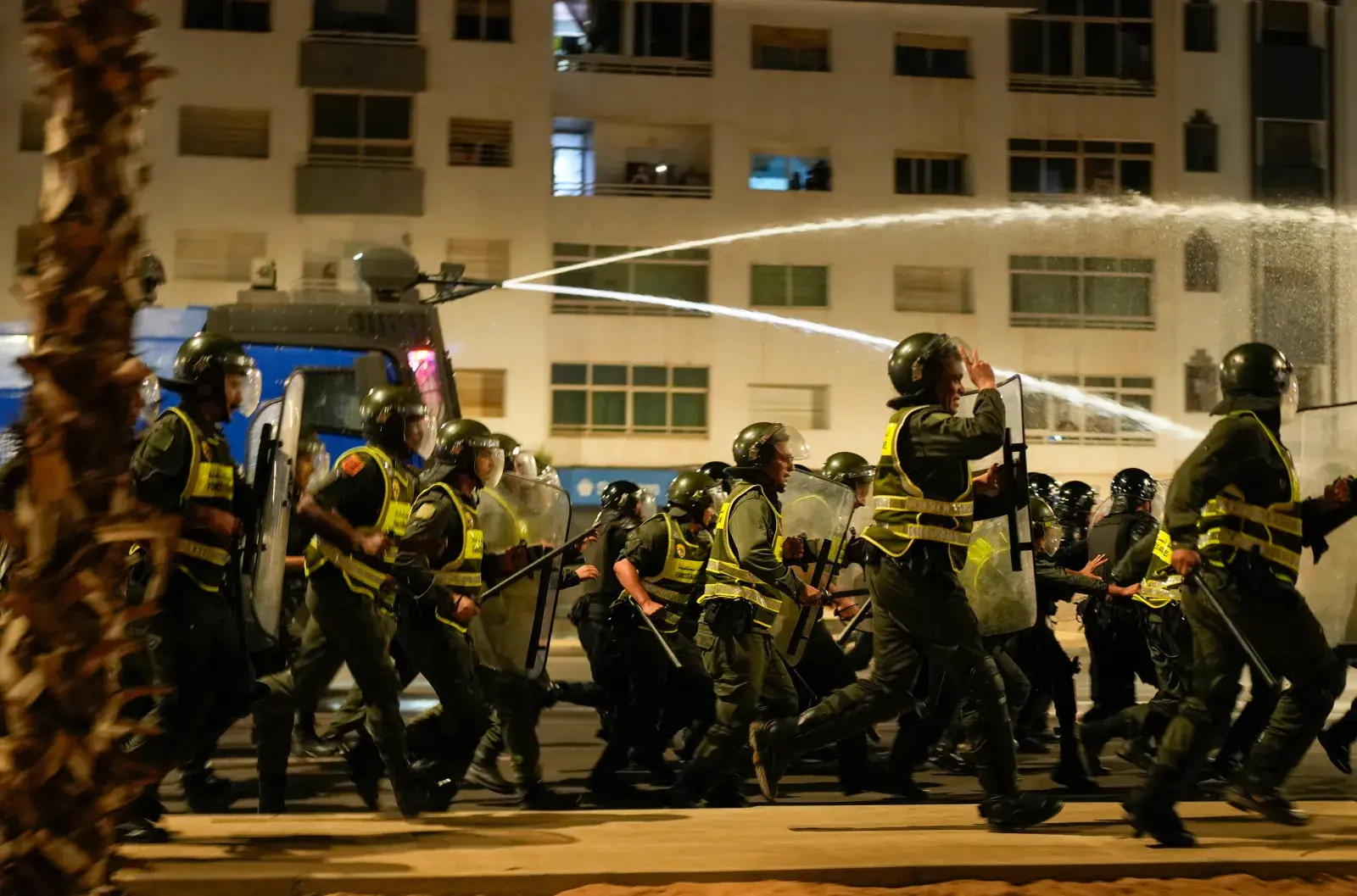
In Morocco, the platform became a political flashpoint. The group GenZ212 used Discord servers to debate corruption and the government’s decision to fund the 2030 World Cup over healthcare and education. Within days, the group’s servers grew from 3,000 to 190,000 members. Protests and arrests soon followed.
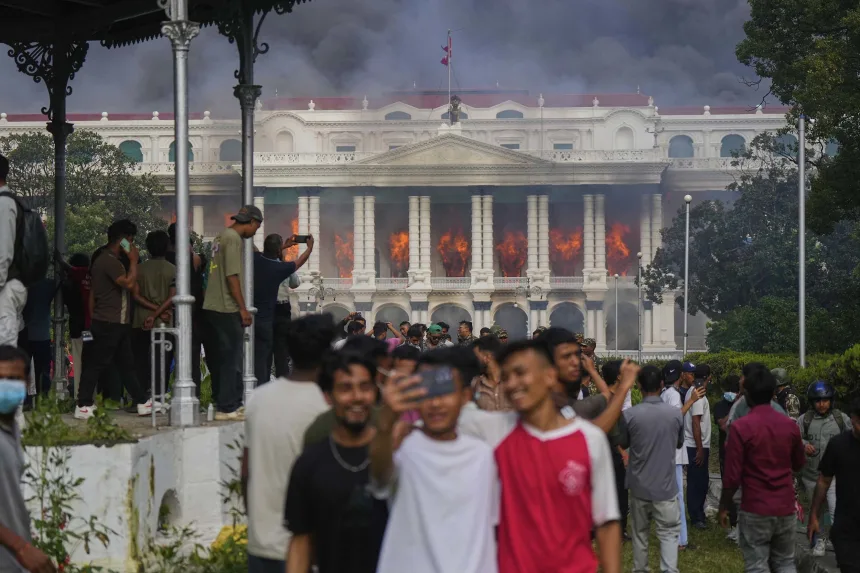
In Nepal, after the government banned 26 social media platforms in September 2025, young protesters from Gen Z turned to Discord. There, more than 160,000 users built a virtual parliament and even voted to appoint a judge as interim prime minister.
Discord’s growing reach has pulled it into unexpected controversies. In the United States, the platform was used to discuss the assassination of far-right Yemeni-American activist Charlie Kirk. In one Discord chatroom, a young man named Taylor Robinson confessed to carrying out the attack.
Part of Discord’s appeal lies in its technical design. The app connects users directly without routing calls through a central server, making calls faster and clearer. Later, voice calls between users were encrypted end-to-end to protect privacy.
Still, Discord faces a set of serious risks. One is the platform’s decentralized leadership, which makes it difficult to moderate harmful content. Extremist groups or bad-faith actors can distort or hijack peaceful youth movements.
There’s also the problem of informational extremism and misinformation. On large servers, it becomes nearly impossible to fact-check every post, and misleading content can spread easily.
In Morocco, internal divisions among young organizers exposed another challenge. According to the Moroccan outlet Hespress on October 5, 2025, some users proposed transforming the movement into a political party. Others rejected the idea, fearing co-optation or partisan labeling.
There are also concerns around authenticity and transparency. It’s difficult to verify whether every member in a server is truly local or actively involved on the ground. Virtual voting doesn’t always translate into real-world commitment or action.
As Discord’s influence continues to expand, it is no longer just a gamer’s playground. It is now a space where the next generation is experimenting with digital democracy, radical transparency, and new forms of collective power, one server at a time.
Why Discord Matters to Gen Z?
Gen Z users have embraced Discord because it allows for unrestricted discussion, fast coordination that makes protest mobilization easier, and decentralized communication. It has also become a tool for bypassing censorship, surveillance, or disruption targeting larger platforms.
One of the app’s major advantages is the freedom it offers. It operates outside traditional political structures, which means young people no longer need, as was often the case, political parties or unions to act on their behalf.
In this way, Discord has reduced the traditional mediating role played by partisan forces.
Yet, despite its decentralized nature, Moroccan Gen Z activists used Discord servers to vote on selecting an interim figure to act as a symbolic leader or prime minister.
This was reported by the French newspaper Le Monde on October 5, 2025, even though the identities of all Gen Z members on Discord remain obscured.
Discord’s significance for Gen Z lies in its ability to overcome bans or restrictions imposed on other social media platforms. It also possesses unique strengths that enhance its role in fueling uprisings.
Among those strengths is speed. Protest channels, voting polls, and organizational decisions can be set up in minutes.
Another advantage is relative privacy. Private or closed servers reduce direct oversight when compared to mainstream social platforms.
Its decentralized structure is also key. With no official leadership, movements on Discord are harder to suppress. The absence of a clear hierarchy gives the platform resilience, and makes crackdowns more difficult.
Discord also excels at internal organization and collective participation. Young people can debate demands, suggest actions, vote on next steps, and manage the entire process within one or several servers.
Crucially, the platform has shown that Gen Z’s demands go beyond social issues. They are calling for transparency, accountability, and genuine political engagement.
There has, however, been controversy over whether Discord collects users’ IP addresses, raising concerns about privacy and surveillance.
Mustapha Adib, a former Moroccan air force officer and telecommunications engineer, responded by noting that all messaging apps, including WhatsApp, Telegram, and Messenger, face the same issue.
They rely on an embedded technology called WebRTC (Web Real-Time Communication), which can potentially expose user IPs.
Generation Z, born between 1997 and 2012, has come of age in a world marked by deepening political polarization, a growing climate crisis, economic uncertainty, and a pandemic that laid bare existing inequalities.
Speaking to CNN on October 4, 2025, Bart Cammaerts, professor of politics and communication at the London School of Economics, said this generation feels they haven’t been given what they deserve and that “their interests not represented or taken into account.”
As a result, Gen Z is increasingly skeptical of liberal representative democracy and uncertain about their future. Their turn to protest reflects this distrust, even though, as Cammaerts notes, they still value democratic principles and collective decision-making.
The New Shape of Revolutions
The Arab Spring uprisings of 2011 were marked by their use of the internet and social media platforms like Facebook. Yet, despite this digital backdrop, political parties and trade unions still held decisive influence over the shape and direction of the popular movements.
In contrast, Discord has reshaped the dynamics of modern uprisings, as seen in Morocco and Nepal. The digital space offered by the platform has enabled a renewal in youth activism, less partisan, more socially ambitious, and defined by clear, focused demands, including education, healthcare, employment, and equality.
For this reason, while the Arab Spring is often referred to as the “Facebook Revolutions,” the recent waves of unrest in Morocco, Nepal, and other regions have earned the label “Discord Revolutions,” reflecting how Gen Z-led uprisings have taken on a new form.
Discord has reduced reliance on traditional political intermediaries, such as parties and unions, and opened the door for youth participation through technology.
It has also fostered the belief that change can begin at the grassroots, not from political elites at the top of the power structure, and without waiting for government or party initiatives. This shift has increased direct popular pressure.
In late 2010, Facebook became the gold standard for organizing revolutionary activity during the Arab Spring. It spread rapidly across the Middle East and North Africa after Mohamed Bouazizi set himself on fire in Tunisia.
As the uprisings rippled across the region, tens of millions of disillusioned citizens turned to the internet to organize. Facebook emerged as the dominant tool, particularly in Egypt and Tunisia, helping activists issue protest calls, share videos, and connect people nationwide in their efforts to oust authoritarian leaders.
Fifteen years later, however, the digital generation has turned to Discord to organize anti-government movements, according to an analysis by Newsweek published on October 3, 2025.
Private servers on the platform allow activists to organize away from public view, often under pseudonyms, and make use of both text messaging and voice calls. This system has enabled a new wave of leaderless, flexible youth movements to take root.
In Morocco, the number of young participants on Discord surged rapidly, particularly through the GenZ212 channels, as users coordinated protest times and shared documents with remarkable speed, The Washington Post reported.
The digital use of Discord allowed young people in southern and peripheral cities across Morocco to coordinate their participation, even in areas with weak local organization or, at times, restricted public freedoms.
Moroccan Gen Z activists began using Discord on September 18, 2025, when they launched a server for the GenZ212 movement, with “212” referencing Morocco’s international dialing code.
They moved to the platform following what became known as the “hospital crisis,” when several pregnant women died in a local hospital in southern Morocco due to a severe lack of medical resources. The incident sparked widespread anger.
In response, they created their own space on Discord, using its channels for daily discussions, protest coordination, voting on action plans, and deciding which cities would see demonstrations, according to a report by The Washington Post on October 4, 2025.
Amid the wave of anger and growing engagement with the Gen Z platform, the number of members quickly surged from a few thousand to 200.000 within just a few days, as reported by Morocco World News.
The app played a key role in accelerating the spread of the protest movement, enabling rapid organization across multiple cities, facilitating internal discussion, decision-making, and youth mobilization.
According to Egyptian political analyst Hisham Gaafar, Morocco’s Gen Z represents the first meaningful popular response following the Operation al-Aqsa flood events.
He argued that these youth-led protests could shape the region’s future political dynamics, especially in the wake of widespread frustration over the inability to act effectively in support of Gaza.
The protests led by Gen Z had a clear impact on Morocco’s internal politics when the prime minister announced his response to the youth’s demands, without specifying any concrete measures, amid growing speculation about his possible dismissal.
On October 8, 2025, sixty prominent Moroccan figures, including politicians and intellectuals, addressed a letter to King Mohammed VI, calling for comprehensive social and constitutional reforms.
This came against the backdrop of rising protests from the GenZ212 movement, whose youth activists are demanding improvements in education, healthcare, and anti-corruption measures.
Sources
- From Morocco to Madagascar, Gen Z is taking digital dissent offline
- Morocco's unprecedented youth mobilization puts government to test
- Discord-born Moroccan youth protests split over call to enter formal politics
- What is Discord, the versatile chat app that Nepal Gen Z protesters used to install Sushila Karki as the first woman PM?
- How Discord has become a tool for youth mobilization in Morocco and Nepal
- From Morocco to Nepal, Gen Z Is Using Discord to Rise Up
- Gen Z protests are shaking Morocco. Here's what to know