An Unprecedented Shift: How the U.S.–Japan Alliance Reached Its Highest Level in 60 Years

“There are about 54,000 US troops in Japan, affiliated with the Indo-Pacific Command in Hawaii.”
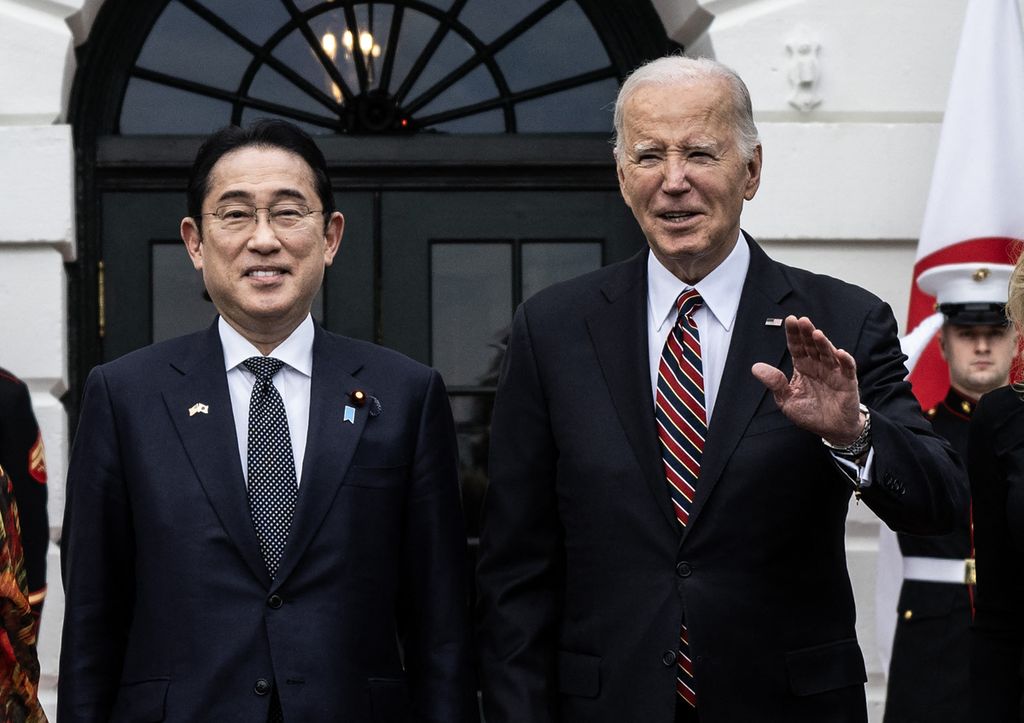
The recent U.S.–Japanese summit in Washington recently raised the level of the relationship between the two countries to the highest level it has reached since the two countries signed the Mutual Defense Treaty in 1960 until today.
U.S. President Joe Biden and Japanese Prime Minister Fumio Kishida announced the largest upgrade to the security alliance between their countries in more than 6 decades, which ensures coordination between the military leaderships of the two countries and the joint development of advanced military technologies.
The plan also includes restructuring the U.S. military command in Japan to enhance operational planning, training, and communication bases between the two countries.
The United States believes that Japan could become a potential production base for munitions, including PAC3 missile systems, which could be re-exported to Ukraine.
There are about 54,000 U.S. troops in Japan, affiliated with the Indo-Pacific Command in Hawaii.
Despite the expanded strategic military cooperation, their economic partnership entails red lines; President Biden, who is nominated for a second term in the November elections, opposes the Japanese company Nippon Steel's acquisition of the prestigious American steel manufacturing company, U.S. Steel.
However, a large number of Japanese companies have been part of the U.S. industrial landscape since the 1980s, especially in the automobile industry (Toyota, Honda, Nissan).
U.S.–Japan Defense Cooperation
On April 10, U.S. President Joe Biden received Japanese Prime Minister Fumio Kishida at the White House, announcing the strengthening of vital partnerships in the Indo-Pacific region, defense cooperation between Washington and Tokyo, and Japan's military capabilities to deter challenges and risks, in a direct message to China, which seeks to enhance its military and economic influence in the region.
According to the agreement, the U.S. and Japanese armies will work together to harmonize the work of the military forces, while the United States will commit to supporting some Japanese military projects on the material and technological levels.
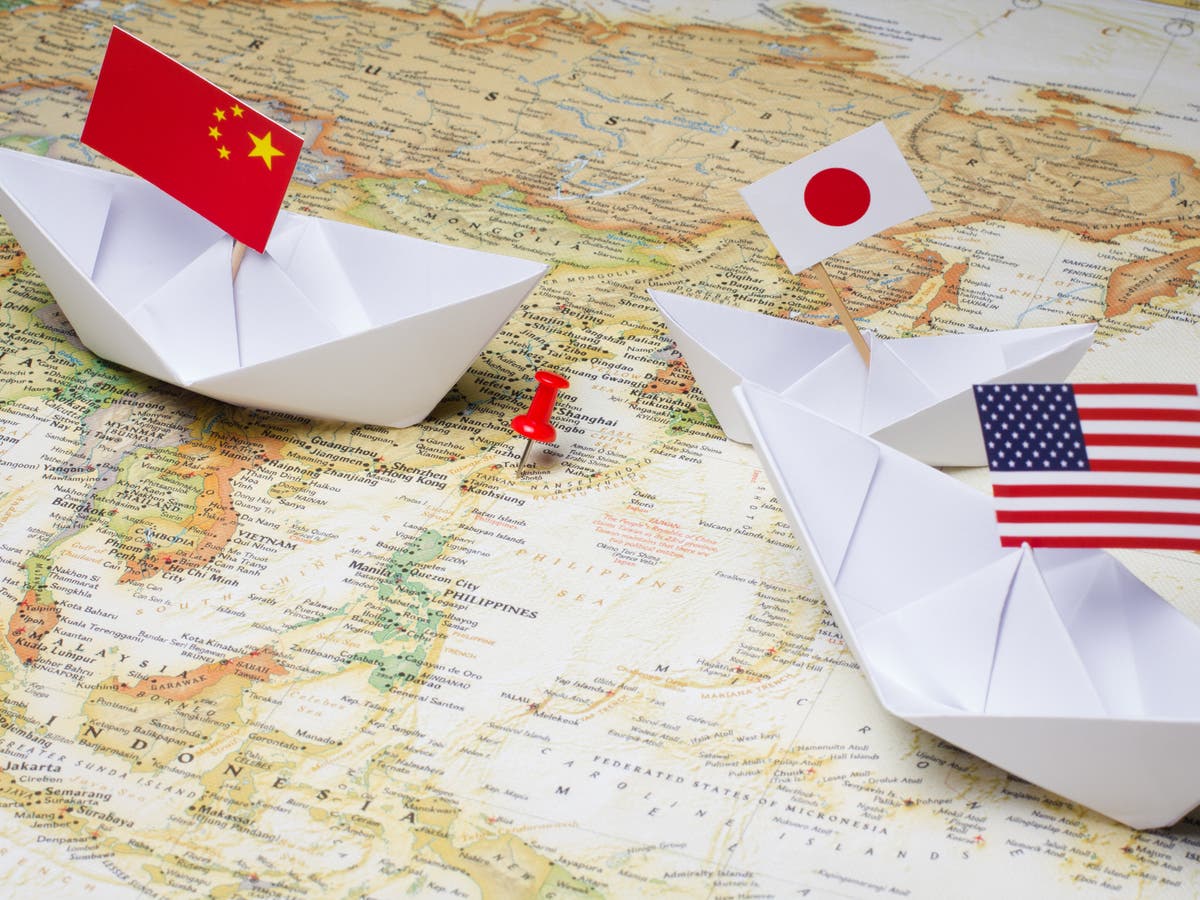
Biden and Kishida also expressed strong opposition to any attempt by China to unilaterally change the status quo by force or coercion in the East China Sea, where Beijing claims the Senkaku Islands under Tokyo's control.
On the Taiwan issue, the two leaders stressed the importance of maintaining peace and stability and encouraged the peaceful resolution of differences between Beijing and Taipei.
Without naming China, Biden and Kishida denounced the destabilizing actions in the South China Sea, appearing to blame the Chinese dragon for many of the recent incidents between Beijing and Manila over a disputed reef.
In his speech to Congress, Kishida called China's stance unprecedented and the greatest strategic challenge, not only to the peace and security of Japan but to the peace and stability of the international community at large.
Illustrating Japanese concern about the Chinese threat, Kishida told U.S. lawmakers, "Ukraine of today may be East Asia of tomorrow."
On the other hand, Beijing expressed its dissatisfaction with the Washington summit that brought together Biden and Kishida, who announced the most important defense partnership between their countries since the Cold War, noting that it was subjected to defamation and attack during it.
Chinese Foreign Ministry spokeswoman Mao Ning said in a press conference on April 10 that U.S.–Japan relations should not target other countries or harm their interests and should not undermine regional peace and stability.
She defended Beijing's claims in the East and South China Seas, accusing Washington and Tokyo of distorting the facts and the truth to portray an aggressive China.
China's Influence
In this context, it is possible to understand the bilateral, trilateral, and multilateral alliances being forged in the Indo-Pacific region, which China sees as an encirclement and threat to it.
The U.S.–Japanese summit statement announced their vision for cooperation in building an air defense network between the United States, Japan, and Australia to confront the air and missile threat.
The statement also announced that the members of the AUKUS coalition (Australia, Britain, and the United States) are considering joint technological cooperation with Japan in areas such as artificial intelligence and self-driving systems, in addition to joint exercises between the United States, Japan, and Korea.
Although the United States is keen on Japanese participation in the second pillar, officials and experts say that there are still obstacles due to Japan's need to adopt better cyber defenses and stricter rules to protect secrets.
The statement also welcomed Japan's increase in its defense budget to reach 2% of the general domestic product (GDP).
Last year, the United States succeeded in bringing together Japan and South Korea in a historic summit at Camp David that produced an alliance between the three countries that see China's growth as a threat to them and to security in the region.
This summit was considered a resounding success for President Biden, who made confronting China and its influence a central goal in the U.S. strategy in the Indo-Pacific region.
The United States and Japan share another alliance in the region, the QUAD, which brings together the United States, Japan, India, and Australia.
Although all members of this alliance have different views on its nature, they share their concerns about China's increasing influence in the region.
In turn, a Biden administration official indicated that Washington and Tokyo are seeking to conclude deals in the fields of artificial intelligence (AI), cloud computing, and aviation, which will contribute to creating more American jobs.
The field of space is another area of cooperation, as Japan hopes to involve its first astronaut to land on the moon through the American Artemis space project.
Joining that intelligence sharing agreement — which consists of the U.S., Canada, Australia, New Zealand, and the UK — is viewed by Japanese security experts as a means of adding more protection against China's provocations.
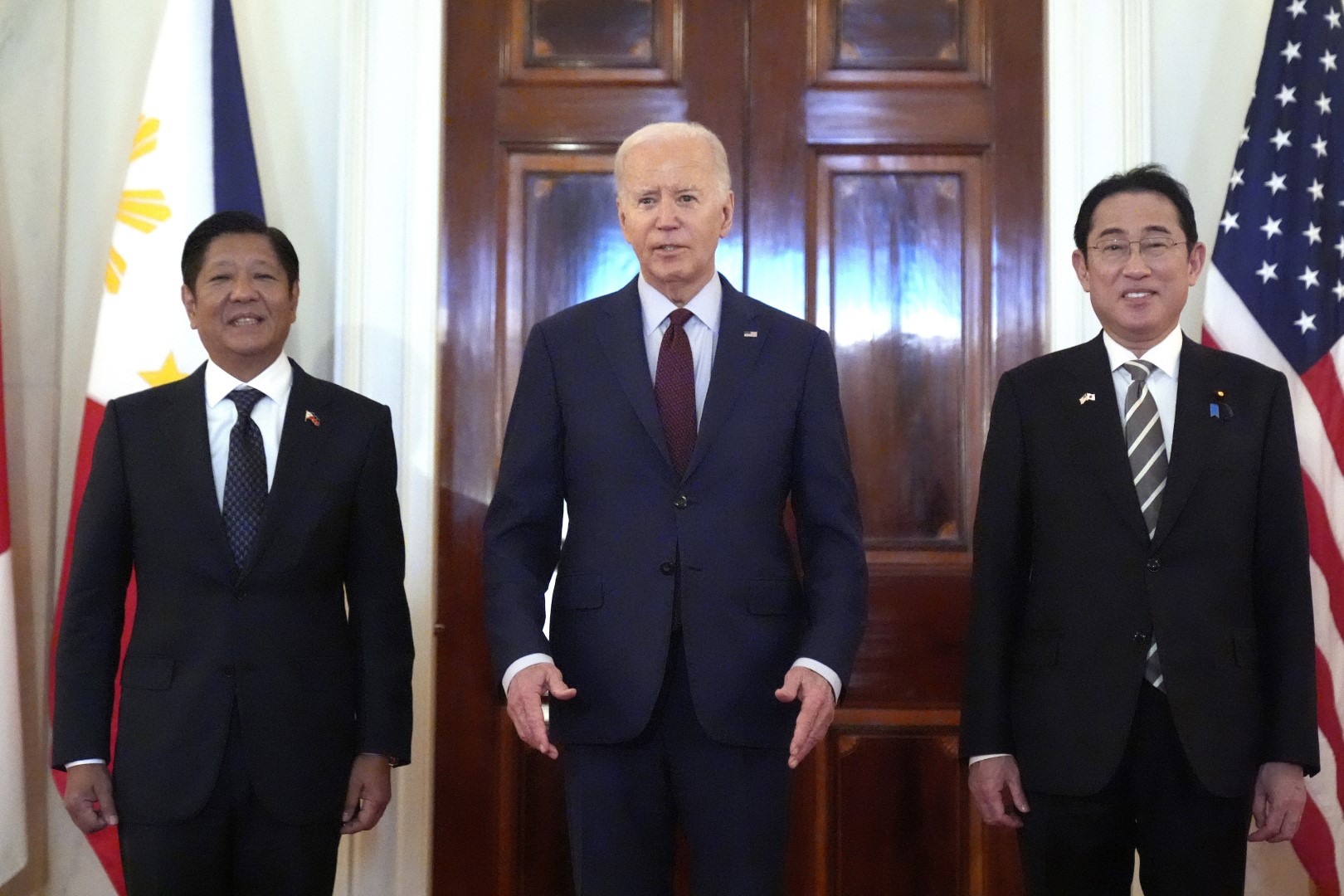
Last week, in parallel with the bilateral summit between the two countries, a trilateral summit was held between the United States, Japan, and the Philippines, which is facing a crisis with China over maritime rights.
Biden stressed during the summit that U.S. defense commitments to Japan and the Philippines are firm, adding that any attack on Philippine aircraft, ships, or armed forces in the South China Sea will invoke the mutual defense agreement.
The Philippines has had a mutual defense agreement with the United States for about 70 years, but there are fears that it could be tested in light of the dangerous escalation of tensions related to the Second Thomas Atoll and the Spratly Islands.
Last year, U.S. President Joe Biden and Philippine President Bongbong Marcos announced a new agreement that gives the U.S. Navy more military bases on the islands, while tension around them is increasing.
The U.S.–Philippine relation has become closer since President Marcos came to power, unlike his predecessor, Rodrigo Duterte, who was neutral in the dispute between Washington and Beijing.
The United States, Japan, and the Philippines are expected to announce new joint naval exercises alongside Australia, similar to the exercises that took place in the region last weekend, according to officials.
Effective Military Alliance
Japan, often described as the United States' most important ally in Asia and its largest source of foreign direct investment, is playing an increasing global role, after a series of security law changes in the past decade that changed its pacifist constitution and raised levels of defense military spending.
The escalation of regional tensions in the Indo-Pacific region has led to an unprecedented shift in Japan's defense and military approach.
Over the past two years, Japan has significantly increased its security capabilities and increased its defense spending by 50% compared to 2022 levels, which means that Japan's total defense spending will reach about $315 billion during the period from 2023 to 2027.
Last December, the Japanese government approved its largest defense budget ever at $300 billion to develop and purchase missile defense systems and long-range ground attack missiles.
This huge spending comes after the defense spending gap between China and Japan has widened dramatically over the past two decades.
Furthermore, Japan has become the world's largest F-35 customer after the United States, with plans to purchase 146 fighter jets.
Japan will begin deploying Tomahawk missiles, which have a range of up to 1,600 km, on its military ships in 2025 after Washington agreed to sell 400 missiles to Tokyo in a deal estimated at about $2.35 billion.
Although Japan relies heavily on the United States for security and both sides seek to build a more effective bilateral military alliance, a number of challenges stand in the way of achieving this goal.
Tokyo fears that Donald Trump's arrival to the White House next November will reduce Washington's interest in alliances or increase scrutiny of what security partners contribute to the United States.
Therefore, Japan sought to expand its bilateral and multilateral security relations through agreements with other partners, including Australia and Germany. In addition, Japan joined Britain and Italy in a joint project to develop the next generation of combat aircraft.
Ambitious defense spending plans may conflict with Japan's finances given the country's huge national debt and widespread opposition to tax hikes, which raises questions about the long-term sustainability of increased defense budgets.
Cooperation in the field of defense industries is still limited between Washington and Tokyo, as Japan has relied heavily on purchases of advanced American defense systems for several decades. The absence of such cooperation constitutes a weak point in the alliance between the two countries.
Sources
- Biden announces new steps to deepen military ties between the U.S. and Japan
- US, Japan, Philippines strike deals on defense, investment at leaders' summit
- US, UK, Australia consider Japan's cooperation in AUKUS security pact
- US approves the sale of Tomahawk cruise missiles to Japan
- Japan’s security and defence policy in flux [Research]