America Unmasked: Reading the Israeli Attack on Qatar Through a Strategic Lens
The U.S.-backed Zionist arrogance calls for a strategic awakening before it’s too late.
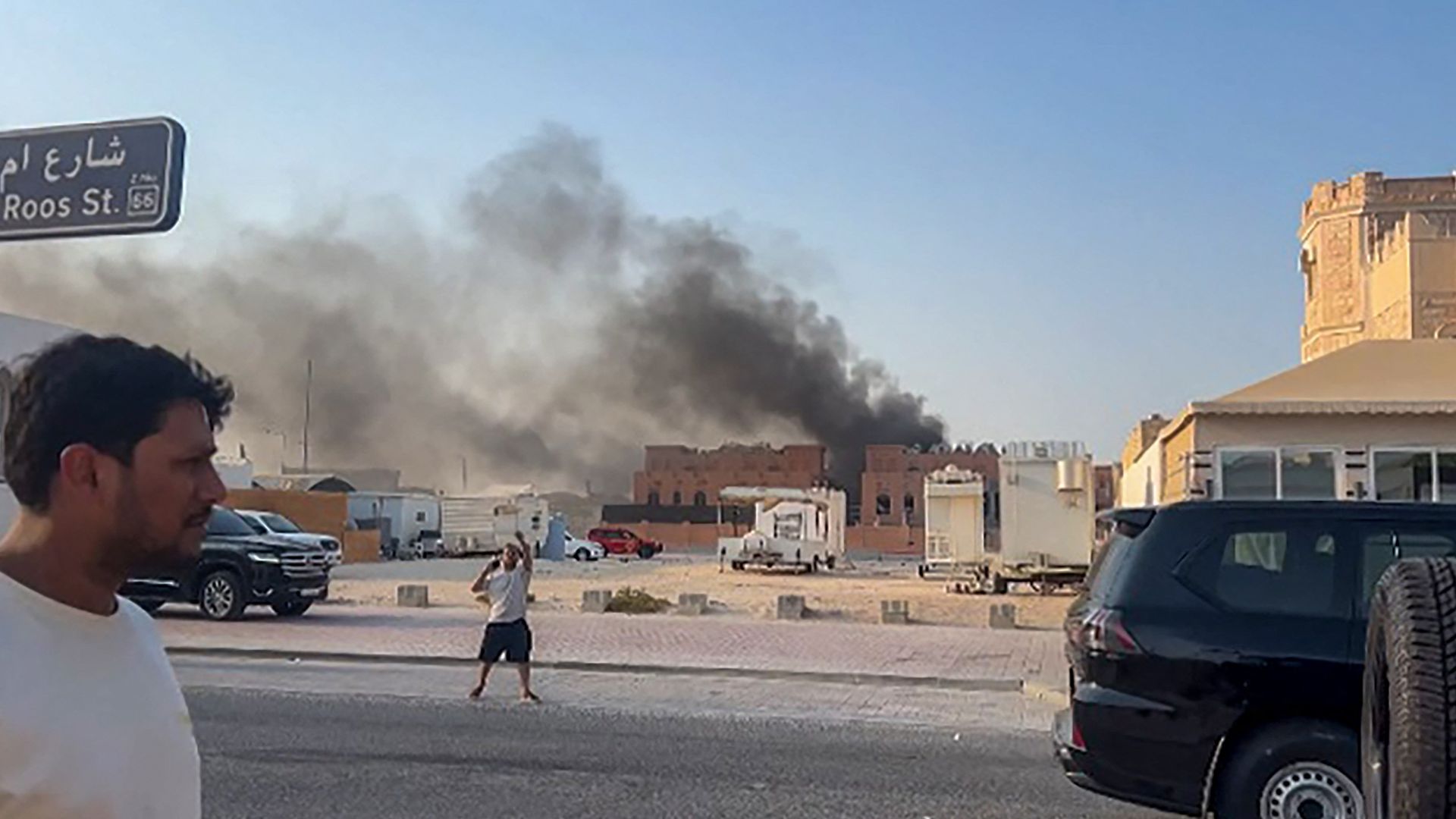
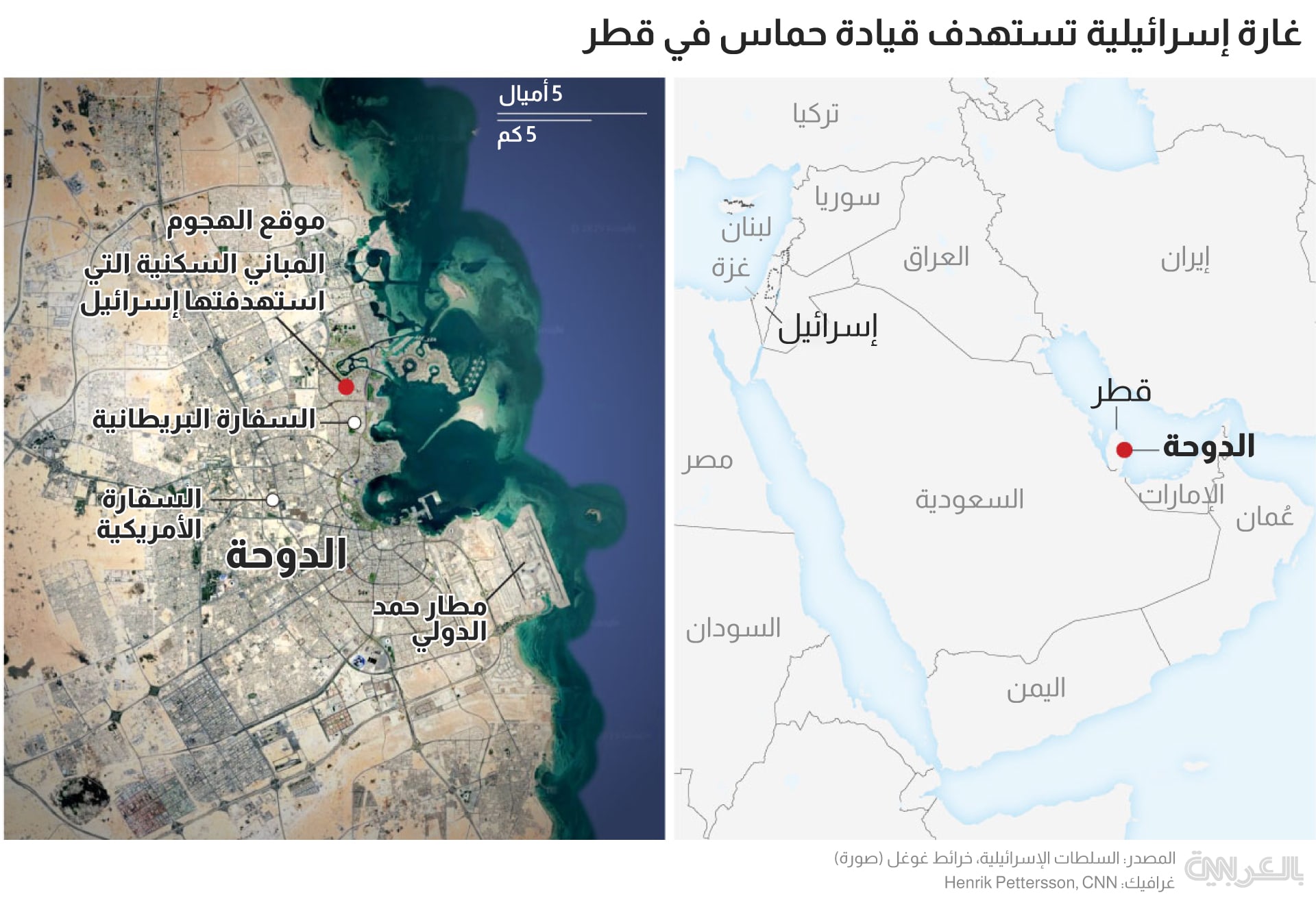
Following its airstrikes on five Arab countries on September 9, 2025, Syria, Yemen, Lebanon, Gaza, and Qatar, the Speaker of the Israeli Parliament, Amir Ohana, published a video of the bombing of Doha, writing, “This is a message to the entire Middle East.”
This was the most significant message behind the Israeli aggression, encapsulated in the idea that the hand of “Israel” will reach every country in the Middle East, whether allied with the United States or opposed to it.
Qatar itself is one of Washington’s most important allies in the region, it hosts the largest American military base in the Middle East, gifted former president Donald Trump a private jet, and paid him $1.5 billion.
The same sentiment was echoed by Israeli Prime Minister Benjamin Netanyahu when he said, “Our long arm reaches Gaza, Yemen, Beirut, and anywhere else that is necessary." The statement came as part of his vision for a “new Middle East” dominated by “Israel.”
He was referring to “Tel Aviv’s” bombing of seven countries so far, six of them Arab, since the start of “Israel’s” war of extermination in Gaza on October 7, 2023, according to the American outlet Axios on September 9.
But it was the direct American involvement in the attack on a “friendly” state, from giving the green light, to passing on coordinates collected by U.S. surveillance aircraft, to disabling Qatar’s American-made air defense systems, that exposed the ugly face of Washington, revealing that it has no true ally but “Israel.”
Implications and Repercussions
The most telling implication of the Israeli aggression on Qatar is that American protection does not, in fact, offer real protection, nor does it truly extend to the Gulf states.
As some analysts put it, “those who rely on the Americans are left exposed.”
“Israel” struck Qatar despite it being a close U.S. ally, hosting an American military base, and Washington not only failed to defend it, but implicitly endorsed the attack.
The messages behind the strike on Qatar were unambiguous: no country enjoys true American protection except “Israel.”
All others are not seen as genuine allies, except on paper, and only insofar as they serve and safeguard U.S. interests, not for the sake of being protected by Washington.
The Washington Post reported on September 10 that the attack revealed “Israel” has no interest in negotiating with Hamas, as it sought to eliminate those it was supposed to be negotiating with over a ceasefire.
The Israeli airstrike was described as a “major strategic gamble” that would “upending ceasefire talks” and the chances of reaching a prisoner exchange deal.
The paper noted that this was why President Trump was unusually harsh in his criticism of “Israel” for carrying out the strike.
Trump wrote on Truth Social, “The bombing of Qatar does not serve the goals of either Israel or America,” although he described “the elimination of Hamas” as a “a worthy goal.”
Qatari officials accused “Israel” of sabotaging the ceasefire negotiations.
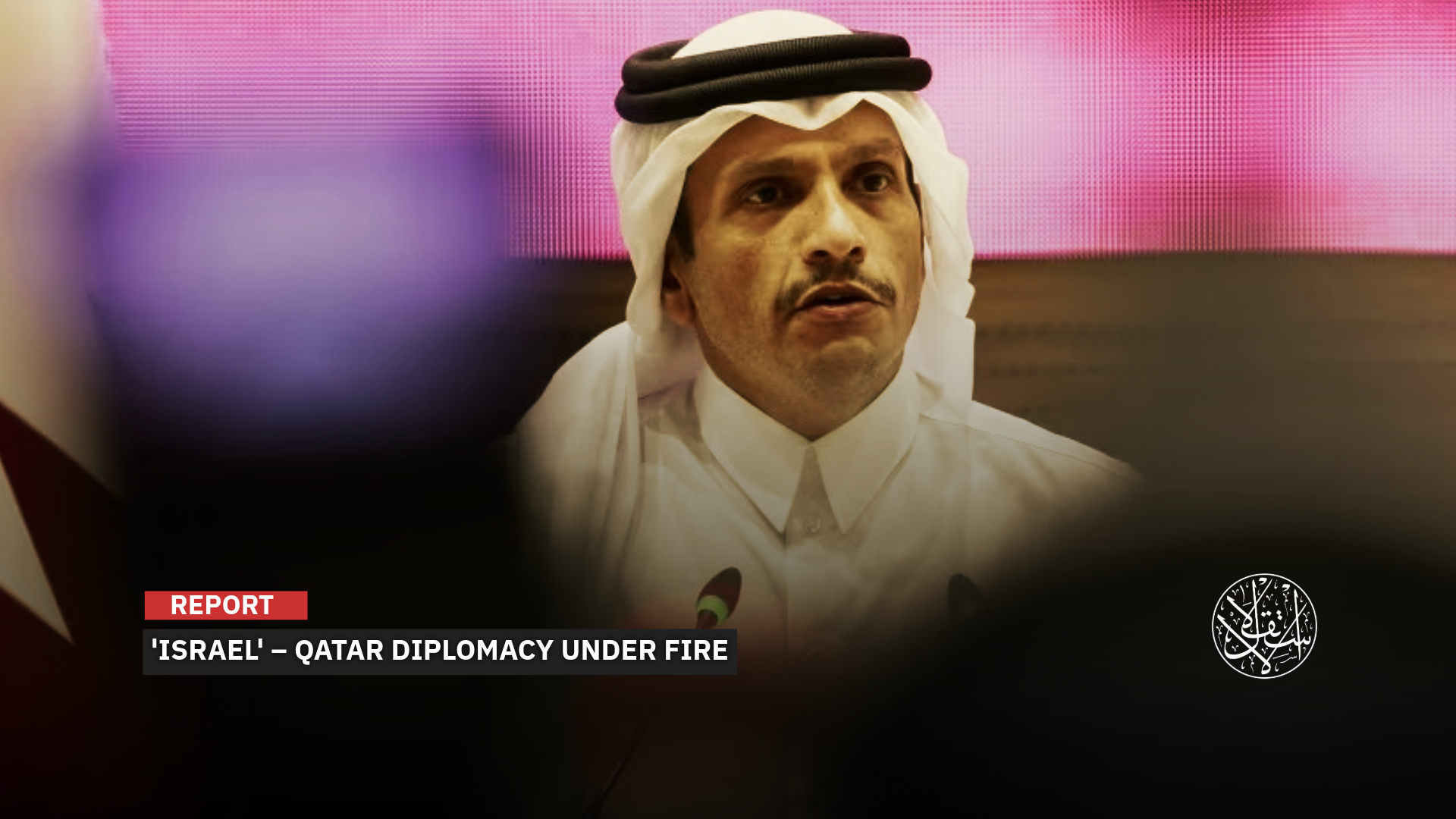
Qatar's Prime Minister Sheikh Mohammed bin Abdulrahman al Thani says Israeli Prime Minister Benjamin Netanyahu has "killed any hope" for the release of the remaining hostages being held in Gaza following air strikes on Doha on Tuesday.
“I was meeting one of the hostages' families the morning of the attack,” said al Thani in an interview with CNN.
“They are counting on this mediation. They have no other hope for that.”
“What Netanyahu has done, he just killed any hope for those hostages,” he added.
Amid speculation that Qatar may suspend its mediation role, he added that “Israel’s” attempt to assassinate the political delegation it was negotiating with cast serious doubt on the occupation’s commitment to peace.
Speaking to CNN on September 10, 2025, al Thani said the Israeli aggression on Doha had eliminated any remaining hope for the Israeli prisoners still held in Gaza, and that he could not predict how Hamas would respond.
He confirmed that Doha is reassessing its mediation role and the future of Hamas’s presence in Qatar, adding that his country is now consulting regional partners on a collective response to the Israeli strike. He stressed that “the entire Gulf region is now in danger.”
Khaled Elgindy, an expert on Palestinian affairs and a researcher at Georgetown University, predicted the collapse of Gaza ceasefire talks, which he said had become a “cover” for Netanyahu to intensify “Israel’s” war.
“To kill the people you’re supposedly negotiating with is audacious, but it’s perfectly in line with everything Israel has done over the last two years,” he said.
Daniel Shapiro, a former U.S. ambassador to “Israel,” said the attack in Qatar could put them in even greater danger.
“There was already significant risk to the Israeli hostages and now that’s heightened even more because of the possibility of some sort of Hamas retaliation,” he said. “There was no real optimism of a ceasefire deal before today from the Israeli side and certainly less so now.”
The attack prompted Hamas to publicly double down on its demands. In an official statement issued on September 9, the group declared:
“The cowardly assassination attempt will not change our position or our demands, which are, an immediate end to the aggression against our people, a full withdrawal of occupation forces from the Gaza Strip, a genuine prisoner exchange, humanitarian aid for our people, and reconstruction.”
“The targeting of the negotiating delegation at the very moment it was discussing the latest proposal by U.S. President Donald Trump leaves no doubt that Netanyahu and his government have no intention of reaching any agreement, they are deliberately working to sabotage every opportunity,” the statement added.
Trump Is Involved
Questions have been raised over whether the true aim of the U.S. initiative to halt the war in Gaza was to lure Hamas leadership into gathering in one place, in preparation for targeting them.
The Trump proposal was vague, containing five ambiguous points, none of which included an Israeli withdrawal or a cessation of hostilities.
American and Israeli journalists have suggested that the Trump administration is now seeking to distance itself from the targeting of Hamas leaders in Doha, attempting to deny involvement following the failed strike. But in truth, Trump is lying, and he knows he is lying.
Western reports noted that an assassination attempt on Hamas leaders in Qatar could not have taken place without American approval.
Some suggested Trump’s proposal to Hamas may have been a trap, a bait-and-switch designed to lure them into a false sense of engagement, similar to what happened during the attack on Iran, when a deadline was given, followed by a strike.
Channel 12’s military affairs editor, Amit Segal, wrote sarcastically, “Do you really think Israel would carry out an attack on a country that hosts a U.S. military base without prior coordination and approval from the United States?”
He continued, mocking those who deny the coordination, “If that’s the case, I have land on Mars to sell you.”
Israeli officials confirmed that the United States gave the green light for the Doha strike, according to Israeli newspapers, despite Trump denying any role in the attack and claiming, via the Truth Social platform, that his administration had learned of it through the U.S. military.
The news site Axios, known for its proximity to the Trump administration, reported on September 9 that Ron Dermer, a senior adviser to Netanyahu, was aware of the attack on Qatar while meeting in Miami with Steve Witkoff and Trump’s son-in-law Jared Kushner, and may have informed them of the plans.
The White House press briefing held by spokesperson Karoline Leavitt to deny Trump’s involvement and explain the administration’s position was described as a “scandal” in itself, unintentionally confirming the very thing it aimed to refute.
Leavitt said that the U.S. believes the strike on Hamas “does not advance Israel or America’s goals,” and that “the president feels very badly about the location of this attack.”
“The president views Qatar as a strong ally and a friend of the United States,” Leavitt added.
What drew further ridicule was Leavitt’s assertion that, upon learning of the attack, “President Trump immediately directed special envoy Witkoff to inform the Qataris of the impending attack, which he did.”
“Eliminating Hamas, who have profited off the misery of those living in Gaza, is a worthy goal,” effectively expressing both disapproval and support for the strike on Qatar at once.
In a particularly striking contradiction, Leavitt confirmed that Trump called Netanyahu after the attack, and that the Israeli prime minister told him “he wanted to make peace and quickly.”
According to Leavitt, President Trump believes the “unfortunate incident,” as she called the attack, “could serve as an opportunity for peace.”
However, Qatari Prime Minister Sheikh Mohammed bin Abdulrahman al Thani denied on September 9 the reports claiming Washington had informed Qatar in advance of the Israeli attack.
“U.S. officials first warned Qatar of the Israeli attack 10 minutes after it began,” al Thani said.
Despite this, The Wall Street Journal reported on September 10 that Trump had a “sharp” phone call with Netanyahu, during which he expressed deep frustration at being caught off guard by the attack on Qatar.
He reportedly told Netanyahu that the decision to target Hamas political leaders in Doha was not a “wise decision.”
Senior U.S. officials cited by the paper said Trump was angered by learning of the strike from the U.S. military while it was underway, rather than from “Israel,” especially as the strike took place on the territory of a U.S. ally that was mediating to end the Gaza war.
“This was a decision made by [Israel's] Prime Minister Netanyahu; it was not a decision made by me,” Trump said.
He also added that he instructed Secretary of State Marco Rubio to finalize a defence agreement between the United States and Qatar.
Because the operation somewhat embarrassed Trump with his ally Qatar, Netanyahu brazenly declared the assassination attempt on Hamas leaders in Doha “Today's action against the top terrorist chieftains of Hamas was a wholly independent Israeli operation,” taking full responsibility. Trump quickly denied any involvement in the strike on Qatar.
“Israel initiated it, Israel conducted it, and Israel takes full responsibility,” Netanyahu’s office tweeted.
How the Leaders Survived the Attack
Several theories have been proposed to explain how Hamas leaders survived the attack, ranging from claims that the United States informed Qatar, which then alerted Hamas, a claim denied by Qatar, to suggestions that Turkish intelligence agencies passed on warnings, or that Hamas itself foiled the plan by deceiving the enemy, or through other chance circumstances, such as praying in a different location than the one struck.
There are reports that an urgent warning was passed to the movement’s leaders at the site two or three minutes before the strike, prompting them to disperse quickly.
However, the source of this warning remains unclear, with speculation around three possibilities:
- Qatar informed them after receiving intelligence from the U.S., either when “Israel” notified Qatar or when it learned of the attack accidentally, as Doha claims, in order to avoid a diplomatic crisis with its ally.
- Turkiye issued the warning, having received intelligence which it hurriedly relayed to Hamas leadership.
- Trump himself intervened to alert Qatar, similar to Iran’s warning ahead of the strike on al-Udeid Air Base, to preserve his ally and mediator role and avoid antagonizing the U.S., a justification he later attempted to offer.
The Wall Street Journal revealed that weeks before the Qatar operation, officials in Egypt and Turkiye issued a “vague” but “stern” warning to senior Hamas leaders, “You must tighten security around meetings,” which is believed to have contributed to the operation’s failure.
Exclusive sources speaking to Gaza24Live cited another reason for the failure: Hamas leaders had left the targeted location to perform the afternoon prayer, which was due at that time, at a prayer room away from the meeting site.
The strike occurred precisely at 3:35 p.m., shortly after the call to prayer, targeting several buildings within the residential compound housing members and leaders of the movement.
But minutes before the bombing, the leadership had moved to the prayer room to perform the Asr prayer, which helped save them, as the prayer room is located some distance from the targeted office.
Reports circulating on social media claimed that Hamas successfully uncovered an American ambush or trap and managed to deceive both the U.S. and “Israel.”
This came after a senior Israeli official revealed to occupation newspapers that the U.S. had pushed Hamas leadership to meet in Doha to discuss its proposal, then coordinated with “Israel,” which bombed the meeting location.
It was confirmed that the failure of the assassination attempt on the negotiating delegation came after Hamas leaders grew suspicious of the U.S.’s insistence that Khaled Mashal and Khalil al-Hayya attend the meeting inside a private villa rather than in a hotel tower, as was customary.
As a result, the movement sent security personnel and the personal bodyguard, along with the leadership’s mobile phones, into the targeted villa. Moments after the bodyguard and mobile devices entered, the Israeli air force bombed the villa, in coordination with the U.S.
Where Are Qatar’s Defenses?
In related developments, military analysts questioned why Qatar’s advanced air defenses failed to intercept Israeli aircraft, as they had done during Iran’s strike on the al-Udeid U.S. base, amid various explanations ranging from Israeli technological deception to alleged American complicity in disabling Qatar’s (American-made) air defenses.
Qatar possesses a substantial and sophisticated arsenal of air defence systems and early warning radars, most notably the advanced US AN/FPS-132 early warning radar, considered unique in the Middle East with a range of around 3,000 miles.
Its defensive network also includes several other European and American radars and electronic warfare systems, as well as a diverse array of air defence batteries, including 11 Patriot PAC-3 batteries.
Medium- and short-range air defence systems such as NASAMS complement other short-range systems like Mistral and SkyNix, which feature Oerlikon 35mm artillery equipped with highly effective AHEAD ammunition to counter swarms of drones and cruise missiles.
According to CNN, “The prime minister added that the US contacted Qatar 10 minutes after the attack occurred, and that Israel used weapons that went undetected by radar. ”
Western media echoed this possibility, suggesting that the attacking aircraft employed advanced technology designed to evade detection.
“Israel” reportedly operates stealth aircraft capable of penetrating the airspace of multiple countries en route to Doha, which lies more than 1,000 miles from their base, having flown over several Arab states both on the way there and back, according to flight tracking data.
However, some Qataris speculated that the U.S. deliberately disabled the radars and defence systems (which are American-made) through built-in technology, preventing them from engaging Israeli planes.
Qatari writer Abdulaziz al-Adhab and journalist Ibrahim Omar highlighted that the most alarming statement by the Qatari foreign minister was that the Qatari air defence system, being American-made, failed to detect the Israeli missiles.
They posed the question: does this system lack the capability to detect Israeli missiles? Was it programmed by the manufacturer to do so? Or is it remotely disabled by some system installed by the American manufacturer?
Does this imply that all Gulf air defence systems purchased from the U.S. are unable to detect Israeli missiles?
They also questioned, “Can Gulf offensive weapons (purchased from America) target locations inside Israel in the event of any confrontation?” implying American control over weapons employing advanced technology.
Political analyst Faraj Ismail also offered an explanation for the silence of Qatar’s air defences during the attack, suggesting a strong possibility that American weapons systems, such as the advanced air defences and radars, were disabled during the aerial strike.
“This renders these weapons worthless in the event of a war between countries armed with American weaponry and Israel,” he said.
This prompted a former employee of the Egyptian Information Authority, who had previously cooperated with Egyptian intelligence, to issue a warning to the Egyptian military on Facebook regarding the American equipment it uses, urging caution and vigilance.
“Qatar employs American-made air defence systems and radar networks that were effectively operated to counter the missiles launched by Iran on the al-Udeid U.S. base in Qatar. But during the recent Israeli attack, ‘the U.S. military disabled all of Qatar’s interceptors and detection tools while they were in their hangars, allowing Zionist aircraft and missiles to freely traverse Qatari airspace back and forth and strike their targets with complete impunity, safe from any form of interception,’” Ismail wrote.
Post-Aggression
As Israeli aggression reached an intolerable level, Arab intellectuals and experts called for deterring Netanyahu’s madness and bloodlust with equal force, blaming him and the criminal gang ruling alongside him for igniting the region.
Journalist Waddah Khanfar said the U.S.-backed Zionist arrogance demands a strategic awakening before it’s too late.
He called for setting aside internal disputes and marginal quarrels, reviving the concept of shared national security, building collective defence systems, and diversifying their sources of armament.
Otherwise, the Arabs may be blindsided by a reconfiguration of occupation in the region under the banner of “Greater Israel.”
Activists on X warned that if this failed operation does not mark a turning point in the course of the war, and if the Zionist arrogance that has crossed every red line is not halted, it will officially spell the end of Arab national security and the joint defence agreement.
Calls for a unified Arab defensive stance intensified following Netanyahu’s threat on September 9 to continue targeting Hamas leaders in any Arab country, alongside warnings from Arab capitals, conveyed through Washington, of severe consequences should such actions occur.
Netanyahu declared, “I want all our enemies to know what is written in our holy books, ‘I will chase my enemies and pursue them, and I will not return until I destroy them,’ as stated in the Torah.”
Israel Hayom reported on September 11 that Egypt threatened “Israel” with “severe consequences” for any Israeli attack targeting Palestinian faction leaders on Egyptian soil.