13 Million Egyptian Students; That's How Sisi's Regime Plans to Swallow Their Meals
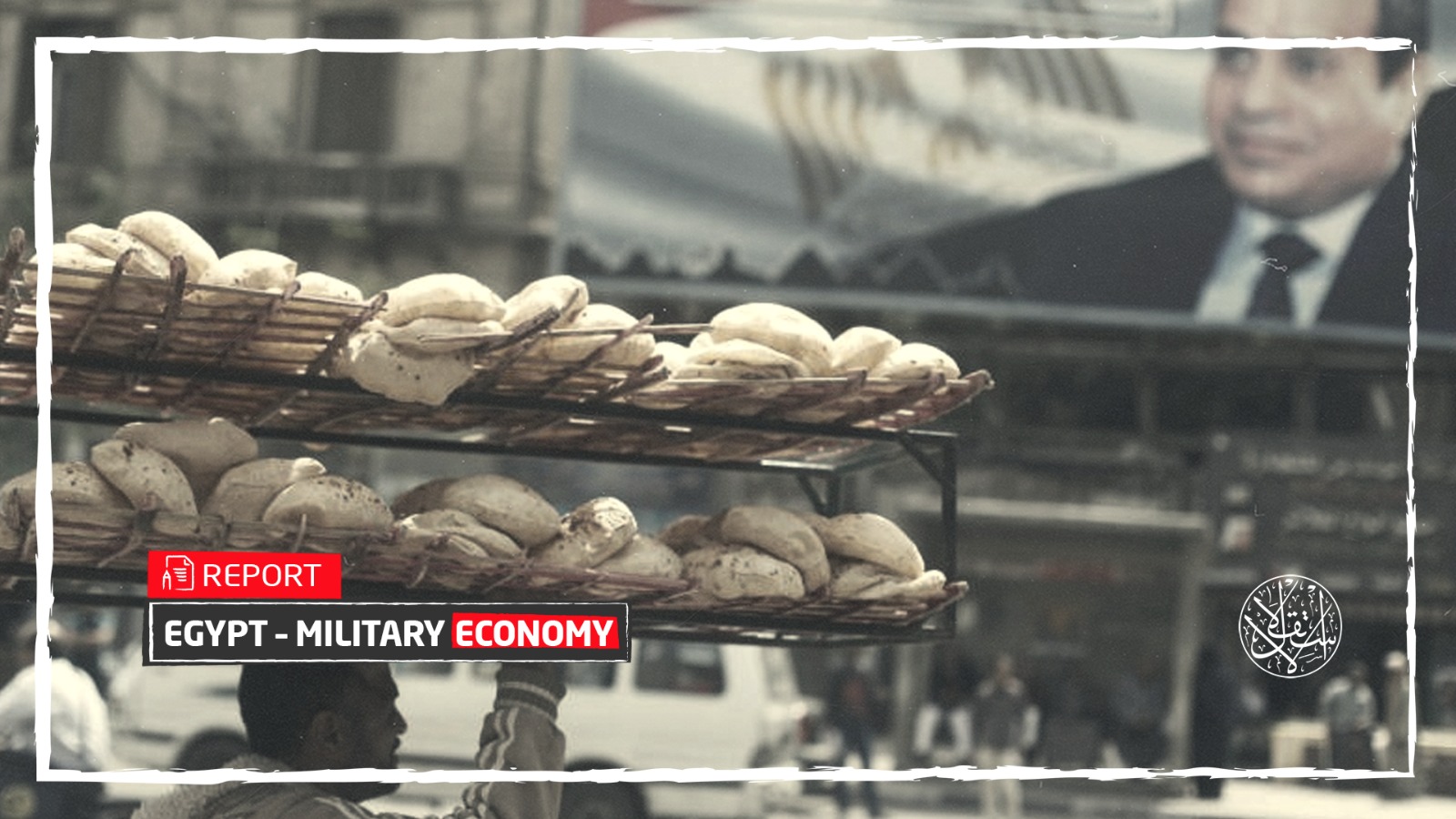
As some 13 million Egyptian students prepare for the various stages of education for the school year (2021/2022), The Silo Foods, a company that is entirely affiliated with the armed forces, was preparing to tighten control of the school nutrition sector.
Huge profits expected to be paid to the military by that acquisition, as planned by the head of the Egyptian regime Abdel Fattah al-Sisi, who limited it to military economic entities without civil sector companies.
What is interesting is that the regime is directing the army to manufacture school food to protect Egypt's children from diseases, coinciding with Sisi's announcement of his intention to lift government support for the loaf of bread on which millions of poor people live, and to free up its price to 50 cents a loaf.
Observers say the student nutrition mechanism goes beyond the economic dimension, to full military control over the education sector and various aspects of life, an approach that has begun since the military coup in mid-2013.
The September 22, 2013, incident early on points to this trend, when Egyptian army brigadier general Mustafa Hassan delivered a speech to female students of the Abdul Aziz Jawish Basic Education School on the Egyptian army's heroism and stability in the country.
At the time, special forces army officers also spoke of what he called "armed legitimacy," a term that young students did not understand, but expressed a serious increase in the military's details of Egyptian life.
That scene seemed incomprehensible at the time, but it later became clear and successive situations revealed the intention of the army forces to leave their barracks, and flow into the castles of education and various aspects of Egyptian life.
Silo Foods
On August 19, 2021, local newspapers reported that Health Minister Hala Zayed, along with General Staff Timur Moussa, Chairman of The Silo Foods Food Industries, had inspected the school meal manufacturing system.
This took place at the headquarters of the company of the National Service Projects Authority of the Armed Forces, in Sadat city (Delta Egypt), amid talk about the company providing meals to school students in cooperation with the Ministry of Education.
The army officer presented the minister with a list of the proposed meal produced by Silo Foods, to be distributed to school students, to include plain biscuits, another with dates, and a school pie, for a total of 13 million students from kindergarten to high school.
Sisi paved the way for the move when he opened, August 3, 2021, the food industrial city of Silo Foods, in Sadat city in Manufiya province.
The specifications and techniques of the new Army Company are higher than the potential of others in the field of nutrition and food industries, as it was founded with the latest management systems and production lines on an area of 135 acres in Sadat city.
Silo Foods also has 14 factories, producing a total capacity of 470,000 tons of food per year, wheat silos with a total capacity of 230,000 tons, as well as a biscuit factory with a capacity of 68,000 tons per year.
In the hands of this army company is a pasta factory, producing a capacity of 151,000 tons per year, and another for the production of baked goods with a capacity of 9,000 tons, along with 4 factories for dairy products, processed cheeses, halawa and polygon.
Within this army's economic empire is a roto factory (printing on packaging materials), with a production capacity of 8,000 tons per year, and a duplex factory to produce all types of cans with a production capacity of 6,000 tons per year.
In the midst of Sisi's opening of the city, The General Manager of National Service Projects, Major General Walid Abu al-Majd, announced that the agency, in cooperation with various state agencies, has carried out several giant projects such as Silo Foods.
According to the Website of the "Arab Market" company guide in Egypt, the number of food and beverage companies in the country, more than 188 major private civilian companies, lacked opportunities in the market for the dominance of military companies.
Complete Control
During the opening of Silo Foods, Sisi paved the way for the military to take control of the school nutrition sector, saying that "8 billion pounds will be provided for school meals annually," which is linked to the gradual elimination of subsidies for loaf of bread, observers said.
Especially since the lifting of subsidies on bread, saves about 7.7 billion pounds initially, can be used to provide meals for students in public schools, while the head of the system set the price of a meal at seven pounds per day for the student.
The average street man can question the validity of that figure and assert that the cost of a manufactured army meal is much lower than this amount, since labor, taxes and production costs do not apply to the army, which is exempt from these matters.
The simple Egyptian man can also be sure that the 7.7 billion pounds to be deducted from the support of hardworking citizens will go directly to the armed forces.
The military's control over food supply operations for schools is not the result of 2021, in 2015 the military participated in the manufacture of school meals in six provinces.
In 2016, the military took control of food supply operations for schools, through the National Service's al-Nasr Services and Maintenance Company, which received 95 percent of school nutrition for students at schools and al-Azhar institutes.
Poisoning Incident
On March 14, 2017, schools in Sohag province in Upper Egypt saw more than 2,260 pupils poisoned after eating school meals supplied by the army to the Ministry of Education.
The incident raised questions about why al-Nasr Services, an army company, chose to supply nutrition to students at schools and institutes with a "direct order,” without competition.
This is largely true of Silo Foods, which has become a food giant in Egypt, without a partner.
The National Service Projects Authority, which belongs to these companies, was established in 1979, under the late Egyptian President Anwar Sadat, and his main mission was to achieve the self-sufficiency of the army.
The aim was also not to rely on the private sector market to provide basic goods to the army, and over time the agency established multiple companies that penetrated the local economy.
Some 22 major companies covered almost all sectors: "National General Contracting and Supplies, National Petroleum, National Fisheries and Aquatic Neighborhoods, National Land Reclamation and Agriculture, National Protected Agriculture.”
Also, "Upper Egypt for food processing and land reclamation, Arab World Optics, plastic linoleum production, integrated egg production complex, Egyptian black sand, Wadi al-Shayeh farm, mining sector, food security sector."
In a report, the Washington Post reported that the Egyptian military controls 60 percent of the country's economy, has a secret budget, and its business is tax-free.
The newspaper's report warned that military control of the economy may threaten to deepen corruption in the country in an unprecedented manner, which cannot be confronted or reduced.
Multipurpose
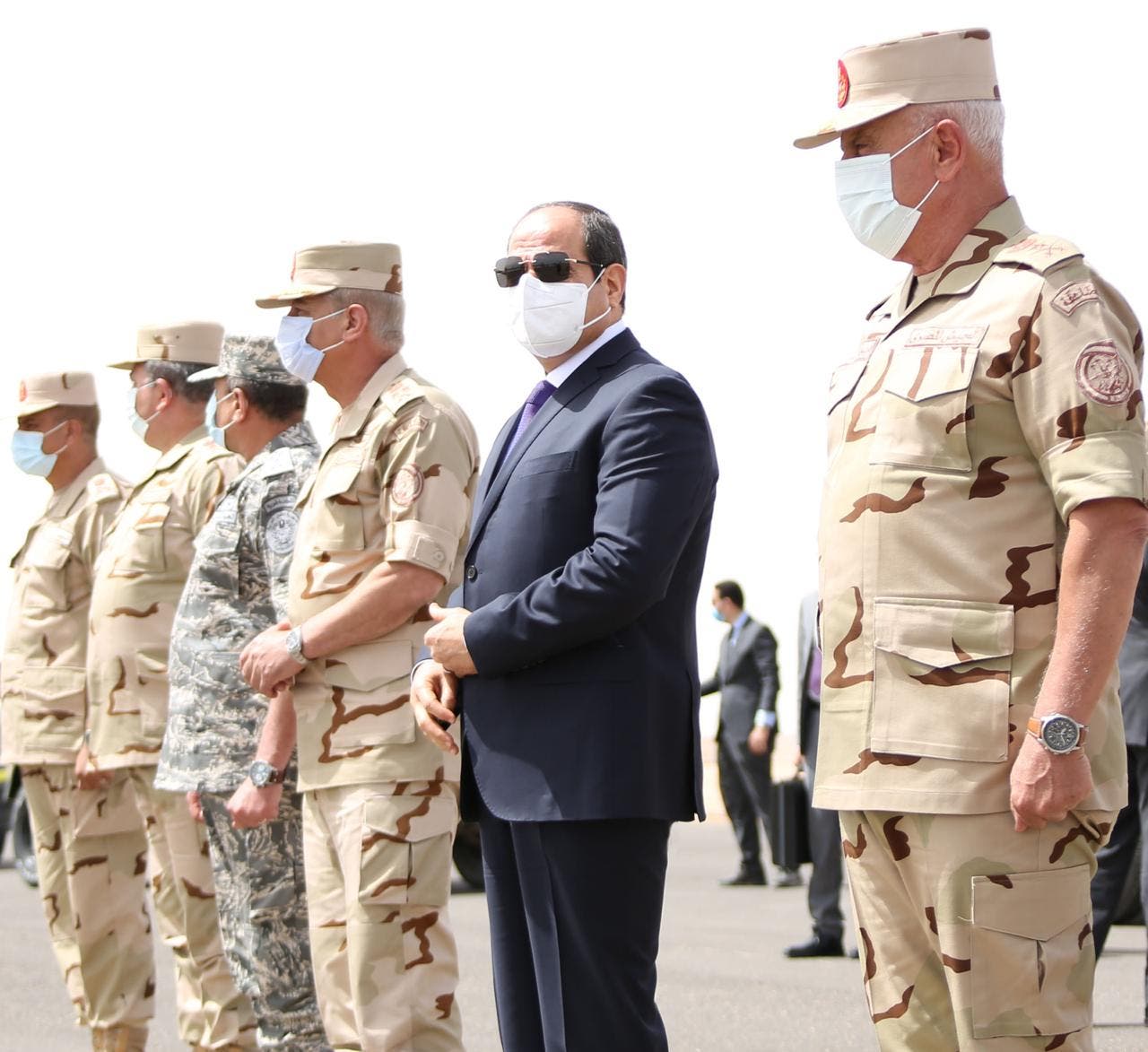
Egyptian political researcher Mohamed Maher spoke about "the dominance of the military in the school nutrition sector, and various other key and central sectors in the lives of citizens, such as medicines, medical services, projects, the Road and Bridges Authority.”
"The purposes of this hegemony are multiple and a well-established strategy that began primarily since the establishment of the Officers' Republic, with the beginning of the era of former President Gamal Abdel Nasser, but which increased completely after the 2013 military coup," he told al-Estiklal.
"The biggest purpose is to bring the state with all its facilities to the armed forces, because Sisi realized from the very first moment that the army is his first and last fortress, and he must ensure his needs, expand his role and release his hand."
"In order to owe him full loyalty, and there is no kind of restlessness within him, Sisi has expanded his privileges unprecedentedly in the history of the Egyptian state," the researcher said.
"This is what we note with Sisi's refusal to establish a ruling political party along the lines of the (national) party during the reign of Presidents Anwar Sadat and Hosni Mubarak," he said.
"Sisi realized that no civilian force could be counted on, and that the winning betting horse was always the army, making him his back, his immunity with legislation and force, if necessary," Maher said.
"Egypt's army and state syndrome has created a complex situation, which is difficult to deal with in the future.
"Egypt would be qualified without the strategy of militarization, as well as the difficulty of disarming military companies and loosening the grip of the armed forces in the future," he said.
On the complex situation, the question arises: "How will this happen? And what civilian force is capable of dismantling that composite network? It would be like nationalization, and foreign and private companies were nationalized for the benefit of the state in the 1960s."
The solution, he concludes, is "to nationalize military companies for the benefit of civil state institutions; but the question still arises: Who can do it, and how he's going to do it.”
Sources
- Egypt: The army granted the right to supply school meals to 13 million students [Arabic]
- The 'Long Live Egypt' meal poisoned the students, and the army ignored the incident [Arabic]
- Military Business; 'Queen Service Company' and the monopoly of the services sector in Egypt [Arabic]
- 'Silo Foods'; A real addition to the state's ability in the food industries - Infographic [Arabic]
- Sisi listens to a detailed explanation of the 'Silo Foods' industrial city [Arabic]
- The Egyptian army controls 60% of the economy [Arabic]
- Silo Foods is a new city for food industries in Egypt; What do we know about it? [Arabic]