Where Is the Political Scene in Iraqi Kurdistan Heading?

“The specter of the 1990s threatens the unity of Iraqi Kurdistan.”
In a scene reminiscent of the political division that plagued Iraqi Kurdistan before 2003, understandings between the two main Kurdish parties—the Kurdistan Democratic Party (KDP) and the Patriotic Union of Kurdistan (PUK)—have reached a deadlock due to disagreements over the formation of the regional government and the distribution of positions allocated to the Kurdish component in the Iraqi federal government.
The results of the regional parliamentary elections held on October 20, 2024, saw the KDP win 39 out of 100 seats, while the PUK came in second with 23 seats, and the New Generation Movement came in third with 15 seats, while the remaining seats were distributed among other political forces and parties in varying proportions.
However, this parliament held only one session, failing to elect its speaker or begin forming a new government due to the ongoing political disputes between the two main parties.
The political landscape has been further complicated by the fact that the Iraqi parliamentary elections, held on November 11, resulted in the KDP winning approximately 30 seats, compared to only 18 seats for the PUK.
These results strengthened the KDP's position as the Kurdish majority in the Iraqi parliament and reshuffled the cards in the political negotiations between Erbil and Baghdad.
Early Elections
Amid the ongoing political crisis in Iraqi Kurdistan between the two largest Kurdish parties, talk has intensified in media and political circles about a possible move by the region's president, Nechirvan Barzani, to dissolve the regional parliament and call for early elections.
This comes after the KDP reached what it describes as a state of despair regarding the PUK's flexibility in the matter of forming a new government.
In this context, the Iraqi newspaper Al-Alam Al-Jadeed reported on May 10 that the KDP is unwilling to leave any area for maneuver or compromise for the PUK, particularly concerning power-sharing within the region or the anticipated negotiations with Baghdad.
It was reported that the KDP, led by Masoud Barzani, sees dissolving parliament as a way to enter federal negotiations from a stronger position, especially since the positions of regional president and prime minister remain in its hands.
According to the internal regulations of the Kurdistan Region Parliament, the president of the region must call for the first parliamentary session within 10 days of the ratification of the election results.
If such a call is not issued within this period, members of parliament have the right to convene on the 11th day, with the oldest member presiding until a speaker is elected.
In this context, the newspaper quoted KDP member Rebin Salam as saying that his party was subjected to bargaining and blackmail by its partners in the region, most notably the PUK, led by Bafel Talabani.
He emphasized that the Kurdistan Parliament is the people's choice and their true voice, and this will be respected by holding parliamentary sessions and proceeding with the formation of a new government.
He indicated that his party is still demanding a return to negotiations, but on the basis of respecting the majority's choice.
He clarified that the option of dissolving parliament has not yet been decided, but it will remain on the table if the political deadlock continues and no understandings are reached that lead to the formation of a government, which could push towards early elections.

New Scenario
Meanwhile, former PUK MP Shirwan Mirza revealed that meetings between the two main Kurdish parties resumed on December 16, in an attempt to resolve the issues of power-sharing in the Kurdistan Region and Baghdad.
“These disputes include forming the regional government, distributing the position of President of Iraq, and allocating ministerial portfolios to the Kurdish component in the federal government,” he said.
In his interview with Al-Estiklal, Mirza emphasized that the delay in forming the Kurdistan Regional Government was not without reason, but rather due to the existence of real obstacles that needed to be addressed, otherwise this delay would not have continued for so long.
He expressed his belief that a new scenario exists that could lead to a comprehensive agreement that resolves the positions in both the Kurdistan Region and Baghdad simultaneously.
He indicated that there are serious attempts to bridge the differences between the two parties and overcome the effects of the inflammatory rhetoric that prevailed during the Iraqi parliamentary election campaigns.
In the same context, the Iraqi newspaper Al-Alam Al-Jadeed confirmed that the resumption of meetings between the two parties came as a result of international pressure, specifically from the United States, which prompted the two Kurdish parties to reactivate the meetings of the negotiating committee after a period of near-complete hiatus due to the depth of their political differences.
It indicated that the KDP showed remarkable flexibility regarding the presidency, following American pressure, expressing its willingness to relinquish the position in exchange for expediting the formation of the Kurdistan Regional Government according to its political conditions and demands.
It stated that the meeting is being held at the level of the joint negotiating committee between the two parties, chaired by Hoshyar Zebari of the KDP and Qubad Talabani of the PUK, aimed to reach an understanding on the selection of the president and to form a unified Kurdish delegation to travel to Baghdad for negotiations with other Iraqi political forces.
Since the establishment of the power-sharing formula in Iraq after 2003, a political convention has been in place whereby the presidency is reserved for a Kurd, and usually goes to a member of the PUK.
Over time, this arrangement became a political and symbolic asset for the PUK in Baghdad, contributing to a delicate balance between the two main Kurdish forces within the region.
However, the rise of the KDP in the recent elections, and its transformation into the leading Kurdish force with a comfortable margin over its rivals, prompted its leaders to revive their demand for the presidency, based on its status as the party with the largest bloc and the broadest representation of the Kurdish public.
This debate is inseparable from the complex political reality in both Erbil and Sulaymaniyah, where the struggle for the highest sovereign position in the federal government coincides with the continued deadlock in forming the Kurdistan Regional Government and the failure to elect a speaker for the regional parliament, placing the Kurds in a highly sensitive negotiating position.

Sensitive Phase
Regarding the repercussions of the escalating dispute between the two main Kurdish parties, Iraqi and Kurdish media outlets have confirmed that the Kurdish political landscape is entering one of its most sensitive phases since 2003.
They noted that it is experiencing an unprecedented level of internal division and weakness, reviving the specter of the 1990s with all its political, economic, and social implications.
According to a report published by Shafaq News on December 9, the current situation in the Kurdistan Region of Iraq is no longer limited to a political crisis between two rival parties, but rather reflects a complex network of bottlenecks that extends from closed-door understandings between political leaders to queues of employees and retirees in front of banks waiting for their delayed salaries.
The report indicated that the Kurdish division, which has deepened since the 1990s, has transformed over time into a chronic structural flaw. This flaw inevitably manifests itself economically and socially with each new political crisis, leaving the Kurds facing one of their most perilous periods since 2003, at their weakest point in terms of internal cohesion and unity of decision-making.
Meanwhile, Kurdish academic Arslan Mohammed viewed the situation from a broader institutional perspective, warning that the paralysis of governance within the Kurdistan Region directly and automatically impacts the Kurds' ability to negotiate with the federal government in Baghdad.
He described the fact that more than a year has passed since the Kurdistan Region parliamentary elections without the formation of a new government or the election of key regional leaders as not being a temporary crisis, but rather a structural political deficiency whose impact extends to the negotiating table with Baghdad and weakens the Kurdish position on strategic issues.
He emphasized that political forces unable to organize their internal affairs find themselves in a weaker negotiating position when demanding rights related to employee salaries, the region's share of the federal budget, the implementation of Article 140 of the Constitution, and other contentious issues that require a unified Kurdish discourse and a cohesive political stance.
He warned that the absence of a shared vision not only threatens the salary and budget allocations, but now extends to the Kurds' position in the equation of the three presidencies at the Iraqi state level.
He concluded that it is the Kurdish citizen who pays the price first, amid a continuing salary crisis, accumulating economic bottlenecks, and faltering services, making the struggle for sovereign positions in Baghdad seem detached from the harsh daily pressures faced by Kurdish citizens.
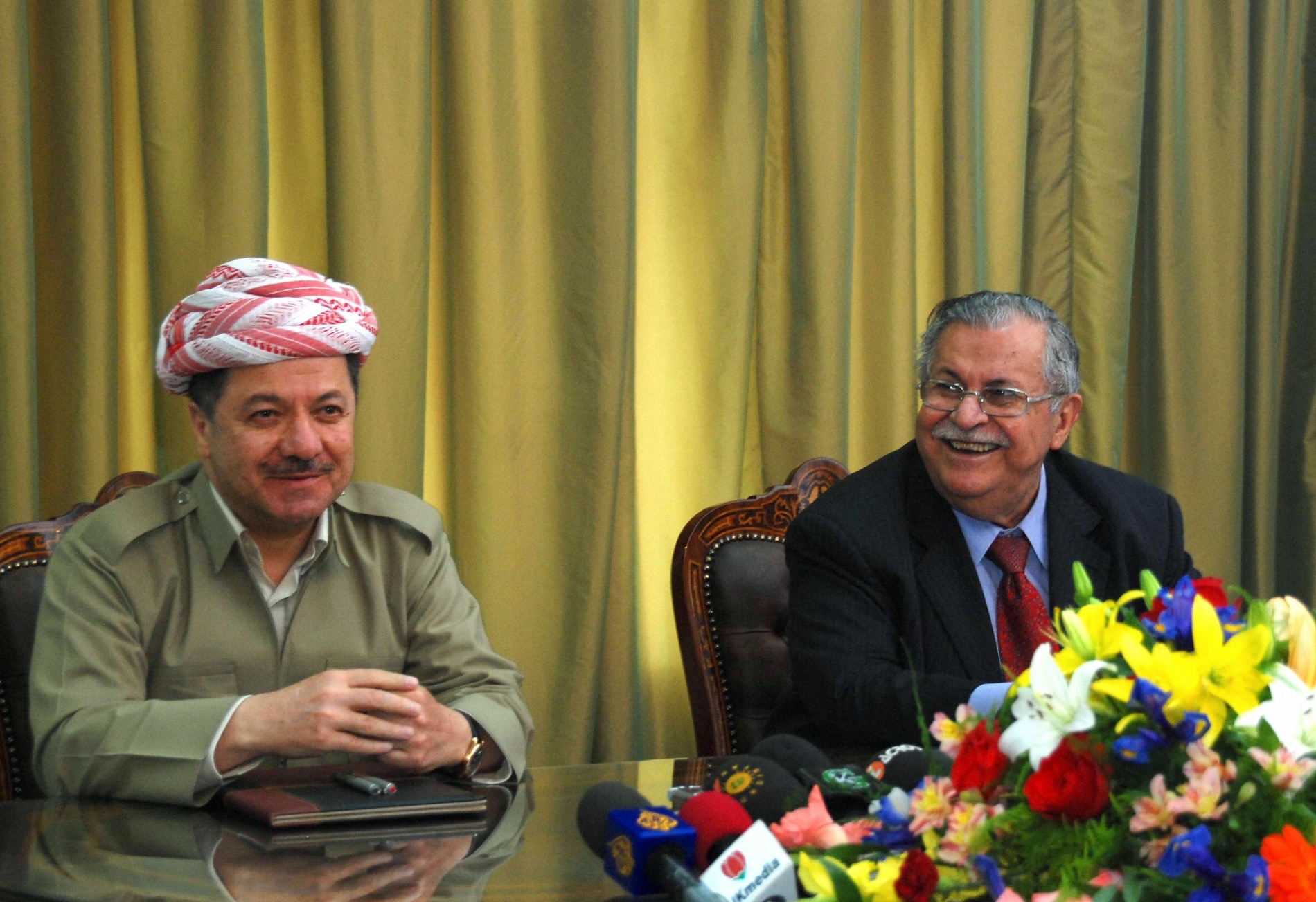
The growing fears of a repeat of the 1990s experience stem from the bloody internal conflicts that erupted between the two main Kurdish parties following the Iraqi authorities' 1991 declaration of autonomy for the predominantly Kurdish regions of northern Iraq after the Second Gulf War.
In 1992, the Kurds elected their first parliament and formed a regional government. However, the institutions of the Kurdistan Region of Iraq were brought to a near standstill between 1994 and 1998 due to a violent armed conflict between the KDP and the PUK.
These conflicts led to the emergence of two separate administrative authorities within the region: one in Erbil and Duhok, led by the KDP, and the other in Sulaymaniyah, administered by the PUK.
With the American occupation of Iraq in 2003, the two Kurdish parties supported the American forces in their quest to overthrow the regime of former Iraqi President Saddam Hussein, before later announcing the formation of a unified administration under the name Iraqi Kurdistan Region, according to the new Iraqi constitution that was ratified in 2005, with Erbil as the capital of the region.
Sources
- The Kurdistan Parliament faces dissolution, and the Democratic Party considers it a final step to overcome blackmail [Arabic]
- Political breakthrough: Kurdish parties return to negotiations under US pressure [Arabic]
- Sulaymaniyah and Erbil: The epicenter of a growing crisis in Iraqi Kurdistan that threatens to divide the region [Arabic]
- Kurdish division complicates matters and brings back the ghosts of the 1990s [Arabic]
- The Kurdistan Region of Iraq has enjoyed self-rule since 1991 [Arabic]