Political Expert: A Potential Islamic NATO Would Change the Calculations of Iran and 'Israel' (Exclusive)
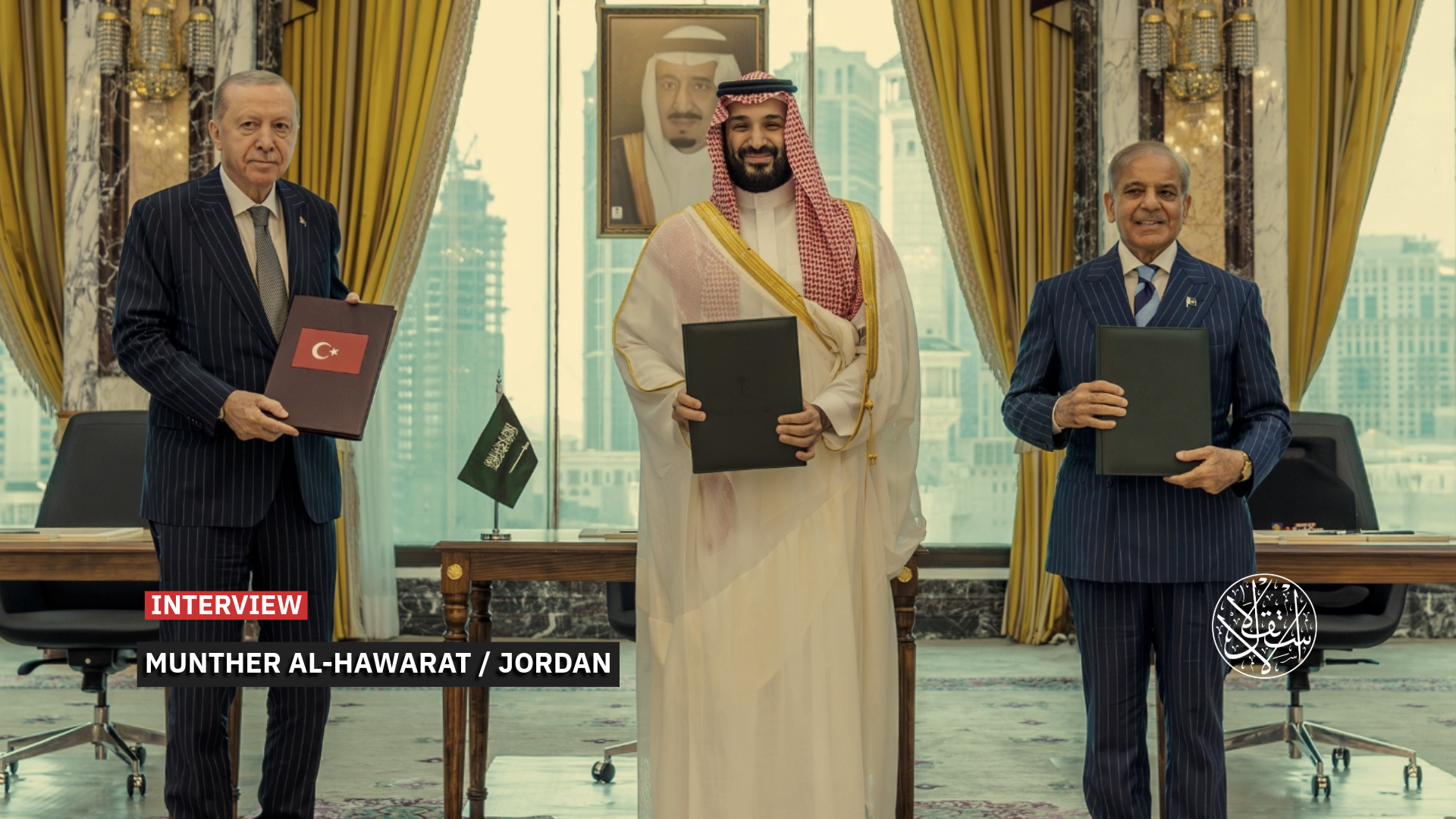
"The Mecca Agreement: A New Layer of Deterrence and Increased Costs for Any Aggression Against the Region's Countries."
Jordanian writer and political analyst Munther Al-Hawarat stated that the joint defense agreement between Saudi Arabia, Turkiye, and Pakistan came amidst regional security vulnerabilities and declining confidence in the adequacy of American guarantees.
In an interview with Al-Estiklal, Al-Hawarat added that the agreement aims to build an additional layer of deterrence and increase the cost of any aggression, as well as protect economic and investment stability in the region.
He pointed out the possibility that the agreement could form the nucleus of an Islamic NATO, but noted that it is still too early to consider this given the absence of a unified military command, a joint force, and clear implementation mechanisms.
He believes that Iran is the direct impetus behind the agreement, while its implications carry broader dimensions that could encompass any party threatening member states, with a potential impact on Israel's calculations.
Regarding the Iranian issue, he suggested that US President Donald Trump's postponement of a large-scale strike against Tehran was intended to preserve the military option as leverage in negotiations.
He also believes that the American discourse on the declining importance of the Strait of Hormuz currently represents a form of political and economic pressure, despite the existence of alternative projects that may diminish its importance in the future.
He emphasized that the crises in Lebanon and Syria, as well as the tension with Israel, will remain linked to state weakness and the proliferation of weapons outside state institutions.
He stressed that regional peace will not be achieved without ending the war in Gaza and establishing a serious path leading to the creation of a Palestinian state.
Munther Al-Hawarat is a writer and political analyst specializing in Middle Eastern affairs. He has a regular presence on several Arab satellite channels, in addition to publishing articles and analyses regularly in Arab newspapers and news websites.
Messages from Mecca
What are the implications of the timing of the joint defense agreement between Saudi Arabia, Turkiye, and Pakistan?
I believe it comes at a moment of clear regional security vulnerability, especially after the Iranian attacks on the Gulf states and Iran's disruption of navigation in the Strait of Hormuz. We also cannot ignore the fact that confidence in the adequacy of American security guarantees has already declined.
In my opinion, this agreement attempts to establish another layer of deterrence, aiming to raise the cost of any aggression against the Gulf states and the countries involved in the agreement.
It also has another objective: protecting economic stability. Confidence in economies and the investment environment that attracts capital has declined following the Iranian strikes and recent security tensions.
I don't believe the agreement is intended as a declaration of war against anyone, not at all. In essence, it is a form of deterrence and a political and security message that any aggression will have consequences, and that the countries of the region have begun seeking more diversified security arrangements.
Does the agreement reflect a trend toward building a regional security system less reliant on the American umbrella?
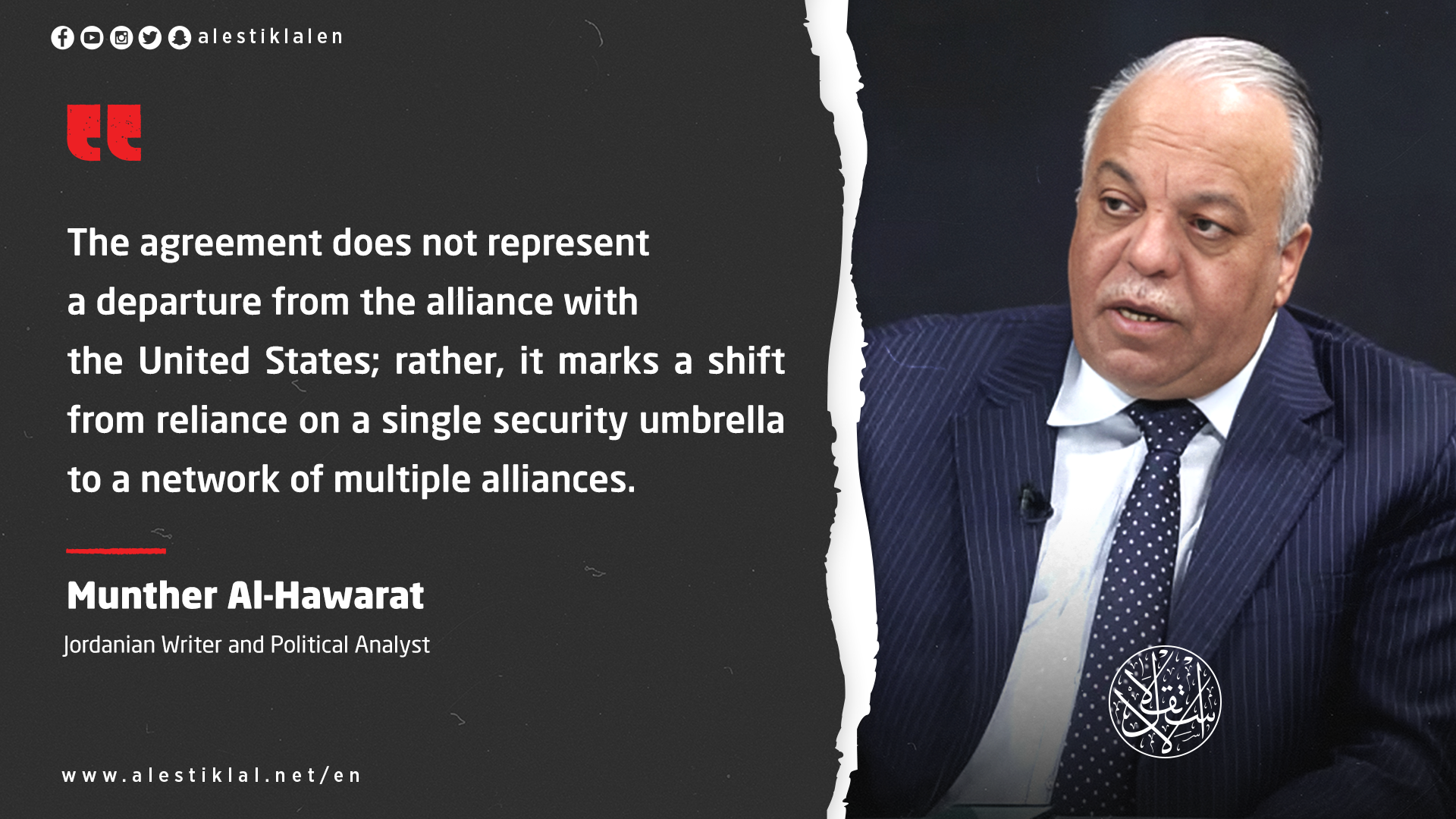
No, not at all. The agreement does not represent a departure from the alliance with the United States; rather, it marks a shift from reliance on a single security umbrella to a network of multiple alliances.
There is no doubt that Saudi Arabia wants to maintain its strategic partnership with the United States and continue its security, military, and strategic cooperation with it.
However, at the same time, it is trying to find or acquire regional alternatives that would grant it greater stability and independence in protecting its own security and the security of the region, naturally in cooperation with, and not outside of, the American umbrella.
What are the chances of this tripartite arrangement becoming the nucleus of an Islamic NATO?
I believe this possibility exists, but it is premature to say that it has become a fully-fledged alliance because, so far, there is no unified military command, no joint force, and no clear, detailed mechanism for deterrence and implementation.
There is a clear reference to Article 5 of the North Atlantic Treaty, which states that an attack on one member is an attack on all members, but the response mechanism itself still needs to be tested.
We hope that this test will not come in the form of an attack on one of the members, but if it does, it will be the first test of the effectiveness of this alliance and its ability to deter and respond directly.
To what extent does the agreement aim to contain Iran, and could it also carry messages directed at "Israel"?
I believe Iran is undoubtedly the direct instigator, but the message conveyed by the agreement extends beyond Iran. It is a message of deterrence that can encompass any party that threatens one of the participating members.
"Israel" has reason to be concerned about this arrangement because the presence of Turkiye as a major military power, alongside Pakistan as a nuclear state, could act as a constraint on its unchecked actions in the region, or at least raise the cost of any large-scale military action.
Serious Repercussions
Why didn't Trump back down from striking Iran? Was he afraid of the repercussions, or did he want to exert pressure to negotiate?
This is a question of strategic importance because there is no doubt that Trump received warnings that any large-scale American strike would provoke a retaliatory Iranian response, and that the Gulf states would be among those most affected by this response.
The American strike threatened to target Iranian energy, electricity, and shipping facilities, and Iran had threatened to retaliate against the Gulf states in the same manner that its interests were being targeted.
Consequently, the region could have been plunged into widespread chaos, whether in terms of energy, infrastructure, or maritime traffic.
For this reason, I believe the Gulf states advised Trump against launching a large-scale strike, given its potentially serious repercussions for the Gulf states and the entire region.
Another important point is that Trump wanted to retain the military option as leverage to extract concessions from Iran.
Once this option is used, it diminishes Iran's deterrent capabilities, and he doesn't want to exhaust it without ensuring it translates into political gains in negotiations.
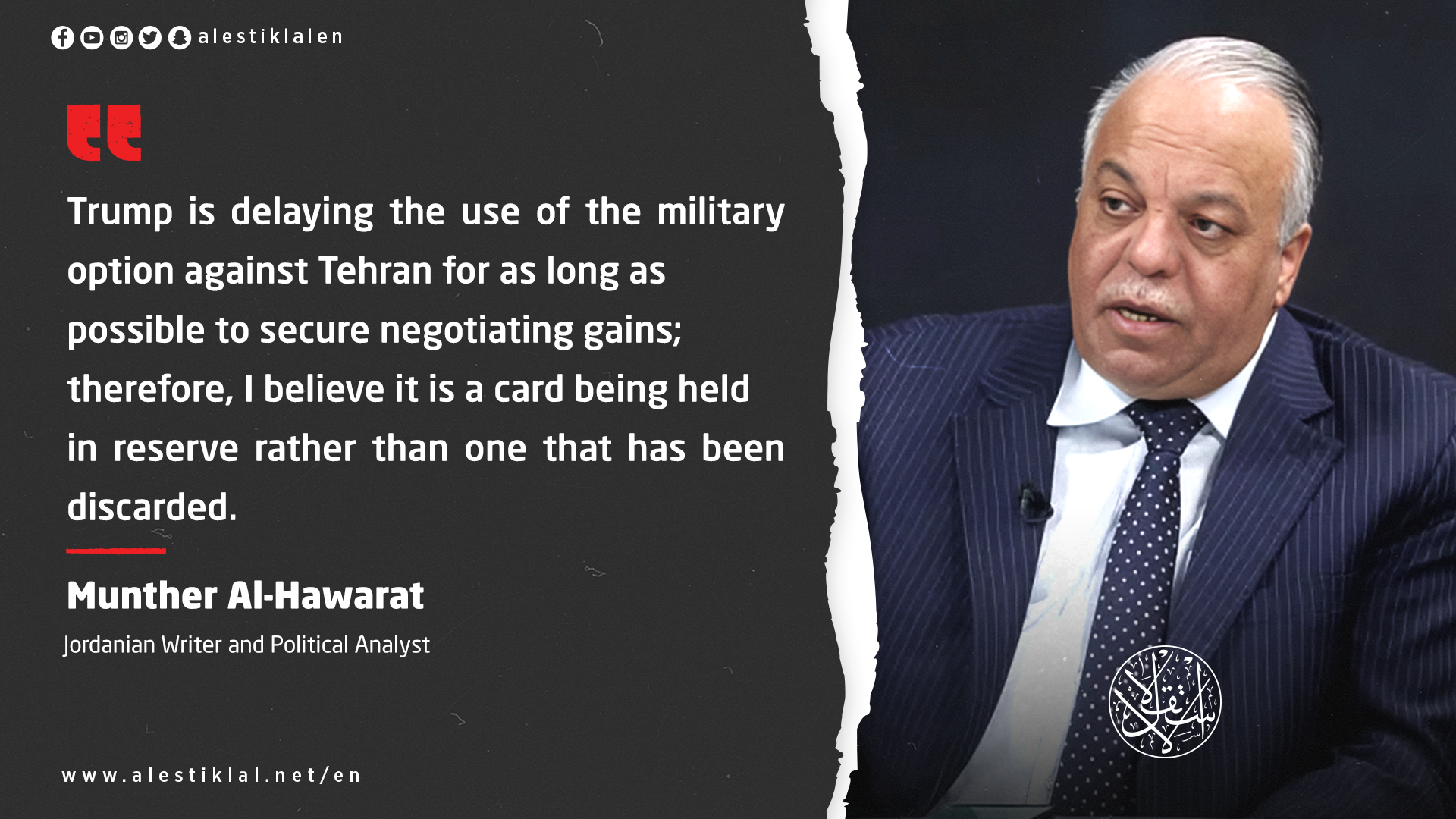
Therefore, he is postponing its use as much as possible, so that he can leverage it in negotiations with Iran and gain concessions. For this reason, I believe it is a card that Trump is holding onto, not one that he has given up.
Where are the Washington-Tehran talks headed? Will they end the war?
We are, in reality, talking about understandings of a phased nature. There is no comprehensive peace, and there are no negotiations in the true sense of the word yet.
We are still discussing the Strait of Hormuz and regulating navigation through it, and we haven't yet moved to the second step, which is the issue of sanctions and the nuclear program. Even negotiations on these two points haven't actually begun yet.
There is no evidence that they have. All that has happened are contacts through intermediaries. Therefore, Iran is essentially buying time to reach certain American objectives.
The first objective relates to the elections, and the second is that Iran wants to use part of President Donald Trump's term in office for negotiations.
Iran is adept at negotiation, skilled at crafting leverage, and skilled at using it. Therefore, they are trying to bog Trump down with details.
This flooding serves its interests in the short term, but in the long run, it could backfire. There is an economic blockade, military strikes are occurring intermittently, and there is talk of targeting land-based communication networks between Iran and the surrounding countries.
Consequently, there is a harsh American approach to targeting Iranian interests, and this pressure might, at some point, lead to internal unrest in Iran.
How do you interpret the American talk about the declining importance of the Strait of Hormuz within two years?
Regarding the talk about the declining importance of the Strait of Hormuz, this comes within the context of pressuring Iran by suggesting that countries in the region will work to build alternative pipelines, ports, and waterways.
This is true, but can all these projects replace the importance of the Strait of Hormuz?
This is doubtful so far, given the scale of these projects and the time, money, investment, and economic viability they require.
But the biggest question concerns the economic feasibility of these projects. Will the expected returns justify their implementation costs?
Therefore, there are many questions surrounding these projects and their economic viability.
These projects may diminish the importance of the Strait of Hormuz, yes, but not entirely. I believe that, at the moment, they are more of a political and economic pressure tactic than a fully established reality on the ground.
Impossible Peace
How long can the Lebanese-Israeli agreement hold?
For the most part, I believe that, up to this point, it is capable of preventing a full-scale war, but it is a fragile agreement.
Unless it is accompanied by an Israeli withdrawal, the deployment of the Lebanese army, and a demonstration of confidence that political understandings and negotiations can provide alternatives to the use of force, the agreement will remain vulnerable.
This could facilitate the transition to the second point, which is the gradual disarmament of Hezbollah, based on the extent of the gains that the Lebanese state can achieve.
However, there is a point that could unravel the agreement: each party might stipulate that the other fully implement its commitments before it takes any action. This equation, at a certain point, could backfire on everyone.
Is Lebanon witnessing a real decline in Hezbollah's role and influence?
Undoubtedly, Hezbollah has lost significant military capabilities, and this has even impacted its political freedom of action.
Hezbollah today is not the same as it once was in Lebanon. Previously, the party largely defined and determined the relationship between politics and the military, and wielded considerable influence over decisions of war and peace in Lebanon.
Now, however, this role has diminished militarily and politically, and its supply lines have been disrupted due to the changes in Syria, in addition to Israeli pressure on maritime supply routes.
Nevertheless, the party still possesses a large social base, a well-organized structure, and a significant arsenal.
Therefore, its role and weapons can only be contained through an internal Lebanese settlement, preferably a political and amicable one, based on the fundamental principle that the state alone holds the authority to possess weapons and to decide on war and peace.
Any political entity should be able to exercise its role and effectiveness through political means, not through military force.
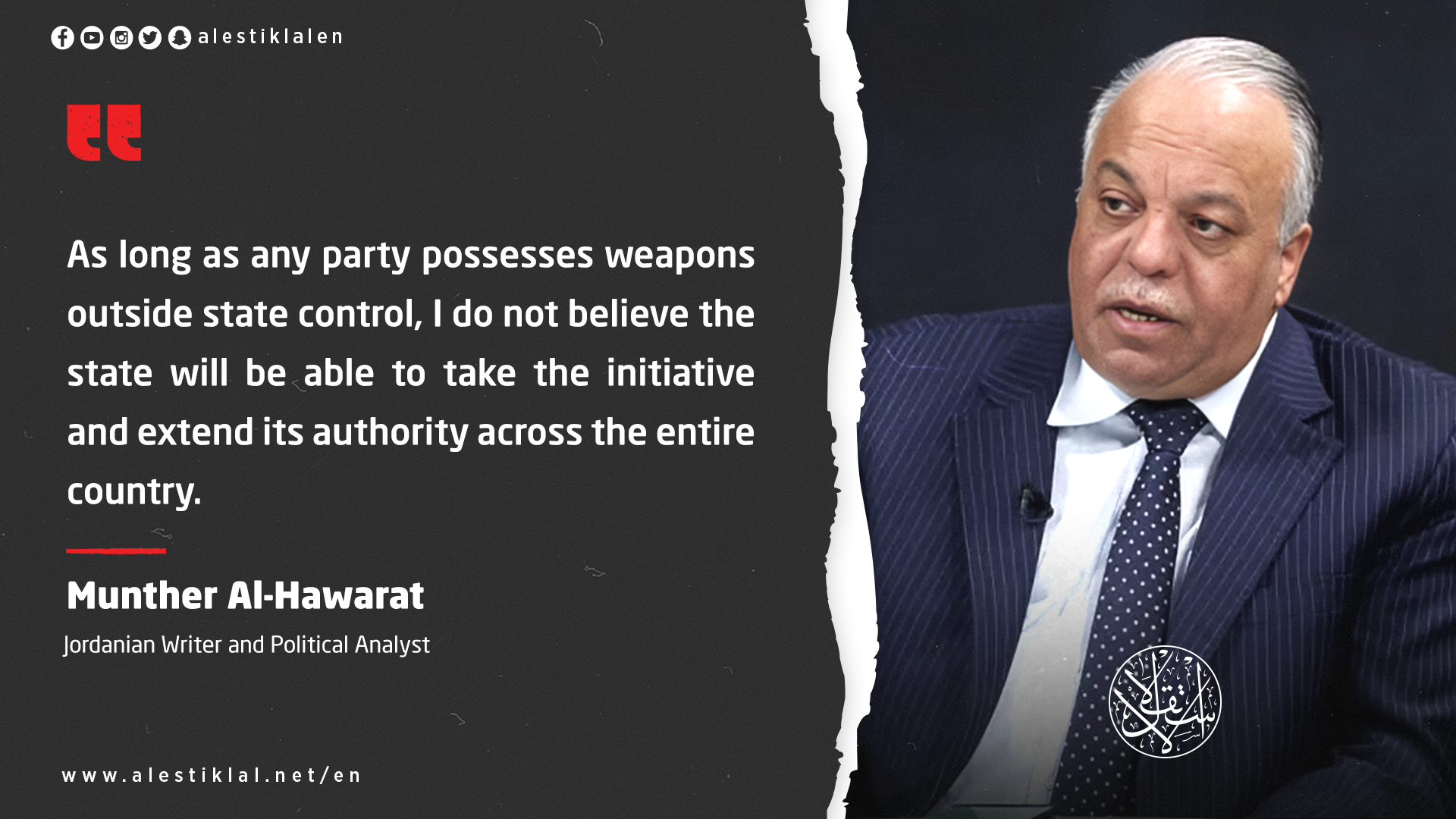
Only then, I believe, can the strategic issues in Lebanon be resolved. But as long as any party possesses weapons outside state control, I do not believe the state will be able to take the initiative and extend its authority across the entire country.
Why does "Israel" continue its incursions into Syria despite Western pressure?
I believe "Israel" sees the weakness of the Syrian state as an opportunity to expand its security zones and penetrate southern Syria.
It claims its goal is to prevent the return of Iran and Hezbollah, but at the same time, it is achieving strategic gains.
The more it expands its presence on the ground, the more leverage it gains in any future negotiations with the Syrian leadership, even if it comes at the expense of Syrian sovereignty.
Israel's provocative, occupation-driven, and expansionist behavior ultimately generates resistance.
If "Israel" were to decide to live in peace with the region, I believe the countries of the region had already presented a clear offer at the 2002 Beirut Summit when they proposed the Arab Peace Initiative.
But Sharon, in reality, rejected the initiative and ignored it. Since then, "Israel" has continued its expansion and attempts to achieve geopolitical and strategic gains at the expense of the Arab region, especially whenever an Arab regime weakens or its state institutions collapse.
After the Al-Aqsa flood, is the region heading towards normalization or further escalation?
I believe both are moving in tandem. But if we want to say whether the war in the region has reached a point where it can end peacefully, I believe the war is still ongoing, and that the paths to normalization have been diminished due to the scale of the crimes committed by Israel in the Gaza Strip.
Any talk of peace has become almost as painful as the scale of the casualties in Gaza. Therefore, I maintain that the path to normalization still exists, but it cannot succeed without ending the war and aggression in Gaza, and without finding a serious path leading to the establishment of a Palestinian state.
Without this, I believe any normalization will remain merely formal and fragile, lacking any real social or popular value.
No Arab can watch the Palestinian people being slaughtered and then shake hands with an Israeli and consider him a friend. The Palestinian Cause must be resolved first, and only then can normalization be discussed.
Whether or not to normalize relations will be a decision for each Arab state to make individually.
However, as long as the war against the Palestinians continues, I believe that any peace will be unsustainable, lacking real value, and will be embarrassing for all who pursue it. It will remain a formal peace within the context of a truce, rather than a genuine, serious peace that deepens and normalizes relations.