Nikolay Mladenov: ‘Israel’-Linked Bulgarian Diplomat Tipped to Lead Gaza

Mladenov is close to the UAE and is one of the most prominent supporters of Arab normalization with the Israeli Occupation.
Nikolay Mladenov, the former UN envoy to the Middle East, has emerged as the leading contender to head a proposed “Peace Council” for Gaza, a body that would oversee day-to-day governance of the territory while working alongside a future Palestinian technocratic government to manage its affairs.
According to Axios, Washington put Mladenov’s name forward after strong Arab objections derailed the candidacy of former British prime minister Tony Blair, whose role in the American war on Iraq remains deeply controversial across the Arab world.
On November 17, 2025, the UN Security Council approved, by majority vote, a U.S.-backed resolution authorizing the creation of a temporary international force in Gaza through the end of 2027. The resolution also welcomed the establishment of a “Peace Council” as an interim administrative authority with international legal standing, tasked with setting the framework and coordinating funding for Gaza’s reconstruction.
In early December, Haaretz reported that the United States plans to form a temporary committee to run Gaza’s civil affairs, operating under the supervision of the “Peace Council,” with the committee expected to begin work by December 15.
Sources cited by the Financial Times said Mladenov is expected to chair the technocratic committee that would govern Gaza after the Israeli war on the Strip, coordinating closely with the “Peace Council” to steer reconstruction efforts and restore a measure of stability to the devastated territory.
A Seasoned Diplomat
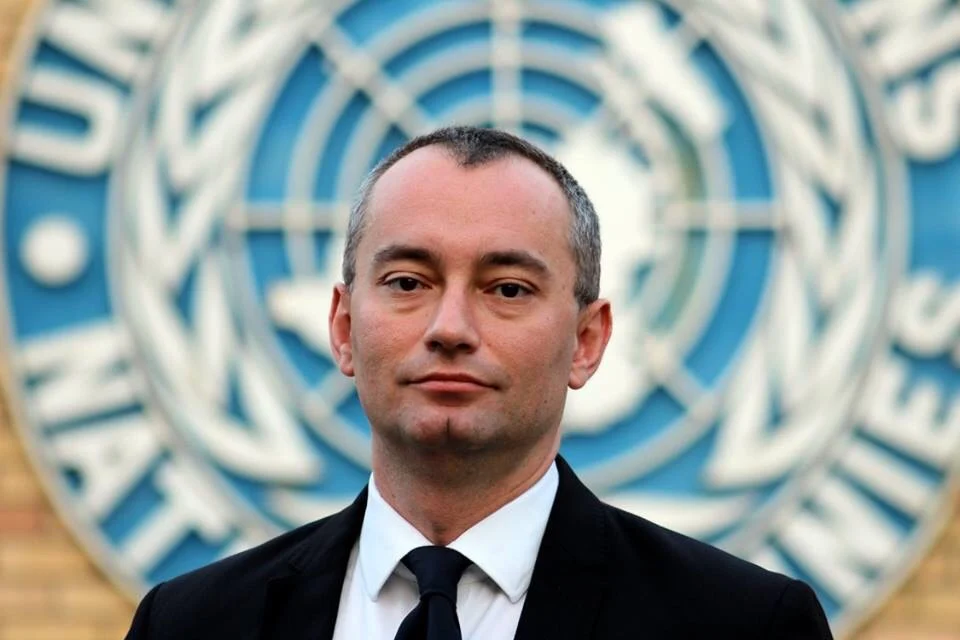
Nikolay Mladenov, 53, is a veteran Bulgarian politician and diplomat with deep experience in some of the United Nations’ most sensitive and influential posts and a long track record as a global affairs strategist.
He holds a master’s degree in war studies from King’s College London and a bachelor’s degree in international relations from the University of National and World Economy in Sofia.
From 2015 to 2020, Mladenov served as the UN Special Coordinator for the Middle East Peace Process and as the United Nations envoy to the Middle East Quartet, placing him at the center of regional diplomacy during a period of repeated crises.
At the national level, he held key cabinet positions in Bulgaria, including minister of foreign affairs and minister of defense. He also served as a member of the European Parliament, where he worked on defense transparency, consumer protection, and internal market reform.
Between 2013 and 2015, Mladenov was the UN secretary-general’s special representative for Iraq and head of the UN Assistance Mission in Baghdad, where he played a role in shaping a national unity government and brokering oil revenue-sharing agreements between Baghdad and Erbil.
Appointed Middle East peace coordinator in 2015, he became a central figure in defusing “border flare-ups” between the Israeli Occupation and the Palestinian Resistance Movement (Hamas) and advocating a negotiated settlement.
Earlier in his career, in 1999, he founded the European Institute in Sofia, a prominent think tank focused on European integration and related policy debates.
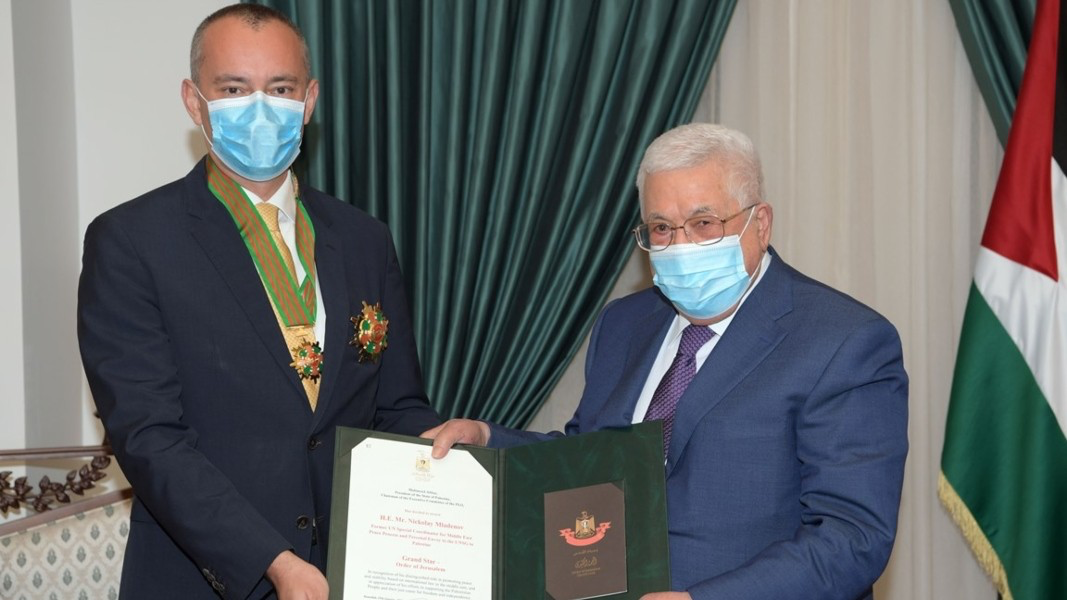
In 2021, Palestinian Authority President Mahmoud Abbas awarded him the Grand Star of the Order of Jerusalem in recognition of his diplomatic efforts and work toward peace.
Mladenov is also a visiting fellow at the Washington Institute for Near East Policy, serves on several academic and institutional boards, and is expected to join an expert team linked to the Koret analytical research project on Arab–”Israel” relations.
Behind the Push
Yedioth Ahronoth has pulled back the curtain on how Nikolay Mladenov emerged as the leading candidate to head the U.S.-backed “Peace Council” for Gaza under President Donald Trump’s plan.
According to the report, several Arab and Muslim states initially blocked the appointment of former British prime minister Tony Blair, citing his role in the American war on Iraq. That resistance, the paper said, pushed Washington to look for a more broadly acceptable and trusted alternative.
In a report published on December 10, the newspaper described Mladenov as a mediator trusted by both Israelis and Palestinians, with deep regional ties and long experience in the “Israeli-Palestinian conflict” and the Middle East more broadly. It portrayed him as one of the most seasoned international diplomats to have worked on the file.
The report noted that Mladenov earned widespread respect during his time at the United Nations for helping prevent repeated escalations between the Israeli Occupation and Hamas. He was widely viewed as credible by both sides and was among the UN’s most active envoys in recent years, building extensive experience in Gaza’s post-war reconstruction after the Israeli genocide.
Mladenov played a particularly central role after the 2018 border protests and the wave of incendiary kites launched from Gaza, working intensively to avert a wider confrontation. On at least two occasions, his efforts dovetailed with Egyptian mediation to broker understandings between the Israeli Occupation and Hamas and steer the situation away from full-scale war.
Beyond his close coordination with Egypt, Mladenov is also known to be close to the United Arab Emirates, which joined the Abraham Accords in 2020. He is widely regarded as one of the most prominent supporters of Arab normalization with the Israeli Occupation.
During his tenure as the UN’s Middle East peace coordinator, Mladenov argued that normalization agreements would reshape the region’s political dynamics. He repeatedly urged Palestinian and Israeli Occupation leaders to seize the moment and return to negotiations to end the “long-running conflict.”
He also praised the UAE’s role in halting “Israel’s” proposed annexation of parts of the West Bank through the normalization deal, warning that annexation would have constituted a serious violation of international law, shut the door on renewed talks, and undermined any prospect of a viable Palestinian state under a two-state solution.
Today, Mladenov serves as director general of the Anwar Gargash Diplomatic Academy in the UAE, where he oversees efforts to train the next generation of Emirati diplomats and position the academy as a regional hub for foreign policy research and mediation.
A Friend of Lieberman
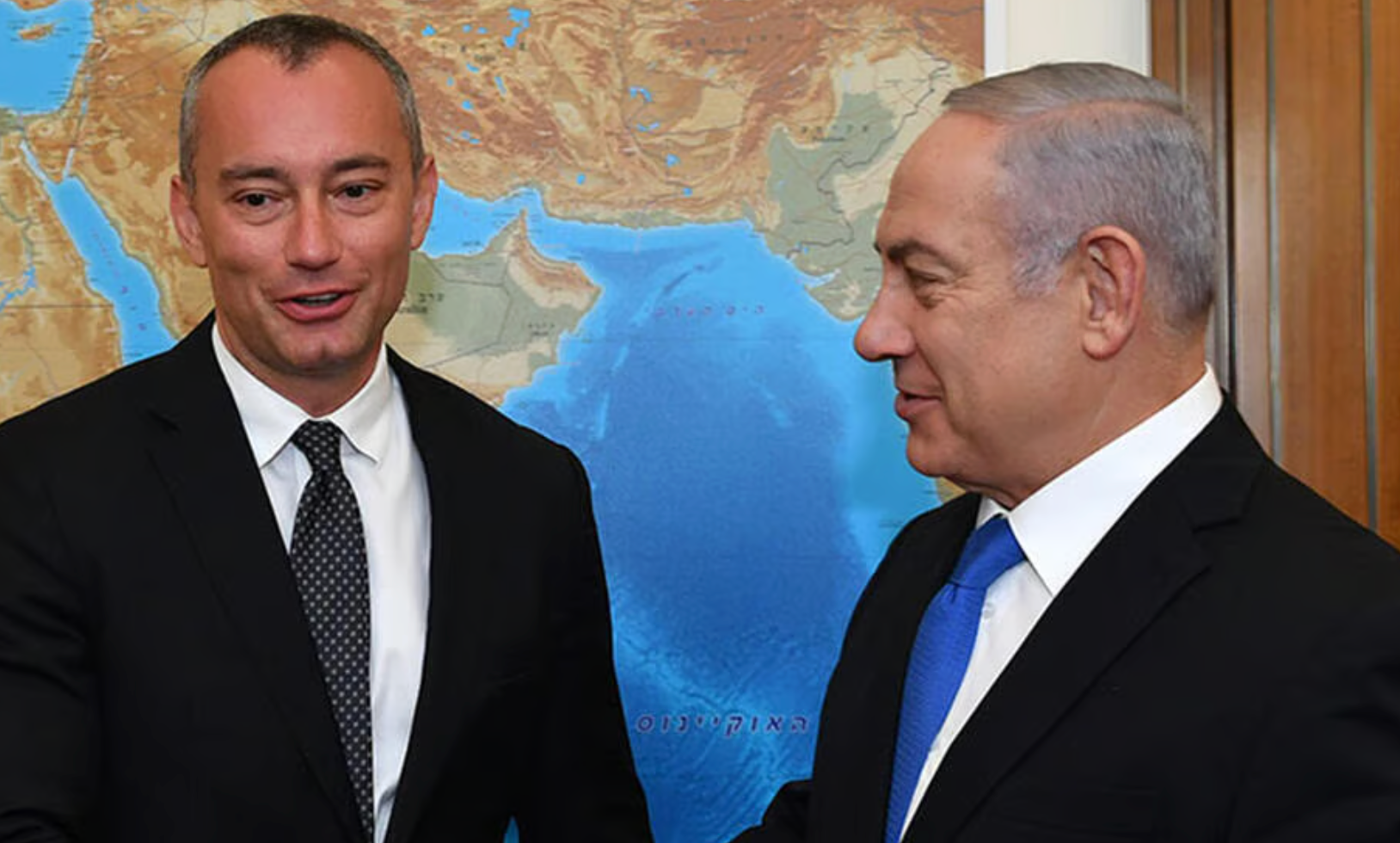
Nikolay Mladenov has cultivated long-standing and durable ties within “Israel’s” political establishment, most notably a close relationship with Avigdor Lieberman, leader of the Yisrael Beiteinu party. The two have known each other since 1999, a connection that has endured over decades and continued even while both held senior government posts.
Mladenov’s network extends well beyond Lieberman. He maintains relationships with prominent Israeli figures, including President Isaac Herzog and former Foreign Minister Tzipi Livni, underscoring the depth of his access to “Israel’s” political elite.
During his tenure at the United Nations, Mladenov was in constant motion between Occupied Jerusalem, Ramallah, and Gaza, sustaining dialogue with leading Palestinian figures. Among them was the late Hamas leader Ismail Haniyeh, who was assassinated in Tehran during the most recent Israeli aggression on Gaza.
He also built solid links with the team of U.S. president Donald Trump, particularly with Jared Kushner, Trump’s son-in-law and senior adviser. Those ties helped position Mladenov as a natural alternative to Tony Blair, after strong regional objections derailed the former British prime minister’s candidacy.
Despite “Israel’s” deep suspicion of UN officials—often seen in Tel Aviv as instinctively sympathetic to the Palestinian cause—Israeli Occupation officials have expressed clear comfort with the prospect of Mladenov taking on the Gaza role. His record is viewed as pragmatic and relatively balanced, reflecting what many in “Israel” describe as moderate instincts.
While Mladenov has repeatedly criticized “Israel’s” illegal settlement expansion in the occupied West Bank, he has also been consistently outspoken against Palestinian armed resistance. That dual posture has earned him a measure of acceptance within Israeli political circles.
According to Yedioth Ahronoth, “Israel” has come to regard Mladenov as “a fair broker,” even agreeing to his oversight of donor funds earmarked for Gaza’s reconstruction, trusting him to ensure the money is not diverted to tunnels or military operations.
The newspaper notes that Mladenov has criticized both “Israel” and Hamas—an equilibrium many see as central to the credibility that eluded several of his UN predecessors.
In briefings to the UN Security Council, Mladenov repeatedly condemned “Israel’s” excessive use of force, including the killing of Palestinian children and the expansion of settlements. At the same time, he denounced Hamas rocket fire and border provocations, urging the international community to unequivocally condemn such “attacks.”
His sharp criticism of Palestinian civilian casualties has at times angered Israeli officials, further illustrating a brand of diplomacy that has rarely satisfied either side entirely.
Among Palestinians, however, the proposed “Peace Council” and the plan to govern Gaza through a technocratic committee are widely viewed as a new form of foreign tutelage—one that entrenches external control, marginalizes Palestinian political rights, and undermines long-held aspirations for an independent state.
Sources
- After Tony Blair veto, ex-UN envoy Mladenov eyed as top candidate for Trump’s Gaza ‘board of peace’
- Nickolay Mladenov
- Nickolay Mladenov
- Nickolay E. Mladenov
- Scoop: Trump plans to appoint U.S. general to lead Gaza security force
- Israel’s accord with United Arab Emirates an opportunity to unlock progress on wider Middle East peace efforts, UN envoy says
- Haaretz: US Administration Plans to Form "Technocrat" Committee to Temporarily Govern Gaza Within Two Weeks