Moroccan Imam Sentenced to 2 Years in Prison; How Could Such Practices Affect the Religious Field?
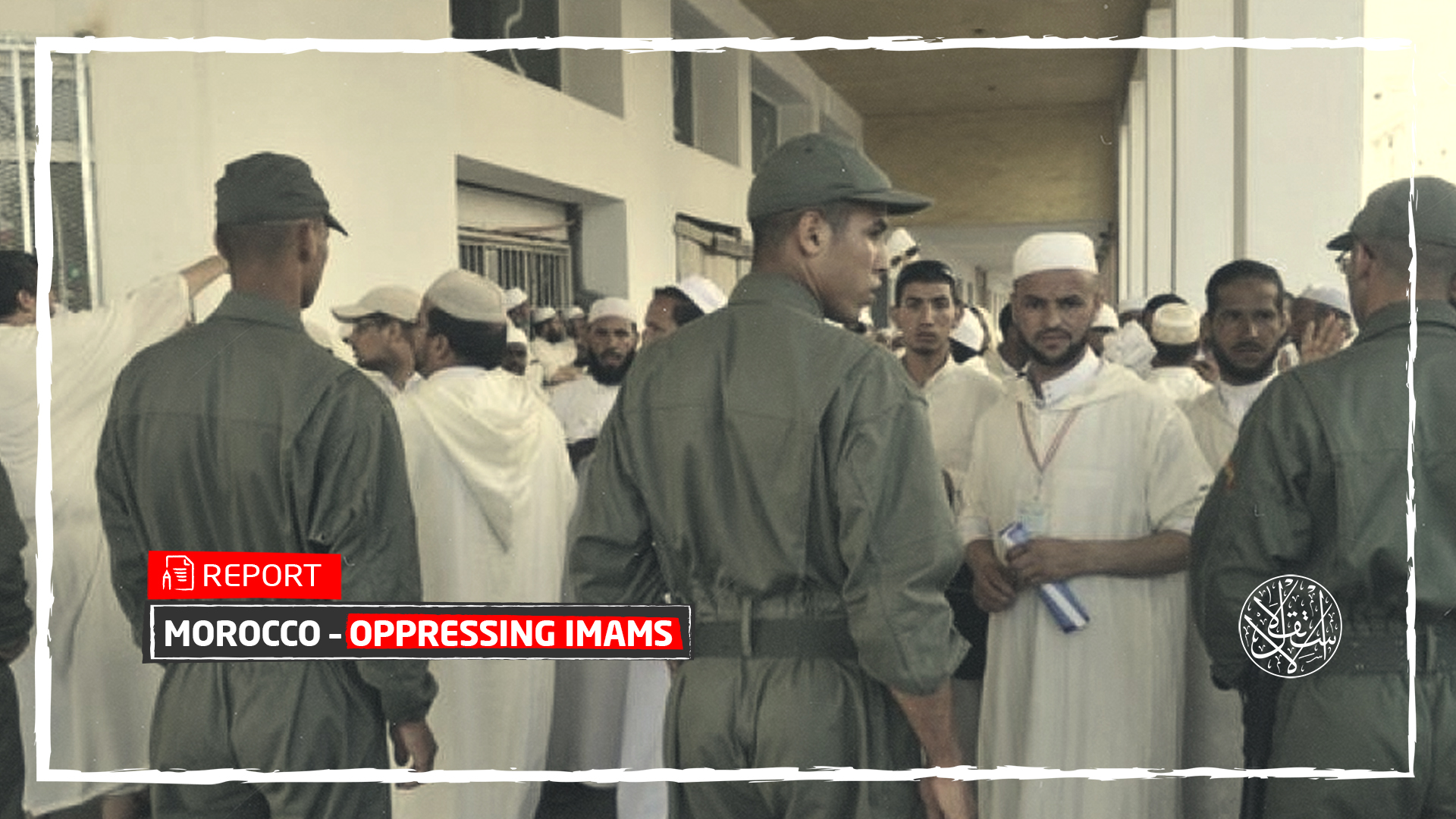
Controversy raised in Morocco about the suffering of the religious custodians and their miserable conditions despite their vital role in providing “spiritual security” for the citizen, and despite their affiliation with one of the sovereign ministries, the Ministry of Endowments, which is also considered one of the richest ministries thanks to the endowments’ income.
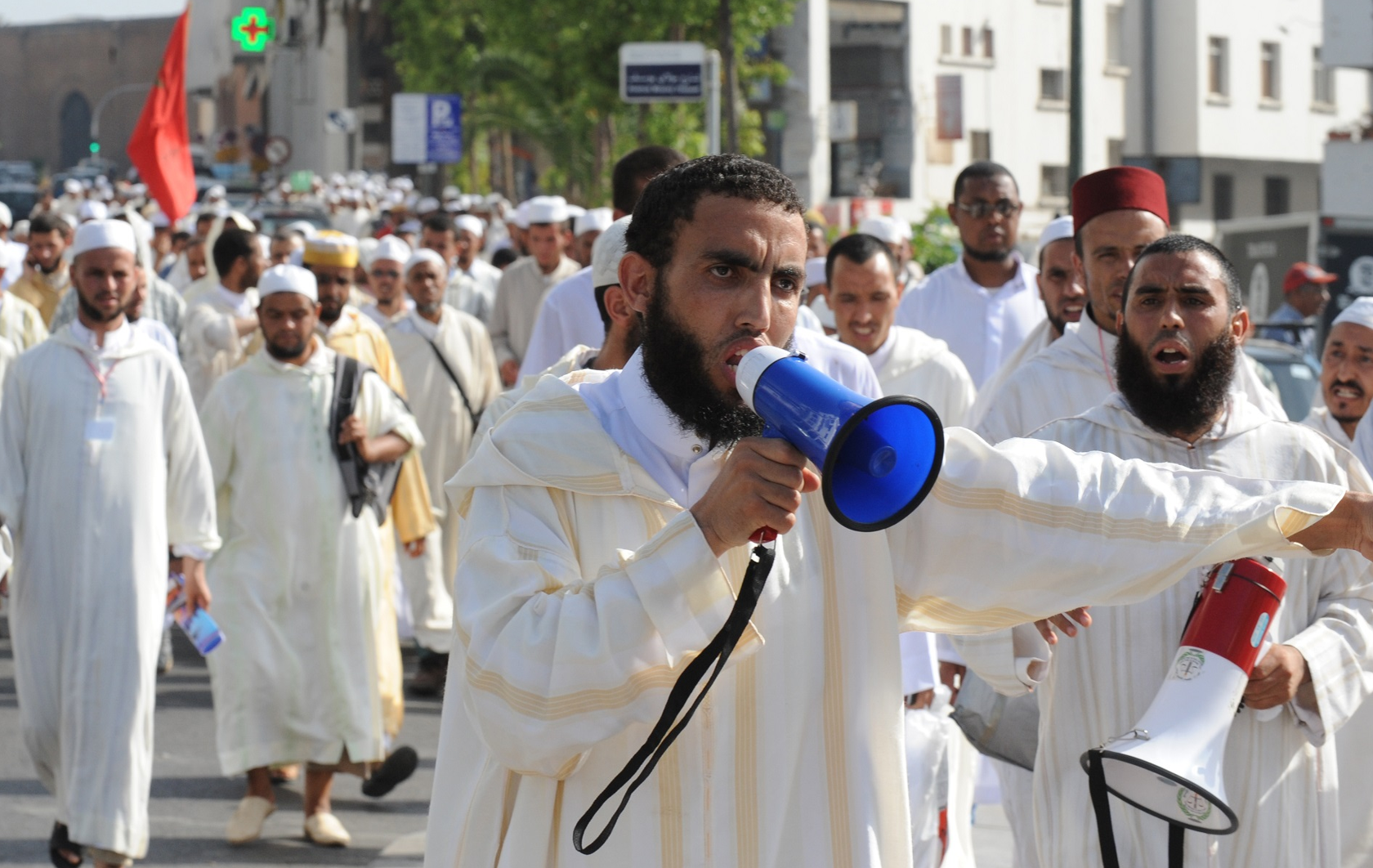
Sentencing the Imam Saeed Abu Aleen, last week to two years in prison, after his arrest in front of the residence of the Minister of Endowments and Islamic Affairs, re-shed light on the issue of religious curators, the most marginalized group within society, and forgotten by the media.
A human rights controversy was sparked by the repressive prison sentence to the İmam for his sit-in in front of the residence of the Minister of Endowments and Islamic Affairs, as part of demands to improve the status of religious custodians.
The “Family of Mosques and Ancient Education” had previously stated in a statement that “the imam, the professor, and the director of the Old Education School in Guelmim, Said Abu Aleen, is unjustly and arbitrarily detained.”
It described the Ministry of Endowments’ decision to dismiss him and terminate his assignment as “arbitrary” without an “objective and rational reason, except for his activity in pushing the demand file for the family of mosques and the religious education frameworks.”
Oppressing the Religious Custodians
According to the Human rights activist Khalid Elbakkari, "The situation of religious custodians is miserable, noting that the ministry still looks at them with the same old perspective, that is, not as employees in a ministry that is supposed to be a defender of their rights. Yet, in a charitable way, with a kind of underestimation of their value and the value of their social and educational roles.”
He continued: “What is interesting in this case is that when we note the penalties that affect the category of religious workers because of the protest and compare them with the disciplinary penalties that employees in other sectors are subjected to. We find that there is a great exaggeration in the disciplinary penalties in the Ministry of Endowments and Islamic Affairs compared to the employees of other ministries, which means that it adopts an approach of intimidation towards its employees.”
Khalid stressed that “Protest is no longer permitted within it, and it is always justified that it has a specificity because it is linked to the spiritual security of citizens and the institution of the Emirate of the Believers, and that religious custodians must possess qualities of dignity as if protest is an antidote to these qualities.”
It should be noted that the social conditions of religious custodians were the subject of parliamentary questions and correspondences to the Ministry of Endowments, the Royal Court, and the Supreme Scientific Council. However, nothing changed.
Spreading the Shrines and Sorcery
Refusing to reveal his identity for fear of being dispensed with, the Imam Ahmed D. [pseudonym] made it clear that what they receive from the Ministry of Endowments is very modest and is not enough for the daily expenses of their families, which makes them vulnerable to many unacceptable matters, including waiting for gifts and alms and what is offered by crumbs. Ahmed continued “the monthly wage for religious duties ranges between 500 and 1000 dirhams for the muezzin, cleaner, guard and others, while the person who practices oratory, imam and others gets a monthly reward ranging between 800 dirhams and 2500 dirhams, depending on the location and city.”
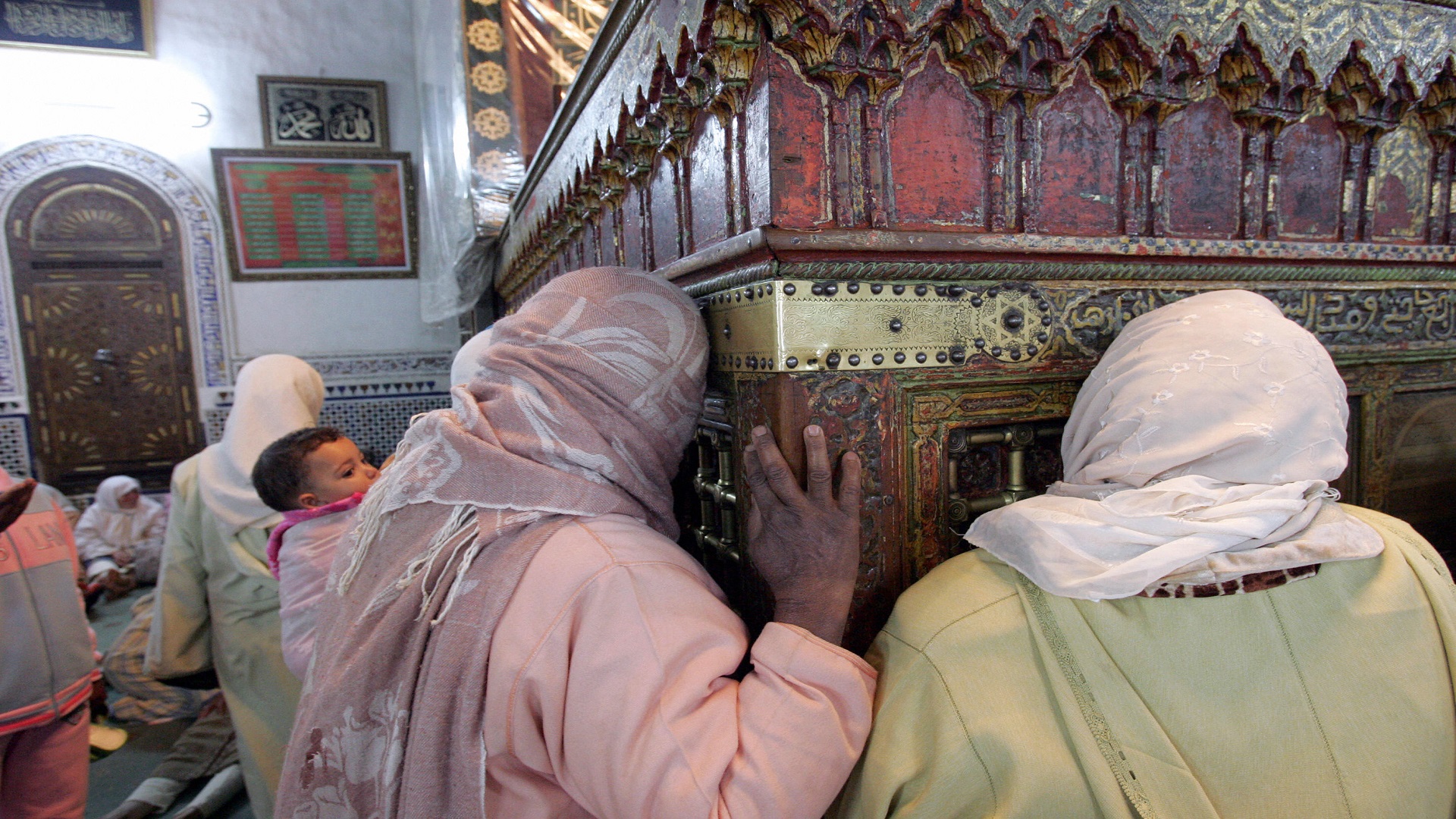
The Parliamentarian Raja Kassab called on the Minister of Endowments to improve the conditions of this category and to transfer the large budget spent on corners and shrines to this category.
Kassab indicated that there are 14 billion centimes spent on shrines, and this is an important amount that must be spent on religious custodians.
Ahmed commented by saying that “The money spent on shrines leads directly to the spread of sorcery and negatively affects the faith and religious practices of Moroccans. Instead of the ministry’s excessive generosity towards shrines, we deserve as workers in the religious field adequate salaries to survive.”
Deficiency of the Official Religious Discourse
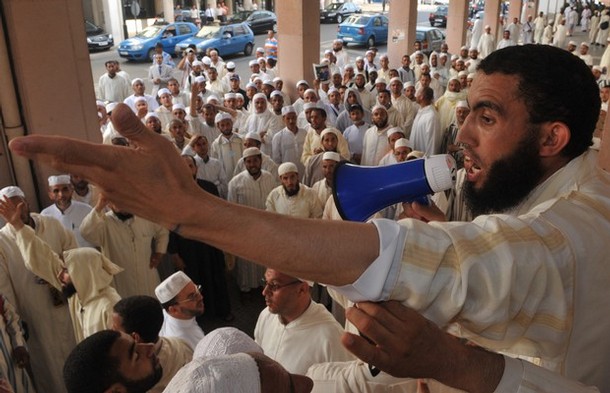
Muhammad K. (a pseudonym) another imam and preacher of a mosque announced “We have repeatedly protested, asked for the settlement of our situation. Since we work 24 hours a day, 7 days a week, for very low wages that do not even reach the minimum wage standards fitting the Moroccan Law.”
A worker of high status in the ministry of endowment Ismail M. (a pseudonym) revealed that “the intimidating and punitive rhetoric that the Ministry of Endowments and Islamic Affairs adopts more than any other ministry is mainly due to the sixties generation who still heads most of the positions in the ministry. The Seniors hold the most important responsibilities in the various institutions of the Ministry. Starting with the Minister of Endowments and Islamic Affairs, Ahmed Tawfiq, who served as a minister for more than 20 years.” The journalist Al-Mahdawi described him as the only minister in the world who held the same ministerial position for 20 years without any change.
Ismail continued “The rigidity of the structure of the institutions of the Ministry of Endowments and its reliance on vertical structuring and on the discourse based on orders issued from above and on the low status worker has only to implement and execute without the need for understanding, discussing, or comprehending. All of the official religious discourse loses its ability to persuade and touch the hearts of Moroccans in the required manner. It creates an abyss between the official discourse and the lived reality. Most Moroccans do not find satisfactory answers to their religious needs in official forums because of their rigidity.
Spreading Foreign Schools of Thought
Ismail pointed out that “the authoritarianism and the enslaving mentality with which the Ministry of Islamic Affairs deals with workers in the religious field, including preachers, imams and curators, creates a barrier to creativity and the development of religious discourse in a way that suits modern technological developments.”
He added: “Young people in general are alienated from the religious establishment, and Moroccan youth are looking for an alternative through television channels and Internet platforms like YouTube to benefit from religious explanation.”
He pointed out that “the problem that arises here is that this remote framing often does not fit with the Moroccan environment and culture. For example, Salafist thought spreads, which is alien to Moroccan society, due to the availability of this religious orientation on many and various media platforms that promote it.
Ismail added “On the other hand, the takfiri ISIS ideology is spreading and terrorist cells multiply because of the alternative that international terrorist organizations are trying to spread over the Internet. In my opinion, the Ministry of Endowment and Islamic Affairs can protect the youth and the country from several disasters if it respects the rights of its employees. And if it encourages their creative abilities in creating programs that meet the religious needs of members of Moroccan society, based on the Maliki school of thought, which is famous for the meanings of coexistence and the values of accepting the other.”
Sources
- The conviction of an imam of a mosque for two years in prison sparks a human rights controversy [Arabic]
- Marginalization and forgetfulness fuel the upcoming “revolution” of religious values [Arabic]
- Parliamentary Adviser to Altawfik: Your Ministry spends 14 billion on shrines at a time when it gives meager wages to religious leaders [Arabic]