Amani Ballour, the Brilliant Pediatrician Under the Syrian Regime Threat
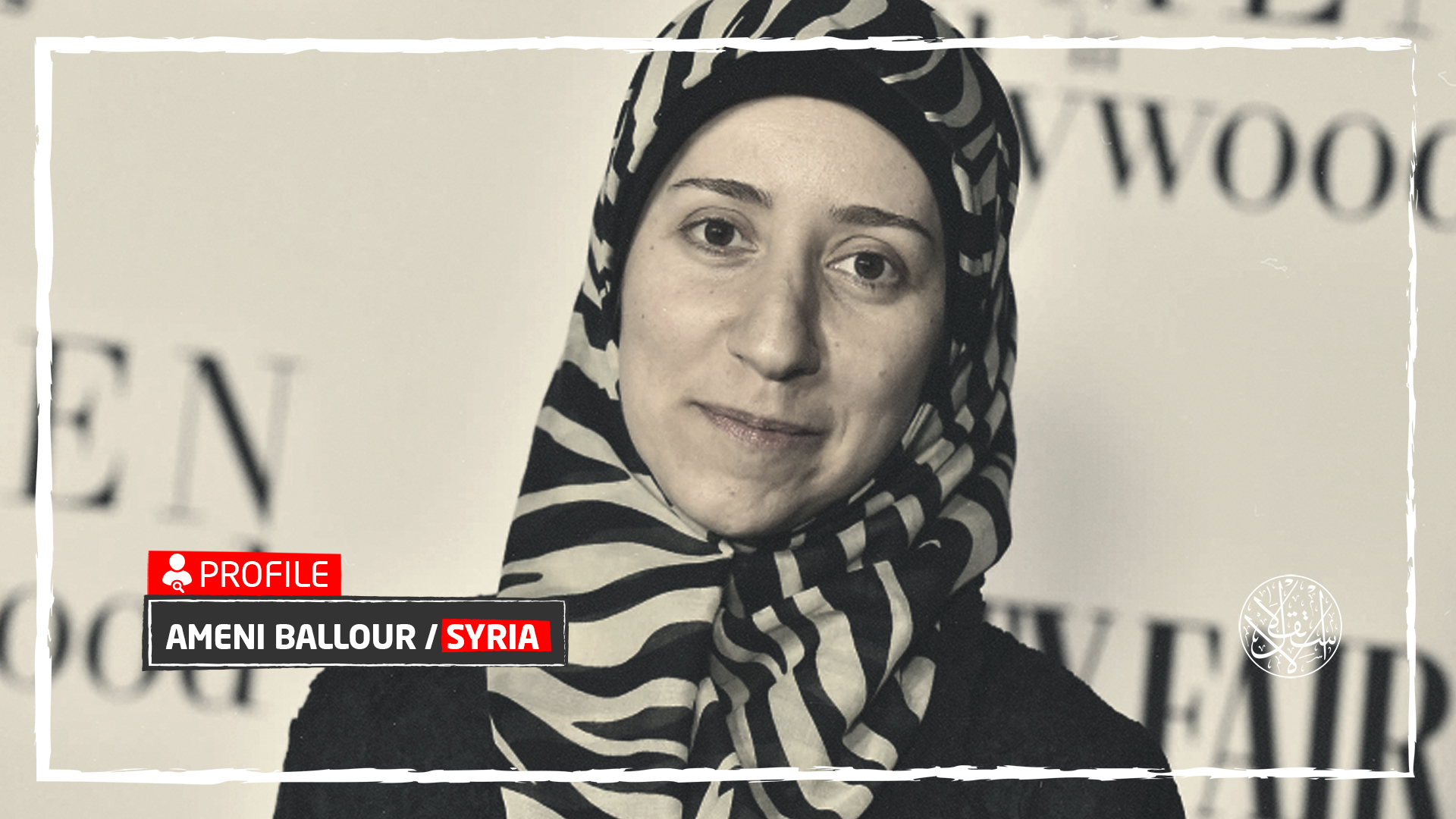
Activists agreed on Dr. Ballour's courage and great sacrifices while managing the Cave Hospital, which has become a symbol of humanity, stressing that the Syrian regime is trying to undermine her after she revealed one of its crimes.
The appearance of the young Syrian doctor, Amani Ballour, in a Security Council session was not an ordinary appearance or an emergency event in the course of the Syrian revolution. The testimony of the pediatrician, Ballour, in which she spoke about the bombing of the Damascus countryside with chemical weapons, was like a thunderbolt and a major shock for the Syrian regime, which found itself embarrassing in front of the world.
This appearance prompted the Syrian regime to launch a wide media campaign against Dr. Ballour, using all means to discredit her testimony and question her patriotism. This prompted thousands of Syrian opponents of the regime to show solidarity and praise her sacrifices.
Who is Amani Ballour?
Amani Ballour, born in 1987, is a Syrian pediatrician and an advocate of women's and children's rights. Her story is portrayed by the Oscar-nominated documentary The Cave, which tells of the struggles of running an underground hospital during the Syrian civil war.
Ballour was born and grew up in the east of Ghouta. She is the youngest among two brothers and three sisters. Her sisters married and became homemakers at a young age; the eldest was 15. Ballour, on the other hand, wanted to do more. She persisted in completing her education.
Ballour started as a volunteer in a nearby rebel stronghold hospital in Ghouta. There were only a few doctors, and there were only two full-time physicians like her. The hospital was intended to be a big, six-story medical center, and it was under construction during that time.
The hospital operated despite frequent attacks from the government, until authorities successfully seized the area. With thirteen other doctors, Ballour decided to continue operating underground, beneath the unfinished building. The subterranean clinic was eventually known as the Cave; as its popularity grew, more medical volunteers appeared. The hospital thrived despite the siege. At times, they were able to use smuggled medical stocks paid by international and local NGOs, and equipment taken from other destroyed hospitals.
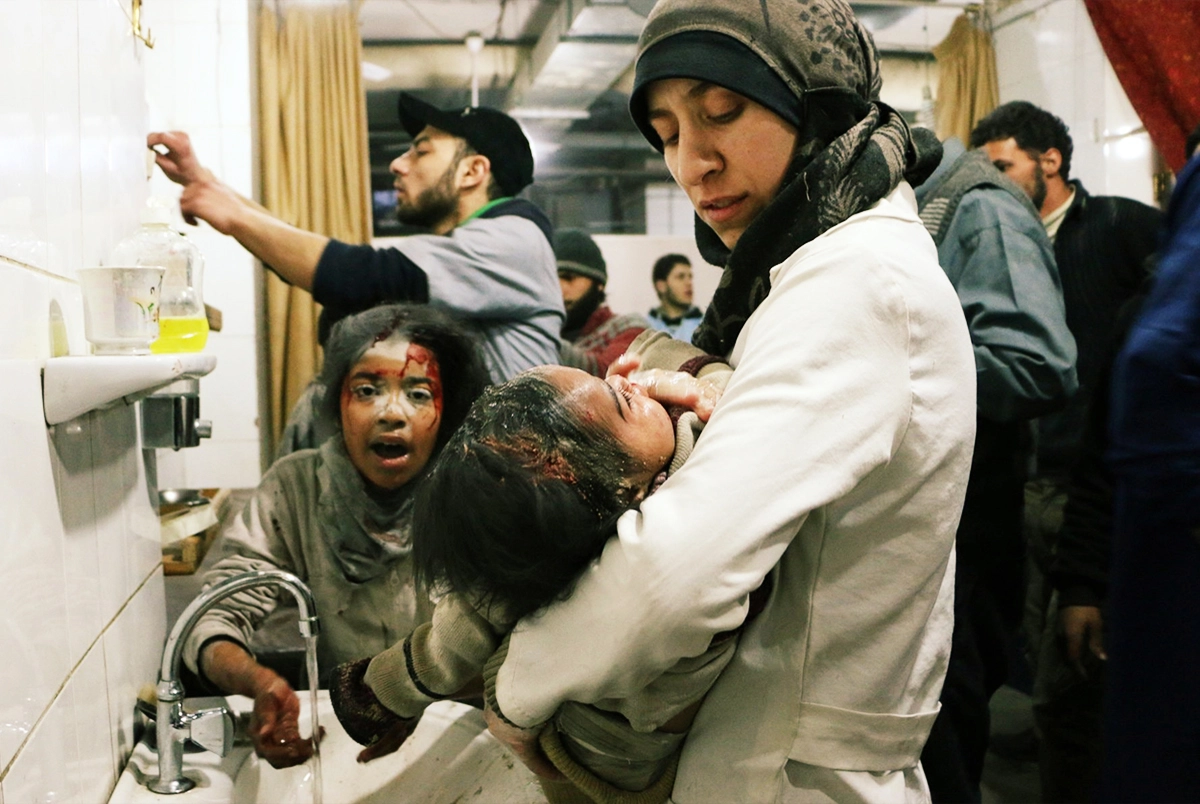
Ballour is no trauma surgeon, but with the influx of injury amid the Syrian Civil War, doctors in The Cave have to treat the wounded even though their affliction was not their specialty. Ballour recalled treating victims with missing limbs, and victims of chemical attacks who were suffocating in the subterranean hospital. The government bombed the hospital many times. She kept detailed journals about the days and the attacks.
In 2016, at 29 years old, Ballour was elected and promoted as the hospital director. She became the first and only woman to manage a hospital in Syria. She ran the hospital until the Assad regime quelled the last resistance in 2018. Since then, Ballour has been exiled. She was forced to flee Syria and spent some time living in a refugee camp in Turkey.
A Syrian Voice In the Security Council
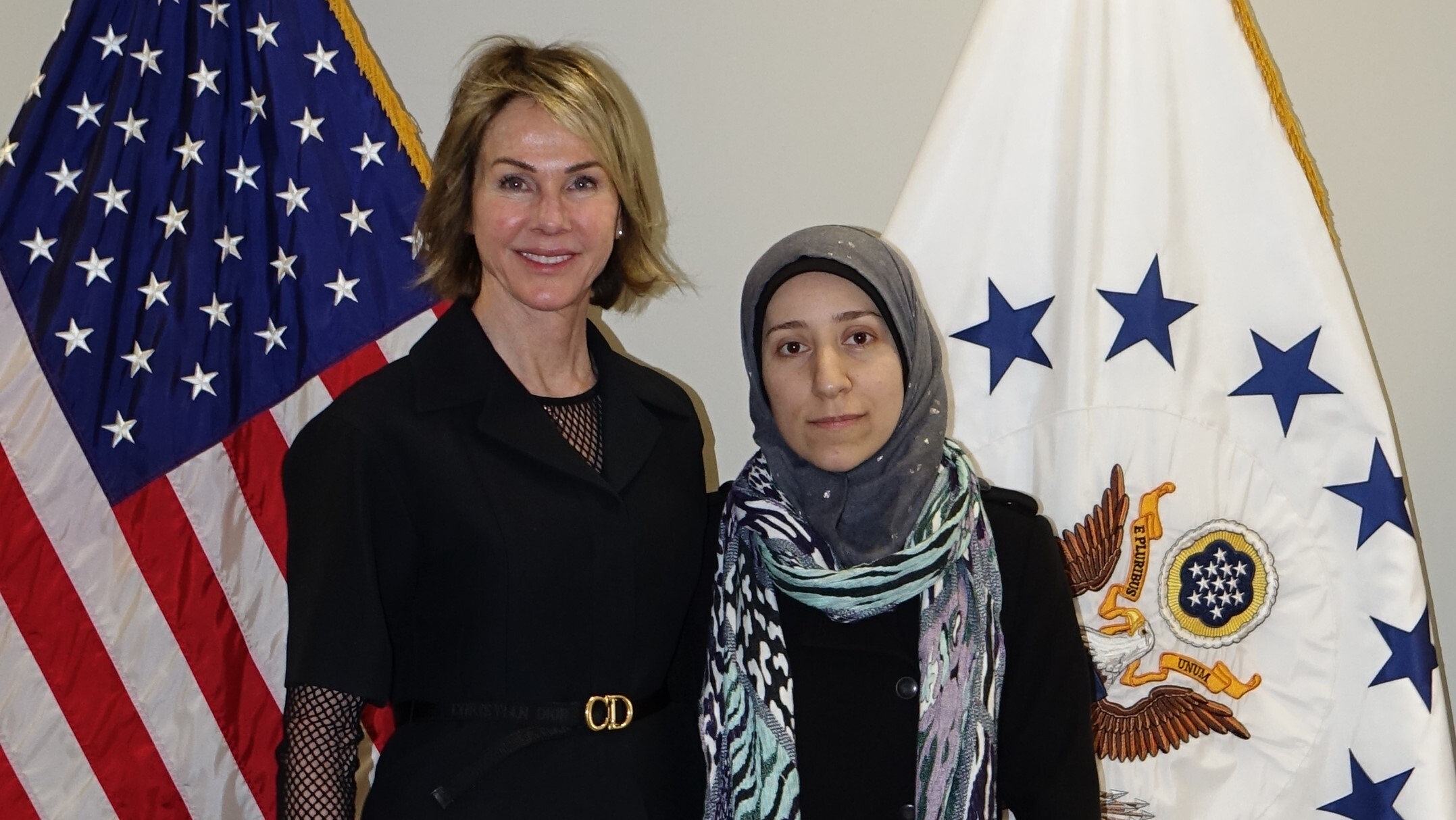
The Syrian pediatrician Amani Ballour, was invited by the US State Department, and she participated in the Security Council session on March 29.
In a tweet she posted on Twitter, Amani expressed her hope to work to alleviate the suffering of the Syrian people.
Amani said that the session was devoted to talking about the humanitarian situation in Syria, which includes health and nutrition, and talking about crossings and humanitarian aid, after two previous sessions, during which the council discussed the political situation in Syria and the chemical weapons file.
During her intervention, Amani focused on the issue of children's health, and the psychological and physical effects caused by the siege, fear and bombing, in contrast to the absence of the minimum basic rights for children who live in camps without education.
She also addressed the regime’s targeting of medical facilities, referring to her personal experience during the siege of Eastern Ghouta between 2012 and 2018, where Amani managed a team of 130 workers in the underground “Cave” hospital.
Amani stressed the importance of the crossings and humanitarian aid, which the regime is trying to convince the international community that it is qualified to manage, pointing out at the same time that the regime uses medicines, infant formula and food as a means by which it fought the residents of the besieged areas, including Eastern Ghouta.
Amani called on the international community to increase its humanitarian assistance to the Syrians and to extend the opening of the crossings, in addition to the right of Syrians to obtain vaccinations in light of the outbreak of the “Corona emerging” virus (Covid-19).
Amani considered the State Department's invitation to her as an opportunity to convey the voice of the Syrians and shed light on urgent issues, most notably the issue of detainees in the regime's prisons, and the humanitarian catastrophe in Syria.
Awards and Sacrifices
On January 15, 2020, Amani received the “Raoul Wallenberg” Council of Europe Award for her courage and commitment to saving many lives in the “Cave” Hospital, which served about 400,000 civilians in Eastern Ghouta.
In a statement published on the official website of the Council of Europe, Council of Europe Secretary General Maria Bejnovic Boric said that Dr. Amani is “a shining example of compassion, virtue and honor, which can thrive even in the worst of circumstances, in the midst of war and suffering.”
Bejinovic Boric noted that the cave hospital "has become a beacon of hope and safety for besieged civilians," praising Amani's courage and risking her life to help civilians and children suffering from the effects of chemical weapons, and her ability to manage a team of about a hundred workers in an underground hospital.
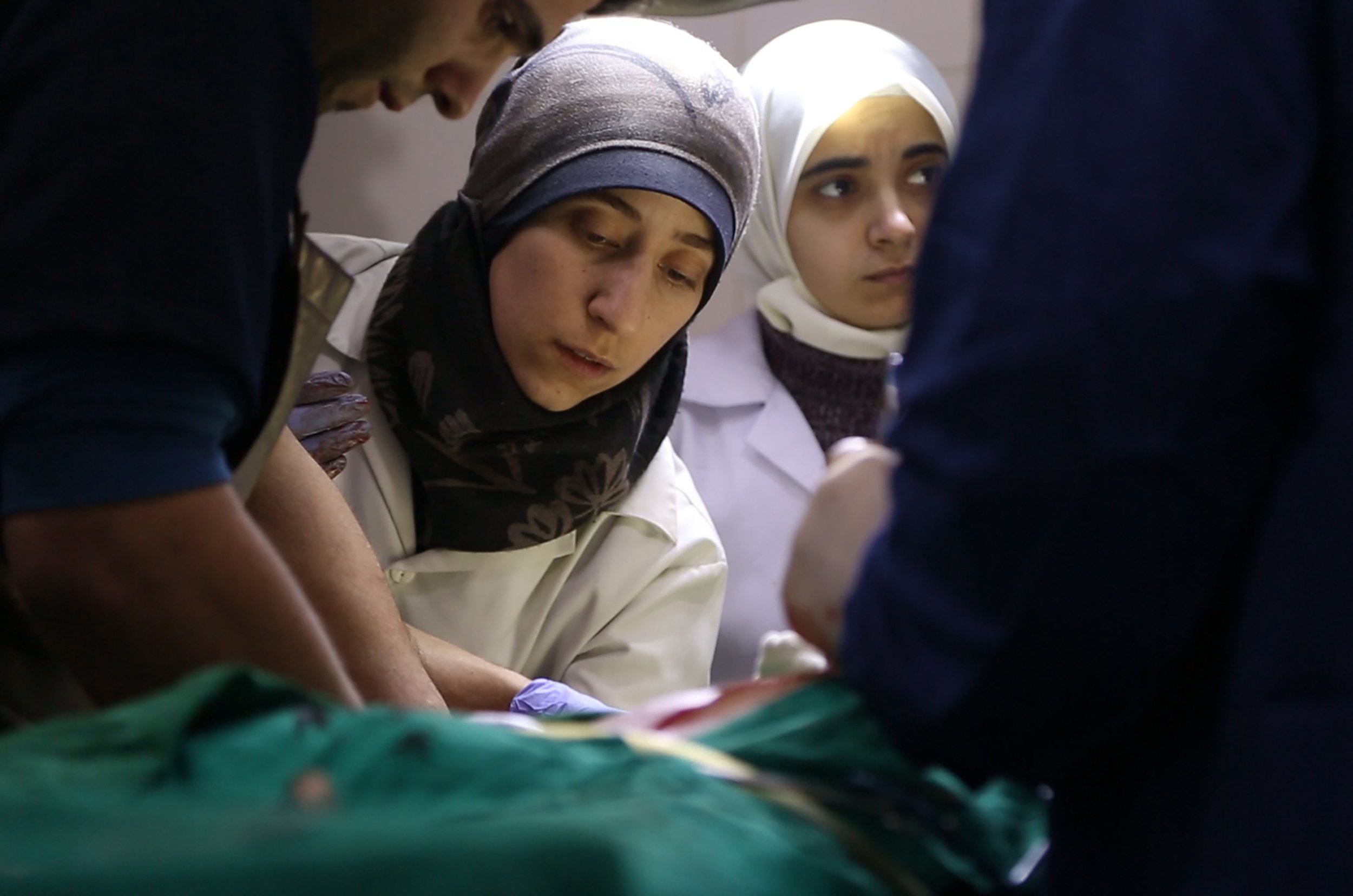
Amani’s story was filmed in a movie called The Cave ( The name of the Hospital ) , prepared and produced by the Danish Documentary Production Company. The film dealt with the daily life of Doctor Amani with four of her colleagues, while they were working underground.
For more than 5 years, Ballour worked in the hospital amid the dangers of war and bombing, and saved hundreds of lives who were injured by the fire of the Syrian regime and Russia, before leaving the green displacement buses in 2018, after the regime tightened its grip on Ghouta and displaced opposition fighters and civilians towards northern Syria.
The doctor, in her thirties, lives today in Turkey. She has become an icon of the revolution, and won the "Raoul Wallenberg Prize" for exceptional humanitarian work.
In a tweet, she attached a photo of the victims of the Ghouta massacre, in which she says, "I can remember these children, they were starving because of the siege, they dreamed of a better life. They suffocated and died."
A Woman vs. A Cruel Regime
Activists launched a solidarity campaign with Dr. Amani Ballour, in both Arabic and English, under the hashtag #I_Stand_With_Doctor_Amani_Ballour.
The campaign came after the Assad regime attacked "Dr. Amani Ballour" because of the documentary "The Cave", which exposed the regime and filmed scenes from the bombing of chemical weapons on the eastern Ghouta of Damascus, especially when Dr. Ballour testified about the chemical massacre before the UN Security Council and the Organization for the Prohibition of Chemical Weapons, at the invitation of the US State Department at the Security Council meeting held on March 29th.
The official website of the “Syrian News” channel broadcast a “documentary film” entitled “From the Tunnel to the Light,” in an attempt to discredit the doctor after she testified in the last Security Council session about the Syrian regime’s use of chemical weapons in the city of Douma in Damascus countryside.
The documentary presents Doctor Khaled Al-Dabbas, who was working in the “Cave” Hospital in Douma, denying the Syrian regime forces’ use of chemical weapons in Douma, accusing Doctor Amani Ballour of “lying.”
Then it moved to the doctor’s house, to reveal Amani’s father, who expressed his anger at his daughter. He appeared in front of the camera and described her as a "traitor."
Whether the man made his statements voluntarily or under threat, the way he described his daughter makes her, and everybody, feel hurt. He should be proud of her.
The documentary was published days after the member states of the Organization for the Prohibition of Chemical Weapons decided to strip the Syrian regime’s government of its rights to vote in the global chemical weapons watchdog, after it was found that the Syrian regime forces used toxic gases in bombing repeatedly during the war.
The documentary was not only limited to the regime’s usual claims to exonerate itself from the use of chemical weapons, but also appeared through the “witnesses present” in the film, and focused more on mentioning the name of Dr. Amani Ballour, in an attempt to undermine her credibility, discredit her, and belittle her testimony in the chemical file.
To conclude, This miserable regime will not succeed in killing the voice of truth. The brilliant Doctor Amani Ballour is a vivid example. One day, all the oppressive and criminal regimes will vanish, only peace will remain.