‘Surpassed His Teacher’; A Turkish Academic Monitors the Signs of the Alliance Collapse of bin Zayed and bin Salman!
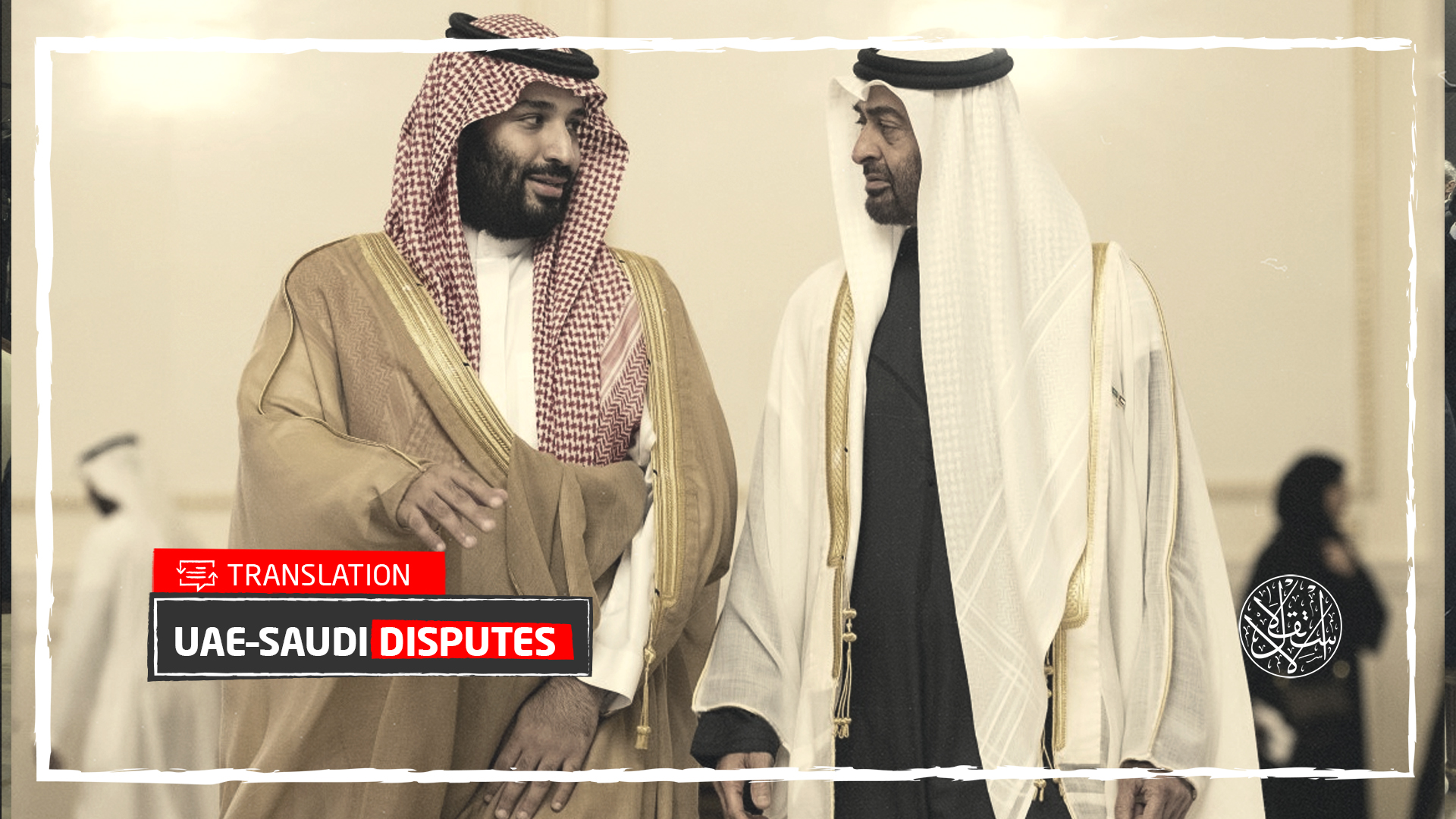
The most experienced specialists on international politics and foreign and Gulf relations would not have expected that the student, the Saudi Crown Prince, Mohammed bin Salman, would turn against his teacher and supporter, the Crown Prince of Abu Dhabi, Mohammed bin Zayed, so that the latter would suffer similar effects of what he has committed of supporting the coups in Egypt, Libya and Yemen.
The Turkish Anadolu Agency recently opened the file of the disputes between Saudi Arabia and the UAE, through an article by the head of the Department of Political Science and International Relations at Mardin Artuklu University, Necmettin Acar.
The Turkish academic pointed out that July 2021 witnessed the peak of the conflict in the Emirati-Saudi interests, when bin Salman announced, at the beginning of the same month, the launch of a new airline to challenge the UAE’s power in the air.
Another indication of the deteriorating relations of the two Gulf allies appeared in the kilometers of queues of trucks on the borders of the two countries, with the start of the implementation of a Saudi customs decision on Emirati goods.
Alliance Background
The agency talked about the circumstances of the emergence of the alliance between the two Gulf neighbors, indicating that it appeared to suppress the demands of the Arab street for change and the consolidation of the thrones of authoritarian regimes in the region during the Arab Spring that began at the end of 2010.
With the death of King Abdullah bin Abdulaziz in 2015, and the ascension of King Salman to the Saudi throne and the obtaining of his son Muhammad of the actual rule of the country, the ties of the UAE–Saudi alliance were strengthened, according to the article.
Acar stressed that that alliance achieved its first goal in the first decade of the 21st century, by protecting the authoritarian regimes in Bahrain, Egypt and Yemen.
In 2011, the Al Khalifa regime in Manama was saved from falling with Emirati and Saudi military support.
In 2013, the coalition provided significant financial and diplomatic support for the Sisi coup and the overthrow of the Muslim Brotherhood government in Egypt. The Coalition also launched a war against Yemen in 2015.
The agency noted that Abu Dhabi Crown Prince Mohammed bin Zayed paved the way for bin Salman to assume the throne of Saudi Arabia by supporting the radical changes in the Saudi rule succession system using his strong relations with the West.
Acar explained that this led to the emergence of a special relationship between the two crown princes.
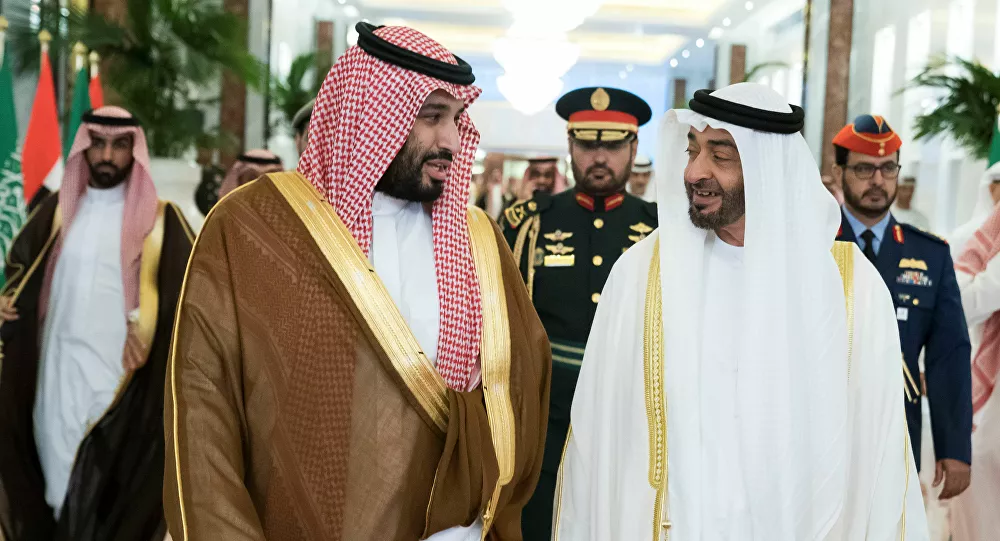
Although rumors have been circulating recently about bin Zayed being bin Salman's teacher and mentor, the major change in U.S. policy has greatly weakened this special relationship.
Necmettin Acar pointed out that recently, “we witnessed many developments in which differences emerged between the UAE and Saudi Arabia alliance.”
The most important regional alliance was in the Yemeni war, which has been going on for more than 6 years, revealing the alliance’s fragility.
He further explained this by saying: “The coalition was severely damaged when the UAE began pursuing its own agenda in Yemen, ignoring the security concerns of its ally, and leaving Saudi Arabia alone in the areas where the war has intensified.”
Emirati normalization with Israel, according to the Turkish academic, “deepened the rift more and more,” as he believes that “bin Zayed’s influence in Riyadh has diminished at the current stage.”
Change of Circumstances
Necmettin Acar proceeded in the article: “The first decade of the 21st century brought great changes in the circumstances that led to the two countries’ alliance.”
He pointed to the divergent interests of the two parties in various files such as relations with Iran, and the policies of the economy and oil, considering that they are “the most important reasons for the shake-up of the alliance.” Currently, the Riyadh administration has taken some decisions targeting the economic success of the UAE.
He continued, “While the conflict with Iran represents a geopolitical one for the UAE, it is sectarian or ideological for Saudi Arabia.”
There are also important differences in the approach between Abu Dhabi and Dubai with regard to Iran, according to the Agency.
While Iran is seen as a rival to oil-rich Abu Dhabi, Tehran is an important potential partner for Dubai, which owes its wealth to trade and tourism.
The economy highlights a field in which Emirati-Saudi competition is evident, as the two countries have been preparing “Vision” documents for many years to come in order to save their economies from dependence on oil and production with high added value.
Although Saudi Arabia is making great efforts in this regard, it seems difficult for it to keep pace with the UAE, which has many years of experience in the field of economy and trade, according to the Turkish writer.
Adding: “The recent competition is closely related to the Saudi government’s realization that it will not be able to develop Riyadh economically without challenging Abu Dhabi in the economy, finance, trade and tourism.”
So, bin Salman launched an initiative called the International Corporate Headquarters Program “Programme HQ” in February 2021, ending the UAE’s position as a regional hub for global companies.
He continued: “Excluding international companies that do not move their headquarters to Saudi Arabia from Saudi public tenders, represented the biggest challenge for the Emirates.”
Therefore, the Dubai administration is concerned about the possibility of the international companies leaving, being eager to get a share of the huge investment budgets announced by bin Salman recently.
On the other hand, he noted, tourism is another area subject to Emirati-Saudi competition, since it is the most important investment field for the Saudi government in its endeavor to stop relying on oil.
In this, Saudi Arabia aims to make its lands the largest tourist center in the region with the "NEOM" city project, which the state began building on the Red Sea coast with an investment budget of 500 billion dollars.
Although tourism is one of the sectors that has the greatest credit for the economic development of the UAE, it will not be easy for it to compete in light of the huge investments made by Saudi Arabia in this field.
The Saudis’ announcement of the establishment of a new airline on July 1, 2021 reveals the intensity of competition in the tourism sector, according to the author.
Finally, he added, the Saudis’ decision to impose customs duties on goods coming from the Emirates was a fatal blow to the UAE, Saudi Arabia’s second largest trading partner after China.
What is striking here is the targeting of “free zones” in particular, as the areas established by the UAE provided great advantages to foreign investors, and created new job and production opportunities.
He explained this, saying: “While the free zone in Jebel Ali alone provides job opportunities for 135,000 people, it covers about 30 percent of the gross domestic product of the Emirate of Dubai.”
With the latest customs tax decision, companies that produce outside Saudi territory and do not employ local workers, will face high costs in the Saudi market.
OPEC Is a Red Line
Acar believes that there is no doubt that the rivalry between the UAE and Saudi Arabia has intensified when the struggle for control of energy markets has intensified.
It seems that Saudi Arabia flared up in anger when the UAE demanded to change its quota at the last OPEC meeting, setting a “bad example” for other OPEC members that produce oil.
He said: “Saudi Arabia leads OPEC, and challenging this leadership constitutes a red line for Saudi Arabia, and therefore Riyadh punished those who challenged the Saudi leadership in OPEC in the past, just as it does today.”
The confrontation between Russian President Putin and bin Salman in March 2020 also happened in relation to the issue of leadership of the oil markets.
Acar added: “The Shah of Iran, Reza Pahlavi, and the President of Iraq, Saddam Hussein, both challenged the Saudi leadership in OPEC, and the two leaders received a harsh response from Saudi Arabia.
“Iran demanded an increase in oil prices by 15 percent at the OPEC meeting in 1977, but Saudi Arabia rejected the proposal on the grounds that an increase in oil prices would not be in the interest of the producing countries.”
He continued, “The Shah did not abandon his insistence and finally succeeded in persuading all OPEC members to increase the price.”
This upset Saudi Arabia and prompted it to respond harshly; it did not recognize the price system offered by Iran and pumped oil heavily to the markets to thwart Iran’s plan. It even announced that it would offer increased discounts to its customers.
Iran, which suffered losses of billions of dollars, had to negotiate with foreign creditors and take austerity measures in its expenditures to keep the country's economy from collapsing.
This economic bottleneck was one of the factors that led to the revolution in 1979, according to the Turkish writer.
He added: “Likewise, Saddam was in dire need of oil revenues to heal the wounds sustained by the Iraq–Iran war in 1990, and he pressured OPEC members, especially Kuwait and the UAE, to raise the price of oil from $12 to $18.”
Acar said: “Saudi Arabia viewed Saddam's invasion of Kuwait and his control of Kuwaiti oil as a challenge to their leadership in OPEC.”
He explained that had this invasion been recognized, Saddam would have single-handedly controlled a fifth of the world's oil reserves.
Therefore, Saudi Arabia did not hesitate to provide strong support to the coalition that was formed to overthrow Saddam, even though it was one of Saddam's biggest supporters during the Iran-Iraq war.
Islam and Oil
Necmettin Acar added: “Looking at the Saudi regime closely, we can notice that the regime has found stability on two important pillars: Islam and oil.”
Therefore, the regime is highly sensitive to ideological and economic threats.
It is believed that this is how the UAE became the most important competitor to Saudi Arabia in the field of economy, with the policies that Riyadh recently pursued.
Acar concluded his article by saying: “In sum, we are far from the conditions that created the Emirati-Saudi alliance that emerged to support authoritarian regimes during the wave of the Arab Spring.
“Although it is possible for these events to bring the two countries relatively close, one thing is certain; it is that the Emirati and Saudi interests no longer coincide in fields such as economy, security and energy.”